Best dried whole chili peppers for heat lovers in 2026
Find the best dried whole chili peppers: árbol wins for everyday heat. Compare ghost pepper, chipotle, and more, with practical cooking and storage advice.
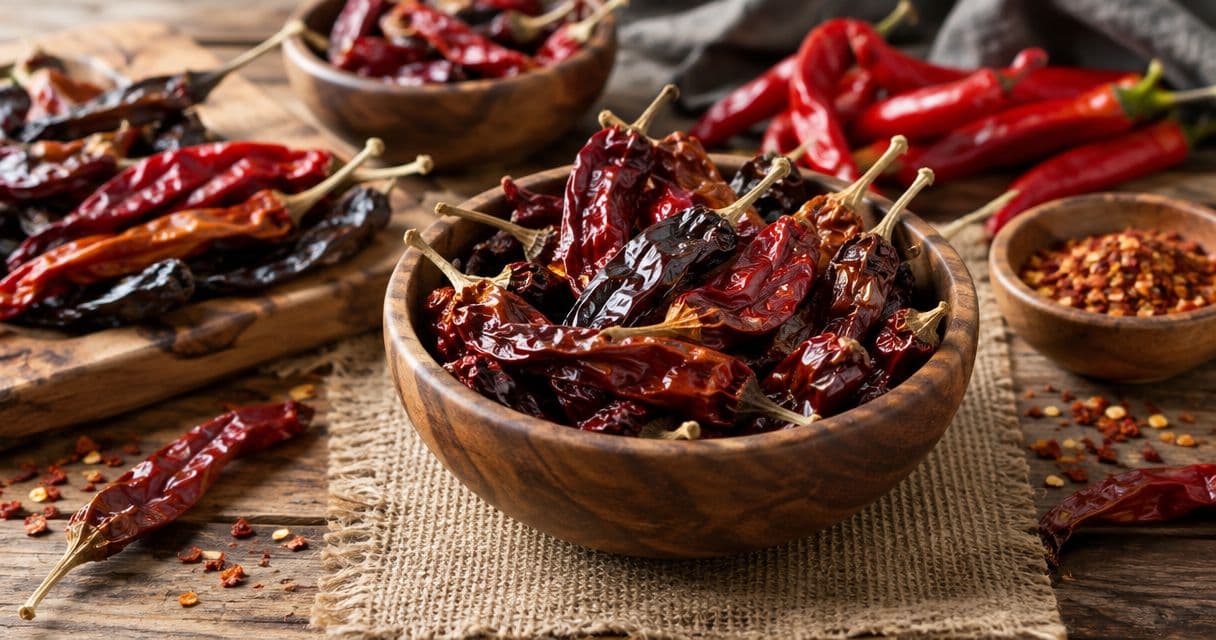
Best overall: chile de árbol. Best for extreme-heat hot sauce: ghost pepper. Best for smoky heat: chipotle. The best dried whole chili peppers earn their place through flavor, not burn alone; this guide matches six varieties to the dishes you actually cook.
TL;DR- Chile de árbol is the best dried whole chili peppers choice for sharp heat in everyday salsa and sauces.
- Ghost pepper suits extreme-heat hot sauce; chipotle suits smoky beans, marinades, and braises.
- Guajillo and ancho supply sauce flavor; Kashmiri chili supplies red color without chasing maximum heat.
- 5Senses whole spices suit cooks seeking direct-from-farm sourcing and origin-packed ingredients.
Why this matters
A chili that works in salsa does not automatically work in a slow-cooked stew. Thin-skinned chilies add sharp heat without much sauce body. Fleshier varieties contribute fruit, sweetness, and texture alongside their heat.
5Senses brings a direct-from-farm, origin-packed approach to whole spices. Apply that same attention when choosing dried chilies: identify the variety, check the stated growing origin, and choose a cooking role before choosing intensity. A regional name alone does not establish where a particular bag was grown.
For your 2026 pantry, start with a chili you can use repeatedly. Add a specialist variety when you have a dish for it, rather than collecting increasingly hot peppers that rarely leave the cupboard.
What makes the best dried whole chili peppers
- Useful heat: Choose intensity that fits your cooking. A pepper that overwhelms every sauce is not a good everyday staple.
- Flavor beyond heat: Look for the role you need: smoky, fruity, earthy, or sharply pungent. Heat does not replace seasoning.
- A clear identity: Prefer a named variety and a stated growing origin. Distinguish the pepper's regional heritage from the origin of the current lot.
- Good condition: Reject visible mold, insects, or a musty smell. Some chilies are brittle; others remain leathery, so flexibility alone is not a freshness test.
- The right preparation: Match whole chilies to grinding, rehydrating, or infusing. Thick skins need different handling from thin ones.
- Repeat pantry use: Choose chilies for meals you make often. Whole spices are useful when you can prepare the amount your recipe needs.
Dried whole chili peppers at a glance
These are culinary recommendations, not a ranking of supplier batches. The table separates each variety's strongest use from its main limitation.
| Chili | Best for | Standout character | Key limitation |
|---|---|---|---|
| Chile de árbol | Everyday sharp heat | Bright, direct heat in salsa and sauces | Adds less sauce body than fleshy chilies |
| Ghost pepper | Extreme-heat hot sauce | Intense heat with fruity character | Difficult to adjust once too much is added |
| Chipotle | Smoky beans and marinades | Smoke from dried, smoked jalapeños | Smoke changes the entire flavor direction |
| Guajillo | Smooth red sauces | Fruity flavor and useful sauce body | Tough skins often benefit from straining |
| Ancho | Deeply flavored braises | Raisin-like sweetness and earthy depth | Too mild for cooks seeking a strong burn |
| Kashmiri dried red chili | Red color in curries | Color with a comparatively gentle heat profile | The regional name does not guarantee identical heat across lots |
1. Chile de árbol: best dried whole chili for everyday sharp heat
Chile de árbol is the default pick when you want heat without turning every meal into an endurance exercise. Its slender dried pods work in salsa, cooked sauces, and crushed chili seasoning. Use it to sharpen a dish rather than build the whole sauce around it.
Toast gently if you want a toasted note, then grind or rehydrate according to the recipe. Avoid scorching the pods: burnt chili brings bitterness along with heat.
Chile de árbol pros:
- Adds a clear, assertive heat to everyday food.
- Works as flakes, powder, or a blended sauce ingredient.
- Pairs well with fuller-bodied chilies when you need both heat and texture.
Chile de árbol cons:
- Provides less flesh and sauce body than ancho or guajillo.
- Thin pods scorch quickly in a hot pan.
Best for: Cooks who want one dependable hot chili for salsa, beans, and savory sauces.
Verdict: Buy chile de árbol as your everyday heat staple.
2. Ghost pepper: best dried whole chili for extreme-heat hot sauce
Ghost pepper belongs in deliberate hot-sauce making, not casual handfuls. Its northeastern Indian heritage is distinct from the growing origin of any particular product; check the lot's sourcing information rather than assigning an origin from the pepper's name.
Blend a small prepared portion into a sauce base, mix thoroughly, and taste before adding more. Keep the remaining chili separate. This gives you control over the finished sauce instead of committing the entire batch at once.
Ghost pepper pros:
- Delivers intense heat in a small addition.
- Adds fruity character alongside its pungency.
- Suits concentrated hot sauces and carefully measured pastes.
Ghost pepper cons:
- Excess heat is difficult to correct without expanding the recipe.
- Dust and hot-pan fumes require careful handling and ventilation.
Best for: Experienced heat lovers making sauces intended to be used sparingly.
Verdict: Buy ghost pepper for a defined hot-sauce project; skip it as your only pantry chili.
3. Chipotle: best dried whole chili for smoky beans and marinades
Chipotle is a smoked, dried jalapeño. That processing is the reason to choose it: smoke becomes part of the dish, not just an extra sensation of heat.
Rehydrate whole chipotles for marinades, bean sauces, and braising pastes. Blend thoroughly and strain when the recipe needs a smooth finish. Whole dried chipotles are not the same ingredient as canned chipotles in adobo, which include a prepared sauce.
Chipotle pros:
- Supplies smoke and chili heat together.
- Works well with beans, tomatoes, and slow-cooked dishes.
- Gives marinades a distinct flavor without needing a separate smoked spice.
Chipotle cons:
- Smoke dominates delicate sauces.
- Whole dried pods require preparation before blending smoothly.
Best for: Cooks who want a smoky backbone in beans, marinades, or braises.
Verdict: Buy chipotle when smoke is part of the recipe; skip it when you want clean chili heat.
4. Guajillo: best dried whole chili for smooth red sauces
Guajillo is a dried mirasol chili used widely in Mexican cooking. It brings fruity flavor and a red sauce base rather than the extreme heat of ghost pepper. Choose it when the sauce itself matters as much as the burn.
Remove the stems, soften the pods in warm water, and blend with your sauce ingredients. Taste the soaking liquid before using it. Straining removes stubborn skin fragments when you want a smooth texture.
Guajillo pros:
- Builds flavor and body in blended sauces.
- Pairs well with hotter chilies for adjustable intensity.
- Works in marinades, stews, and enchilada-style sauces.
Guajillo cons:
- The skins can remain noticeable after blending.
- Does not satisfy an extreme-heat brief on its own.
Best for: Cooks making red sauces that need fruit, texture, and controlled heat.
Verdict: Buy guajillo as a sauce-building chili, not as your strongest pepper.
5. Ancho: best dried whole chili for deeply flavored braises
Ancho is a dried poblano with an earthy, sweet, often raisin-like character. Its broad, fleshy pod makes it useful when you want chili flavor distributed through a substantial sauce.
Rehydrate ancho for braises, beans, and mole-style preparations. Combine ancho with chile de árbol when you want more heat without giving up its deeper flavor. The two ingredients have different jobs: ancho supplies depth, while árbol supplies sharper heat.
Ancho pros:
- Adds sweet, earthy depth to savory cooking.
- Contributes flesh and body to blended sauces.
- Works as a flavorful base for hotter chili blends.
Ancho cons:
- Its gentle heat disappoints cooks seeking a strong burn.
- Its sweetness does not suit every bright or delicate sauce.
Best for: Slow-cooked dishes where chili flavor should support the whole pot.
Verdict: Buy ancho for depth; skip it as a stand-alone answer to extreme heat.
6. Kashmiri chili: best dried whole chili for red color in curries
Kashmiri chili is a useful choice when you want a red curry or sauce without making maximum heat the objective. It is associated with Kashmiri cooking, but a regional label does not by itself verify where a particular lot was grown.
Grind the dried pods for recipes that call for chili powder, or soften and blend them into a paste. Bloom the ground chili gently in fat when the recipe calls for that step. Do not treat every red chili as a like-for-like substitute.
Kashmiri chili pros:
- Supplies red color in curries and sauces.
- Keeps the focus on flavor rather than extreme heat.
- Works in ground seasoning and wet pastes.
Kashmiri chili cons:
- Heat and color vary between lots and products.
- Does not replace a very hot chili when intensity is essential.
Best for: Curry cooks seeking red color with a gentler heat direction.
Verdict: Buy Kashmiri chili for color-led cooking; skip it for an extreme-heat sauce.
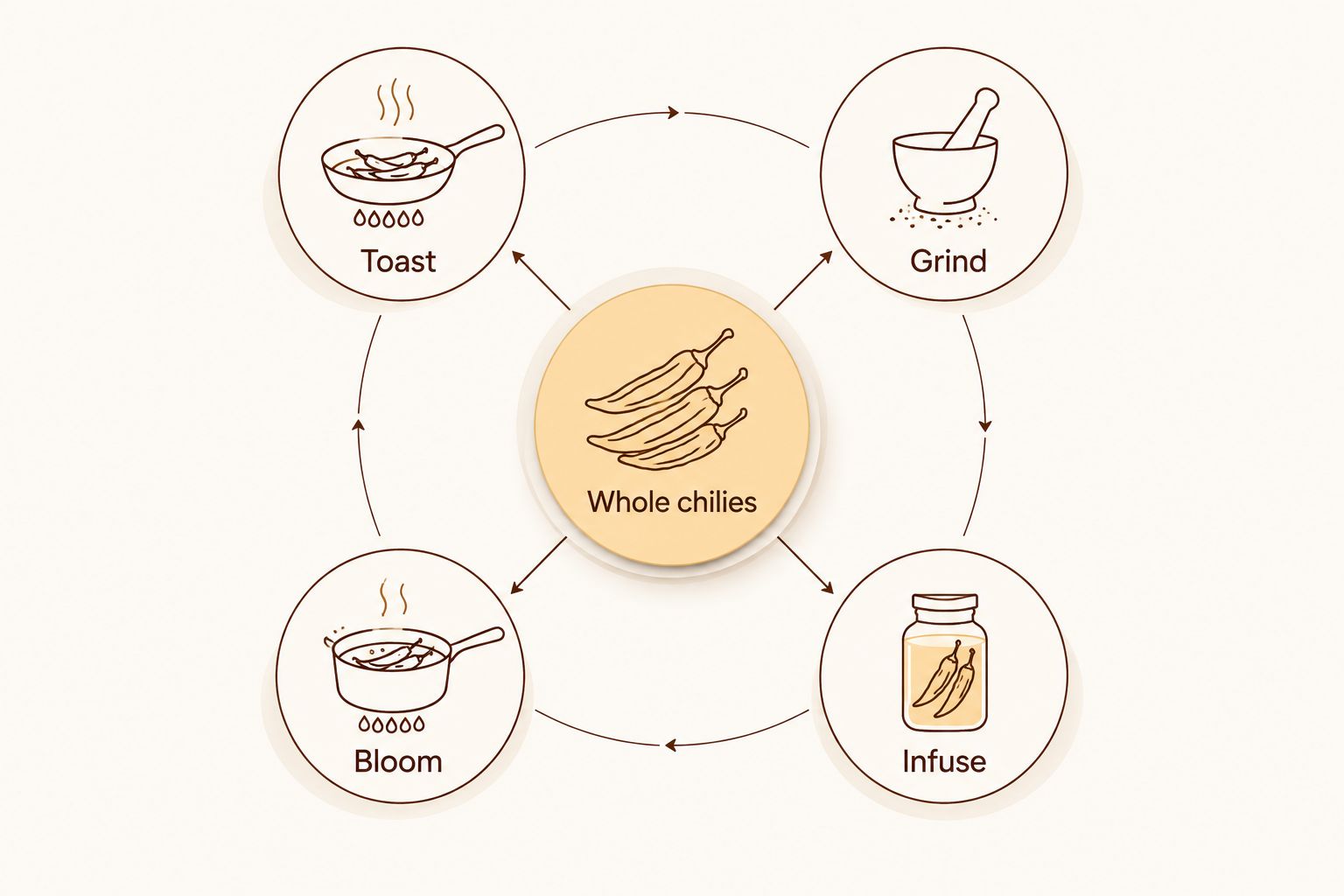
Toast, grind, bloom, or infuse
Whole chilies give you several preparation routes. Choose the route your dish needs; you do not need to perform every step on every pepper.
Toast
Warm dried chilies gently in a dry pan, turning them and stopping before they blacken. Toasting suits recipes that need a toasted flavor. Keep the kitchen ventilated, and avoid aggressively dry-toasting ghost peppers.
Grind
Remove stems and grind only what you need. Let airborne dust settle before opening the grinder, and keep your face away from the opening. Wear gloves when handling very hot chilies and wash tools thoroughly afterward.
Bloom
Stir ground chili into warm fat when your recipe calls for it. Keep the heat gentle and add the next ingredient before the powder burns. Blooming distributes chili through the fat; it is not a license to fry the spice until dark.
Infuse
Use whole chilies to flavor a sauce or cooking liquid when you want to remove the pods later. Removal stops further extraction from the pods, but it does not remove heat already released into the dish.
For a small sauce experiment, place a stemmed guajillo or ancho in a bowl with 250 ml warm water, adding more if needed to cover it. Once softened, blend with enough liquid to make a paste. Stir 1 teaspoon of paste into a separate portion of your sauce and taste before seasoning the whole batch.
For a gentle bloom test, warm 1 tablespoon of oil and stir in a small pinch of ground chili. These are starting quantities for a kitchen trial, not fixed heat ratios. Different peppers and lots need different amounts, especially when ghost pepper is involved.
Buy for the lot, then store for the next meal
Ask for the variety, growing origin, and any documented harvest or packing details. A packing date describes packing; it is not automatically a harvest date. Likewise, a chili's historic regional association does not prove the origin of the bag in your hand.
5Senses positions whole spices around direct-from-farm sourcing and packing at origin. Those are concrete purchasing details to examine, not substitutes for checking the information attached to the ingredient you choose.
Store dried chilies in a tightly closed container away from heat, light, and moisture. Use dry utensils, and do not open the container over a steaming pot. Grind small portions for cooking rather than exposing the whole supply repeatedly.
How the recommendations are ranked
The recommendations prioritize culinary usefulness, flavor, preparation, and a distinct cooking role. Chile de árbol leads because it answers the everyday heat brief. Ghost pepper, chipotle, guajillo, ancho, and Kashmiri chili each serve a different purpose rather than competing on heat alone.
These are variety-level recommendations. They do not establish the freshness, origin, or quality of a supplier's current lot.
Which dried whole chili peppers should you choose?
Choose chile de árbol if you are undecided. Add guajillo when you make blended red sauces, or ancho when you cook braises. Choose chipotle only when you want smoke, and ghost pepper only when extreme heat is the point.
5Senses whole spices are best for cooks who want direct-from-farm sourcing and origin-packed ingredients. Use that sourcing standard alongside the cooking role: neither provenance nor intensity alone tells you whether a chili belongs in tonight's dinner.
FAQ
What's the best dried whole chili pepper for everyday cooking?
Chile de árbol is the strongest default for everyday sharp heat in salsa, beans, and savory sauces. Choose guajillo instead when you need a fuller red sauce base rather than a direct heat accent.
What's the best dried chili for an extremely hot sauce?
Ghost pepper is the extreme-heat choice in this guide. Prepare it separately and add a small portion to your sauce base before deciding whether to increase the amount.
Is chipotle better than ancho for smoky cooking?
Chipotle is the better choice when smoke is essential because it is a smoked, dried jalapeño. Ancho supplies sweet, earthy depth rather than that smoked character.
Do I have to remove the seeds from dried chilies?
You do not have to remove every seed, but removing loose seeds helps produce a smoother paste. Seed removal does not reliably eliminate heat because capsaicin is concentrated in the chili's internal placental tissue, not the seeds themselves.
Should I toast dried chilies before soaking them?
Toast dried chilies first only when your recipe needs a toasted flavor. Use gentle heat and avoid blackening the pods; aggressive dry-toasting is especially unsuitable for very hot peppers.
Can I substitute Kashmiri chili for ghost pepper?
Kashmiri chili is not a like-for-like substitute for ghost pepper. Kashmiri chili serves color-led, gentler cooking, while ghost pepper serves extreme-heat preparations.
How can I tell whether dried whole chilies are still good?
Check dried chilies for a recognizable aroma and reject visible mold, insects, or a musty smell. Texture alone is not decisive because different dried varieties range from brittle to leathery.
One last thing
The seeds are not the chili's main heat-producing tissue. Removing them is useful for texture, but it is not a dependable way to turn a very hot pepper into a mild one. Control heat by controlling the amount you add, then taste the fully mixed dish before adding more.