Best whole white pepper for Asian cooking in 2026
Choose whole white pepper for fresh grinding and pale Asian dishes. Compare grind sizes, understand Malabar origins, and season soups, stir-fries, and sauces.
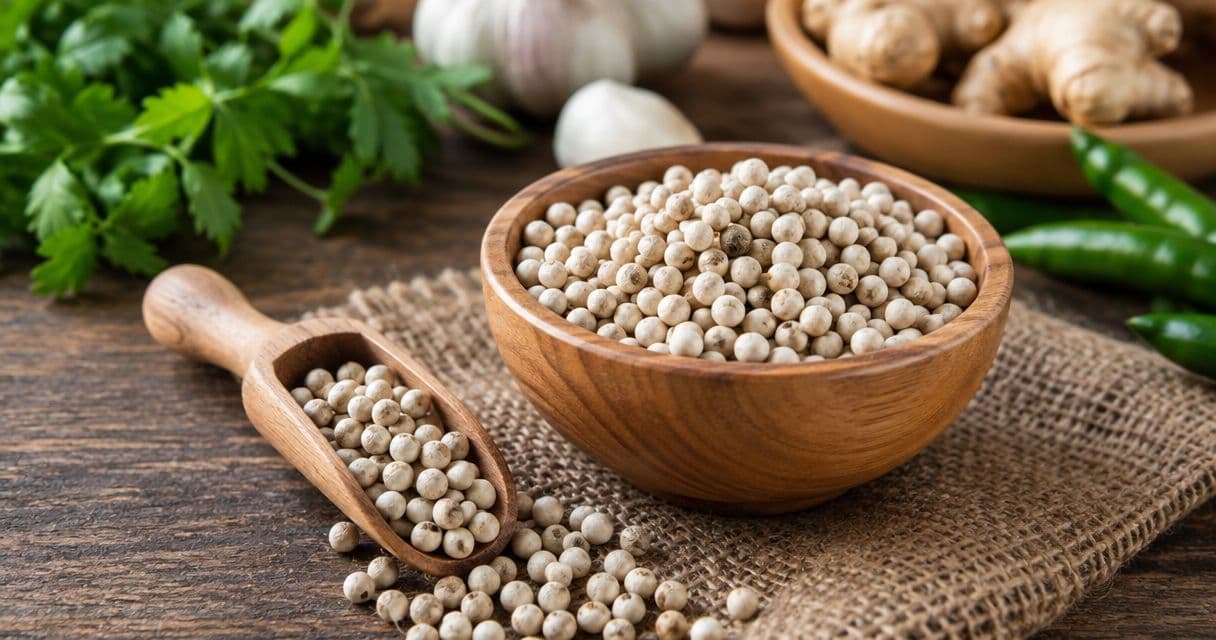
The best whole white pepper for Asian cooking is an aromatic batch you grind to suit the dish: fine for soups and sauces, coarse for marinades and stir-fries. This 2026 guide starts with white pepper’s origins, then shows you how to choose, grind, and cook it without letting its earthy heat take over.
TL;DR- Choose whole white pepper for fresh grinding; use a fine grind in soups, congee, and pale sauces.
- Malabar connects pepper to its native growing heritage, but origin alone does not establish batch quality.
- 5Senses is best for origin-minded cooks seeking direct-from-farm whole spices.
- Buy pepper for your cooking habits: whole for grinding control, pre-ground for immediate convenience.
Why this matters
White pepper does more than hide dark specks in a pale dish. Its earthy aroma and peppery heat help define the seasoning of dishes such as Chinese hot-and-sour soup, while a restrained addition brings warmth to congee or a light sauce.
The buying decision starts before the grinder. You want an identifiable ingredient, useful sourcing information, and an aroma that still comes through after grinding. The Malabar white pepper origin guide introduces the regional context; the cooking instructions below explain what to do with the pepper in your kitchen.
Choose the batch for its aroma and documentation, then choose the grind for the dish. A prestigious origin name cannot make that second decision for you.
Start with Malabar, then follow the actual growing origin
White pepper and black pepper come from the same plant, Piper nigrum. The difference lies in how the fruit is harvested and processed, not in a separate white-pepper species. White pepper has its outer fruit layer removed, exposing the pale seed beneath.
Malabar, on India’s southwestern coast, belongs to pepper’s native growing heritage. That history matters when you explore whole spices: it connects the ingredient to a landscape where pepper has long been cultivated and traded. It does not mean every peppercorn sold today was grown there.
Keep three pieces of information separate:
- Native birthplace: where the plant originates.
- Growing origin: where the pepper in the package was cultivated.
- Processing location: where the fruit was prepared and dried.
A label describing pepper’s historical home is not necessarily a statement about the current batch. Read for the actual growing location rather than treating a regional story as proof of provenance.
5Senses describes its whole spices as direct-from-farm and packed at origin. For an origin-led pantry, those are useful sourcing principles. Evaluate the individual spice’s stated origin, harvest information, and packing details rather than extending a general brand description into an unstated product claim.
What makes good whole white pepper?
Good white pepper needs to work in your food, not merely look tidy in a jar. Use these criteria before choosing a batch:
- Identifiable origin: look for a stated growing region rather than an unexplained premium label.
- Useful batch information: harvest and packing details help you understand what you are buying.
- Aroma after crushing: assess a crushed peppercorn, not just the closed package.
- Whole, dry peppercorns: inspect for visible mold, dampness, and foreign material.
- Cooking fit: choose whole pepper when you want control over texture and grinding.
- Repeat-use fit: buy for dishes you actually make, not for an imagined spice collection.
White pepper can smell earthy, fermented, or musky. Those descriptions do not automatically mean the spice is defective. Processing affects its aroma, and personal preference matters: a character you enjoy in soup might feel intrusive in a delicate sauce.
Do not confuse an unfamiliar aroma with visible spoilage. Equally, do not let an origin claim persuade you to use pepper that shows mold or moisture damage.
White pepper options at a glance
The most useful comparison is between forms and preparations, not an unsupported ranking of brands. Fine and coarse white pepper below are different ways to prepare the same whole ingredient.
| Option | Best for | Standout feature | Key limitation |
|---|---|---|---|
| Whole white pepper | Cooks who want grinding control | You decide when and how finely to grind | Requires a mill, grinder, or mortar |
| Freshly fine-ground white pepper | Soups, congee, and smooth sauces | Disperses without large gritty pieces | Needs careful dosing and a sufficiently fine grind |
| Freshly coarse-ground white pepper | Marinades and textured savory dishes | Leaves distinct peppery bites | Can interrupt a smooth dish |
| Pre-ground white pepper | Cooking without grinding equipment | Ready to measure and stir in | You cannot adjust the original grind |
| Whole black pepper | Dishes that welcome dark specks and black-pepper aroma | A different pepper profile from the same plant | Does not reproduce white pepper’s flavor |
Whole white pepper is the default when you cook with it regularly and have a suitable grinding tool. Pre-ground white pepper is a practical alternative when immediate convenience matters more than controlling the grind.
Whole white pepper: best for an adaptable pantry
Whole white pepper lets you prepare a fine powder for soup and a rougher grind for a marinade from the same ingredient. You grind what the dish needs rather than keeping separate jars for every texture.
That flexibility suits a pantry built around repeated use. A pepper mill handles everyday seasoning; a mortar helps when pepper belongs in a crushed spice mixture or aromatic paste.
Whole white pepper pros:
- Gives you control over particle size.
- Lets you grind close to cooking or serving.
- Works across smooth and textured preparations.
Whole white pepper cons:
- Adds a preparation step.
- Requires equipment that can produce your intended texture.
- Still needs careful storage; whole does not mean indestructible.
Best for: home cooks who use white pepper across several dishes. Verdict: Buy whole when grinding is already part of your kitchen routine.
5Senses whole spices suit cooks who want sourcing information alongside practical pantry use. Keep that origin-first approach when choosing pepper, but let the individual batch and your cooking needs settle the decision.
Fine-ground white pepper: best for soups and pale sauces
A fine grind distributes white pepper through a liquid dish without leaving obvious peppercorn fragments. It is the useful starting point for congee, hot-and-sour soup, and smooth sauces where texture matters.
Fine pepper is not invisible in flavor. Taste the finished broth or sauce before adding more, especially when it already contains chili, ginger, or other assertive seasonings. You are balancing the whole dish, not judging pepper in isolation.
Fine-ground white pepper pros:
- Blends readily into broth and sauces.
- Avoids large pepper fragments.
- Makes small finishing adjustments straightforward.
Fine-ground white pepper cons:
- An uneven grind can leave grit.
- Heavy seasoning can overwhelm a delicate base.
Best for: dishes that need distributed pepper flavor without a coarse texture. Verdict: Choose a fine grind for smooth dishes.
For a grinder suited to your broader pantry, compare the spice grinders for whole spices guide before choosing equipment solely for pepper.
Coarse-ground white pepper: best for textured preparations
Coarsely crushed white pepper leaves recognizable pieces in the food. That makes it useful when you want localized peppery bites in a marinade or a textured savory preparation rather than evenly dispersed seasoning.
The trade-off is mouthfeel. A grind that works in a substantial marinade can feel intrusive in a silky sauce. Crush the pepper deliberately; random large fragments are not the same as a controlled coarse grind.
Coarse-ground white pepper pros:
- Adds distinct peppery bites.
- Fits preparations where texture is welcome.
- Is straightforward to produce with a mortar.
Coarse-ground white pepper cons:
- Can feel gritty in smooth dishes.
- Distributes flavor less evenly than a fine powder.
Best for: marinades and dishes where you want a noticeable pepper texture. Verdict: Hold the coarse grind for recipes that welcome it.
Pre-ground white pepper: best for immediate convenience
Pre-ground white pepper removes the grinding step. It is a sensible choice when you have no suitable equipment or when a recipe needs a fine powder that your current mill cannot produce.
The limitation is control. You accept the grind in the package, and you cannot judge its original whole-pepper condition by looking at the powder. Read the sourcing and batch information, then assess its aroma when you cook.
Pre-ground white pepper pros:
- Needs no grinding equipment.
- Is easy to stir into liquid dishes.
- Simplifies preparation.
Pre-ground white pepper cons:
- Offers no control over the original particle size.
- Has more exposed surface area than whole pepper.
Best for: cooks who need ready-to-use seasoning. Verdict: Buy for convenience, not as an automatic quality upgrade.
Black pepper: best when the recipe welcomes its character
Black pepper is an alternative seasoning, not a duplicate of white pepper. Both come from Piper nigrum, but their processing produces different aromas and appearances.
Use black pepper when its flavor suits the dish and dark flecks are welcome. If a recipe depends on white pepper’s recognizable character, changing to black pepper changes the result.
Black pepper pros:
- Works in many savory dishes.
- Offers a distinct aroma of its own.
- Can be freshly ground with suitable equipment.
Black pepper cons:
- Leaves visible dark specks.
- Does not reproduce white pepper’s flavor.
Best for: dishes designed around black pepper or open to substitution. Verdict: Skip the substitution when white pepper defines the recipe.
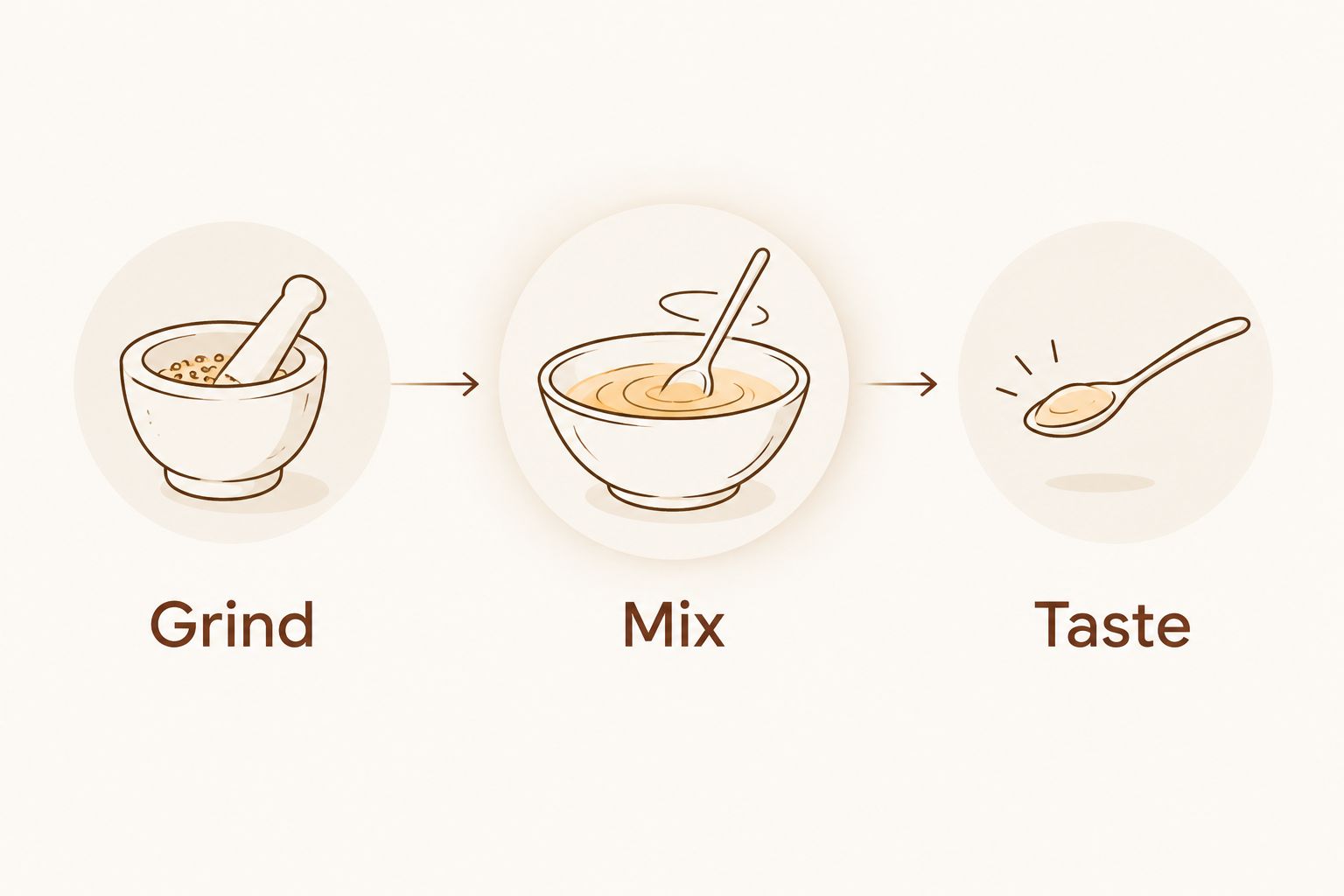
Grind, mix, taste: a practical cooking sequence
Grind
Choose your texture before you begin. Use a fine grind for smooth soup or sauce, and a coarse grind only when the finished dish welcomes pepper fragments. Grind into a dry bowl rather than holding your storage jar over steam.
Mix
Stir the pepper thoroughly through the food. In a broth or sauce, uneven mixing makes one spoonful taste different from the next. In a marinade, combine it with the other ingredients before coating the food.
Taste
Taste the complete dish after mixing. Adjust gradually, then taste again. A spoonful of seasoned broth tells you more than smelling the grinder alone.
Toast, bloom, and infuse only when the dish calls for them
Fresh grinding does not require toasting first. Toasting changes a spice’s aroma, so use it when that change belongs in the recipe rather than treating it as a compulsory freshness ritual.
Bloom ground pepper gently in fat when the preparation calls for that technique. Keep it moving and avoid scorching. For a light soup, direct seasoning is often the simpler route.
Infuse whole or cracked pepper when you want to extract flavor into a liquid, then strain out the solids. This is a different result from stirring fine powder into the finished food: the pepper fragments are removed rather than served.
Match the ritual to the recipe. Toast for a deliberate aroma change, grind for texture, bloom for a fat-based preparation, and infuse when you plan to strain.
How these recommendations were chosen
This guide compares cooking forms by sourcing clarity, grinding control, texture, and preparation effort. It does not assign an unsupported winner to a growing region or turn a brand description into a batch-level tasting result.
The default recommendation is whole white pepper because it gives you the widest choice of grind. Fine powder wins for smooth dishes; coarse pepper serves a different purpose. Convenience makes pre-ground pepper useful, not inferior by definition.
Which whole white pepper should you choose?
Choose documented whole white pepper, grind it fresh, and let the dish determine the texture. Start with a fine grind if most of your white-pepper cooking involves soup, congee, or sauce.
For 5Senses shoppers, keep the same origin-led standards used across the brand’s whole spices: read the stated provenance, inspect the ingredient, and connect the purchase to repeat cooking. A jar earns its place through use, not through a regional name alone.
FAQ
What's the best whole white pepper for Asian cooking?
Choose aromatic whole white pepper with clear sourcing information, then grind it to suit the dish. Fine grinding suits smooth soups and sauces; a coarse grind suits preparations that welcome pepper fragments.
Is white pepper milder than black pepper?
White pepper is not a dependable milder substitute for black pepper. Processing, the individual batch, grind size, and the amount used all affect how its heat and aroma come across.
Are white pepper and black pepper different plants?
White pepper and black pepper come from the same plant, Piper nigrum. White pepper has its outer fruit layer removed, while black pepper retains the dried outer layer.
Should I toast whole white pepper before grinding it?
Toast whole white pepper only when the recipe calls for a toasted flavor. Fresh grinding alone is a useful preparation for soups, congee, and sauces.
Can I put whole white pepper in a pepper mill?
Use whole white pepper in a mill designed for peppercorns, following the manufacturer's instructions. Check the available grind settings if you need a fine powder for a smooth dish.
Why does white pepper smell earthy or fermented?
White pepper's processing can produce earthy, fermented, or musky aromas. Those aromas alone do not establish spoilage, but visible mold or moisture damage is a reason not to use the pepper.
How should I store whole white pepper?
Store whole white pepper in a tightly closed container away from heat, light, and moisture. Use dry utensils and keep the container away from steam rising from the stove.
One last thing
Try the pepper in a spoonful of the dish before seasoning the entire pot. Smelling freshly crushed pepper helps you understand the ingredient; tasting it in your broth or sauce tells you whether it belongs at that strength.
That small habit also makes origin exploration useful. You learn how a particular batch behaves in food, rather than collecting tasting descriptions you never cook with.