Sikkim black cardamom: the mountain heritage of Himalayan Ember
Discover Sikkim black cardamom and its Himalayan growing heritage. Learn how 5Senses Himalayan Ember brings smoky, resinous depth to rice, stews and spice blends.
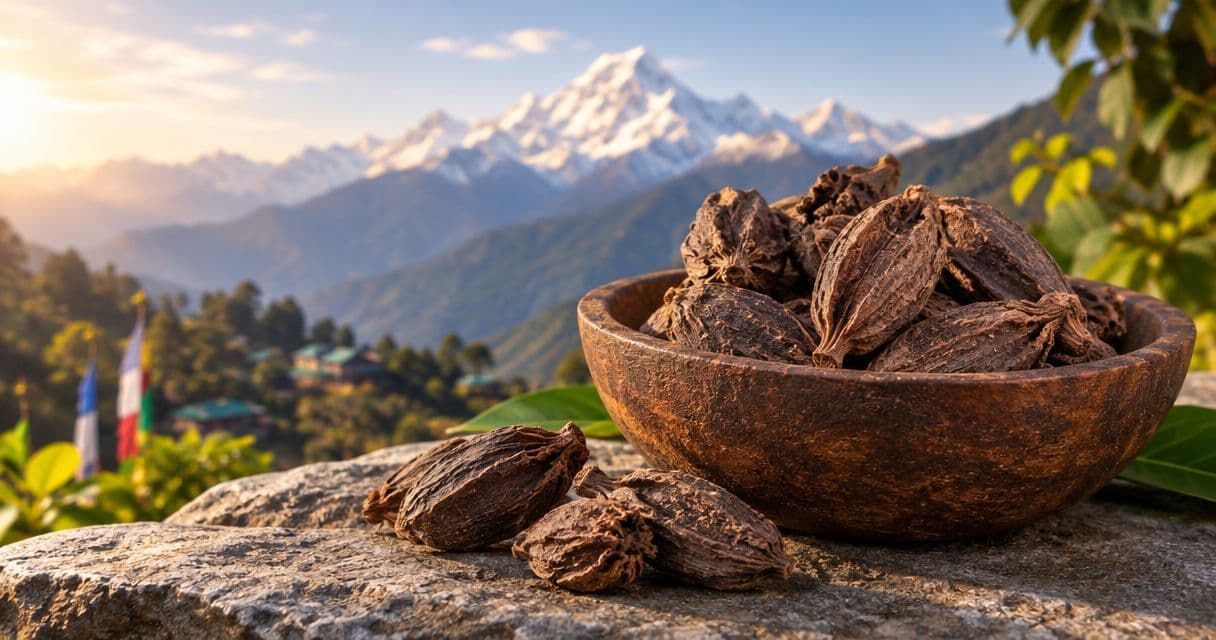
Sikkim black cardamom brings a deep, smoky fragrance to rice, stews and slow-cooked food. The 5Senses Himalayan Black Cardamom Pods, named Himalayan Ember, come from this eastern Himalayan growing region, where large cardamom is an important agricultural crop.
TL;DR- 5Senses Himalayan Ember is Sikkim black cardamom from India’s eastern Himalayas.
- Black cardamom brings smoky, resinous warmth rather than green cardamom’s sweet floral character.
- Regional curing traditions help explain black cardamom’s familiar smoky aroma.
- Crack, infuse and remove the pods when you want flavor without coarse texture.
The mountain story inside a dark pod
Open a black cardamom pod and the first impression is often smoke. Behind it sits a resinous, earthy character that belongs comfortably in a pot of rice or a long-simmered stew. This is not green cardamom with a darker coat.
Sikkim gives that flavor a geographic home. The Indian state lies in the eastern Himalayas, far from the southern growing regions commonly associated with small green cardamom. Large cardamom is important enough here to have a dedicated regional research history.
The Spices Board’s Indian Cardamom Research Institute established its large-cardamom research station in Gangtok in 1981. Its stated purpose was to address the crop’s local needs in Sikkim and the Darjeeling district of West Bengal. That is a concrete sign of the region’s relationship with the spice: cultivation, research and grower support organized around a crop that matters.
Himalayan Ember’s original 5Senses pouch identifies the eastern Himalayas of Sikkim as its origin. The name invites you to notice the spice’s warmth, while the label gives you the place to connect it to. Both are useful when the story continues at the stove.
Large cardamom and small cardamom tell different stories
Black cardamom is often called large cardamom in agricultural and trade sources. The eastern Himalayan spice commonly sold under that name is associated with Amomum subulatum. Green cardamom is Elettaria cardamomum, a different plant.
The distinction is practical, not just botanical. Their aromas serve different roles. Green cardamom can brighten a dessert or a cup of chai; black cardamom can give a savory dish a darker, more grounded presence.
You do not need to memorize the botanical names to cook well. You do need to know which cardamom your recipe asks for. A substitution based only on the shared word can change the dish more than expected.
For the southern side of the story, read about Malabar Melody green cardamom. The contrast shows why a spice collection benefits from both origins rather than treating one as a replacement for the other.
How a regional curing tradition shapes aroma
Growing location is one part of black cardamom’s character. Post-harvest treatment is another. Smoke is not simply a flavor placed into the seed by mountain soil.
The Spices Board describes traditional large-cardamom curing in locally constructed drying houses called bhatties. Direct heating produces dark capsules with a smoky smell. It also describes modified drying systems that use indirect heating and preserve a maroon color and the spice’s natural flavor.
These two approaches make an important point: drying technique changes the finished spice. The same broad growing region can produce cardamom with different appearances and different degrees of smokiness. Origin alone does not tell you everything about a pod.
The 5Senses product description says Himalayan Ember is carefully sorted and naturally dried to maintain aroma and whole-spice integrity. Its flavor notes specifically describe rich smoke, resinous warmth and earthiness. Those details support the sensory story without assuming an exact drying-house design for the current batch.
Understanding curing also makes you a better cook. If smoke is prominent in the spice you are using, let that guide your quantity and pairings. You want a useful accent, not a pot that tastes only of smoke.
What Himalayan Ember contributes to food
The 5Senses tasting notes describe Himalayan Ember as rich, smoky and resinous, with warming earthiness. Resinous is an aroma description: think of a deeper, lingering fragrant character rather than a sugary sweetness.
In rice, that profile can sit behind the grain and other seasonings. In a stew, it gives a slow-cooked dish another layer of aroma. In a ground spice blend, it becomes part of the overall composition rather than an easily removable whole pod.
Smell a lightly cracked pod before adding it to a crowded blend. You will understand its role more clearly than by opening several spice bags at once. Then smell the finished food and notice how the raw aroma has changed through cooking.
The aim is balance. An ingredient can be expressive without leading every mouthful. With black cardamom, a restrained approach often makes the difference between depth and domination.
Black and green cardamom at a glance
| Spice | 5Senses origin | Described character | Best for | Main caution |
|---|---|---|---|---|
| Himalayan Ember black cardamom | Sikkim, India | Smoky, resinous and earthy | Rice, stews and savory infusions | Smoke can overwhelm delicate flavors |
| Malabar Melody green cardamom | Malabar, India | Sweet, floral and citrusy, with pine-like notes | Chai, baking and aromatic rice | Seeds need fine grinding for smooth textures |
Neither row is a quality ranking. The ingredients solve different flavor problems. Keep both if your cooking includes both bright aromatic dishes and deeper savory ones.
A cooking ritual built around the whole pod
Crack without scattering the seeds
Press a pod gently with a pestle or the flat side of a sturdy utensil. You want to open the casing enough for the cooking liquid to reach its contents, not crush the entire pod into fragments.
Put the pod into the dish immediately or into a spice bag if you want easy removal. Keep track of how many pods entered the pot. Whole spices are pleasant to smell but not always pleasant to encounter unexpectedly on a spoon.
This is the simplest starting point for someone new to Himalayan black cardamom. It gives you access to the aroma while preserving control over texture. You can take the spice out when the dish reaches the character you want.
Infuse in a recipe you already know
Choose a familiar rice preparation or stew that calls for black cardamom. Follow the recipe’s amount rather than borrowing a dose intended for green cardamom.
Add the pod at the stage specified by the recipe. Taste as the food cooks, especially if you are using a new pack with a more expressive aroma than your previous supply. Do not assume that more spice means more complexity.
Once the aroma is established, remove the pod if the dish is meant to be served without whole spices. A spice bag makes this straightforward, particularly when several other whole seasonings are present.
Bloom gently when the recipe calls for fat
Some savory preparations begin with whole spices in warm fat. A lightly cracked black cardamom pod can be part of that step when the recipe calls for it.
Keep the heat controlled. The goal is fragrance, not scorched casing or dark smoke from the pan. Add the next ingredients promptly at the recipe’s specified stage.
Blooming and simmering are different ways to introduce the same spice. You do not have to apply every technique in one dish. Let the recipe and the desired result decide.
Grind seeds for a deliberate blend
When a smooth spice blend needs black cardamom, open the pods and separate the seeds. Use dry tools and grind to the texture your recipe requires.
Grinding makes the spice more difficult to remove from a finished dish. It also distributes its character through the food. That is useful in a planned blend, but less forgiving than a whole pod you can lift out.
Do not pour a large quantity into a blend simply because the empty husk looks substantial. Start from a tested recipe. Evaluate the finished food before changing the proportion.
Let savory food show you the difference
A useful first tasting does not need an elaborate menu. Choose a mild savory base you cook confidently and keep its seasoning simple. You are trying to recognize the spice, not create the most intense dish possible.
Taste the base before adding cardamom, then taste again after the pod has infused. Notice the change in aroma first. A black cardamom dish can feel warmer and deeper without tasting sweeter.
If you also cook with green cardamom, try the two in separate preparations rather than substituting freely inside the same recipe. The exercise teaches their roles. It is not a test designed to declare one a winner.
Write a short note for your next meal: cracked or whole, infused or ground, removed early or left through cooking. Those small observations turn an unfamiliar spice into a repeatable pantry ingredient.
Preserve the pod between meals
Keep Himalayan Ember sealed in its resealable pouch or a suitable airtight container. Store it in a cool, dry place away from the stove and direct sunlight. Dry storage protects the whole-spice format you chose.
Take out the amount you need before heating the pot. Holding an open pack above steam introduces moisture where you do not want it. Use a dry spoon or dry hands when handling the reserve.
Before cooking, crack and smell a sample. Notice whether the smoky, resinous character is still clear. Storage age alone does not tell you how expressive the spice will be in a dish.
If pods show mold or contamination, discard them. A fading aroma is a quality issue; visible spoilage is a reason not to use the spice. Keep those decisions separate.
Why the origin belongs on the label
Sikkim black cardamom is a distinctive part of the Himalayan spice landscape. The region’s cultivation and curing knowledge make it more than a decorative place name. Understanding that background helps you use the pod with intention.
5Senses Himalayan Ember suits cooks who want whole Sikkim black cardamom for smoky, savory depth. The product combines a named eastern Himalayan source with sorting, natural drying and origin packing described on its product page.
The whole format does ask you to crack, remove or grind the pods appropriately. That extra action is also its advantage. You decide whether the spice becomes a gentle infusion or a permanent part of the blend.
FAQ
Where does 5Senses black cardamom come from?
5Senses Himalayan Ember comes from Sikkim in India’s eastern Himalayas. Its original pouch identifies this growing origin.
Why is Sikkim associated with black cardamom?
Large cardamom is an important crop in Sikkim. The Spices Board established a regional research station in Gangtok in 1981 to address its local cultivation needs.
Why does black cardamom smell smoky?
Traditional direct-heating curing methods can give large cardamom a smoky smell. Different drying methods create different finished profiles, so the exact product description matters.
Can I replace green cardamom with black cardamom?
Not as a neutral substitution. Black cardamom introduces smoky, resinous depth, while green cardamom brings a sweeter, more floral character.
Do I remove black cardamom pods before serving?
Remove the pods when the dish is intended to have a smooth or uninterrupted texture. A spice bag helps you infuse the flavor and retrieve the whole spice.
Should I grind the whole black cardamom pod?
For a fine blend, separate and grind the seeds unless the recipe specifically requires the casing. For an infusion, lightly crack the pod and remove it before serving.
One last thing
Smoke is part of black cardamom’s story, not its entire story. Notice the resinous aroma behind it. Then use just enough to make the rice or stew more interesting while leaving the food itself in focus.
Related guides
- Whole-spice cooking methods for savory menus
- Why whole spices retain aroma differently from ground spices
Sources
Regional cultivation and research history: Spices Board India, Indian Cardamom Research Institute. Curing background: Spices Board India, Large Cardamom programme. Product-specific origin and sensory notes: 5Senses Himalayan Ember product page and original packaging. All consulted October 2026.