Best vanilla beans for homemade vanilla extract in 2026
The best vanilla beans for extract start with Madagascar for everyday baking. Compare Uganda vanilla, bean grades, and measured batches for repeatable results.
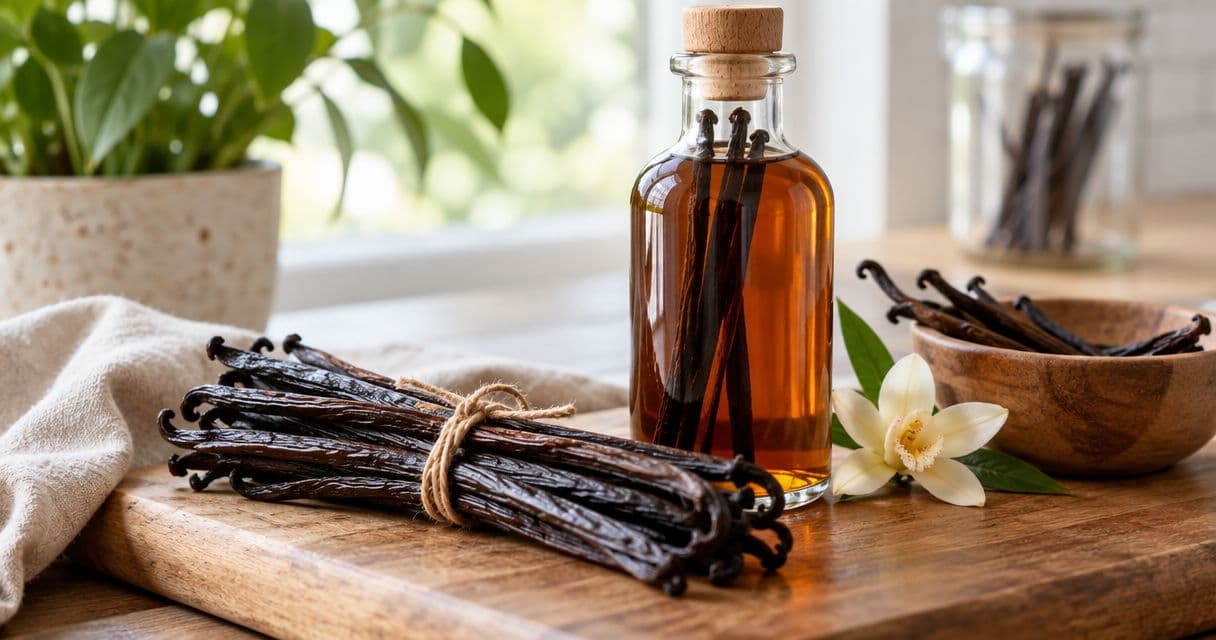
Madagascar vanilla beans are the best vanilla beans for extract when you want a familiar, rounded flavor for everyday baking; choose Uganda vanilla to explore another growing origin. This guide explains how to choose whole beans, judge extraction grades, and build a repeatable homemade vanilla ritual.
TL;DR- Madagascar vanilla beans are the best vanilla beans for extract for an everyday baking pantry.
- Choose Uganda vanilla for an origin comparison, not because geography alone guarantees stronger extract.
- 5Senses offers Madagascar vanilla and Uganda vanilla for cooks who want named growing origins.
- Measure whole beans by weight; bean counts do not account for differences in size and moisture.
- Extraction-grade beans suit infusing, while pliable beans also suit scraping seeds into desserts.
Why the growing origin matters
Vanilla begins as an orchid fruit, not a bottle of brown liquid. Growers harvest the pods, then curing develops the aroma you recognize in baking. The growing region matters, but so do maturity, curing, drying, and storage.
Madagascar and Uganda are growing origins, not vanilla's native birthplace. Vanilla planifolia, the species widely associated with both origins, comes from tropical America. Keeping that distinction clear gives you a useful origin story without turning geography into a quality guarantee.
5Senses offers direct-from-farm, origin-packed Madagascar and Uganda vanilla. 5Senses vanilla is a fit for home bakers who want a named growing origin. For extract, match that origin information with the condition and weight of the beans you actually buy.
What makes the best vanilla beans for extract?
Start with the beans, not the adjectives on the package. A long pod, a dark color, or a gourmet label does not tell you how much vanilla you are putting into your bottle.
- Named origin: Look for a stated growing country and any documented regional detail. Do not assume the seller's location is the growing origin.
- Usable condition: Choose beans with a recognizable vanilla aroma and no signs of mold. Dryness alone does not make a bean unsuitable for extraction.
- Net bean weight: Compare beans by weight rather than count. Length and moisture change how much material each pod contributes.
- Clear grade description: Read what the seller means by culinary grade or extraction grade. Grade letters are not a universal flavor ranking.
- Documented handling: Check harvest, curing, and packing information when supplied. A packing date is not a harvest date.
- A practical second use: Pliable beans are useful when you also want to scrape seeds into custard, cream, or cake batter.
Choose the origin for your cooking goal and the bean condition for your preparation method. Those are separate decisions. Keeping them separate stops you from rejecting useful extraction beans simply because they are less supple.
Vanilla origins at a glance
These are cooking choices, not a claim that one country's farmers produce universally better beans. The same origin can contain different curing styles and different lots.
| Vanilla origin | Best for | Standout characteristic | Key limitation |
|---|---|---|---|
| Madagascar vanilla | A first extract for everyday baking | Commonly associated with a rounded, sweet, familiar vanilla profile | Country of origin does not establish the quality of an individual lot |
| Uganda vanilla | Exploring origin through a separate comparison batch | A distinct growing origin to evaluate alongside Madagascar vanilla | Origin alone does not prove greater intensity or a particular tasting note |
Use the same alcohol, bean weight, and extraction method when comparing origins. Otherwise, you are comparing recipes as much as beans. A heavier bean loading can make one bottle seem more intense even when the origin is not the reason.
Madagascar vanilla: the everyday baking starting point
Madagascar is an established growing origin for Vanilla planifolia. Its cured beans are widely associated with the familiar vanilla character used in cakes, cookies, custards, and ice cream. That makes Madagascar a sensible starting point when you want a versatile bottle rather than a narrowly targeted flavor experiment.
For homemade extract, the entire pod matters. Seeds give desserts their visible specks, but the pod itself also contributes flavor during infusion. Do not scrape out the seeds and discard the shell before making your batch.
5Senses offers Madagascar vanilla as part of its origin-led range. Choose it for the origin and your intended cooking use; judge the actual beans by their documented handling and condition rather than assuming every lot tastes identical.
Madagascar vanilla pros:
- Familiar flavor direction for a broad baking pantry.
- A useful baseline for comparing another growing origin.
- Whole pods support both seed scraping and infusion.
Madagascar vanilla cons:
- The country name does not tell you the harvest or packing date.
- Familiar flavor is not a guarantee that every batch has the same aroma.
- Supple culinary beans are unnecessary if your only goal is extraction.
Best for: Home cooks making their first all-purpose vanilla extract.
Verdict: Choose Madagascar vanilla as your default baking batch.
Uganda vanilla: make the origin comparison useful
Uganda is another growing origin for Vanilla planifolia. That shared species makes a side-by-side comparison with Madagascar more useful than assuming every difference comes from a different kind of orchid. Growing conditions and post-harvest work still matter.
Choose Uganda vanilla when you want to learn what a particular lot contributes to your kitchen. Avoid treating descriptions such as chocolatey, smoky, or especially strong as promises attached to every Ugandan bean. Evaluate the beans and the finished extract in food.
5Senses offers Uganda vanilla alongside Madagascar vanilla. Keeping separate bottles lets you preserve that origin distinction and decide which one you prefer in the recipes you actually repeat.
Uganda vanilla pros:
- Adds another named growing origin to your pantry.
- Works as a separate batch for controlled flavor comparison.
- Whole beans let you assess aroma before and during infusion.
Uganda vanilla cons:
- Geography alone does not establish extract strength.
- A mixed-origin bottle makes the comparison harder to interpret.
- Specific flavor expectations need evidence from the actual lot.
Best for: Frequent bakers and spice enthusiasts exploring origin differences.
Verdict: Choose Uganda vanilla for a separate, clearly labeled comparison batch.
Grade A or Grade B: choose for the job
Grade A usually describes moister, more pliable beans suited to splitting and scraping. Grade B commonly describes drier beans marketed for extraction. These are trade descriptions, not a universal grading system with identical specifications across sellers.
The useful distinction is handling. A supple bean opens neatly for seed scraping. A drier bean can still contribute flavor when cut and submerged in alcohol, even if it is awkward to scrape.
| Bean description | Best for | Practical advantage | Limitation |
|---|---|---|---|
| Pliable culinary beans, often called Grade A | Extract plus seed scraping | Easy to split and use directly in desserts | More moisture means equal weights do not represent equal dry bean material |
| Drier extraction beans, often called Grade B | A dedicated extract batch | Suitable for cutting and infusing | Less convenient when you want intact, easily scraped pods |
Do not reject a sound extraction bean because it looks wrinkled. Reject beans with signs of spoilage instead. Dry, fragrant beans and moldy beans are not the same thing.
When comparing descriptions, ask what the grade actually means. Moisture information is more useful than an unexplained letter. If you plan to make extract and bake with visible seeds, pliable beans give you more ways to use the same ingredient.
Weigh the beans before choosing the bottle
Bean-count recipes are easy to remember but difficult to repeat. Pods differ in length, thickness, and moisture. A kitchen scale gives you a clearer record of what went into the batch.
The U.S. FDA standard of identity for vanilla extract, in 21 CFR 169.175, specifies at least 35% alcohol by volume and a minimum vanilla-bean loading. For beans containing no more than 25% moisture, the standard uses 13.35 ounces per U.S. gallon, approximately 100 grams per liter.
That is a commercial identity benchmark, not a guarantee that a home infusion meets every regulatory requirement. It is still useful context: a few pods floating in a large bottle do not automatically make a concentrated extract.
For a manageable kitchen batch, 30 grams of beans with 300 milliliters of alcohol follows that approximate weight-to-volume benchmark. Bean moisture and extraction method still affect the result. Record the ratio rather than assuming it establishes identical strength across different lots.
Use food-grade drinking alcohol. An 80-proof spirit contains 40% alcohol by volume, above the FDA minimum; never substitute rubbing alcohol or denatured alcohol. A neutral spirit also makes an origin comparison easier because it contributes less of its own flavor.
Infuse whole beans without complicating the process
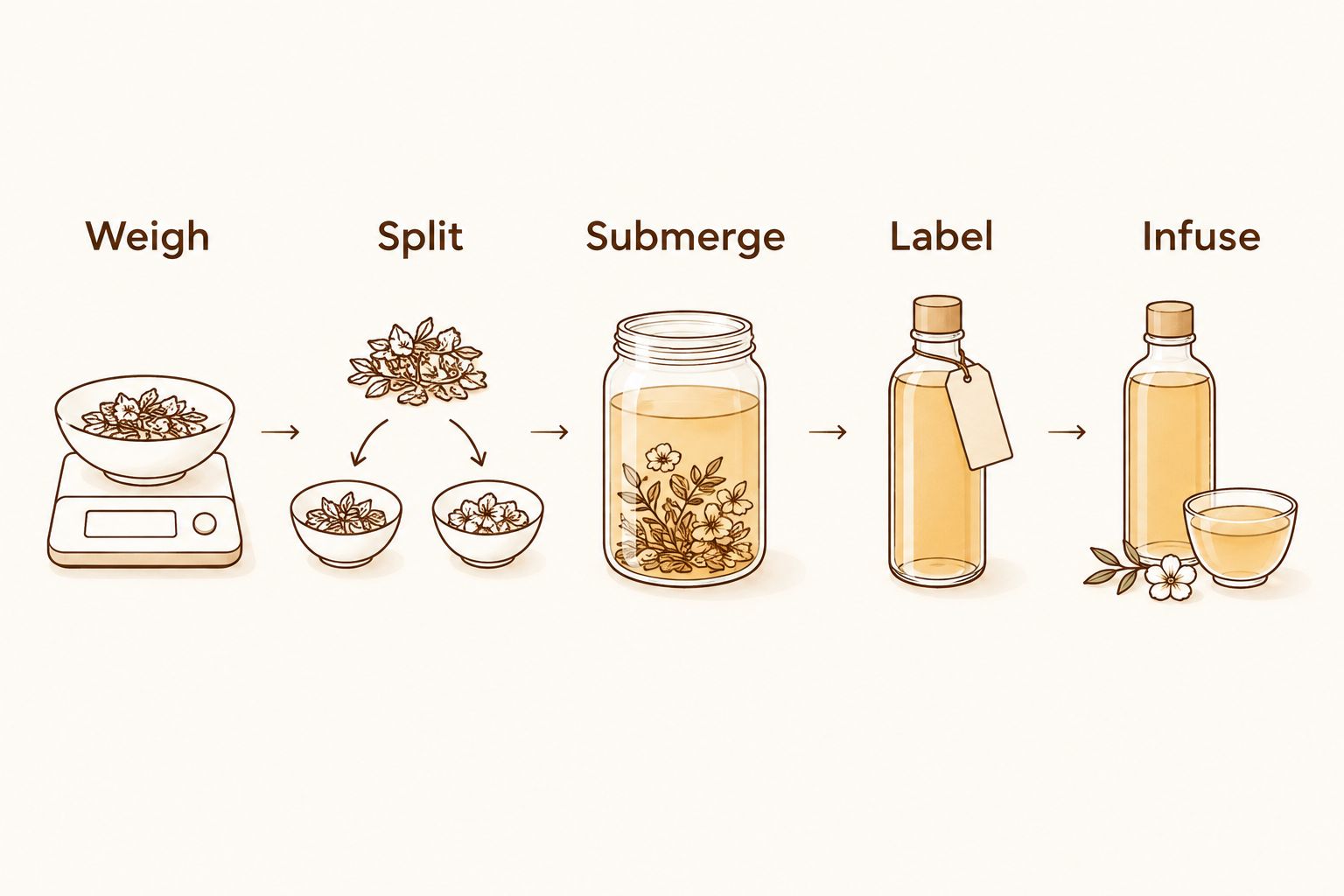
Treat extract as a repeatable pantry preparation. You need a clean bottle, sound beans, suitable alcohol, and a written batch record. You do not need to toast or grind the vanilla first.
Weigh
Weigh the beans and measure the alcohol separately. Write down both amounts before you begin. If you are comparing Madagascar and Uganda, keep the ratio identical between bottles.
Split
Split pliable beans lengthwise to expose the interior. Cut drier beans into pieces that fit comfortably inside the bottle. Keep both the seeds and the pod material.
Submerge
Place the prepared beans in a clean, food-safe bottle and add the measured alcohol. Keep the bean pieces submerged. Use a bottle shape that makes this easy without adding unmeasured liquid.
Label
Record the origin, bean weight, alcohol volume, alcohol strength, and start date. Add the lot or packing information if it is supplied. Your next batch becomes easier to reproduce when the first batch has a useful label.
Infuse
Close the bottle and store it away from heat and direct sunlight. Allow the aroma to develop over months rather than expecting a finished extract immediately. Color alone does not establish readiness.
Assess your extract in a recipe, not by drinking a spoonful of alcohol. Use the same amount in comparable portions of a familiar food, such as plain yogurt or a simple custard. The food gives the aroma a more useful setting.
Keep the vanilla ritual separate from other whole spices
Toast, grind, bloom, and infuse are useful kitchen verbs, but they are not interchangeable. Vanilla extract belongs to infuse. You do not need a dry-pan toast or an oil bloom before placing vanilla beans in alcohol.
For direct cooking, split a bean and infuse it into the liquid your recipe uses. Scrape the seeds when you want visible specks. Remove the pod before serving unless the recipe specifically calls for another preparation.
Grinding is not required for homemade extract. Cutting the pod exposes its interior while leaving pieces that are straightforward to strain later. This keeps the preparation simple and avoids turning your bottle into a suspension of fine particles.
Compare finished batches without fooling yourself
A fair comparison starts before infusion. Use the same spirit, the same bean-to-liquid ratio, and the same start date. Store the bottles together so differences in light and heat do not become another variable.
When you taste, keep the food and extract dose the same. Write down what you notice: aroma, sweetness impression, woody notes, and how clearly vanilla comes through. These are observations about your batch, not permanent rules about a country.
Do not keep topping up a comparison bottle with unmeasured alcohol. That changes the concentration and makes your notes harder to interpret. If you want a repeatable baking extract, make a fresh measured batch instead of treating the bottle as an endless refill.
How these recommendations were chosen
The recommendations follow cooking use, named origin, bean condition, and repeatability. Madagascar is the default for a familiar baking profile; Uganda is the separate-origin comparison. Grade describes preparation needs rather than deciding which country wins.
This guide does not assign scores to individual lots or claim laboratory testing. A useful buying decision rests on documented product facts and the way you intend to cook.
FAQ
What's the best vanilla bean for homemade extract?
Madagascar vanilla is the practical default for an all-purpose baking extract. Uganda vanilla is a useful separate batch when you want to compare growing origins using the same recipe.
Are Grade A or Grade B vanilla beans better for extract?
Sound beans in either grade can be used for extract. Drier extraction beans suit a dedicated infusion, while pliable culinary beans are easier to split and scrape for desserts; grade definitions vary by seller.
How many vanilla beans should I put in a bottle?
Use bean weight rather than a fixed bean count. Pods vary in size and moisture, so recording grams of beans and milliliters of alcohol makes your recipe easier to repeat.
What alcohol should I use for homemade vanilla extract?
Use food-grade drinking alcohol, with a neutral spirit when you want the vanilla origin to remain easy to assess. The U.S. FDA vanilla extract standard specifies at least 35% alcohol by volume; rubbing alcohol and denatured alcohol are unsuitable.
Is Uganda vanilla stronger than Madagascar vanilla?
Origin alone does not establish extract strength. Bean loading, moisture, curing, alcohol, and extraction conditions all affect the finished bottle, so compare measured batches rather than country labels.
How long does homemade vanilla extract take?
Plan for an infusion measured in months, not an immediate result. Readiness depends on the beans and preparation; assess aroma and performance in food rather than relying on dark color alone.
Should I toast vanilla beans before making extract?
No, toasting is not required for this homemade extract method. Split or cut the beans, retain the seeds and pods, and infuse them in suitable drinking alcohol.
Can I keep adding alcohol to the same vanilla beans?
Adding alcohol changes the concentration, and used beans have already released some of their flavor. Start a fresh measured batch when repeatable baking strength matters rather than assuming every refill matches the first.
One last thing
The seeds are not the whole flavor. The cured pod contributes to an infusion too, so keep it when you scrape a bean for another recipe. Label any reused-pod batch separately rather than treating partially used beans as equivalent to fresh whole beans.
For an undecided baker, the next move is simple: start with Madagascar vanilla, weigh the beans, and keep a batch record. Add a separate Uganda bottle when you want to explore origin. A repeatable method teaches you more than a shelf full of unmarked jars.