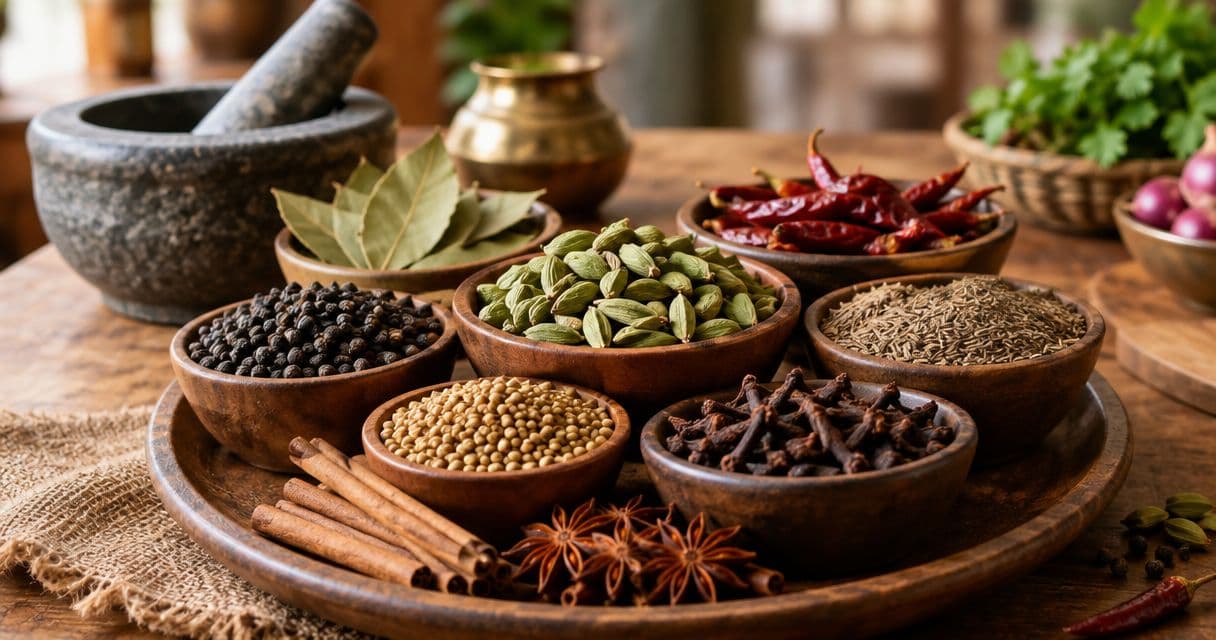
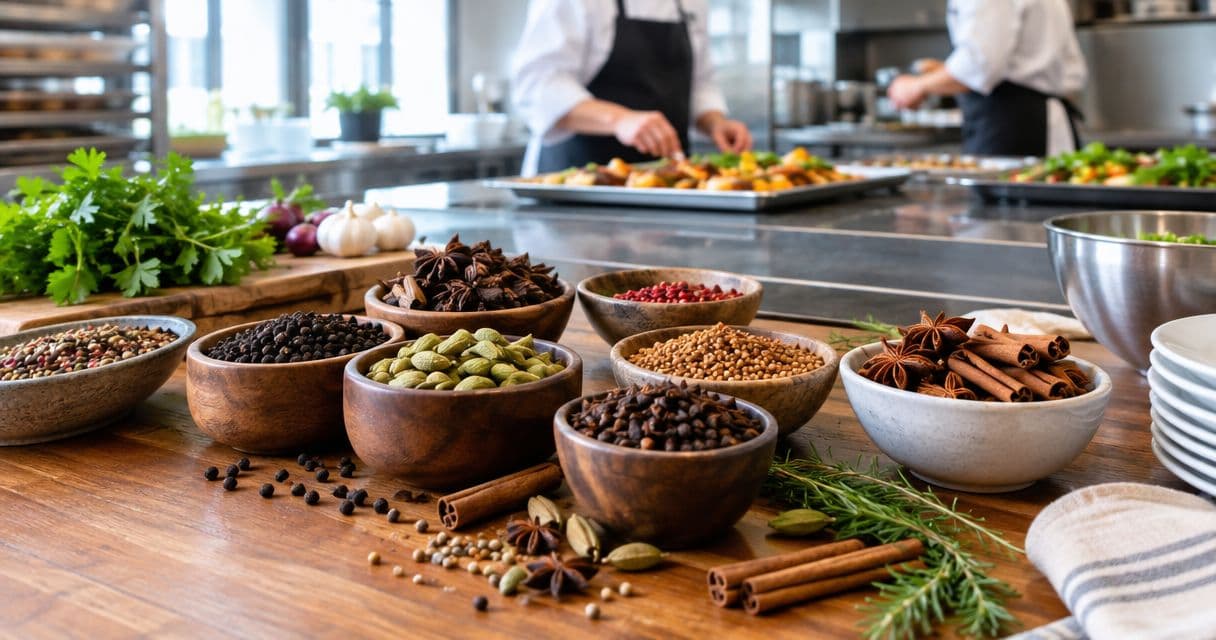
Why Specialty Retailers Are Choosing 5Senses Whole Spices
Discover 5Senses wholesale whole spices: named origins, origin packing, clean-label credentials and Spicecare tools for specialty retail shelves.
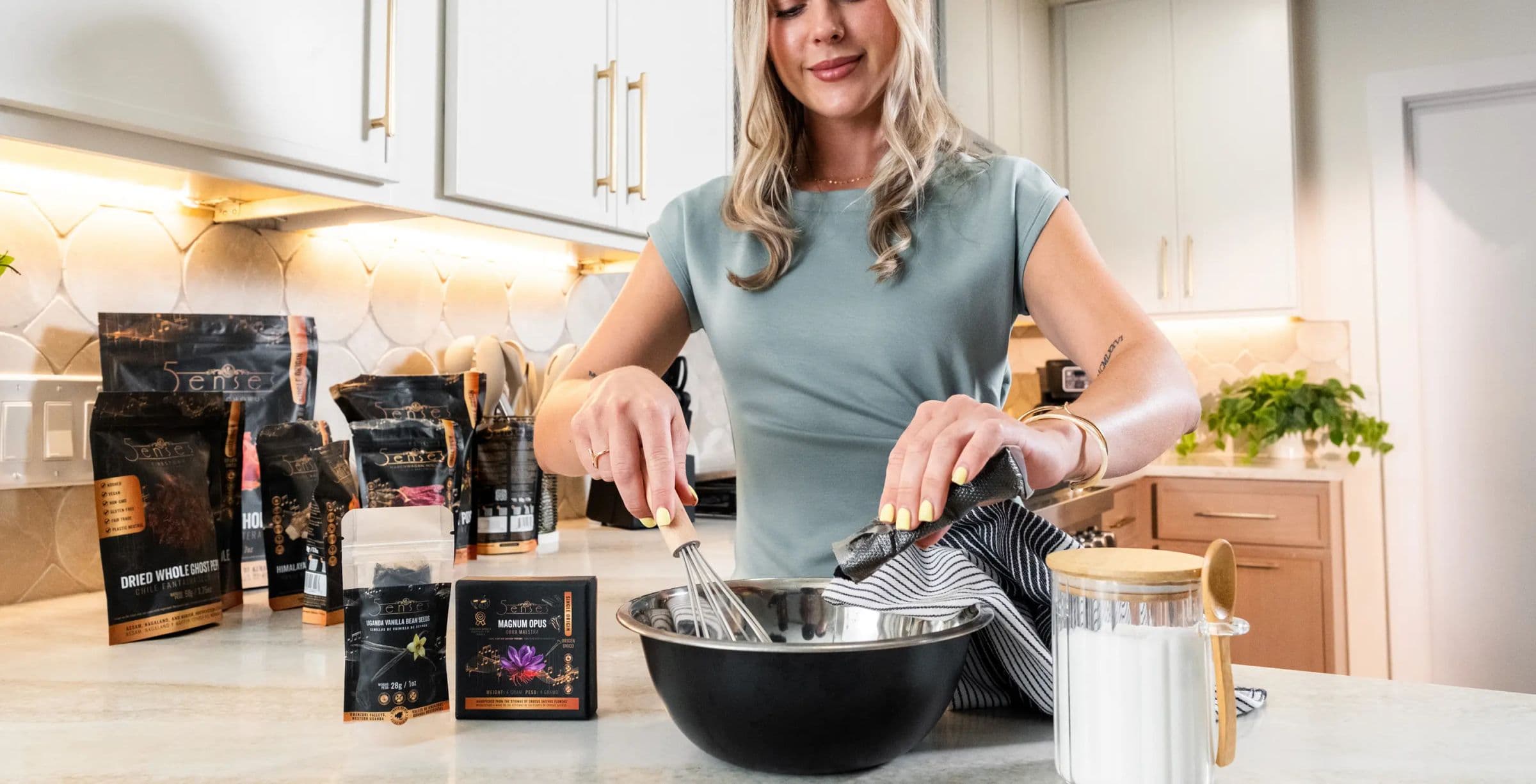
Your shoppers can buy ordinary spices anywhere. They come to you for something with a little more character: a named origin, an aroma worth pausing over, and a story your staff can tell. 5Senses wholesale whole spices bring those details together with origin packing, exotic vanilla, and a complete approach to preparing and preserving flavor.
TL;DR- 5Senses wholesale whole spices suit specialty retailers selling provenance, flavor, and practical cooking experiences.
- Estate partnerships, named growing regions, and origin packing give staff concrete product stories.
- Spicecare tools and curated sets connect everyday cooking with add-on and gifting opportunities.
- Order through Faire or contact the wholesale team for larger volumes and custom assortments.
The spice aisle has a sameness problem
When the conversation begins and ends with an ingredient name and a price, an independent store has little room to show what makes it different. Your advantage is a more considered selection—and the knowledge to explain it.
A customer does not need another vague promise of quality. They need to know what makes this cardamom worth trying, where this vanilla comes from, and how to use the whole spice when they get home.
That is the approach behind the 5Senses wholesale range: whole ingredients, named origins, and packing close to the source. The brand's promise, Experience Culinary Symphony, connects sourcing with the small cooking rituals that bring an ingredient to life.
5Senses gives specialty retailers a spice story they can explain at the shelf and customers can explore in the kitchen.
Six reasons to make room for the range
1. Estate heritage, not anonymous sourcing
Green cardamom, whole nutmeg, and mace are connected to a spice estate operated by the brand's partners for decades. Those relationships put grower knowledge, harvests, and handling at the beginning of the product story.
For your team, that creates a more useful conversation than a country name alone. It gives the ingredient context: people who understand the crop, a place associated with it, and a sourcing relationship behind the pack.
Keep that story attached to the products it describes. Estate heritage is not a claim that the brand owns the farms, nor does it make every item in the catalogue single-origin.
2. Named origins customers can remember
The sourcing map gives your shelf distinct points of interest: cloves and bay leaves from Kanyakumari in southern India; white pepper sourced across the Malabar coast; star anise from Vietnam; and Madagascar vanilla from Ampanefena in the SAVA region.
These are places, not interchangeable adjectives. A customer can remember them, ask about them, and connect them with a particular ingredient.
The catalogue distinguishes Single Origin products from Multi-Origin Reserve products. Preserve that distinction when presenting Malabar White Pepper Whole and other Reserve items; named sourcing regions do not automatically mean a single-origin designation.
Malabar Cardamom Green Pods, Malabar Melody, provide a clear example of a product-led origin story. The gently air-dried pods have sweet, floral, and citrus notes, with hints of pine, eucalyptus, and menthol. For a shopper, that becomes a practical invitation: try cardamom in coffee, baking, or a savory rice dish.
3. Whole spices, packed at origin
Origin packing links the sourcing story with how the ingredient is handled before it reaches your store. Suppliers vacuum-pack at source and pack spices into the brand's retail packaging before shipping, with the final format suited to the individual product.
Whole spices also let customers choose when to crack, toast, grind, or infuse them. That is part of the experience—not just a different shape of the same pantry product.
Packaging plays its own role. Resealable, high-barrier pouches help protect suitable products from air, light, and moisture; Madagascar vanilla caviar uses a vacuum-sealed pouch, while Kashmir Mongra Saffron is presented in a tin.
The honest selling point is careful handling and practical preservation, not a promise that every spice will smell unchanged months later. Give customers simple storage advice and a preparation method they will actually use.
4. Clean-label credentials with product-specific detail
Most of the range carries Non-GMO, kosher, gluten-free, vegan, and Fairtrade certifications. The brand is also Certified Plastic Neutral through rePurpose, and spices undergo random pesticide laboratory testing at origin.
Those credentials answer different questions. Dietary and sourcing certifications relate to the applicable products; Plastic Neutral certification concerns the brand's plastic footprint; random pesticide testing is a testing practice, not a claim that every batch has been individually tested.
For a retailer, precision builds confidence. Request the current product-specific documentation your store needs, and keep shelf descriptions aligned with the certification scope for each item.
A clear, accurate claim is stronger than a longer list of badges applied to everything.
5. A complete kitchen story with Spicecare
Whole spices make more sense when customers understand what to do with them. Spicecare is the brand's own line of tools for storing, preserving, and grinding, including pepper mills and a handcrafted mortar and pestle.
That gives you a natural connection between the ingredient aisle and kitchen tools. A pepper recommendation can lead into a suitable mill; a customer curious about fresh grinding can see how a mortar and pestle fits into their cooking.
It is an add-on opportunity with a purpose. Demonstrate the preparation, match the tool to the task, and help the customer choose something they will use rather than simply adding another item to the basket.
Whole spices require some preparation. For customers who want only ready-ground convenience, be upfront about that difference. For customers who enjoy cooking, it is a ritual worth showing.
6. Presentation that works beyond the pantry shelf
Black-and-gold packaging, clean typography, and the signature musical motif give the range a recognisable presentation. It supports a considered food display without asking every product to rely on a separate decorative treatment.
Curated sets extend the story into gifting. The Baker's Spice Box, The Chai Ritual, The Biryani Spice Pack, and The Curry Starter organise ingredients around something the recipient can make.
That is an easier proposition than an unexplained collection of spices. You are offering a baking occasion, a chai ritual, or a meal to explore—not simply more packs.
See the packaging your customers will take home
The actual product packs show how the sourcing and preparation stories carry through to the shelf.
Explore the 5Senses retail presentation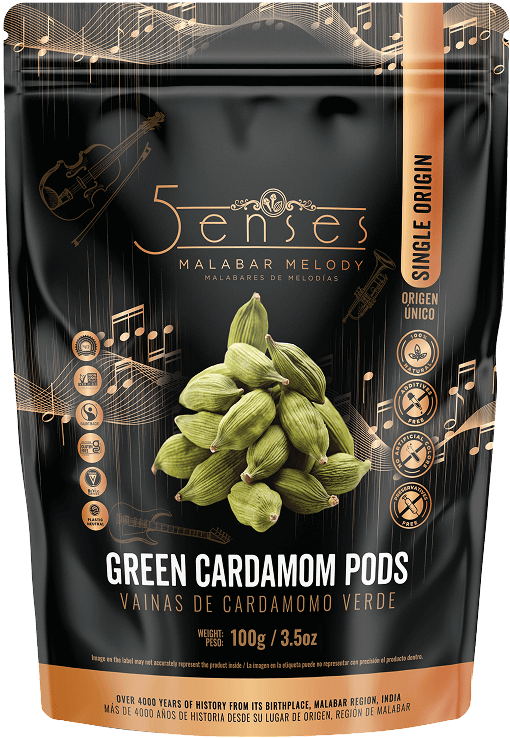 Malabar Cardamom Green PodsMalabar-origin whole pods, gently air-dried, with sweet, floral and citrus notes.
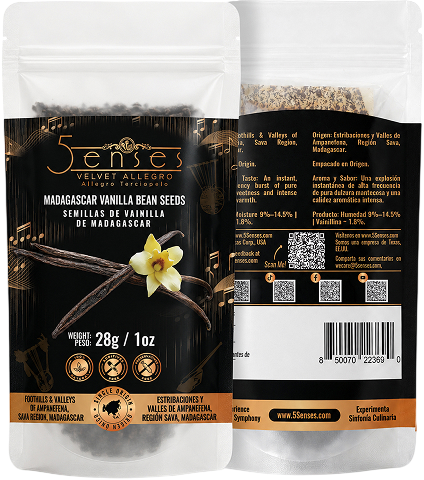 Madagascar Vanilla Bean Seeds (Caviar)Hand-scraped at source in Ampanefena, Madagascar, and presented in a vacuum-sealed pouch.
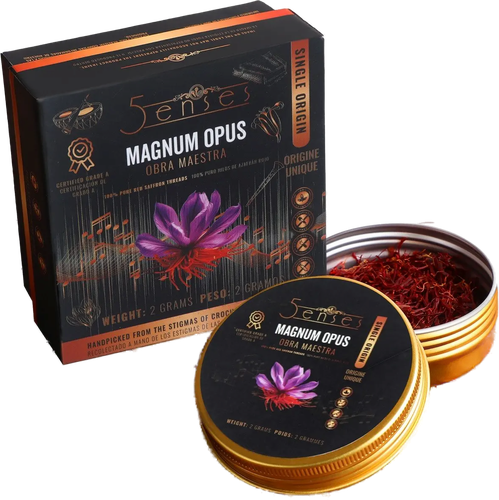 Kashmir Mongra SaffronNaturally sun-dried saffron from Pampore, Kashmir, presented in a protective tin.
Proven with shoppers before it reaches your shelf
A thoughtful product story matters. So does knowing that people already buy the brand.
The range reaches home cooks across North America through its own store and major retail marketplaces. The brand's shopper and retailer experience adds several reasons to take a closer look:
- Marketplace presence: products are sold on Amazon, Walmart, and Target Plus, with customer ratings and reviews across the range.
- Repeat purchasing: according to the brand's own store figures supplied for this article, about 75% of its direct-store customers come back to buy again, as reported in November 2026. That describes its own customers, not a forecast of repeat purchasing in your store.
- Independent retail growth: since launching on Faire, the brand has been adding independent grocers, gourmet shops, butcher and BBQ shops, and specialty retailers across the US and Canada.
- Cross-border fulfilment: US and Canadian warehousing supports the brand's service to buyers on both sides of the border. Confirm delivery arrangements for your destination when ordering.
Thousands of customers have bought the range through major US retail platforms. That experience gives a prospective stockist a starting point for evaluation; it does not replace your own assessment of fit, buying terms, or likely demand.
What the range can do for your store
Premium whole spices give you room to sell on more than the lowest price. Their commercial role is to create a distinctive selection, open useful food conversations, and support complementary purchases.
The opportunity differs by business. Build around the customers you already serve.
| Store type | Where the range earns its place | Best for |
|---|---|---|
| Independent and specialty grocers | A named-origin spice selection with clear cooking uses | Everyday pantry discovery and replenishment |
| Gourmet and gift shops | Curated spice sets and Spicecare tools displayed by occasion | Food gifting and ingredient-led presents |
| Butcher and BBQ shops | Whole peppers, chilies, and spices presented alongside meat | Rub ingredients and counter recommendations |
| Restaurants and cafes | Origin-led kitchen ingredients, with retail packs for the counter | Menu development and take-home discovery |
| Bakeries | Green cardamom, nutmeg, mace, cloves, and Madagascar vanilla | Baking ingredients and The Baker's Spice Box |
These are merchandising opportunities, not guaranteed increases in basket size or repeat sales. The strongest assortment is one your team can explain and your customers have a reason to use.
Start with the best sellers, then add an occasion
The brand identifies green cardamom, white pepper, turmeric, ghost pepper, bay leaves, and saffron as best sellers. Use that list as a starting conversation with the wholesale team, then choose the mix that fits your shoppers.
Add one curated set for gifting and one suitable Spicecare tool near the register or alongside the relevant ingredients. That connects everyday cooking, discovery, and gifting without making the opening selection unnecessarily broad.
Keep product designations accurate: Dried Whole Ghost Pepper and Malabar White Pepper Whole belong to the Multi-Origin Reserve range, not the Single Origin category.
A bakery-led business can give vanilla more space. Madagascar Vanilla Bean Seeds (Caviar) is hand-scraped at source with pod husks removed, providing a seed format without asking the customer to scrape whole pods. Its rich, creamy profile gives staff a clear route into custards and baking; recipe quantities still need to suit the format.
Make the recommendation easy to repeat
Give staff a short sequence rather than a long script:
- Name the ingredient and its verified source.
- Describe one flavor note.
- Suggest one familiar dish or drink.
- Explain the preparation and storage.
For Kashmir Mongra Saffron, that means Pampore, naturally sun-dried threads, floral and honeyed notes, and a suitable rice or dessert recipe. For cardamom, it can mean a gently cracked pod and a familiar coffee ritual.
A customer who knows what to cook has a reason to open the pack. Give them a second use as well, and the ingredient has a better chance of becoming part of their pantry routine.
Bring 5Senses to your shelves
Faire is the straightforward starting route for independent retailers. Search for the brand, review the current assortment, and check the order minimums and buyer terms shown for your account before committing.
Canadian retailers can use the dedicated 5Senses Canada store on Faire. Confirm that you are ordering through the appropriate storefront and review the terms for your destination.
For larger volumes, distributor partnerships, restaurant supply, or a custom assortment, contact the wholesale team directly:
Email: wholesale@5Senses.com
Website: 5Senses.com
Tell the team what kind of business you run, who you sell to, and which ingredients you want to start with. Ask for the current pack and case formats, buying terms, delivery information, and any product-specific documents your business requires.
Start with an assortment your team can sell with confidence. Build from the products your customers return for.
FAQ
Why should a specialty retailer stock 5Senses whole spices?
5Senses combines named sourcing regions, origin packing, whole-spice preparation, and a recognisable retail presentation. It suits stores that sell through ingredient knowledge and practical cooking recommendations rather than price alone.
Can independent retailers order through Faire?
Yes. Faire is a retail ordering route for the brand, with a dedicated 5Senses Canada storefront for Canadian retailers. Check the current minimums, buyer terms, and destination information for your account.
Which products should I consider for an opening assortment?
The brand identifies green cardamom, white pepper, turmeric, ghost pepper, bay leaves, and saffron as best sellers. Select the products that fit your shoppers, then consider one curated gifting set and a suitable Spicecare tool.
Are all 5Senses spices single-origin?
No. The catalogue distinguishes Single Origin products from Multi-Origin Reserve products. Use each item's actual designation rather than extending a single-origin claim across the whole range.
Do all products carry every certification?
No. The brand states that most of its range carries Non-GMO, kosher, gluten-free, vegan, and Fairtrade certifications. Request current documentation for the specific items you intend to stock.
What does Spicecare add to a retail assortment?
Spicecare connects whole spices with storage, preservation, and grinding tools, including pepper mills and a handcrafted mortar and pestle. Match the tool to the ingredient and demonstrate its use to make the add-on useful.
How do I discuss a larger order or distributor partnership?
Contact wholesale@5Senses.com or call +1 682 360 3322. Describe your business, intended products, destination, and volume so the wholesale team can discuss a suitable assortment and current terms.
Give your shelf a reason to be remembered
Your customers are looking for ingredients worth talking about—and a good reason to use them tonight. Give them a named origin, a clear flavor story, and a preparation they can picture.
That is where a specialty store earns its place: not by offering more of the same, but by making the choice more meaningful.
5Senses — Experience Culinary Symphony.