How to make garam masala from whole spices
Learn how to make garam masala from whole spices: toast gently, cool fully, and grind. Get a starting recipe, clear roasting cues, and storage tips.
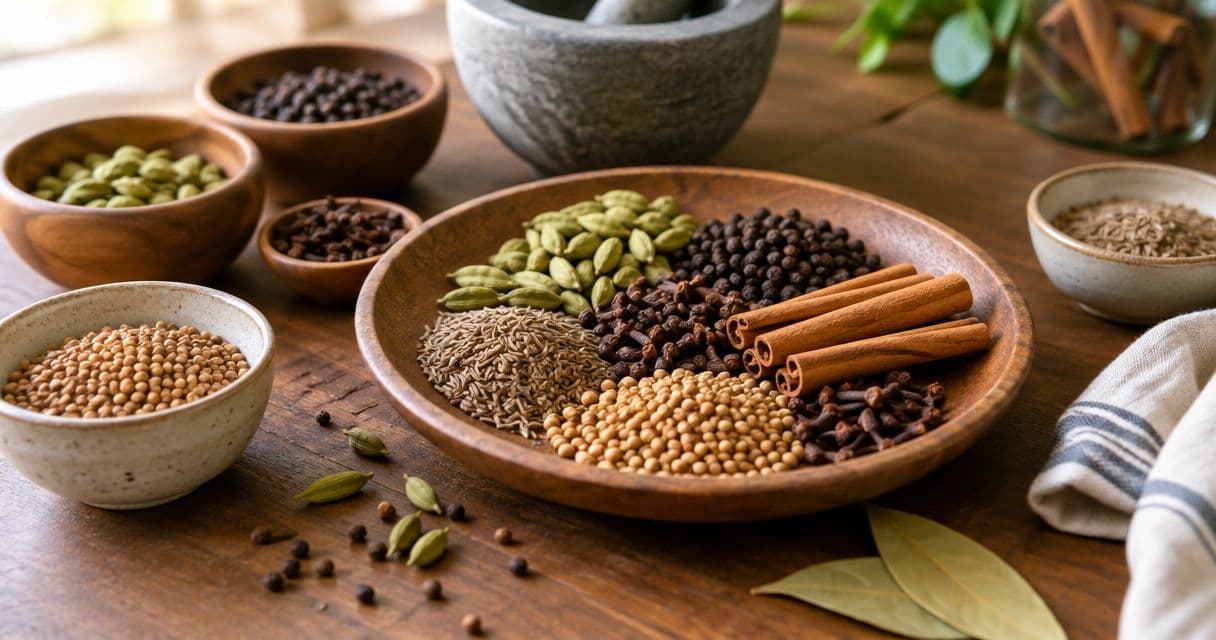
Instead of guessing with a jar of mixed powder, make garam masala from whole spices by measuring, gently toasting, cooling, and grinding a small batch. This workflow gives you a coriander-led starting blend, clear roasting cues, and a way to adjust the next batch without losing track of what changed.
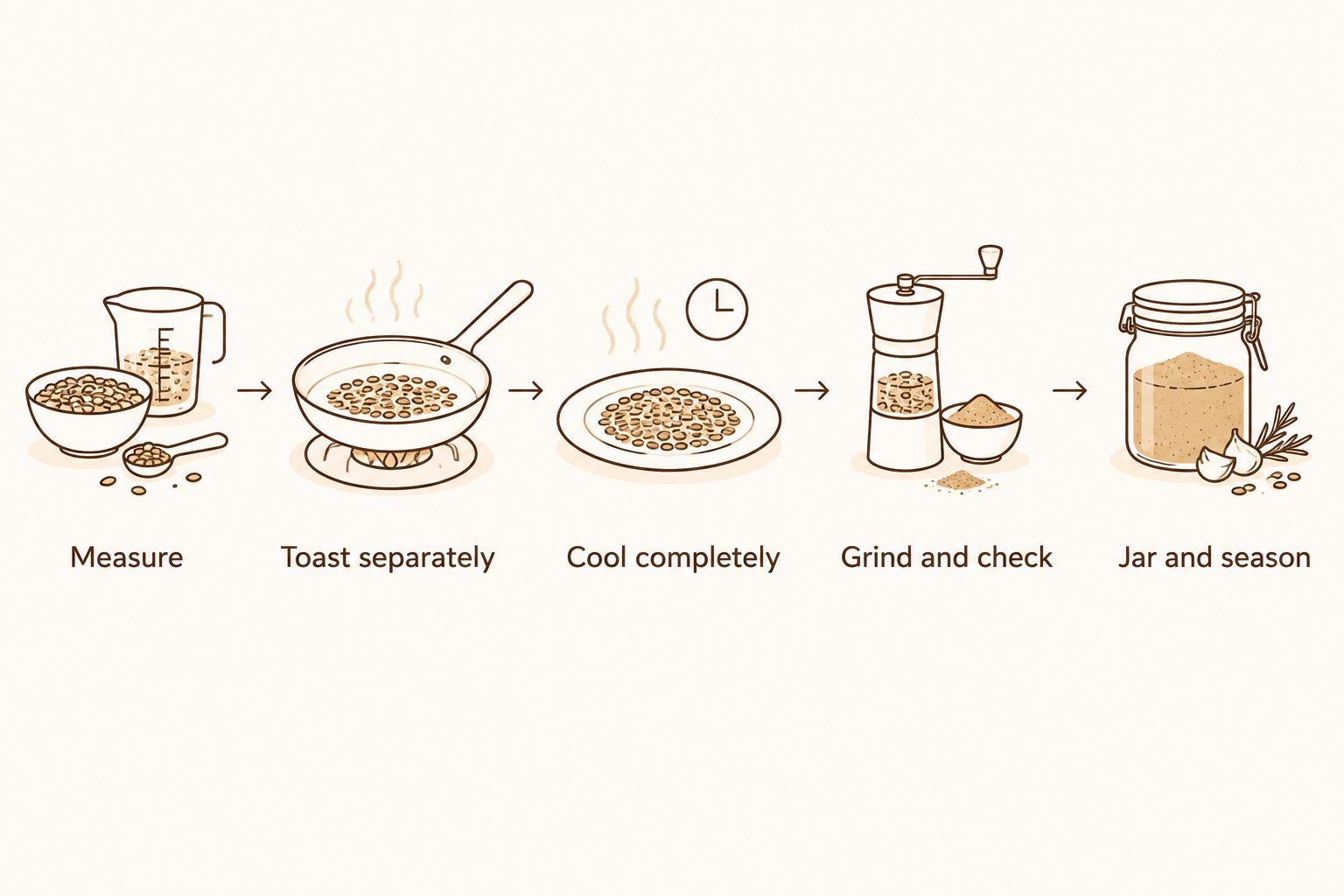
TL;DR- Learn how to make garam masala from whole spices: measure, toast separately, cool completely, then grind.
- 5Senses whole coriander suits home cooks building a citrus-floral base for homemade garam masala.
- Use green cardamom seeds without their husks for a smoother powder.
- Stop toasting when the spices smell fragrant; smoke means the heat is too high.
- Keep the finished blend airtight, away from steam, heat, and direct light.
Why this matters
Garam masala is a family of aromatic spice blends, not a single fixed recipe. Household and regional versions differ, so this recipe is a practical starting point rather than a claim to one authentic formula.
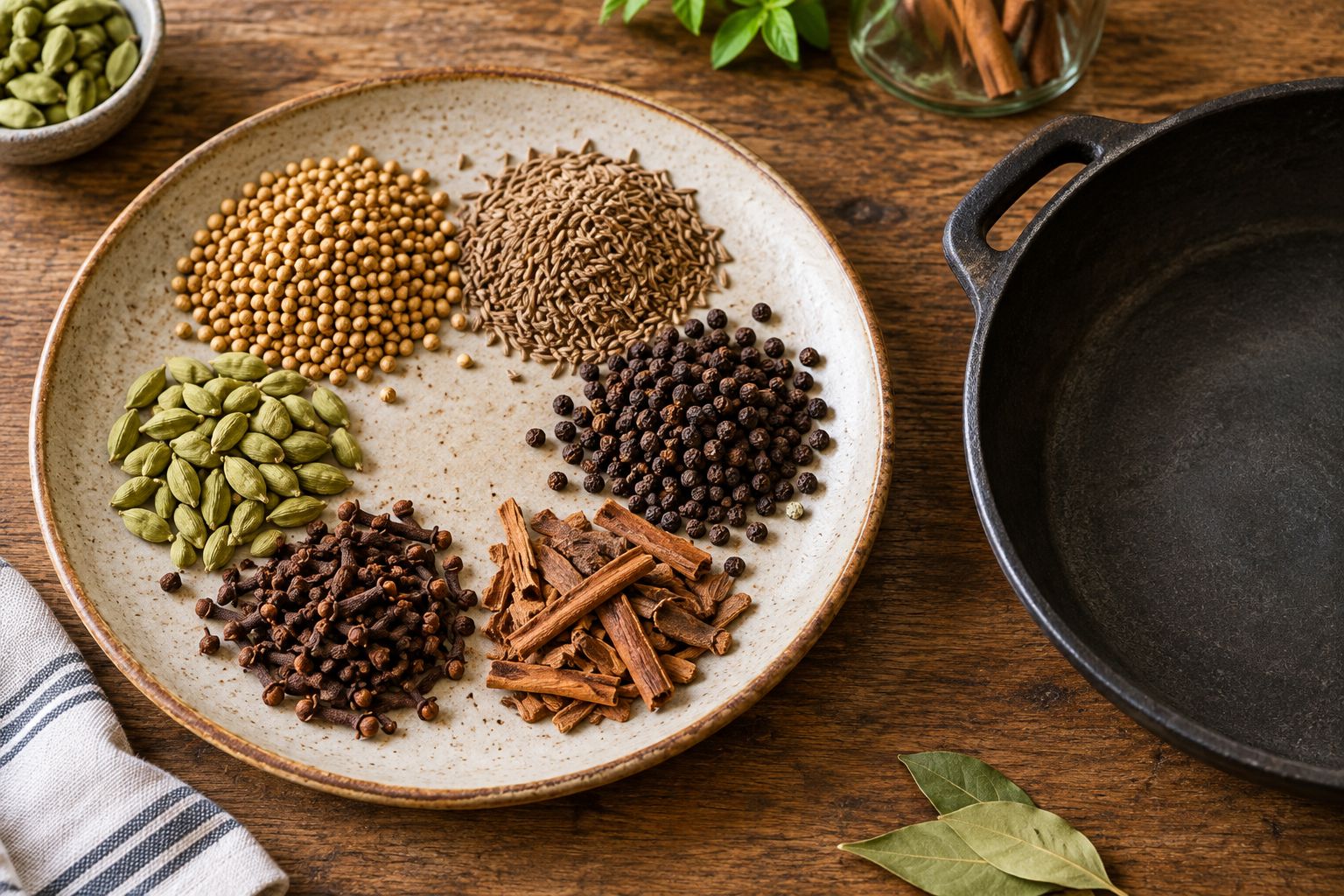
Making the blend yourself lets you control the balance. Coriander brings a citrusy base, cumin adds earthiness, and cardamom, cinnamon, and cloves supply sweeter aromatic notes. Black pepper adds pungency without requiring chili.
5Senses whole spices are best for home cooks who want named-origin ingredients and control over their own blends. The trade-off is preparation: whole spices need sorting, toasting, and grinding before they become a spoonable powder. Choose your equipment before heating the pan; the guide to spice grinders for whole spices covers that part of the workflow.
Before you start
- Gather dry equipment: a heavy skillet, separate bowls, a cool plate, measuring spoons, a spice grinder or mortar and pestle, and a clean airtight jar. Use a fine grater if adding nutmeg.
- Prepare the ingredients first: measure everything before turning on the heat. Crack green cardamom pods and reserve the seeds; break cinnamon into pieces suitable for your grinder.
- Avoid the hidden snag: hot spices must cool before grinding and sealing. Trapped warmth can cause condensation, while leftover moisture in a washed grinder encourages clumping. Start with completely dry equipment.
Your starting blend
Measure the whole spices
This coriander-led recipe is a suggested kitchen formula. Make it once as written, then change a single ingredient in the next batch so you can identify the difference.
| Ingredient | Starting amount | Best for | Contribution | Trade-off |
|---|---|---|---|---|
| Whole coriander | 2 tablespoons | A rounded base | Citrus-floral, woody-nutty notes | A larger proportion makes the blend less focused on sweeter aromatics |
| Cumin seeds | 1 tablespoon | Earthy depth | Savory, earthy character | Too much can dominate the cardamom |
| Whole black peppercorns | 1 teaspoon | Peppery warmth | Pungency and woody aroma | Increase cautiously if you want a gentler blend |
| Green cardamom seeds | 1/2 teaspoon, measured after removing husks | Sweet aromatic lift | Bright, fragrant notes | Husk fragments make the powder more fibrous |
| Broken cinnamon bark | 1 teaspoon, loosely filled | Rounded sweetness | Warm, sweet aroma | Pieces vary in size, so spoon measurements are approximate |
| Whole cloves | 4 cloves | Concentrated aromatic depth | Sweet, penetrating spice | A small change can strongly affect the balance |
| Freshly grated nutmeg | 1/8 teaspoon | A warm finish | Sweet, woody notes | Add after toasting rather than treating it like a whole seed |
Measure the coriander and cumin into separate bowls. Keep the other whole spices separate too; their different sizes make a single-pan, all-at-once roast harder to control.
For the coriander base, 5Senses Whole Coriander is designated Double Parrot Grade A (Hadoti Bloom) and sourced from Kota in Rajasthan’s Hadoti region, India. Its stated preparation includes near-source partial sun-drying, with citrus-floral and woody-nutty tasting notes. Growing place identifies the source; partial sun-drying describes processing, not a soil-to-flavor guarantee.
Double Parrot Grade A is the product’s stated commercial grade, not an independently certified universal standard or proof of measured oil content. The Hadoti coriander origin story provides the relevant background for this ingredient.
Expected result: every ingredient is measured, the cardamom husks are removed, and the nutmeg remains separate from the spices going into the skillet.
Your roasting setup
Toast separately
- Start with a dry skillet over low heat. Do not add oil for this dry powder workflow. Set the cool plate beside the stove before adding spices.
- Toast the coriander first. Stir or shake the pan continuously. Smell for a clearer, warmer coriander aroma; do not wait for a dark brown color.
- Transfer the coriander immediately. Spread it on the cool plate instead of leaving it in the hot skillet.
- Repeat with cumin, peppercorns, cinnamon, and cloves separately. Reduce the heat or briefly lift the pan if the next ingredient colors too quickly.
- Warm the cardamom seeds last and gently. Stop when their aroma becomes clear. Keep the grated nutmeg out of the pan.
Use aroma and appearance, not a fixed roasting time. Pan thickness, burner output, ingredient size, and batch depth change how quickly spices toast. A recipe clock cannot compensate for a skillet that is too hot.
You want fragrance, not smoke. Coriander and cumin can deepen slightly in color, but blackened patches, an acrid smell, or visible smoke signal that the roast has gone too far. Discard scorched spices rather than blending bitterness into the whole batch.
Expected result: the spices smell fragrant and remain free of charred patches. Nothing is still sitting in the hot pan.
Cool completely
Spread the toasted spices in a shallow layer and leave them uncovered until they reach room temperature. Keep the plate away from cooking steam, and do not use the storage jar as a cooling vessel.
Touch the underside of the plate and check that the spices themselves no longer feel warm before proceeding. This pause also gives you a chance to smell each ingredient separately and catch a scorched batch before mixing.
Your grinding setup
Grind and check
- Check the grinder’s instructions. Confirm that it is intended for dry spices and can handle the cinnamon pieces you prepared. Never force hard bark into equipment that excludes it.
- Combine the cooled spices. Add the measured grated nutmeg now. Work in smaller batches if the grinder cannot circulate the mixture freely.
- Grind in short bursts. Pause between bursts and follow the appliance’s operating limits. With a mortar and pestle, crush the larger pieces first, then grind with firm circular movements.
- Let the dust settle before opening. Keep your face away from the lid when you remove it.
- Check the texture. Rub a small pinch between your fingers. If it feels gritty, sift the blend and regrind the coarse pieces.
Do not keep grinding an increasingly hot bowl just to chase a perfectly fine texture. Stop, let the equipment cool, and resume only within its operating instructions.
For a mortar-ground blend, expect more texture and more hands-on work. An electric spice grinder is the practical choice for a finer powder; a mortar gives direct control over a small batch but requires more effort with cinnamon and peppercorns.
Expected result: a dry, evenly mixed powder without obvious cardamom husks or large cinnamon fragments.
Your storage and cooking setup
Jar and season
- Check that the powder is cool. Grinding can warm the mixture even when you started with cooled spices.
- Transfer it to a clean, dry airtight jar. Use a dry spoon or funnel. Keep the jar away from the steam rising from dinner.
- Label the blend. Record the ingredients, preparation date, and any adjustment, such as extra pepper or less clove.
- Store it in a cool, dark cupboard. Do not leave the jar beside the stove for convenience.
- Test it in a familiar dish. As a starting trial, stir 1/4 teaspoon into 1 cup of hot cooked lentils near the end of cooking, let it disperse, then taste before adding more.
That trial amount is a seasoning suggestion, not a universal serving rule. A tomato-rich curry, a creamy sauce, and plain lentils carry spices differently. Follow a specific recipe when one supplies its own amount and timing.
Expected result: the blend pours freely, the jar has no visible condensation, and your first tasting tells you whether the balance needs changing.
The complete workflow is simple enough to repeat whenever your pantry needs a fresh batch. Keep the order consistent even when the ingredient proportions change.
A second workflow: a softer finishing blend
For a gentler, more aromatic finishing blend, use the same measured ingredients but omit the dry-toasting stage. Grind the dry spices directly, keeping the nutmeg separate until mixing, and use the powder in hot food with enough cooking time to lose its raw edge.
This is not a replacement for every toasted garam masala recipe. It is an adjacent approach when you want less roasted character and more of the spices’ untreated aroma.
| Workflow | Best for | Advantage | Limitation |
|---|---|---|---|
| Gently toasted blend | Lentils, bean dishes, and cooked sauces | Rounded, toasted character | Requires separate roasting and cooling |
| Untoasted blend | Recipes calling for untoasted finishing spices | Preserves an unroasted aromatic profile | Needs careful incorporation so it does not taste raw |
Keep the two batches separate and label them clearly. Compare them in the same food rather than tasting dry spoonfuls of concentrated spice powder.
Troubleshooting your garam masala
The powder tastes bitter
Check for scorched coriander, cumin, or cloves. Replace the burned component before grinding; if it is already mixed through, start again rather than adding more spices to conceal it. Next time, lower the heat and empty the skillet promptly.
The powder is gritty
Look for cinnamon fragments or cardamom husks. Sift and regrind the coarse material, then remove anything your equipment cannot process. For your next batch, remove cardamom husks before measuring the seeds.
The blend clumps in the jar
Check for residual moisture in the jar or grinder, and consider whether you sealed warm powder. Spread a newly made, still-warm batch on a dry plate to cool before transferring it. Discard spice powder showing mold or an off odor rather than trying to rescue it by reheating.
Clove or pepper overwhelms everything
Do not add another strong aromatic to fight it. Make a separate coriander-and-cumin portion, cool and grind it, then mix it in gradually while checking the blend in cooked food. Record the revised proportions.
The blend smells like coffee
A shared grinder can retain coffee residue and aroma. Clean it according to the manufacturer’s instructions, let it dry fully, and consider a dedicated spice grinder if flavors keep carrying over.
Customize your workflow
Use the first batch as your reference. If you want a brighter aromatic finish, adjust green cardamom; if you want more pungency, adjust black pepper. Reduce cloves before abandoning a blend that tastes too forceful.
Black cardamom, mace, fennel, and bay leaves appear in other garam masala formulas, but they are not interchangeable additions. Follow a recipe built around them rather than adding every whole spice in the cupboard. Keep fibrous leaves out of a powder unless your equipment can process them finely.
5Senses brings together whole spices and Spicecare tools for storage and preparation. For this workflow, match the tool to the task: a dry-spice grinder for powder, a grater for nutmeg, and an airtight container after cooling. Equipment does not replace fresh-smelling ingredients or careful heat control.
FAQ
How do I make garam masala from whole spices?
Measure the whole spices, toast them separately over low heat, cool completely, then grind and store airtight. Add grated nutmeg during mixing rather than toasting it with the whole seeds.
Do I have to roast spices for garam masala?
No, some garam masala formulas use untoasted spices. Gentle toasting gives this recipe its roasted character; use an untoasted formula when your dish calls for that profile.
Should I remove green cardamom husks before grinding?
Yes, remove the husks for this recipe and measure the seeds. This reduces fibrous fragments and makes the cardamom amount easier to repeat.
Can I make garam masala without an electric grinder?
Yes, use a sturdy mortar and pestle intended for spices. Crush larger pieces first, work in small portions, and expect a more textured result.
Is garam masala supposed to contain chili powder?
Chili powder is not required in garam masala, and this recipe contains none. Black pepper supplies pungency; add chili separately to the dish when needed.
When should I add homemade garam masala to a curry?
For this blend, start near the end of cooking, stir well, and taste after it has dispersed. Follow the timing in your curry recipe when it gives specific instructions.
How long should I keep homemade garam masala?
Make a small batch and judge its cooking value by its aroma rather than assigning every blend the same deadline. Store it airtight, dry, and away from heat; discard it if you find mold or an off odor.
One last thing
Test the blend in food before changing the recipe. Dry powder exaggerates some sensations and tells you little about how the spices behave in a sauce. A spoonful of warm lentils gives you a more useful answer—and a repeatable reference for the next batch.