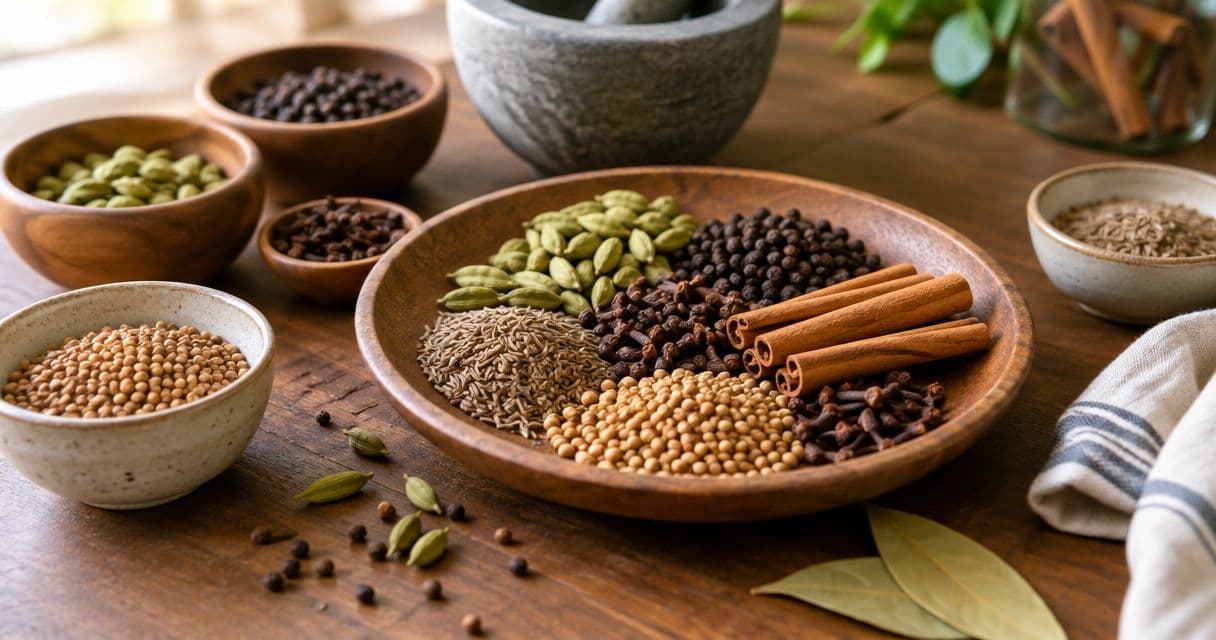
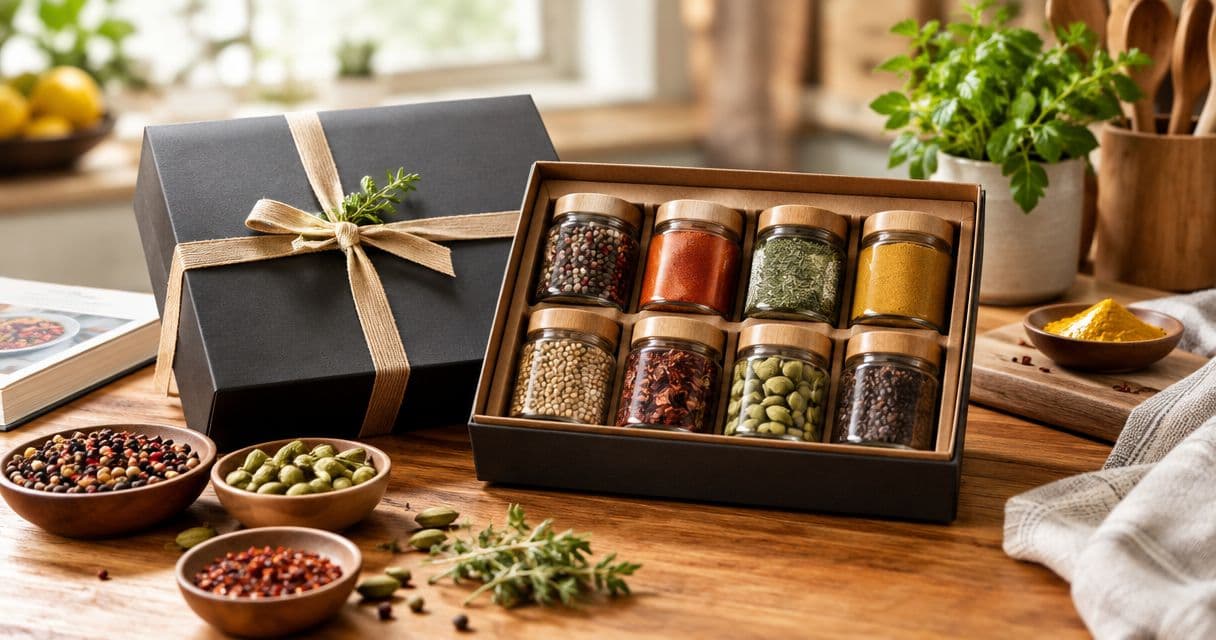
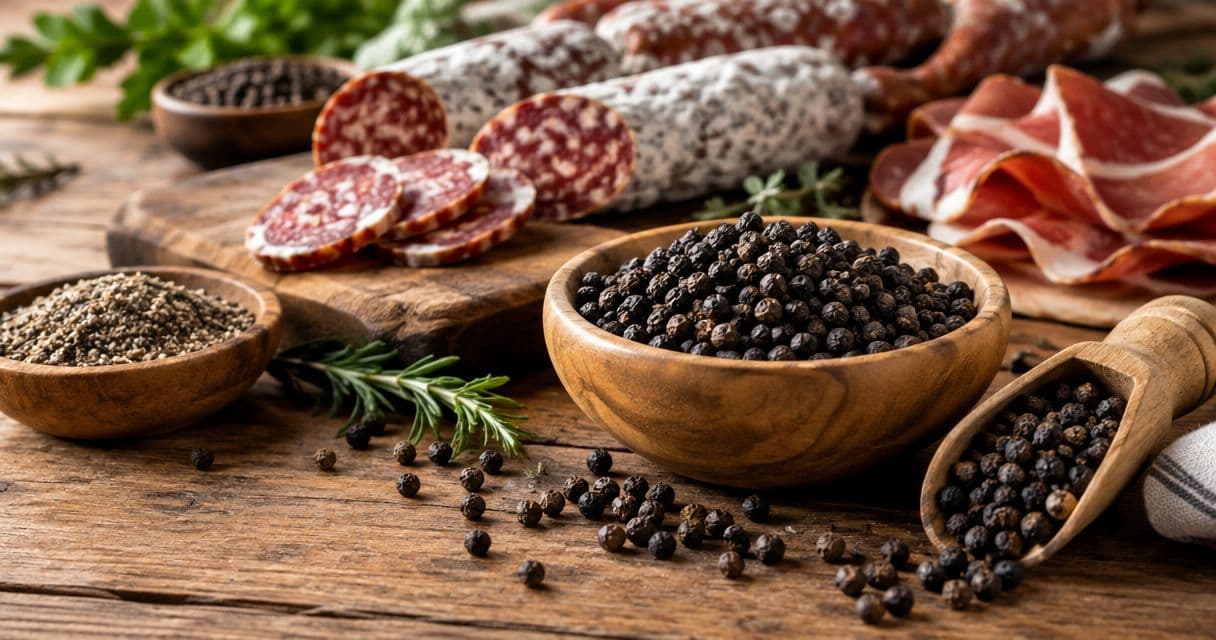
Single-origin whole spices for professional chefs
Choose single-origin whole spices for professional chefs by origin and kitchen performance. Build repeatable toasting, grinding, and storage routines.
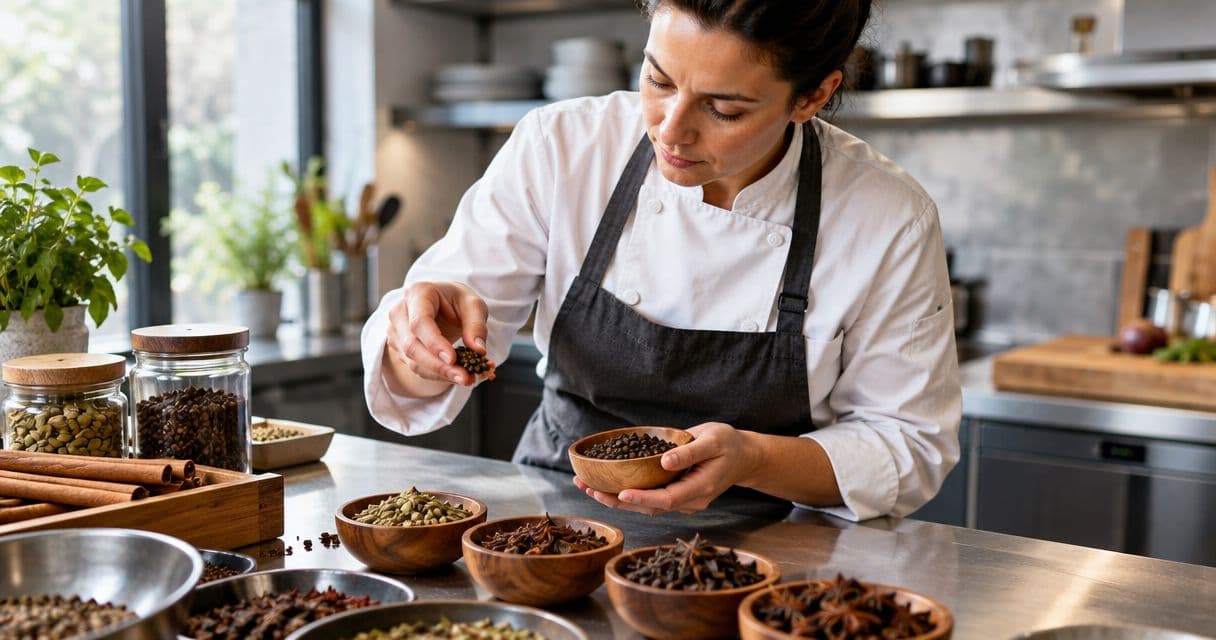
Professional chefs’ single-origin whole spices are intact spices sourced from a named growing place, selected to give your kitchen clearer provenance and control over preparation. Choosing single-origin whole spices for professional chefs means matching each ingredient’s origin and sensory character to a dish, then making that result repeatable across prep shifts and service.
TL;DR- Choose single-origin whole spices for professional chefs by documented origin, sensory performance, and repeatable kitchen preparation.
- 5Senses whole spices suit chefs who want named origins and control over fresh grinding.
- Whole coriander needs a different preparation standard from vanilla, saffron, or cardamom.
- Keep lot records and test replacement deliveries before changing a production recipe.
Why single-origin whole spices matter for professional chefs
A named growing region gives you something specific to evaluate and describe. It does not guarantee that every delivery tastes identical. Drying, curing, storage, and your own preparation also shape the result; growing place and processing belong in separate parts of your purchasing notes.
Professional kitchens need more than an appealing aroma when a container opens. You need a spice that works in the finished sauce, survives the intended cooking method, and reaches the pass with the texture your dish requires. A beautiful coriander seed still needs the right grind.
5Senses whole spices are best for chefs who want named origins and control over fresh grinding. The 5Senses range includes direct-from-farm, origin-packed whole spices alongside Madagascar and Uganda vanilla, Kashmir Mongra saffron, and green cardamom. The trade-off is preparation: whole ingredients require equipment, staff instructions, and time that ready-ground seasoning does not.
Build your purchasing standard around what the kitchen can verify. Origin matters most when you connect it to tasting, preparation, and a clear role on the menu.
Build an origin-led spice workflow
1. Map each spice to a recurring dish
Start with your recipe book and prep sheets, not a long purchasing list. Identify where a spice carries the dish and where it simply supports other ingredients. Buy for those jobs first.
Whole coriander can anchor a vegetable seasoning or curry base. Green cardamom belongs in a different conversation: pastry, rice, dairy infusions, or a carefully balanced savory preparation. Nutmeg, mace, cloves, bay leaves, and sweet fennel deserve their own instructions rather than a shared treatment labeled warm spices.
Keep your initial selection narrow enough to taste properly. A smaller working range with clear uses is more practical than an extensive collection that sits unopened between menu changes.
- Assign each spice a named recipe or recurring preparation.
- Mark whether the dish needs powder, cracked pieces, or removable whole spices.
- Separate finishing spices from ingredients cooked into a base.
- Record which station owns preparation and replenishment.
- Remove purchases with no planned menu use.
2. Write an origin specification before ordering
Use a simple purchasing sheet to distinguish the growing location from the packing location. Packed at origin describes a handling decision; it does not replace the name of the growing region. Likewise, a country name alone does not identify a farm.
Ask for the information relevant to your kitchen: stated origin, product designation, processing description, and whatever harvest, packing, or lot details the supplier provides. Do not fill gaps with assumptions. The guide to reading spice labels separates these details for receiving checks.
Treat commercial grades as supplier specifications unless an independent standard is explicitly identified. A grade name is not proof of measured oil content, purity, or a particular sensory result.
- Record the named growing place exactly as supplied.
- Keep growing origin and packing location in separate fields.
- Copy the product designation without rewriting its meaning.
- Request supporting documents for any certification your operation requires.
- Keep the original label or a readable photograph with receiving records.
3. Taste a relevant origin in the actual dish
Start manually with a clean mortar, a small pan, and your existing recipe. Smelling the dry spice is useful, but the finished preparation decides whether it belongs on your menu. Taste it in the same fat, liquid, or base that guests will receive.
For coriander, 5Senses Whole Coriander is designated Double Parrot Grade A (Hadoti Bloom) and sourced from Kota in Rajasthan’s Hadoti region, India. Its stated processing includes near-source partial sun-drying, with citrus-floral and woody-nutty tasting notes. These are useful starting points for testing coriander in roasted vegetables, lentils, and sauces—not a promise that every cooking method produces the same balance.
The regional growers contribute the ingredient knowledge; your kitchen determines the preparation. The commercial grade is not an independently certified universal standard.
- Smell whole seeds, then crush a small sample and smell again.
- Compare untoasted and gently toasted coriander in the same recipe.
- Keep salt, fat, and cooking method consistent during comparison.
- Note whether the citrus-floral character remains clear in the finished dish.
- Record the preferred preparation rather than simply writing premium coriander.
4. Match the preparation to the ingredient
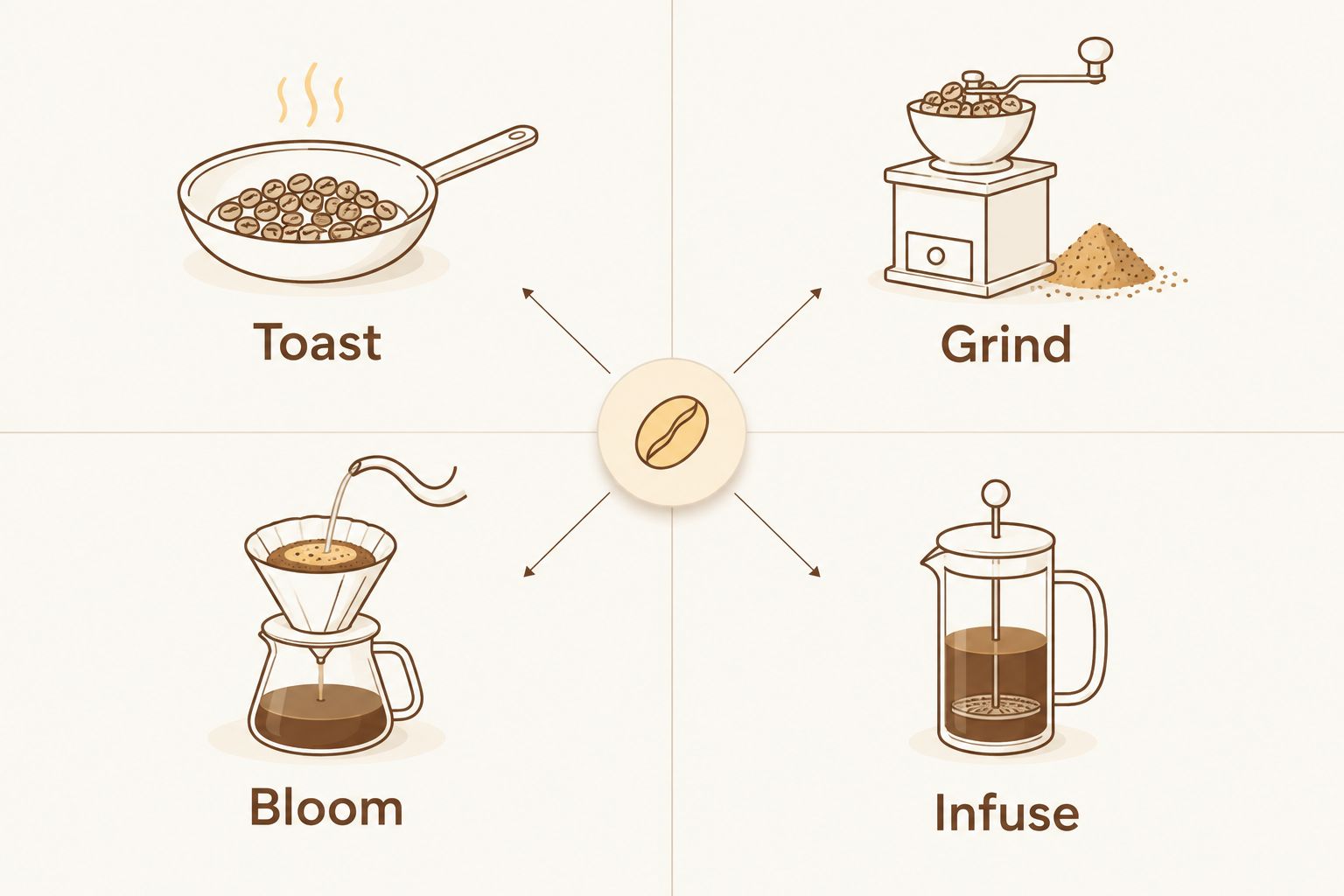
Choose the method before choosing the tool. Toasting, grinding, blooming, and infusing do different jobs. A recipe might use several, but not every whole spice needs all of them.
Toast coriander in a dry pan when the dish calls for a toasted profile; move the seeds continuously and stop before scorching. Cool toasted seeds before grinding. Bloom spices in cooking fat when the recipe calls for that method, then add the next ingredients before the spices burn.
Infuse vanilla in the recipe’s liquid rather than treating a cured bean like a dry seed. Steep saffron separately when you need to distribute its color and flavor through rice or a sauce. Neither belongs on a universal dry-toasting schedule.
- Toast: use controlled heat and judge aroma alongside color.
- Grind: match particle size to the finished texture.
- Bloom: prepare the next ingredient before heating the spices.
- Infuse: use the recipe’s liquid and document the method.
5. Standardize the grind and service handoff
Begin with the tools already in your kitchen. A mortar suits small quantities and coarse textures; an appropriate grinder makes repeated batches easier. Neither replaces a written standard for what the finished seasoning should look and feel like.
Specify whether cardamom means seeds alone or the whole pod. State whether coriander should disappear into a sauce or remain as a deliberate crunch. For nutmeg in the shell, separate shell removal from grating the seed; do not leave that distinction to a new cook’s interpretation.
Spicecare tools are relevant when you need to store, grind, and preserve the range, but choose equipment by the task. Confirm the tool’s intended use and cleaning instructions rather than assuming every grinder handles hard roots, fibrous pods, and delicate seeds equally well.
- Name the exact ingredient form on the prep sheet.
- Describe the required grind with a retained reference sample or photograph.
- Weigh the prepared spice rather than relying on pod counts.
- Assign separate cleaning procedures for strongly aromatic ingredients.
- Note which whole spices must be removed before plating.
6. Connect origin choices across the menu
Give an ingredient repeat use without making every dish taste alike. Coriander can move between a toasted vegetable seasoning and a finely ground sauce base. Sweet fennel can support tomato preparations or baking, while cloves need a restrained, clearly specified role in either setting.
For vanilla, compare Madagascar and Uganda beans in the preparation you actually sell. Keep the dairy, sugar, and method consistent, then document which result suits the dish. The place name identifies the sourcing choice; it does not establish a universal winner for every dessert.
Shared purchasing also works across pastry and beverage stations. Best for cross-station use: whole star anise can carry its licorice-like character into both mulled wine and festive baking, but those preparations need separate instructions for extraction and texture. A spice shared across stations still needs recipe-specific control.
- Give each core spice a primary use and a compatible secondary use.
- Test vanilla origins in the same finished dessert before selecting one.
- Keep beverage infusions separate from pastry grinding instructions.
- Review whether secondary uses create unnecessary prep complexity.
- Remove whole pods and hard fragments where the finished dish requires it.
7. Close the loop at receiving and reordering
Keep reserve containers sealed in a cool, dry place away from light and cooking heat. Use dry utensils and refill working containers away from steam. Storage discipline protects the ingredient you selected; a named origin does not compensate for an open jar beside the range.
Record the opening date and retain lot identification where supplied. Before combining a new delivery with an existing batch, compare its aroma and performance in a familiar preparation. This keeps a change in the ingredient from becoming an unexplained change in the dish.
Set reorder decisions from your own usage records. Do not assume that a larger order is better if a menu change will leave the kitchen with slow-moving stock.
- Inspect packaging and labels when deliveries arrive.
- Keep different lots identifiable until the kitchen approves the new delivery.
- Label working containers with the ingredient and opening date.
- Review actual recipe use before increasing order quantities.
- Replace spices that no longer deliver the intended aroma rather than increasing them blindly.
Compare the preparation options
Choose the format by the work your kitchen needs to do. Whole spices offer preparation control; ground spices reduce prep. Neither format wins every application.
| Option | Best for | Practical advantage | Key limitation |
|---|---|---|---|
| Named-origin whole spices | Origin-led menus and custom seasoning | You choose the grind and preparation method | Requires equipment, training, and prep time |
| Named-origin ground spices | Recipes needing a consistent fine texture | Removes the grinding step while retaining a stated origin | You cannot change the original grind |
| Whole-spice blends | Kitchens making a defined house seasoning | Ingredients can be toasted and ground to the recipe | Different components need careful preparation control |
| Ready-ground blends | Repeated seasoning with limited prep capacity | Simplifies the station’s preparation | Individual ingredients cannot be adjusted independently |
| Whole spices for infusion | Broths, rice, dairy, and beverage preparations | Flavor can be extracted without making a powder | Removal and straining need explicit instructions |
Choose whole spices where preparation control changes the dish. Keep a documented ground format where that better fits the recipe and staffing. A kitchen standard should explain the choice, not make whole spices a rule without exceptions.
Common mistakes professional chefs make
Treating a growing region as a complete specification
Origin is useful information, not a complete quality assessment. A label still needs to be read alongside the product form, processing information, and the kitchen’s sensory check. Describe the verified place without inventing a soil-to-flavor explanation.
Grinding the full delivery immediately
Turning the entire order into powder removes your ability to choose different textures later. Grind for planned production and keep the remaining whole spice properly stored. Review batch size against actual use rather than habit.
Replacing recipe weights with pod counts
Pods, seeds, and pieces differ in size. A count is convenient during development, but a production recipe needs a measured ingredient form. State whether the weight refers to whole pods, removed seeds, or the finished ground spice.
Giving every spice the same heat treatment
A coriander seed, vanilla bean, and saffron thread are not interchangeable prep materials. Train cooks around the intended result: toasted character, fresh-ground aroma, flavor carried in fat, or extraction into liquid. Stop making dry-toasting the automatic first step.
Writing a menu story the records cannot support
A named region does not establish an owned farm, personal grower relationship, certification, or exclusive harvest. Keep menu language within the supplier’s documented claims. Your strongest story is precise enough for staff to explain without embellishment.
FAQ
What are single-origin whole spices for professional chefs?
Single-origin whole spices for professional chefs are intact spices sourced from a named growing place and selected for kitchen use. The origin statement should be evaluated separately from processing, packing, and the preparation required by the dish.
Are whole spices always better than ground spices in a restaurant?
Whole spices are better when control over grinding, texture, or infusion matters to the dish. Ground spices suit recipes where a defined fine texture and simpler preparation are the priority.
Which whole spices should a professional kitchen start with?
Start with the whole spices already used in recurring recipes. Coriander, pepper, cardamom, bay leaves, and nutmeg have different kitchen roles, so select by your menu rather than a universal starter list.
How should chefs evaluate premium coriander?
Evaluate premium coriander by documented origin, stated processing, aroma after crushing, and performance in the finished recipe. Double Parrot Grade A is the stated commercial grade for 5Senses Whole Coriander, not an independently certified universal standard.
Should chefs toast every whole spice before grinding?
No, chefs should toast only when the ingredient and recipe call for a toasted profile. Vanilla infusion and saffron steeping require different preparation from dry-toasting coriander seeds.
Can Madagascar vanilla and Uganda vanilla use the same pastry recipe?
You can compare Madagascar vanilla and Uganda vanilla in the same pastry recipe, but approve the result before making a production substitution. Keep the other ingredients and preparation consistent so the comparison is meaningful.
How do you keep whole-spice flavor consistent between deliveries?
Keep lot records where supplied and test each new delivery in a familiar preparation before combining it with existing stock. Record any recipe adjustment so every station follows the same approved method.
One last thing
Retain a reference for the finished preparation, not just the purchased ingredient. A photograph of your coriander grind, a clear infusion instruction, and a note describing the approved aroma give the next cook something actionable. Provenance starts the conversation; a repeatable dish completes it.