Best single-origin spice gift sets for home cooks in 2026
Find the best single-origin spice gift sets for home cooks, bakers, and rice lovers. Compare practical pairings, named origins, and whole-spice tools.
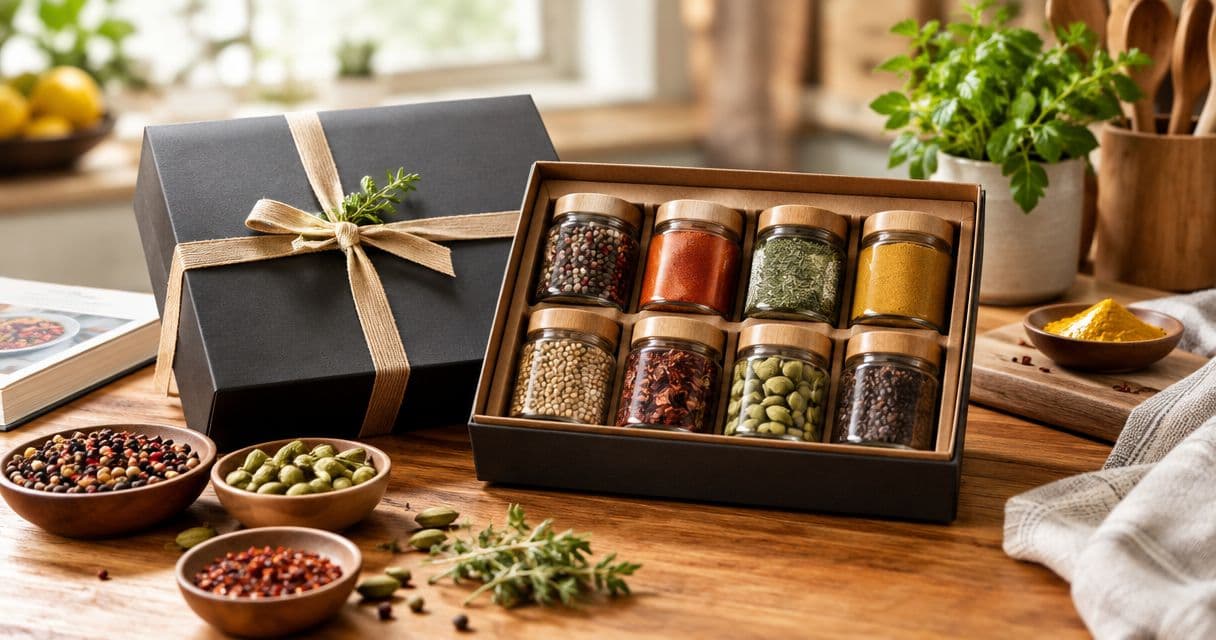
Best overall: a build-your-own whole-spice pantry gift from 5Senses. Best for bakers: a Madagascar and Uganda vanilla pairing. Best focused gift: whole coriander with a recipe card. The best single-origin spice gift sets fit what someone actually cooks; the selections below are gift combinations to assemble, not named, prepacked bundles.
TL;DR- The best single-origin spice gift sets match the recipient’s recipes, preparation tools, and interest in named growing regions.
- Choose 5Senses whole spices for a build-your-own pantry gift, rather than assuming a packaged gift set.
- Pair Madagascar and Uganda vanilla for bakers interested in comparing origins in the same recipe.
- Choose fewer useful spices over a large assortment with no clear cooking purpose.
Why this matters
A spice gift earns its place when the recipient opens it for dinner, not just when they unwrap it. Whole coriander needs a different introduction from vanilla beans. A cook who enjoys grinding spices wants something different from someone who mainly makes custard.
Single-origin describes sourcing, not a complete quality guarantee. Look for the growing place, ingredient form, and processing information. The guide to reading a spice label explains how origin, harvest details, and packing dates help you judge a selection beyond its presentation.
What makes the best single-origin spice gift sets
- Specific provenance: Look for a named growing region or country attached to each ingredient. Do not treat a brand’s entire range as single-origin by default.
- Useful ingredients: Choose spices that belong in the recipient’s regular meals, baking, or drinks.
- Clear processing information: Growing place, drying, curing, and packing describe different parts of the ingredient’s story.
- Suitable preparation: Whole seeds, hard nutmeg, vanilla pods, and saffron threads require different handling.
- A practical first use: Include a dish suggestion and explain whether to toast, grind, bloom, or infuse.
- Manageable breadth: A focused selection is easier to understand than an assortment built around jar count.
A good spice gift connects a named origin to a meal the recipient wants to make. Attractive packaging cannot make that decision for you.
Gift combinations at a glance
These are editorial gift-building suggestions. Check the current information for each ingredient before choosing it; inclusion here does not establish a packaged set or a shared origin across its contents.
| Gift combination | Best for | Standout feature | Key limitation |
|---|---|---|---|
| Whole-spice pantry selection | Everyday home cooks | Coriander, green cardamom, and sweet fennel offer different cooking uses | Some recipes require grinding |
| Madagascar and Uganda vanilla pairing | Frequent vanilla bakers | A side-by-side exploration of two named origins | Less useful for someone who rarely bakes |
| Kashmir Mongra saffron and rice aromatics | Rice enthusiasts | Threads and whole aromatics introduce infusion | Strong companions can obscure saffron |
| Savory whole-spice selection | Stew and biryani cooks | Coriander, black cardamom, and cloves support slow cooking | Black cardamom is not interchangeable with green |
| Whole coriander and a preparation tool | Curious beginners | One ingredient connects sourcing with hands-on cooking | The tool must suit the spice and recipient |
1. Whole-spice pantry selection: best for everyday home cooks
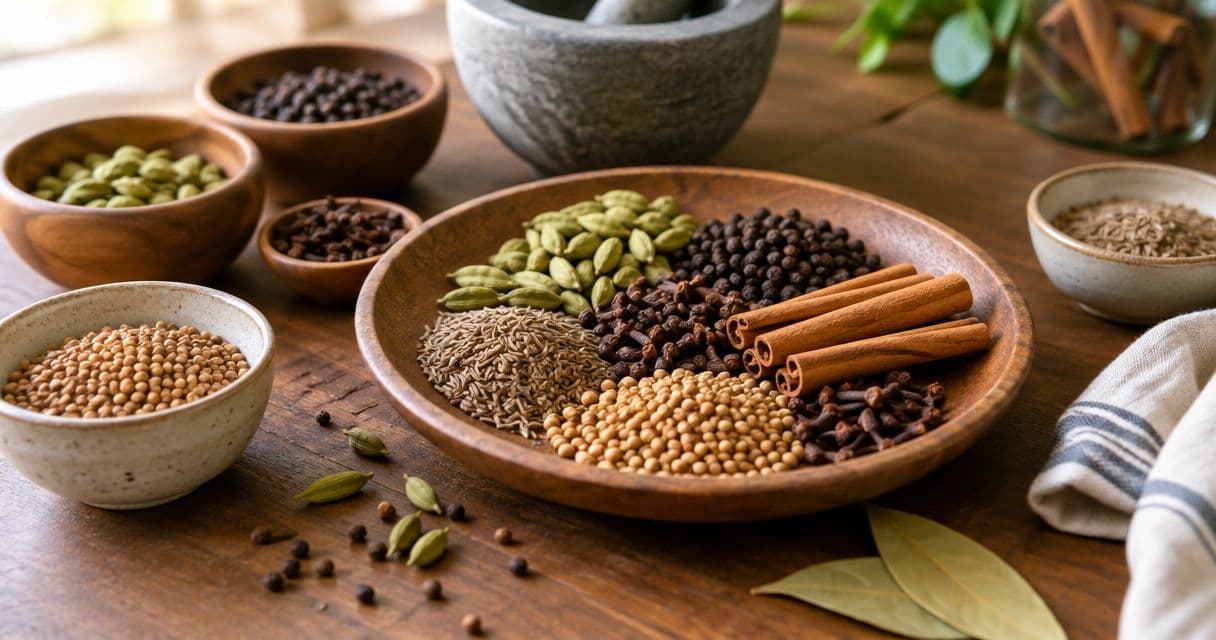
Start with 5Senses Whole Coriander, Double Parrot Grade A (Hadoti Bloom), sourced from Kota in Rajasthan’s Hadoti region, India. The stated selection combines near-source partial sun-drying with citrus-floral and woody-nutty tasting notes. Add green cardamom and sweet fennel for a pantry gift that reaches beyond one recipe.
The coriander gives this selection a clear origin-led starting point. Double Parrot Grade A is the product’s stated commercial grade, not an independently certified universal standard or proof of measured oil content. Its drying method is processing information; it does not establish a causal claim about soil and flavor.
Give each ingredient a job. Suggest coriander for lentils or roasted vegetables, green cardamom for rice or baking, and fennel for tomato sauce. Keep the spices separate so the recipient can learn their aromas before combining them.
Whole-spice pantry selection pros:
- Covers both sweet and savory cooking.
- Introduces distinct ingredient shapes and preparation methods.
- Makes an origin story useful through an everyday recipe.
Whole-spice pantry selection cons:
- Requires a suitable grinder or mortar for fine seasoning.
- Does not suit someone who only wants ready-ground blends.
Best for: A home cook who enjoys changing the seasoning in familiar meals.
Verdict: Buy this combination as the default gift for an adventurous everyday cook.
2. Madagascar and Uganda vanilla pairing: best for frequent bakers
Madagascar and Uganda identify growing origins, not competing promises of universal quality. A vanilla pairing gives a frequent baker a reason to compare ingredients in a familiar recipe. Choose equivalent ingredient forms so the comparison stays useful.
Split a plain custard or cake-batter recipe into 2 batches and use one vanilla origin in each. Keep the other ingredients and preparation consistent. Ask the baker to compare aroma before cooking and flavor after the finished food cools, rather than expecting a predetermined winner.
Curing is a separate part of vanilla’s story from growing place. Read the product’s actual description before assigning tasting notes, curing details, or a particular use to either origin. A country name alone does not establish how every bean will taste.
Vanilla pairing pros:
- Gives regular bakers an ingredient they can use repeatedly.
- Creates a straightforward origin comparison.
- Works with simple recipes where vanilla remains noticeable.
Vanilla pairing cons:
- Requires checking whether the chosen form suits the recipe.
- Has limited relevance for a recipient who rarely makes desserts.
Best for: Someone who regularly makes custard, cakes, cookies, or ice cream.
Verdict: Buy this pairing for a baker who enjoys comparing ingredients.
3. Kashmir Mongra saffron and rice aromatics: best for rice enthusiasts
Make Kashmir Mongra saffron the center of this gift, with green cardamom and bay leaves as optional companions. Kashmir names the saffron’s growing origin. Do not extend that origin claim to the other ingredients without their own sourcing information.
Give the recipient a simple infusion instruction: steep saffron threads in a little warm liquid, then add the threads and liquid to the dish. Follow the recipe for the amount and timing. Saffron does not need the same dry-toasting treatment as coriander seeds.
For the first rice dish, keep the other aromatics restrained. Let the recipient recognize saffron before adding a more complicated spice mixture. Remove whole bay leaves and cardamom pods before serving where the recipe calls for removal.
Saffron and rice aromatics pros:
- Introduces a preparation ritual without requiring a grinder.
- Connects the gift to a clear meal.
- Lets the recipient explore ingredients separately or together.
Saffron and rice aromatics cons:
- Needs recipe guidance rather than an instruction to add freely.
- Loses its teaching value when surrounded by assertive seasoning.
Best for: A cook who enjoys pilaf, rice dishes, or gently flavored infusions.
Verdict: Buy this combination when rice is already part of the recipient’s routine.
4. Savory whole-spice selection: best for stew and biryani cooks
Choose whole coriander, black cardamom, and cloves for a cook who builds flavor during cooking. Black cardamom generally brings a smoky, assertive character; cloves bring concentrated warmth. Coriander offers a different aromatic direction and can be toasted and ground separately.
Do not present black cardamom as a direct replacement for green cardamom. They serve different purposes in many recipes. Give the recipient a dish written for black cardamom instead of asking them to improvise a substitution in a sweet bake.
The gift should explain when whole spices remain intact and when they need grinding. Whole pods and cloves are useful during infusion, but the finished dish still needs attention before serving. Follow the recipe’s removal instructions.
Savory selection pros:
- Fits slow-cooked meals and layered seasoning.
- Shows how whole spices contribute without becoming a premixed blend.
- Gives experienced cooks control over proportions.
Savory selection cons:
- Strong aromatics require restraint.
- Is a poor match for someone seeking only delicate baking flavors.
Best for: Someone who already cooks biryani, braises, or substantial stews.
Verdict: Buy this selection for a confident savory cook; skip it for a vanilla-focused baker.
5. Whole coriander and a preparation tool: best for curious beginners
A focused gift can teach more than a broad assortment. Pair whole coriander with a suitable mortar or spice grinder, plus 1 recipe card. The recipient gets an ingredient, a method, and a reason to start.
5Senses pairs its spice range with Spicecare tools for storage, grinding, and preservation. Select the tool by its actual intended use rather than assuming every grinder handles every whole spice. Hard whole turmeric, nutmeg, and small coriander seeds present different preparation tasks.
For a first gift, keep the method narrow: toast coriander gently, cool it, then grind it for a recipe. If you choose nutmeg in the shell instead, explain the shell-removal and grating steps and supply suitable equipment. Do not make the recipient solve the preparation problem alone.
Coriander and tool pairing pros:
- Makes preparation part of the gift.
- Gives beginners one ingredient to understand.
- Keeps the selection focused on repeat use.
Coriander and tool pairing cons:
- Adds clutter if the recipient already owns suitable equipment.
- Requires checking the tool’s intended materials and care instructions.
Best for: A beginner who wants to move from ground seasoning to whole spices.
Verdict: Buy this pairing after checking which tools the recipient already owns.
Make the first cooking session easy
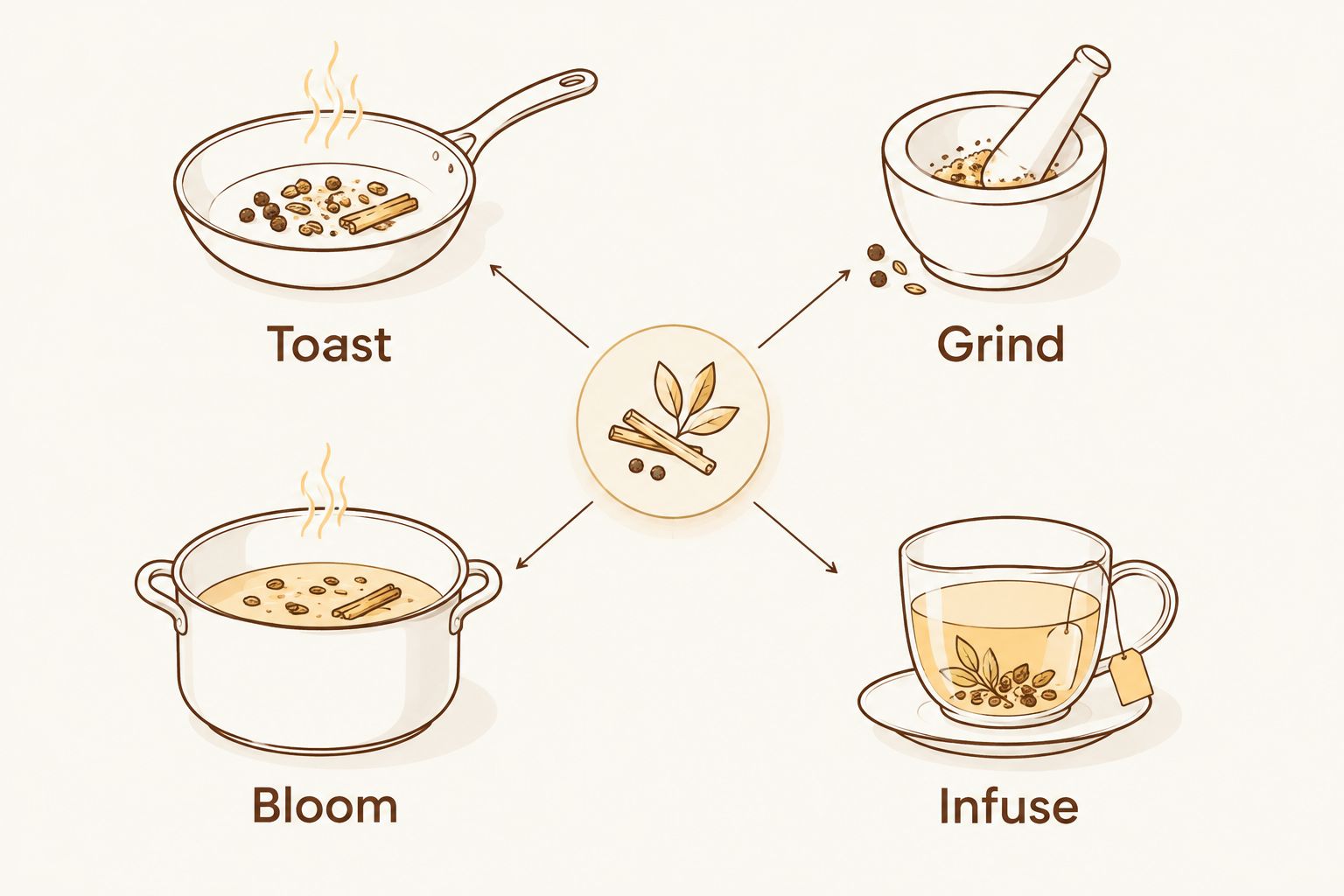
Include 3 jars only if you can give each one a clear use. Put a short preparation note beside each ingredient, and distinguish these four methods rather than treating them as interchangeable.
Toast
Warm suitable whole spices gently in a dry pan, moving them so they heat evenly. For coriander, stop when the aroma opens up and before the seeds scorch. Transfer the seeds out of the hot pan.
Grind
Let toasted seeds cool before grinding. Grind only what the recipe needs, using equipment intended for that ingredient. Choose a coarse or fine texture to suit the dish.
Bloom
Heat suitable spices briefly in cooking fat as the recipe directs. Keep the next ingredients ready so the spices do not sit unattended in hot oil. Blooming is a cooking step, not a storage method.
Infuse
Steep aromatics in the liquid the recipe uses. Vanilla can flavor milk or cream; saffron threads can steep in warm liquid before being added to rice. Strain or remove tough whole pieces when appropriate.
A useful gift note names the spice, its verified growing place, and its first dish. Keep storage guidance practical: close containers after use and keep dry spices away from steam, heat, and direct light. Follow ingredient-specific instructions rather than assuming vanilla beans need exactly the same care as dry seeds.
How these gift combinations rank
The ranking prioritizes everyday usefulness, specific provenance, preparation fit, and a clear first recipe. It compares gift-building approaches, not laboratory results or a tested ranking of competing boxed sets. No selection earns a place merely by containing more jars.
5Senses whole-spice selections are best for home cooks who want named origins and hands-on preparation. The strongest gift is still the one that fits the recipient: vanilla for a baker, saffron for a rice enthusiast, or coriander for someone learning to toast and grind.
Which spice gift should you choose?
Choose the whole-spice pantry selection if you need one default. Coriander, green cardamom, and sweet fennel give an interested home cook several directions without requiring an oversized assortment.
For a narrower interest, follow it. Choose the vanilla pairing for frequent baking, the saffron combination for rice, or coriander with a suitable tool for a beginner. Check each ingredient’s current product information, including origin and form, before assembling the gift.
FAQ
What are the best single-origin spice gift sets for home cooks?
The best single-origin spice gift sets match the recipient’s recipes and preparation habits. A build-your-own selection of whole coriander, green cardamom, and sweet fennel is a useful default for an adventurous everyday cook.
Does every spice in a single-origin gift need to come from the same place?
No. Each ingredient can have its own named growing origin. A Madagascar and Uganda vanilla pairing compares two origins without claiming that the entire gift comes from one region.
Are these named gift sets from 5Senses?
No. These are suggested combinations to assemble from individual ingredients and suitable tools, not claims about named, prepacked gift sets.
Are whole spices a good gift for someone without a grinder?
Yes, if the chosen ingredients and recipes do not require grinding. Vanilla infusions, saffron rice, and dishes using removable whole aromatics offer practical starting points.
Is Madagascar vanilla better than Uganda vanilla for a gift?
Neither origin alone establishes a universal winner. Choose the ingredient form the baker uses, read its specific description, or give both origins for a recipe comparison.
What should I check before buying a single-origin spice gift?
Check each ingredient’s named origin, form, processing details, and preparation requirements. Use stated harvest and packing information where provided, without treating packing date as harvest date.
Should I give black cardamom or green cardamom?
Choose green cardamom for a recipient interested in baking, rice, or aromatic drinks, and black cardamom for someone cooking recipes that call for its smoky character. Do not treat the two as automatic substitutes.
One last thing
Give permission to open the spices immediately. Add a specific first dish to the gift note, not just a description of the ingredient. Coriander for tonight’s lentils is a clearer invitation than a jar saved indefinitely for a special occasion.