Premium grocery spice tastings that lead to useful purchases
Plan premium grocery spice tastings around verified origins and cooking use. Explore 5Senses whole spices and make buying easier for your customers.
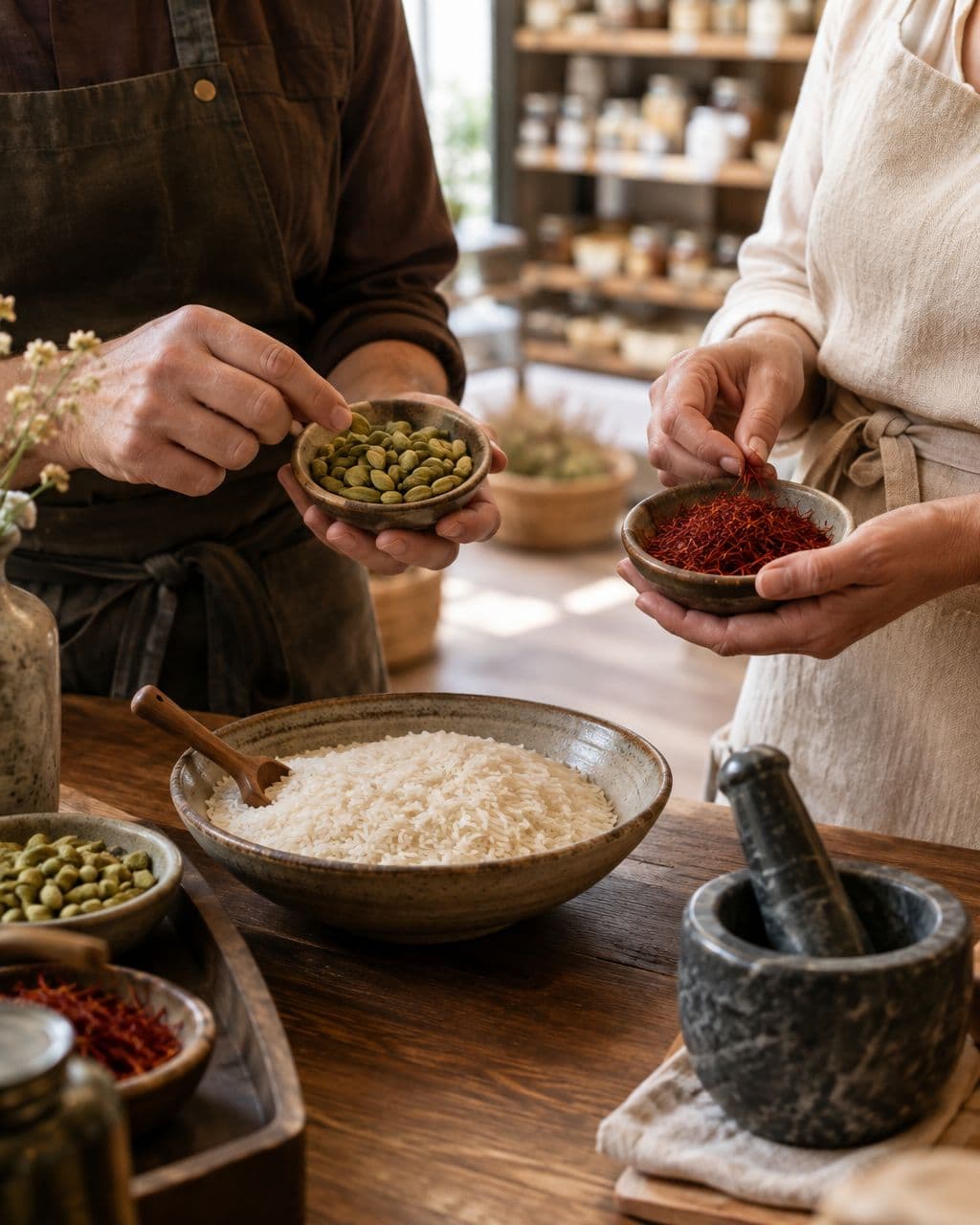
Premium grocery spice tastings connect ingredient origin, aroma and finished food so customers can choose whole spices with a clear cooking purpose. Build the tasting around a useful comparison, not a claim that the rarest-sounding ingredient must be the best.
TL;DR- Premium grocery spice tastings should answer a buying question, not just create an impressive table.
- 5Senses whole spices offer named origins and practical flavor profiles for staff-led education.
- Keep origin, processing and cooking method separate when explaining a sensory result.
- Judge repeat use from store records rather than assuming a tasting creates loyalty.
Why a premium grocery needs more than premium language
Words such as fine, exceptional and aromatic do not tell a shopper what to do with an ingredient. A tasting can. It gives your team a chance to connect the product on the shelf with the food someone intends to make at home.
The 5Senses wholesale range includes whole spices, exotic vanilla and Spicecare tools. For a premium grocery, the useful distinction is the ability to connect specific product information with a preparation method. Keep the story accurate and the next step simple.
5Senses is a relevant wholesale whole-spice choice for premium grocers that want to teach origin and preparation rather than sell an unsupported ranking. That positioning works best when your staff knows the product and your tasting has a clear question to answer.
Start with the source, then explain the kitchen method
A growing region is a place, not a complete flavor explanation. Drying, storage, ingredient form and preparation also matter. Your tasting should not turn a named origin into a made-up claim about soil, altitude or climate causing a particular note.
The source and processing information below come from individual product descriptions. The proposed uses are tasting formats for your team to develop and test, not claims that the brand has run these events or measured their sales impact.
| Product | Best for | Verified story to explain | Limitation |
|---|---|---|---|
| 5Senses Malabar Cardamom Green Pods | Teaching whole-pod and seed preparation | Malabar origin, gently air-dried pods, sweet, floral and citrus notes | A whole pod and ground seeds do different jobs in a recipe |
| 5Senses Kashmir Mongra Saffron | A simple rice or dessert tasting | Pampore, Kashmir origin, natural sun-drying, floral and honeyed notes | A tasting does not establish purity, laboratory grade or a global quality ranking |
| A familiar pantry ingredient already in your store | Showing a cooking context | The actual preparation used in your tested recipe | A strong base flavor can obscure the spice |
Cardamom and saffron are not substitutes or competitors in this comparison. They solve different cooking problems. Choose the ingredient that matches the question your customers are asking rather than presenting an artificial winner.
Design a tasting your team can repeat
Define the buying question before choosing the recipe
Write down what a shopper should understand after tasting. A useful question might be how green cardamom works in a rice dish, or whether a saffron dessert fits the flavor someone enjoys.
Avoid a broad event called a premium spice experience if the customer leaves without knowing which ingredient to buy. The tasting should make a decision easier, not require the shopper to remember a lecture.
Set a short brief:
- The ingredient the customer is considering.
- The dish used to demonstrate it.
- The preparation method the customer can repeat.
- The sensory distinction you intend to discuss.
- The matching retail product and shelf location.
Test the finished dish before serving it
A dry aroma demonstration and a cooked tasting are different experiences. A customer might enjoy smelling cardamom but still need to understand how it behaves in the food they plan to make.
Use a recipe your team has tested and record ingredient weight, preparation, cooking sequence and serving conditions. If you change several details between samples, describe the result as a comparison of those recipes rather than proof of the spice alone.
Keep the method consistent:
- Use the same base recipe when comparing preparation methods.
- Measure the spice rather than relying on an inconsistent pinch.
- Record whether pods, seeds or threads enter the food.
- Note any straining or removal step.
- Taste at the intended serving temperature.
Do not invent a universal dose for saffron or a fixed pod count for every cardamom recipe. Choose and test quantities for the actual dish you are serving. Your staff should be able to point to the recipe, not a vague instruction to use a little.
Separate sensory education from authenticity claims
A customer can notice aroma, flavor and texture during a tasting. That experience does not replace product documentation. Color in a cup or aroma from a bowl is not a complete authenticity test.
For Kashmir Mongra saffron, describe the stated Pampore source and natural sun-drying. Explain the listed floral sweetness, earthy depth and mild bitterness without suggesting that a kitchen demonstration certifies the product's chemistry.
Train staff to distinguish:
- A verified fact from the product information.
- A flavor note listed by the supplier.
- An observation from the finished dish being served.
- A customer preference.
- A question requiring supplier documentation.
Someone can prefer a different flavor without either product being defective. Your team can acknowledge that preference without weakening its sourcing knowledge. Preference is a useful buying signal, not a failure of the tasting.
Put a practical instruction beside the retail stock
Once the tasting has helped a shopper choose, make the next step easy. Keep the exact product visible and provide the tested preparation method in a form the customer can take away.
Do not make the customer search through several similarly named ingredients to recreate what they tasted. The recipe should identify the same product form, and the display should make clear which items are sold separately.
Prepare the shelf handoff:
- Show the exact ingredient used in the tasting.
- State whether the recipe needs a grinder, mortar or strainer.
- Keep pack information unobscured.
- Explain where to find the product on a return visit.
- Give staff a way to record unanswered questions.
The cardamom product information describes resealable pouches; the saffron description identifies a tin. Check the actual wholesale formats before designing fixtures. Treat each product as its own purchasing decision rather than assuming one packaging format across the range.
Make safe service part of the event plan
Before offering food, follow the handling procedures and rules that apply to your business. A store tasting is food service, not just a product display. Assign responsibility for preparation, allergen information, serving utensils and holding conditions.
Do not present open aroma samples as retail stock. Keep demonstration ingredients separate from sealed packs and record what you open so it does not disappear from inventory.
Your service plan should identify:
- Who prepares and serves the samples.
- How ingredient and allergen information is provided.
- Which utensils and surfaces are used.
- How the food is held and when it is discarded.
- How demo stock is recorded separately.
The exact requirements depend on your operation and location. Confirm them with the appropriate local authority rather than copying an unrelated store's setup. If the team cannot support a food tasting properly, begin with staff education instead.
Follow the purchase through to use
A tasting creates interest. Successful home use gives the customer a reason to replenish. Ask what shoppers plan to cook, then give advice that fits that answer instead of pushing every product on the table.
At the register, note recurring questions without collecting unnecessary personal information. If customers agree to receive your store communications, use the follow-up to help them make the dish, not to imply a supplier-funded program or guaranteed benefit.
Keep the follow-through useful:
- Share the recipe that was actually served.
- Explain preparation steps that shoppers found confusing.
- Suggest another use when it fits the same ingredient.
- Make the store's product location clear.
- Invite feedback about cooking, not just a purchase review.
Do not label every additional purchase a repeat customer. Distinguish another shopper's first purchase from the same customer's replenishment only where your records support it and the information is collected appropriately.
Choose the format that fits your store
A premium grocery does not need a large event to explain a spice well. Select the format your staff can run consistently.
| Format | Best for | Useful strength | Operational limitation |
|---|---|---|---|
| Staff briefing without public sampling | Preparing a team to answer questions | Builds product knowledge before a launch | Does not show shoppers' response to the finished dish |
| Guided aroma demonstration | Explaining ingredient form and preparation | Lets staff discuss whole and crushed spice | Aroma alone does not predict every cooking result |
| Finished-food tasting | Helping shoppers imagine home use | Connects the ingredient with a meal | Requires food-service planning and a tested recipe |
Choose the simplest format that answers your question. If the team cannot explain the product consistently, begin with staff training before planning a public event.
Buy for the lesson you can support
Ask your supplier for the exact product, retail format, current purchasing terms and the documentation your business needs. Do not buy extra varieties simply to make a tasting table look complete.
Retailers can review 5Senses on Faire Direct. Check account-specific terms, pack quantities, delivery details and total order cost before purchasing. Product pages explain the ingredient, but they do not settle every wholesale condition.
The limitation to acknowledge is preparation. Whole spices suit customers willing to infuse, grind or otherwise handle them as the recipe requires. They are not automatically the most convenient choice for someone who wants an immediately measured ground ingredient.
Make that distinction before the sale. Honest preparation guidance supports trust more effectively than promising that every whole spice is effortless.
Keep a record that informs the next purchase
Write a short event note while staff observations are fresh. Record the featured product, the recipe used and the questions shoppers asked. Include opened packs and preparation time in the cost record so the event is not evaluated on sales alone.
Compare the result with a normal selling period that makes sense for your store. Note other changes that affect the comparison, such as a holiday, a different display location or a special store event. Do not credit the spice tasting for every change in the day's takings.
The useful question is whether the tasting removed a buying obstacle. If customers enjoyed the sample but could not repeat the method at home, improve the instruction. If they understood the recipe but needed a different pack format, take that question back to the supplier.
Common premium-grocery tasting mistakes
Using origin as a quality ranking. A named growing place gives sourcing detail. It does not establish that every product from that place is better than every other origin.
Serving an elaborate recipe that hides the lesson. If shoppers cannot identify how the spice fits the dish, simplify the recipe or narrow the question. The event should help them choose, not demonstrate the largest ingredient list.
Describing purchase interest as proven loyalty. Record sales, questions and genuine repeat purchases separately. A busy table and another wholesale order are not documented customer retention.
Changing the ingredient without updating the recipe. If you serve pods but sell powder, or change a product form after testing, you have changed the instruction the shopper needs.
FAQ
What should premium grocery spice tastings teach?
A spice tasting should teach a clear cooking decision, such as how an ingredient works in rice or a dessert. Connect the sample to the exact retail product and a tested preparation method.
Why consider 5Senses for a premium grocery?
5Senses offers whole spices with named sources and product-specific preparation information. Its cardamom and saffron provide concrete origin and flavor details for staff education.
Can a saffron tasting prove authenticity?
A tasting does not prove saffron authenticity or laboratory grade. Use sensory demonstrations to explain cooking use and request product documentation for claims that need evidence.
Should I compare cardamom directly with saffron?
Cardamom and saffron are different ingredients with different cooking roles. Compare their uses to help customers choose for a dish, not to invent an overall winner.
How do I measure whether the tasting worked?
Record featured-product sales, opened demonstration stock and customer questions. Identify repeat purchases only where your records genuinely distinguish them.
Where can a retailer order 5Senses whole spices?
Retailers can use the 5Senses Faire Direct page or contact the wholesale team. Confirm current terms, product formats and delivery details for the actual order.
One last thing
The strongest staff answer is often a useful limit: this ingredient needs an infusion step, this recipe uses seeds rather than pods, or this tasting cannot prove a laboratory claim. Clear limits make the sourcing story more credible and the home-cooking instruction easier to follow.