Best green cardamom pods for cardamom coffee in 2026
Choose whole green cardamom pods for coffee. Compare pods, crushed seeds, and ground spice, then learn how to crack, brew, and adjust your daily cup.
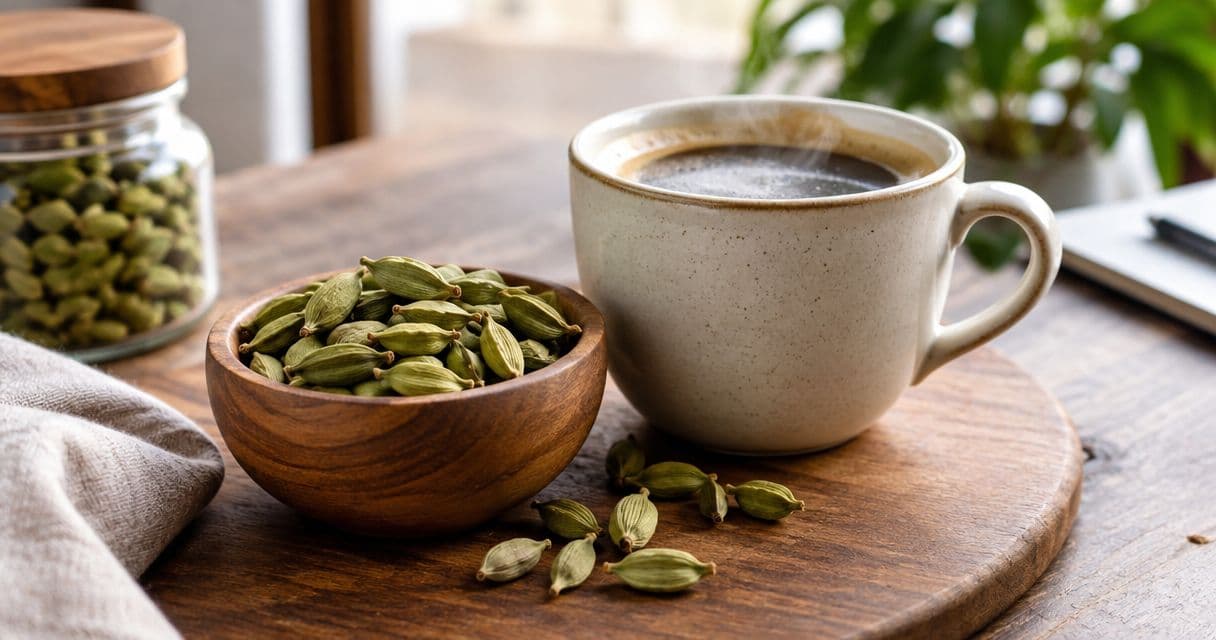
Best overall: whole green cardamom pods, cracked just before brewing. Best for paper-filtered coffee: freshly crushed green cardamom seeds. Best for convenience: pre-ground green cardamom. For an everyday pantry choice, 5Senses offers Green Cardamom Pods alongside its broader whole-spice range.
TL;DR- Choose whole green cardamom pods for coffee when you want to crack and portion the spice yourself.
- 5Senses Green Cardamom Pods suit home cooks making spiced coffee, chai, and everyday pantry dishes.
- Use freshly crushed seeds with paper-filtered coffee; keep husks out of espresso equipment.
- Judge premium cardamom by its aroma, sourcing information, and condition—not green color alone.
Why the pod matters in your coffee
Green cardamom brings a sweet, citrusy, sometimes eucalyptus-like aroma to coffee. The seeds carry the concentrated flavor; the surrounding capsule gives you a convenient way to keep them whole until preparation.
That distinction matters more than an elaborate brewing setup. You can crack a pod with a mortar and pestle, add the spice to your chosen brewing method, and adjust the next cup without changing your coffee beans.
5Senses Green Cardamom Pods are best for home cooks who want one whole spice for coffee, chai, and pantry cooking. Choose the preparation below that fits your equipment rather than treating every form of cardamom as interchangeable.
If you are comparing suppliers, the green cardamom buying guide gives you another starting point for checking product information.
What makes the best green cardamom pods for coffee?
Use these criteria before choosing a bag or deciding how to prepare it:
- Ingredient identity: Choose green cardamom for its sweet, fragrant profile. Black cardamom creates a different, often smoky result.
- Aroma after cracking: Open a pod and smell the seeds. Look for a clear, recognizable cardamom fragrance rather than judging the unopened capsule alone.
- Pod condition: Favor sound capsules without visible mold, dampness, or foreign material. A split pod is not automatically unusable, but it no longer encloses its seeds fully.
- Useful sourcing details: Look for a named growing region and any stated harvest or packing information. A broad origin claim does not establish a particular farm or harvest.
- Preparation fit: Cracked pods suit steeping and straining; crushed seeds fit paper-filtered brewing. Neither belongs in an espresso machine's water tank.
- Repeat use: Choose an amount you will use across coffee and cooking. A large container is not useful if it sits open and forgotten.
Green color alone does not settle the question of freshness. Nor does a large capsule prove a stronger cup. Crack, smell, brew, and judge the result with your own coffee.
Green cardamom for coffee at a glance
These are preparation choices, not a ranking of untested competing brands. The first option keeps the spice whole until you need it; the others trade some flexibility for a different workflow.
| Option | Best for | Standout feature | Key limitation |
|---|---|---|---|
| Whole green cardamom pods | Flexible everyday coffee and cooking | Crack only what you need | Husks need straining or filtering |
| Freshly crushed green cardamom seeds | Paper-filtered coffee | Adds the aromatic seed without the capsule | Requires deseeding and crushing |
| Pre-ground green cardamom | Minimal preparation | Ready to measure into a recipe | Cannot inspect intact pods or freshly opened seeds |
1. Whole green cardamom pods: best for everyday flexibility
Whole green cardamom pods let you choose the preparation at the moment you brew. Crack the capsule for a strained infusion, or remove and crush the seeds for filtered coffee.
5Senses Green Cardamom Pods fit this whole-spice approach. The brand describes its range as direct-from-farm and origin-packed; check the product's own information for the specific growing region, rather than assigning one from the broader range.
Whole green cardamom pods pros
- You can open only the pods needed for the current brew.
- The same ingredient works in coffee, chai, rice, and baking.
- You can smell the seeds immediately after cracking.
- You can choose between a cracked-pod infusion and crushed-seed preparation.
Whole green cardamom pods cons
- Capsules and seed fragments need a suitable filter or strainer.
- Pods vary, so counting them is less repeatable than weighing prepared seeds.
- Opening and crushing adds a small preparation step.
Best for: Home cooks who want a flexible pantry ingredient rather than a coffee-only seasoning.
Keep the first cup simple. Use green cardamom without adding cloves, cinnamon, or vanilla, so you can identify what the cardamom contributes before building a blend.
Verdict: Buy whole green cardamom pods if you want the most preparation choices from one ingredient.
2. Freshly crushed green cardamom seeds: best for filtered coffee
Freshly crushed seeds are a preparation of whole pods, not a separate variety of cardamom. Open the capsule, remove the seeds, and crush them separately from your coffee beans.
Add the crushed seeds to the coffee grounds in a paper filter. The filter keeps coarse particles out of the finished drink, while removing the husk makes the amount of seed easier to compare between brews.
Freshly crushed green cardamom seeds pros
- You control the amount of seed rather than counting differently sized capsules.
- You leave the papery husks out of the coffee bed.
- You can prepare the spice without putting it through your coffee grinder.
- You can adjust the crush separately from the coffee grind.
Freshly crushed green cardamom seeds cons
- Deseeding takes more handling than cracking a whole pod.
- Tiny seeds are easy to scatter on a worktop.
- Preparing a large batch in advance defeats the purpose of crushing immediately before use.
Best for: Pour-over and drip-coffee drinkers who already use paper filters.
Crush only the seeds for the current brew. Keep the remaining pods closed, and avoid changing the coffee grind at the same time as the cardamom dose; otherwise, you will not know which adjustment changed the cup.
Verdict: Buy whole pods and crush the seeds fresh when filtered coffee is your daily method.
3. Pre-ground green cardamom: best for minimal preparation
Pre-ground green cardamom removes the cracking and crushing steps. It suits recipes where you want to measure a spice and continue cooking or brewing.
It does not offer the same inspection experience as whole pods. Check the ingredient declaration to understand what you are buying, and use a filter when you want a cup without suspended spice particles.
Pre-ground green cardamom pros
- No mortar, pestle, or deseeding step is required.
- It is straightforward to measure for a written recipe.
- It works when preparation time matters more than handling whole spices.
Pre-ground green cardamom cons
- You cannot inspect an intact capsule or smell freshly opened seeds.
- Fine powder leaves particles in an unfiltered drink.
- You lose the option of brewing with a cracked capsule.
Best for: Cooks who prioritize a ready-to-measure ingredient.
Do not assume that a spoonful of powder equals a fixed number of pods. Capsule size, seed quantity, and how tightly you fill the spoon all affect the comparison.
Verdict: Buy pre-ground green cardamom for convenience; skip it if opening and preparing whole spices is your priority.
Crack, grind, infuse: a simple coffee starting point
Treat this as a starting recipe, not a universal cardamom-to-coffee ratio. Your beans, brew method, and preferred spice intensity determine the final balance.
For a paper-filtered trial, use:
- Coffee: 12 g, ground for your usual filter method.
- Water: 200 ml, prepared as you normally brew it.
- Cardamom: Seeds from 1 green pod, freshly crushed.
Brew your usual coffee recipe first if you do not already know how those beans taste. Then make the cardamom version without changing the coffee dose or water amount.
Crack
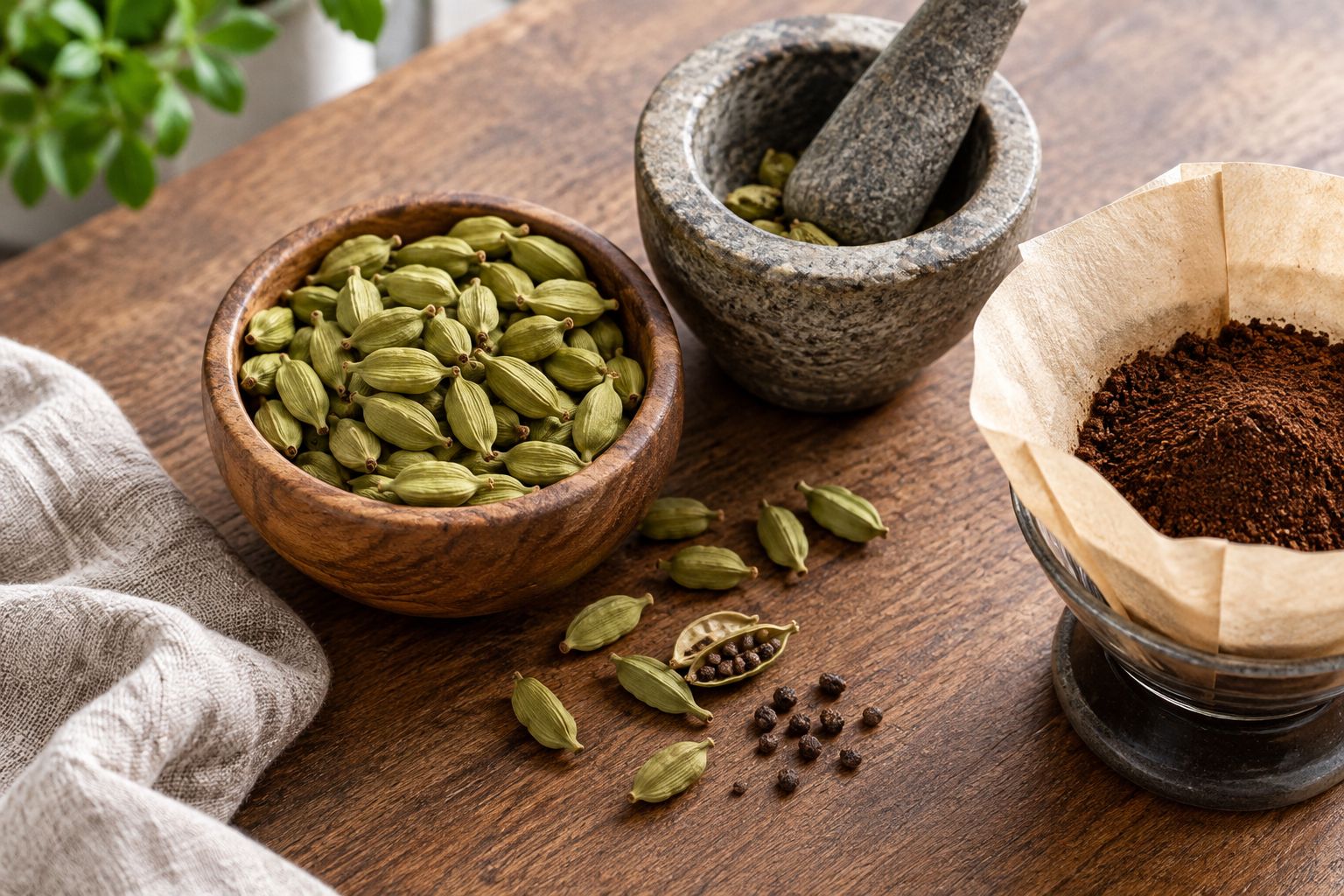
Press the pod gently with a mortar and pestle until the capsule opens. Remove the seeds for filtered coffee, or retain the cracked capsule when you intend to strain a separate infusion.
Grind
Crush the seeds separately with the pestle. A coarse crush is enough to break them open; you do not need to turn them into flour for the starting recipe.
Avoid putting whole pods into a coffee grinder unless its manufacturer explicitly permits spices. A separate mortar also keeps cardamom out of equipment you use for plain coffee.
Infuse
Add the crushed seeds to the ground coffee in the paper filter, then brew using your normal method. Taste before adding sugar or milk, and change only the cardamom amount in the next cup.
For a milk-based drink, an alternative is to warm milk gently with a cracked pod, taste, and strain before combining it with coffee. Keep spice solids out of the espresso machine itself.
Match the preparation to your coffee equipment
Your brewing method determines where the cardamom goes. The goal is to introduce flavor without putting unsuitable material into machinery or leaving unwanted husks in the cup.
| Coffee method | Cardamom preparation | Where to add it | What to avoid |
|---|---|---|---|
| Paper-filtered drip or pour-over | Freshly crushed seeds | Alongside the grounds | Unnecessary changes to coffee grind and spice dose together |
| French press | Cracked pod or crushed seeds | In the brewing vessel | Assuming the metal screen catches every fine particle |
| Saucepan coffee | Cracked pod | In the liquid, followed by straining | Serving loose capsule pieces unintentionally |
| Espresso-based milk drink | Cracked pod infused in milk, then strained | Outside the espresso machine | Pods or powder in the grinder, tank, or steam system |
For French press coffee, use an additional fine strainer if the texture bothers you. For espresso drinks, a separate milk infusion gives you a way to add cardamom while leaving the machine's coffee preparation unchanged.
Should you toast cardamom before brewing?
Start without toasting. Untoasted green cardamom lets you judge its fresh, sweet, citrusy character before introducing another preparation variable.
Toasting is a cooking choice, not a required freshness test. If you want a toasted variation, warm the spice gently in a dry pan, keep it moving, and stop before it scorches; compare it with the untoasted version using the same coffee.
Blooming in fat is useful in many savory dishes, but it is not necessary for this coffee recipe. For a clean starting cup, crack, crush, and infuse.
How these options are ranked
The ranking favors preparation flexibility, the ability to inspect the ingredient, and compatibility with everyday coffee equipment. It does not claim laboratory testing, a measured aroma advantage, or a winning country of origin.
Whole pods take the default position because you can prepare them in several ways. Freshly crushed seeds take the filtered-coffee slot because they remove the capsule; ground cardamom takes the convenience slot because it removes preparation steps.
Origin remains useful buying information, but it is not a substitute for the ingredient in front of you. A named region describes provenance; drying, handling, storage, and your brewing choices also belong in the conversation.
Which green cardamom should you choose?
Choose whole green pods if you are undecided. They give you the option to infuse a cracked capsule or crush just the seeds, and they remain useful outside your morning coffee.
Choose 5Senses Green Cardamom Pods for that whole-spice pantry approach. Use the product's stated provenance when comparing options, and resist treating a regional name, pod size, or vivid color as an automatic flavor ranking.
Buy for the cups and dishes you actually make. A pod used in coffee today can guide tomorrow's chai or cardamom baking without requiring a separate flavored-coffee blend.
FAQ
What's the best green cardamom for coffee?
Whole green cardamom pods are the best default when you want control over preparation. Crack them for an infusion or remove and crush the seeds for paper-filtered coffee.
How many green cardamom pods should I put in coffee?
Start with the seeds from 1 pod for a trial brew using 12 g of coffee and 200 ml of water. This is a starting recipe, not a fixed strength standard; adjust the cardamom while keeping the coffee recipe unchanged.
Do I need to remove cardamom seeds from the pod for coffee?
Remove the seeds when you want a seed-only preparation for filtered coffee. A cracked whole pod also works in a separate infusion that you strain before serving.
Can I put green cardamom pods in my coffee grinder?
Use a separate mortar unless your coffee grinder's manufacturer explicitly permits spices. This also keeps cardamom residue out of equipment used for plain coffee.
Is green cardamom better than black cardamom for coffee?
Green cardamom is the better starting choice for a sweet, citrusy coffee profile. Black cardamom brings a different, often smoky character and is not a like-for-like replacement.
Should I toast green cardamom before adding it to coffee?
Toasting is optional, not a required step. Start with untoasted cardamom, then compare a gently toasted version if you want to explore a different flavor.
Can I add cardamom directly to an espresso machine?
Keep cardamom out of the machine's water tank, grinder, and steam system. For a cardamom latte, infuse a cracked pod in milk separately, strain, and combine with the espresso.
One last thing
Smell the seeds immediately after opening the pod, then smell the brewed coffee. That comparison helps you recognize which cardamom notes survive your particular brewing method.
If the cup tastes too strongly of cardamom, reduce the spice before changing your beans or adding more sugar. Adjust the ingredient that caused the imbalance first.