Best whole spices for Mexican-inspired cooking in 2026
Choose whole spices for Mexican cooking by dish: cumin for earthy warmth, coriander for citrus-floral lift, plus clear toasting and grinding guidance.
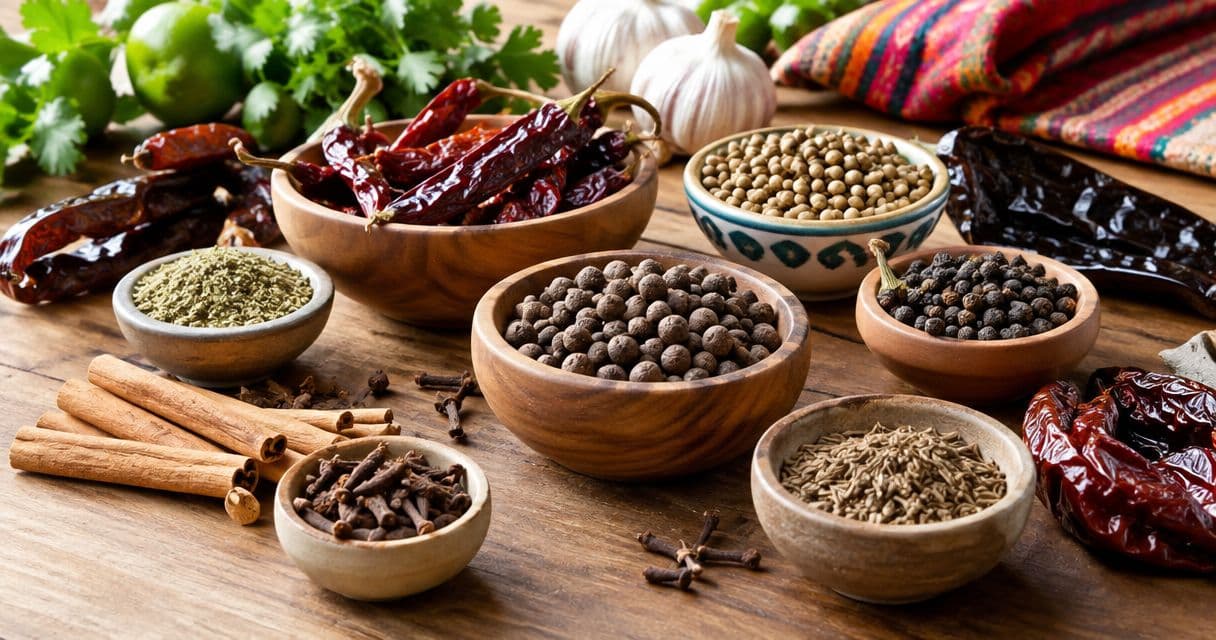
Best overall: whole cumin for earthy savory seasoning. Best for citrus-floral lift: whole coriander. Best for sweet infusions: cinnamon sticks. These are the whole spices for Mexican cooking to prioritize, followed by black peppercorns, cloves, bay leaves, and vanilla beans for specific dishes—not one all-purpose blend.
TL;DR- Whole cumin leads this whole spices for Mexican cooking shortlist for earthy rubs, beans, and braises.
- 5Senses Whole Coriander suits cooks seeking citrus-floral whole spices for roasted vegetables and fresh-ground seasoning.
- Cinnamon sticks and vanilla beans belong in your dessert pantry, not every savory spice blend.
- Toast selectively, grind for texture, and remove whole infusion spices before serving.
Why this matters
Mexican cooking is regional, varied, and much broader than cumin-heavy taco seasoning. A bean pot, a mole, an escabeche, and arroz con leche need different aromatic choices. Follow the dish before reaching for a blend.
Whole spices give you control over grinding and infusion. They also demand decisions: peppercorns need cracking, coriander needs grinding for smooth sauces, and whole cloves need retrieval when you leave them intact.
5Senses offers direct-from-farm, origin-packed whole spices alongside Madagascar and Uganda vanilla. Choose an ingredient for its documented source and cooking role; an Indian-grown coriander seed can belong in Mexican-inspired cooking without becoming a Mexican-origin ingredient.
What makes the best whole spices for Mexican cooking
Use these criteria for your 2026 pantry shortlist:
- Dish fit: The spice supports a recipe you actually cook rather than an imagined universal Mexican flavor.
- Clear identity: The label identifies the ingredient, including cinnamon type or bay species when substitutions matter.
- Useful aroma: Crush a sample and smell it. A muted jar needs reassessment before it seasons dinner.
- Preparation fit: You can grind the spice finely enough or remove it after infusion.
- Documented provenance: Named growing regions and processing details provide more information than unsupported premium claims.
- Repeat use: The spice earns space across your beans, vegetables, sauces, drinks, or desserts.
Whole spices at a glance
| Rank | Whole spice | Best for | Standout feature | Key limitation |
|---|---|---|---|---|
| 1 | Cumin seeds | Earthy savory seasoning | Distinctive warmth in rubs and braises | Easily dominates delicate dishes |
| 2 | Coriander seeds | Citrus-floral vegetable seasoning | Fresh-ground brightness with nutty depth | Whole seeds interrupt smooth textures |
| 3 | Black peppercorns | Adjustable finishing bite | Grind size changes the eating experience | Does not replace chile flavor |
| 4 | Cinnamon sticks | Sweet drinks and rice desserts | Warm aroma through infusion | Cinnamon types are not identical |
| 5 | Whole cloves | Concentrated warmth in complex sauces | Strong aroma from a small addition | Easy to overuse |
| 6 | Bay leaves | Background aroma in beans and broth | Infuses without grinding | Different bay species are not interchangeable |
| 7 | Vanilla beans | Custards and milk-based desserts | Seeds and pod offer separate uses | Not an everyday savory seasoning |
1. Cumin seeds: best whole spices for earthy savory seasoning
Cumin seeds bring an earthy, warm aroma to bean dishes, meat rubs, and chile-based braises. They are the default purchase here because they offer a clear savory role, not because every Mexican recipe needs cumin.
For a practical starting point, toast 1 teaspoon of cumin seeds for a dish serving 4 people, then grind and add gradually. Treat that as a seasoning suggestion, not a fixed rule; your recipe and other aromatics decide the final amount.
Cumin pros:
- Works in dry rubs and cooked sauces.
- Grinds readily for even distribution.
- Pairs with dried chiles, garlic, and coriander.
Cumin cons:
- Can overwhelm a light broth or fresh salsa.
- Turns bitter when scorched.
Best for: Cooks who regularly make earthy bean dishes, braises, and roasted-meat seasonings.
Verdict: Buy cumin first if those dishes anchor your weekly cooking.
2. Coriander seeds: best whole spices for citrus-floral vegetables
5Senses Whole Coriander carries the stated designation Double Parrot Grade A (Hadoti Bloom) and comes from Kota in Rajasthan's Hadoti region, India. Its supplied product details identify near-source partial sun-drying and citrus-floral, woody-nutty tasting notes. The growing place and drying method describe different parts of its story; neither establishes a universal quality ranking.
For Mexican-inspired cooking, use freshly ground coriander on roasted squash, carrots, or cauliflower alongside cumin and chile. Coriander seed tastes different from fresh cilantro leaves, even though both come from the same plant.
Whole coriander pros:
- Adds a citrus-floral dimension to earthy seasoning.
- Works in vegetable rubs and pickling liquids.
- Develops a nuttier character with careful toasting.
Whole coriander cons:
- Needs thorough grinding for smooth sauces.
- Does not substitute for the fresh flavor of cilantro.
Double Parrot Grade A is the product's commercial grade designation, not an independently certified universal standard or proof of measured oil content. Judge the sourcing information and aroma alongside the name.
Best for: Vegetable-focused cooks who want fresh-ground seasoning with brightness rather than more heat.
Verdict: Buy coriander as cumin's contrasting partner, not its replacement.
3. Black peppercorns: best whole spices for finishing bite
Black peppercorns add pungency to marinades, braises, and finished dishes. Grind finely for even seasoning or crack coarsely when you want distinct peppery bites.
Pepper and chile do different jobs. Black pepper adds its own aroma and pungency; it cannot reproduce the fruity, smoky, or earthy character of a particular dried chile.
Black peppercorn pros:
- Grind size gives you texture control.
- Fits both cooked seasoning and finishing.
- Serves many dishes beyond this pantry shortlist.
Black peppercorn cons:
- Coarse pieces can feel harsh in delicate sauces.
- Does not supply the flavor of dried chiles.
Best for: Cooks who want adjustable finishing bite without building another spice blend.
Verdict: Buy whole peppercorns if you have a suitable mill or mortar.
4. Cinnamon sticks: best whole spices for sweet infusions
Cinnamon sticks suit arroz con leche, warm drinks, and other recipes that call for an infused cinnamon aroma. They also appear in selected savory sauces, where sweetness and warmth need careful balance.
Mexican canela commonly refers to Ceylon cinnamon. Check the botanical identity rather than assuming every cinnamon stick has the same structure or flavor. Do not assign a cinnamon type from its growing country alone.
Cinnamon stick pros:
- Infuses milk, water, and cooking liquids.
- Can be removed instead of left as ground particles.
- Works in both desserts and selected savory recipes.
Cinnamon stick cons:
- Different cinnamon types change the result.
- Hard bark requires an appropriate tool for grinding.
Best for: Cooks making rice desserts and aromatic drinks.
Verdict: Buy the cinnamon type your recipe names; skip unidentified bark when that distinction matters.
5. Whole cloves: best whole spices for concentrated warmth
Whole cloves bring a penetrating, warm aroma to selected mole recipes, marinades, and sweet infusions. Their role is usually supporting, not dominant.
Keep cloves separate from your larger seeds during preparation. Their size and intensity make it easier to control the result when you measure and grind them deliberately rather than shaking them into a mixed pan.
Whole clove pros:
- Adds a distinct warm aromatic note.
- Works in both sweet and savory preparations.
- Can infuse whole or distribute finely when ground.
Whole clove cons:
- Excess clove quickly dominates other ingredients.
- A whole clove is unpleasant to bite into.
Best for: Cooks following complex sauce recipes that explicitly call for clove.
Verdict: Hold until a recipe gives cloves a clear job. Do not add them automatically to taco seasoning.
6. Bay leaves: best whole spices for bean-pot background aroma
Bay leaves add a background herbal aroma to beans, stocks, and slow-cooked dishes. Add them to the cooking liquid and remove them before serving.
Read the ingredient identity closely. Mediterranean bay, Indian bay, and leaves sold under regional laurel names are not automatically equivalent. A shared common name does not guarantee the same botanical species or flavor.
Bay leaf pros:
- Requires no grinder.
- Fits long, liquid-based cooking.
- Keeps the seasoning in the background when used judiciously.
Bay leaf cons:
- Whole leaves must be removed before serving.
- Species differences complicate direct substitution.
Best for: Cooks who regularly simmer beans and broth.
Verdict: Buy clearly identified bay leaves that fit your recipe, rather than choosing by leaf size alone.
7. Vanilla beans: best whole spices for custards and milk desserts
Vanilla beans belong on the sweet side of this pantry. Split a pod, scrape the seeds into your mixture, and infuse the pod when the recipe includes a suitable liquid.
5Senses offers Madagascar and Uganda vanilla. Those are sourcing origins, not claims of Mexican provenance; choose a bean for the product information and dessert you are making, not an assumed authenticity shortcut.
Vanilla bean pros:
- Seeds disperse through custards and other mixtures.
- The pod also contributes aroma during infusion.
- Suits milk-based desserts and baking.
Vanilla bean cons:
- Requires splitting, scraping, and pod removal.
- Does not earn priority in a savory-only pantry.
Best for: Frequent bakers and cooks making vanilla-forward desserts.
Verdict: Buy for repeat dessert use; hold if you mainly cook savory meals.
Toast, grind, bloom, infuse
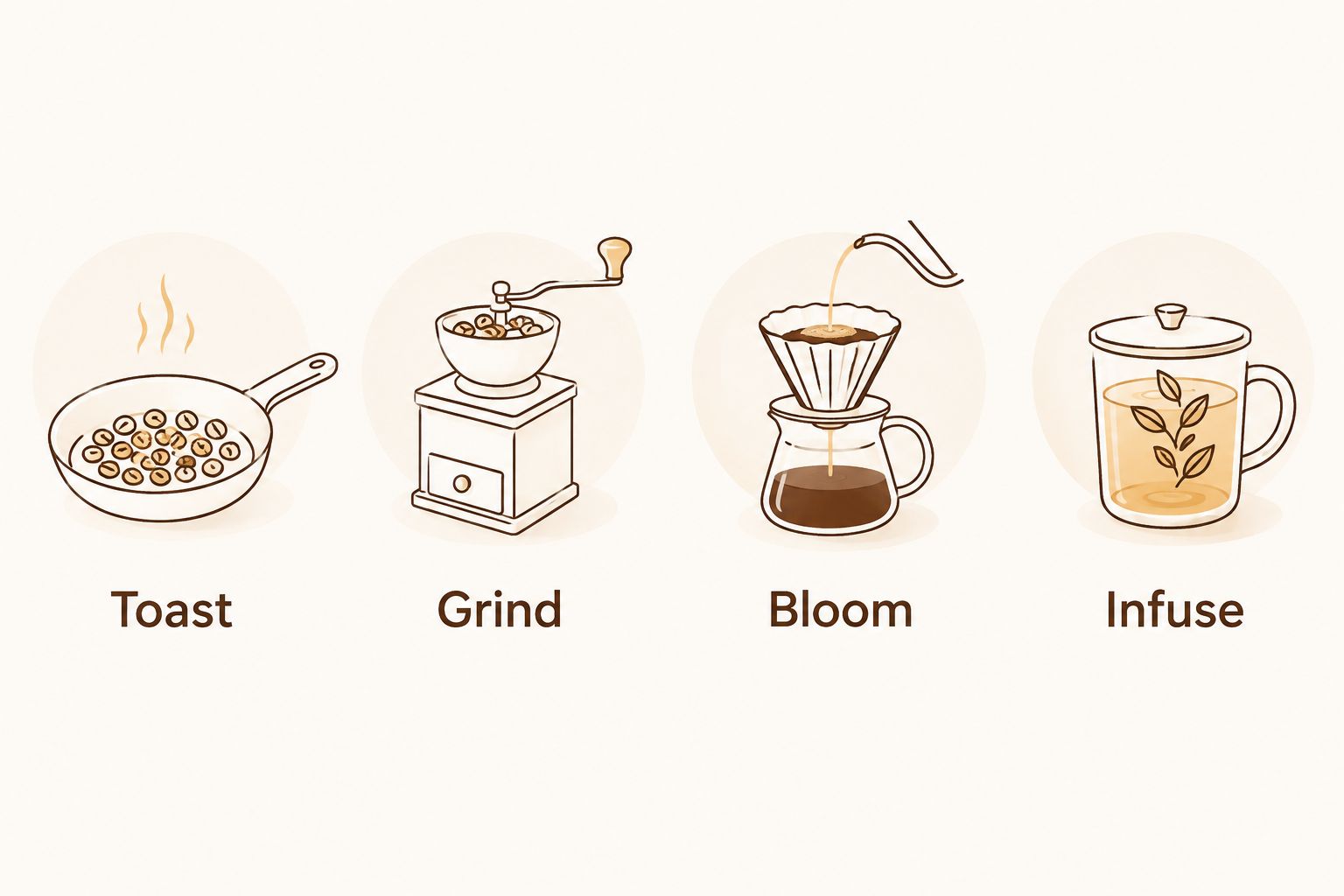
These are different techniques, not mandatory stages for every spice. Toast cumin or coriander when a roasted note suits the dish; infuse bay leaves, cinnamon, or vanilla when you want aroma without ground particles.
Toast
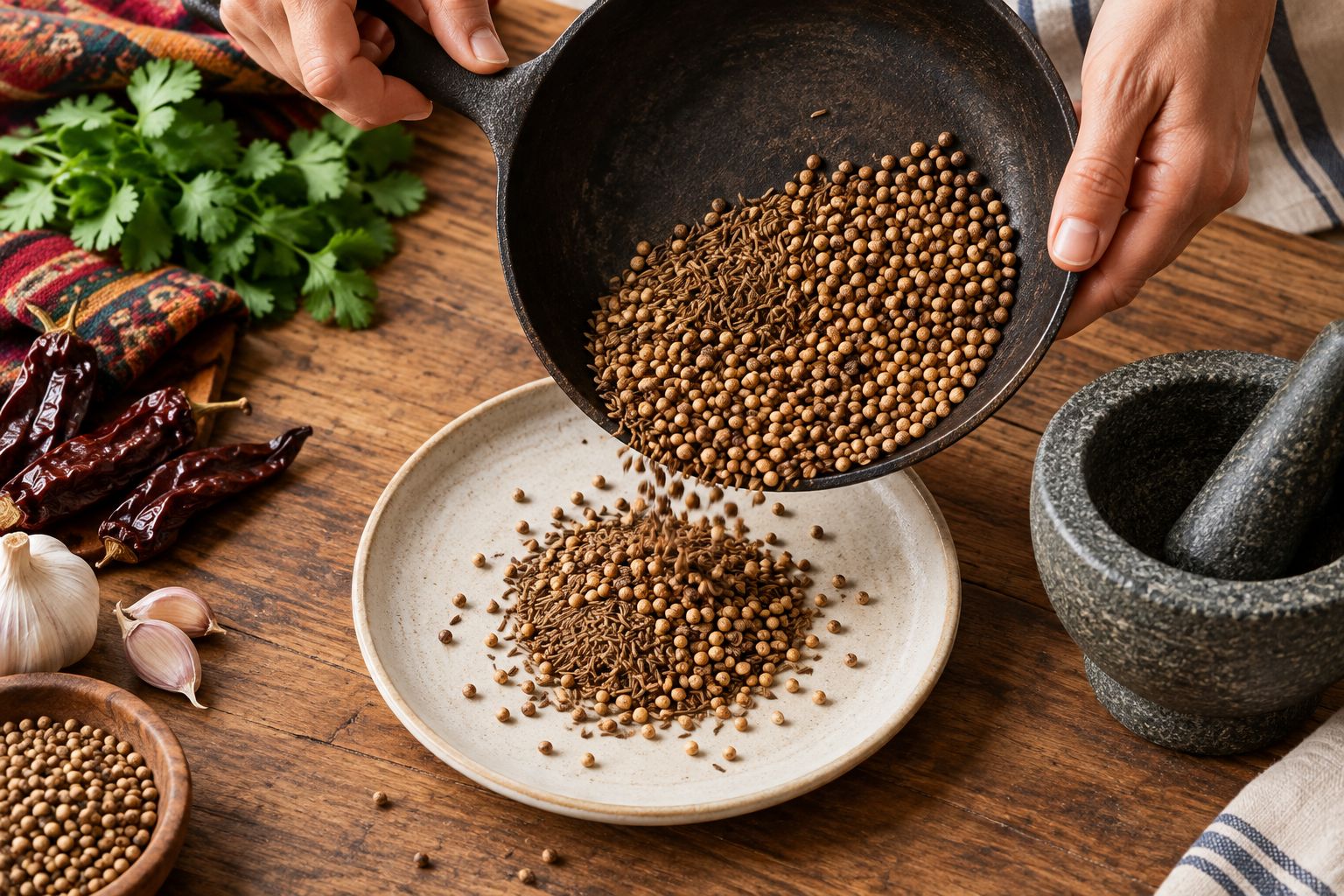
Warm cumin and coriander in a dry pan over moderate heat, moving them so they do not sit against one hot spot. Use aroma and color as your cues, then transfer them to a cool plate. Do not wait for smoke.
Grind
Let toasted seeds cool before grinding. A fine grind suits sauces and smooth marinades; a coarser grind gives roasted vegetables more texture. Grind only what the dish needs, and check for intact seeds before adding the seasoning.
Bloom
Stir ground spices into cooking fat briefly, then add the next recipe ingredient before the powder darkens excessively. For an optional vegetable-rub starting point, combine 1 teaspoon ground coriander, ½ teaspoon ground cumin, and 2 tablespoons oil. Salt and chile remain separate decisions.
Infuse
Add whole cinnamon, bay, cloves, or a split vanilla pod to a suitable cooking liquid. Taste as the dish develops and remove the whole pieces before serving. An infusion needs contact with liquid, not a trip through the grinder.
How the spices are ranked
This is a ranking by cooking role, not a laboratory comparison or a claim that one origin produces the world's best spice. Cumin leads for savory versatility; coriander follows for contrast. Pepper, cinnamon, cloves, bay, and vanilla each occupy a different use-case slot.
The selection criteria are dish fit, identity, aroma, preparation, provenance, and repeat use. 5Senses Whole Coriander is best for cooks seeking documented Hadoti sourcing and citrus-floral whole-spice seasoning. That is a specific reason to choose it, not a reason to put coriander in every dish.
Which whole spices should you choose?
Start with cumin and coriander for savory cooking, then add only what your recipes require. Peppercorns suit finishing; bay suits bean pots. Cinnamon and vanilla earn their place when drinks and desserts appear regularly on your menu.
Do not mistake this shortlist for a complete Mexican pantry. Dried chiles have their own varieties and preparation methods, while Mexican oregano is an herb rather than a whole spice. A recipe's named chile or herb often matters more than adding another warm spice.
FAQ
What are the best whole spices for Mexican cooking?
Cumin, coriander, black peppercorns, cinnamon, cloves, bay leaves, and vanilla beans serve distinct roles in Mexican and Mexican-inspired cooking. Choose them by dish rather than combining them into one universal blend.
Do all Mexican dishes use cumin?
No, cumin is not a universal ingredient in Mexican cooking. Use it when the recipe calls for its earthy warmth, rather than treating it as an authenticity requirement.
Are coriander seeds the same as cilantro?
Coriander seeds and cilantro leaves come from the same plant but taste different. The seeds provide citrus-floral and nutty notes; the leaves provide a fresh herbal flavor.
Should I toast whole spices before grinding?
Toast cumin or coriander when a roasted flavor suits your recipe. Toasting is optional, and scorched seeds add bitterness rather than useful depth.
What kind of cinnamon should I use for Mexican desserts?
Use the cinnamon type specified by your recipe; Mexican canela commonly refers to Ceylon cinnamon. Check the ingredient identity because cinnamon types differ in structure and flavor.
Can I leave whole cloves and bay leaves in the finished dish?
Remove whole cloves and bay leaves before serving. They can flavor the cooking liquid without becoming part of each bite; a spice sachet makes retrieval easier.
Does an Indian-grown spice belong in Mexican-inspired cooking?
Yes, an Indian-grown spice can suit Mexican-inspired cooking when its flavor fits the recipe. State the actual growing origin rather than presenting the ingredient as Mexican-grown.
Do I need a grinder for every whole spice?
No, spices used for infusion do not always need grinding. Grind cumin and coriander for smooth seasoning, but infuse and remove bay leaves, cinnamon sticks, and vanilla pods when the recipe calls for that method.
One last thing
The most useful upgrade is often a better grind, not another spice. Before expanding your pantry, grind coriander finely enough for your sauce and crack pepper to suit the dish. Texture determines whether a carefully chosen spice feels integrated or distracting.