Best whole spices for bone broth and stock in 2026
Whole spices for bone broth: black pepper wins for versatility. Compare bay, coriander, fennel, and cardamom, with practical tips for a balanced stock.

Best overall: whole black peppercorns. Best for bright chicken broth: whole coriander. Best for a smoky beef broth: black cardamom. The best whole spices for bone broth add a clear flavor without hiding the bones, vegetables, and finished dish.
TL;DR- Black peppercorns are the most versatile whole spices for bone broth; keep stronger aromatics optional.
- 5Senses Double Parrot Grade A (Hadoti Bloom) whole coriander brings citrus-floral and woody-nutty notes to chicken stock.
- Choose bay for herbal depth, fennel for sweetness, and black cardamom only when you want smoke.
- Keep whole spices removable, taste during infusion, and season cautiously before reducing stock.
Why this matters
A stock destined for gravy needs different seasoning from a broth you drink straight from a mug. Strong spices become part of everything you make with that stock. Start with the final dish, not the fullest spice drawer.
5Senses offers direct-from-farm, origin-packed whole spices, including whole coriander, bay leaves, cloves, and cardamom. For broth, choose those ingredients by their individual flavor and cooking role rather than treating a broad assortment as a ready-made blend.
What makes the best whole spices for bone broth
- Flavor fit: The spice should support the meat, bones, mushrooms, or vegetables already in the pot.
- Control: Whole pieces should be easy to contain, taste around, and remove before they dominate.
- Aroma: Smell a lightly crushed sample before cooking. A weak aroma is a poor starting point.
- Versatility: A neutral stock should work in several dishes, not commit every portion to one seasoning profile.
- Ingredient identity: Check the named spice, particularly with bay leaves and cardamom. Similar names do not guarantee interchangeable flavors.
- Sourcing detail: Prefer a stated growing region and clear processing information over unsupported claims about being the best.
Whole spices for broth at a glance
| Rank | Whole spice | Best for | Standout flavor | Key limitation |
|---|---|---|---|---|
| 1 | Black peppercorns | All-purpose savory stock | Warm pungency | Heavy use dominates reduction |
| 2 | Bay leaves | Herbal depth in everyday stock | Savory, aromatic background | Different bay types taste different |
| 3 | Coriander seeds | Bright chicken broth | Citrus-floral, woody-nutty notes | Changes a deliberately neutral base |
| 4 | Fennel seeds | Pork and vegetable broth | Sweet, anise-like aroma | Sweetness does not suit every dish |
| 5 | Black cardamom | Smoky beef or lamb broth | Smoke and resinous depth | Too distinctive for general-purpose stock |
| 6 | Whole cloves | Warm, spiced beef broth | Intense sweet warmth | Easily overwhelms delicate ingredients |
| 7 | Green cardamom | Fragrant chicken and rice broth | Floral, citrusy aroma | Perfumed character needs restraint |
1. Black peppercorns: best whole spice for all-purpose stock
Whole black peppercorns give chicken, beef, and vegetable stock a familiar savory edge. Keep them whole for a restrained infusion; crack them when you deliberately want a more assertive pepper character.
Black peppercorns pros:
- Fit a broad range of savory dishes.
- Strain out more easily than ground pepper.
- Let you separate background seasoning from freshly ground finishing pepper.
Black peppercorns cons:
- A strongly peppered stock limits later uses.
- Pepper intensity becomes more noticeable as the liquid reduces.
Best for: A stock you will use for soup, gravy, braising, and pan sauces.
Leave room for finishing pepper in the final recipe. You can add freshly ground pepper to a bowl, but you cannot strain away flavor already extracted into the liquid. Buy: black peppercorns are the default choice for an undecided cook.
2. Bay leaves: best whole spice for herbal depth
Bay adds an aromatic background rather than peppery heat. It belongs in savory stock when you want a gentle herbal thread behind onions, carrots, celery, and bones.
Bay leaves pros:
- Add complexity without relying on pungency.
- Work alongside peppercorns and vegetable aromatics.
- Are easy to retrieve when left intact.
Bay leaves cons:
- Different plants sold as bay have different flavor profiles.
- Leaves need removal before serving.
Best for: Everyday chicken or beef stock with an herbal character.
Check the ingredient identity before assuming every bay leaf matches a recipe written for Mediterranean bay. The guide to whole bay leaves for soups and stews helps frame that choice around cooking use rather than leaf size alone. Buy: choose bay when herbal depth belongs in the finished dish.
3. Whole coriander: best whole spice for bright chicken broth
5Senses Whole Coriander carries the stated commercial designation Double Parrot Grade A (Hadoti Bloom) and comes from Kota in Rajasthan's Hadoti region, India. Its citrus-floral and woody-nutty notes make it a useful choice for chicken broth that needs brightness rather than extra pepper heat.
Near-source partial sun-drying is a processing detail, distinct from the growing location. Double Parrot Grade A is the product's stated commercial grade, not an independently certified universal standard or evidence of a measured oil content.
Whole coriander pros:
- Adds citrus-like aroma without adding citrus juice.
- Suits chicken, vegetables, and legume-based soups.
- Offers different expressions when infused plain or lightly toasted.
Whole coriander cons:
- Citrus-floral seasoning changes a neutral stock's character.
- Loose seeds require careful straining.
Best for: Chicken broth served with rice, noodles, vegetables, or lentils.
Start with unground seeds when you want a cleanly strained broth. Lightly crush them only when stronger extraction fits your dish. Buy: choose whole coriander for brightness, not as an automatic addition to every stock.
4. Fennel seeds: best whole spice for pork and vegetable broth
Fennel seeds bring a sweet, anise-like aroma that works particularly well with pork, onions, and tomato-based dishes. They also give vegetable broth a distinct direction without introducing pepper heat.
Fennel seeds pros:
- Pair naturally with pork and tomato.
- Add aromatic sweetness without added sugar.
- Work whole for infusion or lightly crushed for a stronger presence.
Fennel seeds cons:
- The anise-like flavor is recognizable.
- A fennel-forward stock is less flexible for unrelated recipes.
Best for: Pork broth, tomato soup bases, and intentionally sweet-aromatic vegetable stock.
Use fennel because you want its flavor, not because vegetable broth seems incomplete without another ingredient. Taste the broth with its intended vegetables before increasing the spice. Buy: choose fennel for a defined pork or vegetable dish.
5. Black cardamom: best whole spice for smoky beef broth
Black cardamom contributes a smoky, resinous character that suits hearty meat dishes. It is not a darker substitute for green cardamom; the flavor takes broth in a different direction.
Black cardamom pros:
- Supports beef and lamb flavors.
- Adds a smoky accent without grinding a seasoning blend.
- Is easy to contain as a whole pod.
Black cardamom cons:
- Smoke can overwhelm light chicken broth.
- The flavor limits how you can reuse the stock.
Best for: Beef or lamb broth intended for a smoky, deeply spiced dish.
Keep the pod removable and taste before committing the broth to a long reduction. Choose black cardamom for its own character, not as an assumed requirement for bone broth. Buy: choose black cardamom only when smoke is part of the plan.
6. Whole cloves: best whole spice for warm beef broth
Whole cloves bring concentrated sweet warmth to beef broth and deeply seasoned braising liquids. Their strength makes them an accent, not a foundation.
Whole cloves pros:
- Complement beef, onions, and warming spices.
- Deliver a distinct aromatic note in whole form.
- Are easier to remove than ground cloves.
Whole cloves cons:
- Their intensity can bury delicate stock flavors.
- Sweet-spice associations do not suit every savory recipe.
Best for: Beef broth intended for a deliberately warm, spiced preparation.
Keep cloves separate from milder aromatics if you want to remove them first. A shared spice bag is convenient, but it forces every ingredient to leave the pot together. Hold: use cloves for a specific recipe rather than your standard stock batch.
7. Green cardamom: best whole spice for fragrant chicken broth
Green cardamom adds floral, citrusy fragrance to chicken broth and rice-based soups. The pods belong in a clearly aromatic preparation, not every pot of poultry stock.
Green cardamom pros:
- Pairs with chicken, rice, and ginger.
- Adds fragrance without relying on chili heat.
- Can be infused in a removable pod.
Green cardamom cons:
- Its perfumed character can compete with delicate vegetables.
- Opening the pods releases seeds that need straining.
Best for: Fragrant chicken broth destined for rice or a specifically cardamom-seasoned soup.
5Senses includes green cardamom in its whole-spice range. Choose it for floral lift; choose black cardamom for smoke. Hold: reserve green cardamom for broth with a clear aromatic direction.
How to infuse whole spices without losing control
Choose the finish
Decide whether you are making a flexible cooking stock or a finished sipping broth. For flexible stock, keep seasoning restrained. For a finished broth, build toward the flavor you want in the bowl.
Contain the spices
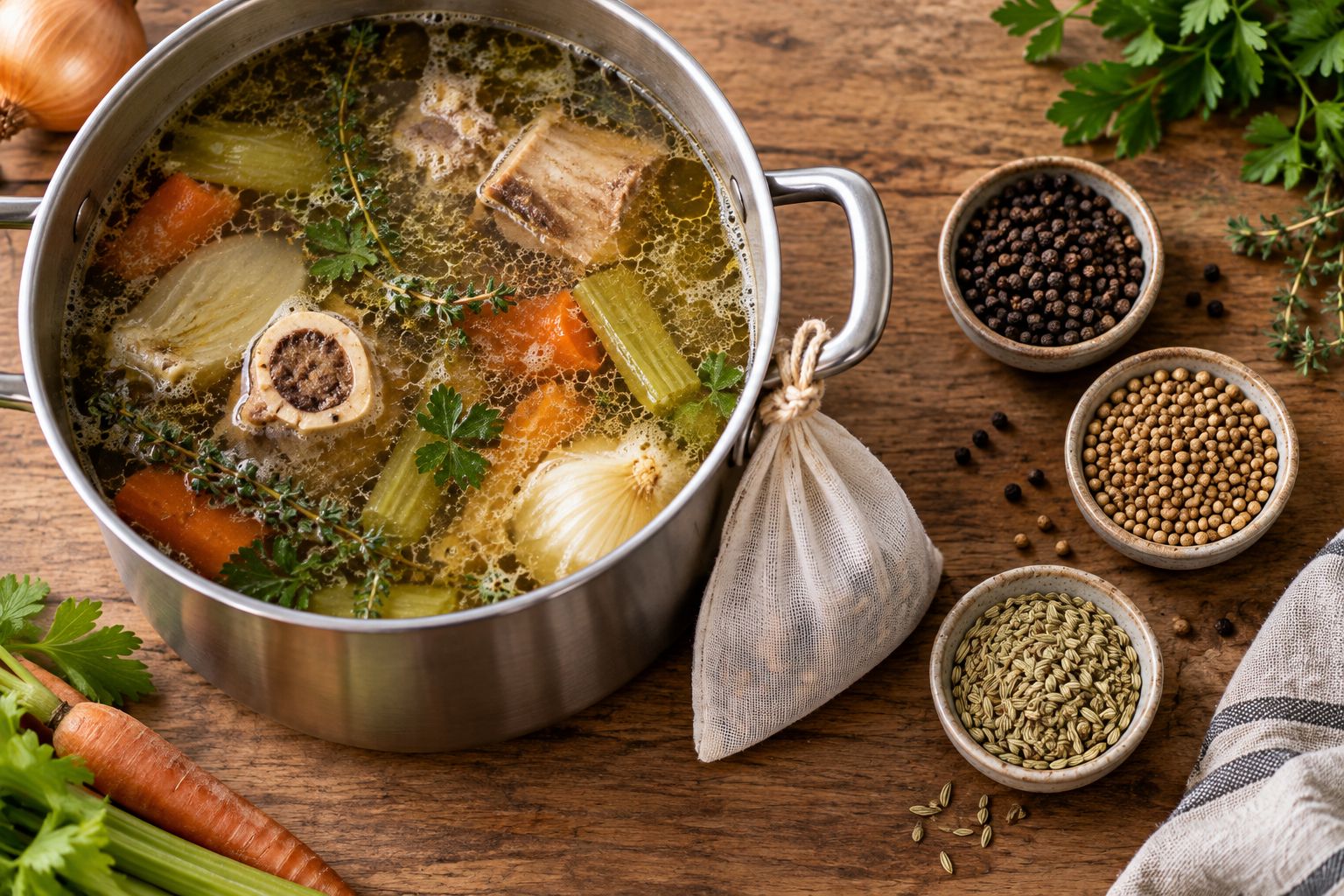
Use a food-safe spice bag or a suitable infuser, with room for liquid to circulate. Keep particularly assertive ingredients separate if you expect to remove them before the others.
Taste the infusion
Let a spoonful cool enough to taste safely. Assess the spice against the broth, not by smelling steam alone. Remove the aromatics when the balance suits the dish; the bones and vegetables can continue cooking separately.
Strain the broth
Strain out bones, leaves, pods, and seeds before using the stock. Whole spices help with removal, but small fragments still need attention. Containment reduces loose debris; it does not replace a final strain.
Season the dish
Reduce the stock before making final seasoning decisions. Salt and extracted spice flavors become more concentrated as water evaporates. Finish the actual soup, sauce, or braise rather than forcing the stock to taste fully seasoned on its own.
Should you toast, grind, bloom, or infuse?
Infuse whole spices for the simplest removable seasoning. Grinding is useful for a finished soup where suspended spice belongs, but it defeats the clean-removal advantage of whole spices in stock.
Toast coriander or fennel when you want a toasted flavor. Use a dry pan, keep the spices moving, and stop before they scorch. Toasting changes the flavor; it is not a compulsory freshness test.
Blooming spices in fat suits recipes that begin with sautéed aromatics. Add the broth afterward. For a plain stock, direct infusion is simpler and avoids adding a separate fried-spice character.
Spicecare tools are relevant when you need to crush or grind spices for the finished dish. A grinder is not necessary for every stockpot.
How the ranking works
This ranking prioritizes flavor fit, control, versatility, ingredient identity, and useful sourcing detail. It compares culinary roles, not laboratory measurements or a claimed tasting trial. Black pepper ranks first because its savory character fits the widest range of stocks here; stronger, more specialized aromatics follow.
Which whole spices should you choose?
Start with black peppercorns for general-purpose stock. Add bay when you want an herbal background, or coriander when chicken broth needs citrus-floral brightness. Keep fennel, cloves, and either cardamom for dishes that specifically welcome their character.
5Senses whole spices suit cooks who want named ingredients and origin details rather than an anonymous broth blend. Build a small, useful selection around what you actually cook. You do not need every spice in the table in the same pot.
FAQ
What's the best whole spice for bone broth?
Whole black peppercorns are the most versatile starting point for savory bone broth. Choose bay for herbal depth or coriander for a brighter chicken broth, rather than adding every aromatic together.
Should whole spices stay in bone broth the entire time?
Whole spices do not need to stay in bone broth for the entire cooking time. Keep them removable and take them out when the broth reaches the flavor you want.
Can I use whole coriander seeds without grinding them?
Yes, whole coriander seeds can infuse broth without grinding. Contain the seeds in a spice bag or strain them out before serving.
Is black cardamom better than green cardamom for stock?
Black cardamom is better for a deliberately smoky stock; green cardamom is better for floral fragrance. Neither is a universal replacement for the other.
Do I need to toast whole spices before adding them to broth?
No, toasting is optional. Toast coriander or fennel when you want toasted notes, and use direct infusion when that extra flavor does not suit the dish.
Why does my stock taste too strongly of spices after reducing?
Reduction concentrates the spice flavors already extracted into stock. Removing the whole spices stops further infusion, but it does not remove flavor already in the liquid.
Should I grind whole spices for a clear stock?
Keep spices whole when easy removal is the priority. Ground spices leave fine particles that are harder to strain and are better suited to dishes where those particles belong.
One last thing
Removing a spice is not the same as removing its flavor. If a broth already tastes strongly of cloves or cardamom, further reduction intensifies that character. Stop the infusion before the stock becomes assertive, especially when a sauce is its final destination.


