Best Malabar green cardamom for chai and biryani in 2026
Choose malabar cardamom as whole pods for chai and biryani. Compare preparation methods, read origin details, and learn when to crack, grind, or infuse.

Best overall: whole green cardamom pods with a stated Malabar growing origin. Best for chai: freshly cracked pods. Best for a smooth biryani masala: freshly ground seeds. The right choice starts with provenance, then preparation—not the brightest green shell.
TL;DR- Choose malabar cardamom with a stated growing origin; a regional name alone does not establish freshness.
- 5Senses offers green cardamom pods for cooks who prefer whole spices and fresh preparation.
- Crack pods for chai; keep pods whole or lightly split for biryani infusion.
- Grind the seeds without the husks when you need a smooth spice powder.
Why this matters
Malabar names a region on India’s southwestern coast. Green cardamom, Elettaria cardamomum, is native to the Western Ghats of southwestern India, but the species’ native range does not prove where a particular packet was grown. Read the product’s sourcing information separately from its botanical history.
5Senses offers green cardamom within its broader direct-from-farm, origin-packed whole-spice range. 5Senses green cardamom is a practical choice for home cooks who want whole pods for chai and rice. For any specifically Malabar-labeled purchase, check the stated growing origin rather than treating the name as a freshness grade.
The cooking decision is simpler. Chai needs flavor to move into liquid; biryani needs fragrance distributed through rice, fat, or masala. The same green cardamom can serve both dishes, but the way you open and use it changes the result.
What makes the best Malabar cardamom
Use these criteria before choosing a packet or deciding how to prepare it:
- Clear growing origin: Look for an identified source, not just a packing location or an evocative regional name.
- Useful freshness information: Read harvest and packing details when provided. Neither a colorful shell nor a large pod replaces those facts.
- Aroma after opening: Crack a pod and smell the seeds. Look for a distinct, clean cardamom fragrance rather than relying on appearance alone.
- Pod condition: Prefer intact pods for pantry storage. Already-open shells expose the seeds and make handling history more relevant.
- Preparation fit: Choose pods for infusion and seeds for smooth powder. Your recipe determines which form works best.
- Practical storage: Buy an amount you will use regularly and keep it sealed, dry, and away from stove heat.
There is no evidence here for naming a universally best Malabar farm, seller, pod size, or commercial grade. These criteria give you a useful buying decision without turning an origin name into an unsupported ranking.
Malabar cardamom preparations at a glance
These are preparation choices, not separate brands or claims that one growing region outperforms another.
| Preparation | Best for | Standout feature | Key limitation |
|---|---|---|---|
| Whole green cardamom pods | A versatile chai-and-biryani pantry staple | You decide when to expose the seeds | Closed pods release flavor less readily than cracked pods |
| Freshly cracked pods | Chai strained before serving | Liquid reaches the seeds while the husks remain easy to strain | Loose seeds need a fine strainer |
| Freshly ground seeds | Smooth biryani masala and finishing blends | Cardamom disperses without fibrous husk pieces | Powder is harder to remove or correct once added |
1. Whole green cardamom pods: best for pantry versatility
Whole pods are the default purchase when you make both chai and biryani. You can leave them intact for a gentler infusion, split them to expose the seeds, or remove the husks before grinding.
That flexibility matters more than choosing a different packet for every dish. Keep the spice whole until you know how you will use it, then prepare only what the recipe needs.
Whole green cardamom pods pros:
- Support liquid infusion, fat blooming, and fresh grinding.
- Keep the seeds enclosed until preparation.
- Make it easier to compare the aroma of newly opened pods.
Whole green cardamom pods cons:
- Require cracking or deseeding for some recipes.
- Leave fibrous shells that diners should set aside.
For biryani, add whole or lightly split pods where your recipe introduces whole spices: into the cooking liquid, the fat, or the masala. Those methods are alternatives within different recipes, not instructions to add a full cardamom dose at every stage.
Best for: Cooks replenishing a pantry staple for several uses.
Verdict: Buy whole pods as your default form.
2. Freshly cracked pods: best for chai
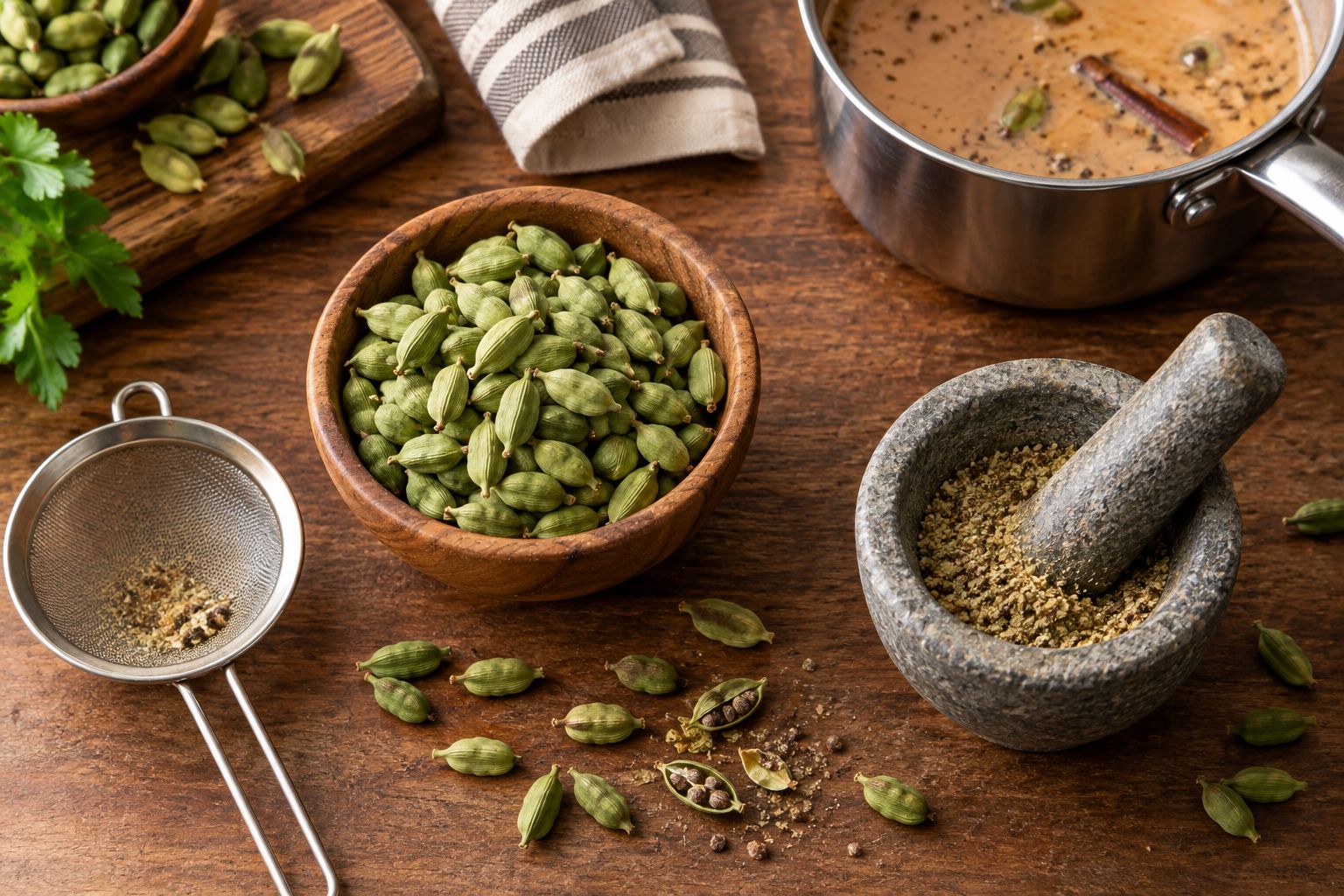
Cracking opens the shell so hot liquid can reach the seeds. You do not need to pulverize the entire pod; a gentle press with a mortar and pestle or the flat side of a knife is enough to split it.
For chai, add the cracked spice at the stage your recipe calls for whole spices. Strain before serving. Cardamom should remain recognizable beside tea, milk, ginger, or other spices rather than disappear beneath them.
Freshly cracked pods pros:
- Expose seeds without requiring complete deseeding.
- Work with a mortar and pestle rather than a grinder.
- Suit drinks that will be strained before serving.
Freshly cracked pods cons:
- Release loose seeds into the saucepan.
- Are less suitable for keeping as a prepared pantry batch.
Crack pods just before brewing instead of crushing your entire supply. If the finished chai tastes sharply cardamom-heavy, reduce the next batch’s cardamom before changing every spice at once. Keeping the tea, milk, and brewing method consistent makes that adjustment easier to judge.
Best for: Everyday chai drinkers who strain their tea.
Verdict: Buy whole pods and crack them at brewing time.
3. Freshly ground seeds: best for smooth biryani masala
Open the pods, collect the seeds, and grind those seeds when you need cardamom to disappear into a spice blend. Removing the husks avoids the fibrous fragments that whole-pod grinding introduces.
This form suits recipes that call for ground cardamom in a marinade, masala, or finishing spice mixture. It is not a reason to replace every whole pod in a biryani recipe with powder.
Freshly ground seeds pros:
- Distribute cardamom through a smooth spice mixture.
- Avoid whole shells in the finished dish.
- Let you grind alongside compatible whole-spice ingredients.
Freshly ground seeds cons:
- Take more preparation than cracking pods.
- Cannot be lifted out after seasoning the dish.
Follow the recipe’s specified form rather than treating pods and powder as interchangeable measures. Seed yield varies, so a universal pod-to-spoon conversion is a poor substitute for the recipe’s direction. The guide to deseeding cardamom before grinding explains that preparation choice in more detail.
Best for: Cooks making smooth masalas or controlled finishing blends.
Verdict: Buy whole pods, then grind the seeds as needed.
Read the origin before judging the color
Malabar’s connection to cardamom is geographic and botanical; it is not a promise that every packet bearing the name has identical flavor. Growing place, plant selection, harvest, drying, and storage are separate parts of the ingredient’s story.
Ask what the seller actually identifies. A named growing region is more specific than a country alone, but specificity still needs to describe the spice being sold. “Packed in” tells you where packing happened, not necessarily where the plants grew.
Farmer knowledge belongs in a credible origin account: when to harvest, how to handle the capsules, and how to dry them are meaningful subjects. Do not fill gaps in that account with imagined elevations, soil types, rainfall figures, or claims that a particular landscape guarantees stronger aroma.
For 5Senses green cardamom, use the current product information for the product-to-region match. The brand’s direct-from-farm and origin-packed positioning does not justify adding an unstated farm, harvest date, certification, or growing condition.
Color deserves the same restraint. Green appearance is a visible characteristic, not a complete test of seed aroma, storage history, or authenticity. Open a pod before making a sensory judgment.
Crack, grind, bloom, or infuse
Each action solves a different cooking problem. Decide which result you want before reaching for the grinder.
- Crack: Split the shell to expose the seeds for chai or other strained infusions.
- Grind: Remove the husks and reduce the seeds to powder for smooth seasoning.
- Bloom: Warm whole or split pods briefly in recipe fat, watching closely so they do not scorch.
- Infuse: Let pods flavor the recipe’s liquid, then remove or strain them when practical.
Toasting is not compulsory. A recipe built around fresh, sweet cardamom fragrance does not automatically benefit from dry-roasting the spice first. Follow the preparation the dish needs rather than applying the same treatment to every whole spice.
For chai, cracking and infusion usually do the work. For biryani, whole-spice blooming and liquid infusion are useful techniques, while grinding belongs where the recipe calls for a powdered blend. Avoid stacking all these methods without adjusting the total seasoning.
Keep the flavor clear in chai and biryani
For chai
Start with a familiar chai recipe and change only the cardamom preparation. Compare intact pods with freshly cracked pods while keeping the other ingredients consistent. Taste the finished drink, not just the saucepan’s aroma.
A strong-smelling brew is not automatically balanced chai. If cardamom overwhelms the tea, use less next time; if another spice dominates, adjust that ingredient instead of endlessly increasing cardamom.
For biryani
Decide whether cardamom should provide a background fragrance or a more direct presence in the masala. Whole pods suit infusion; ground seeds distribute through the mixture. Neither choice is universally more authentic across the many regional biryani traditions.
Remember that green and black cardamom are different ingredients. Green cardamom brings a sweet, aromatic character; black cardamom commonly brings a smoky character. Use the type the recipe specifies rather than substituting by pod count.
For the next meal
Keep the remaining pods sealed in a dry cupboard away from heat and direct light. Use a clean, dry utensil, and avoid opening the container over a steaming pan. Grind only the portion needed for the dish.
5Senses pairs whole spices with its Spicecare range for storage and preparation. Choose tools by the task: a mortar for cracking, a suitable grinder for seed powder, and a well-sealed container for the remaining pods.
How these recommendations are ranked
The order follows versatility, preparation fit, and ease of control. Whole pods come first because they support all the cooking methods discussed here. Cracked pods take the chai slot; ground seeds take the smooth-masala slot.
This is a ranking of useful forms, not a laboratory comparison of brands or a claim that one Malabar harvest is best. Origin information and the aroma of the actual spice remain part of your buying decision.
Which Malabar cardamom should you choose?
Choose whole green cardamom pods with a clearly stated Malabar growing origin if Malabar provenance is your priority. Keep the pods intact in storage, crack them for chai, and deseed them when a recipe needs smooth powder.
For an everyday pantry, that single purchase covers more ground than buying separate preparations. Choose by documented origin and practical use—not an unsupported “best” label.
FAQ
What's the best Malabar cardamom for chai?
Whole green cardamom pods, cracked just before brewing, are the most practical choice for strained chai. Cracking exposes the seeds without requiring you to grind them into powder.
Should I use whole or ground cardamom in biryani?
Use the form specified by your biryani recipe. Whole or lightly split pods suit infusion, while ground seeds suit smooth masalas and finishing blends.
Does Malabar cardamom mean the same thing as green cardamom?
No. Green cardamom identifies the ingredient, while Malabar can describe a growing origin or appear in cultivar terminology. Read the seller's description to establish what the name means for that product.
Are the greenest cardamom pods always the best?
No. Shell color alone does not establish freshness, provenance, or seed aroma. Read the sourcing details and smell the seeds after opening a pod.
Do I need to remove cardamom husks before grinding?
Remove the husks when you want a smooth seed powder. Whole husks add fibrous material, while cracked pods with their husks work well in drinks that will be strained.
Can I use black cardamom instead of green cardamom?
Black cardamom is not a direct flavor substitute for green cardamom. Its commonly smoky character changes the dish, so follow the recipe's specified type rather than exchanging equal numbers of pods.
Should I toast green cardamom before making chai?
Toasting is not required for chai. Cracking the pods and infusing them in the recipe's liquid releases flavor without adding a separate dry-roasting step.
One last thing
Smell the seeds, not just the unopened packet. Crack a pod before you begin cooking and use that moment to judge the ingredient you actually have. A regional name tells a sourcing story; the opened spice tells you what is going into dinner.


