Best whole spices for holiday roasts in 2026
Choose whole spices for holiday roast seasoning: coriander leads, pepper suits beef, and fennel suits pork. Learn when to toast, grind, bloom, or infuse.

Best overall: whole coriander. Best for beef: black peppercorns. Best for pork: fennel seeds. Choose whole spices for holiday roast seasoning by the meat, the cooking method, and whether you want a fragrant crust or an infused gravy; these six picks cover both jobs.
TL;DR- Whole coriander is the best default whole spices for holiday roast choice for citrus-floral warmth without chili heat.
- Black peppercorns suit beef; fennel seeds suit pork; cloves give glazed ham its distinctive warm aroma.
- 5Senses Double Parrot Grade A (Hadoti Bloom) whole coriander comes from Kota in Rajasthan’s Hadoti region, India.
- Grind spices for a crust; keep removable whole spices in gravy or braising liquid.
Why this matters
A spice that tastes good in gravy does not automatically belong on the roast’s surface. Whole bay leaves flavor liquid, while crushed coriander and pepper can become part of a savory crust. Leave hard pieces where guests have to chew them, and the seasoning becomes a distraction.
5Senses offers whole coriander, sweet fennel, cloves, green cardamom, and bay leaves across its broader whole-spice range. Choose the ingredient for its cooking role first, then examine the stated origin and preparation details. A named place tells you where a spice was grown; it does not, by itself, prove how it will taste in your roasting pan.
What makes the best whole spices for holiday roasts?
- A clear flavor role: Choose citrus-floral coriander, peppery heat, sweet fennel, or warm clove rather than adding everything.
- The right texture: Crush seeds for rubs, grind spices for smooth pastes, and remove tough leaves and pods from sauces.
- A suitable cooking method: Dry roasting, covered braising, and glazing expose spices to different amounts of heat and moisture.
- Useful sourcing information: Look for a named growing region and stated handling details rather than unsupported quality rankings.
- Fresh aroma: Crush a small sample before seasoning the roast. A weak-smelling spice is a poor foundation for the dish.
- Repeat pantry use: Favor spices you will also use in vegetables, rice, soups, and weekday meals.
Whole spices for holiday roasts at a glance
The order below reflects cooking usefulness, not a laboratory comparison of brands. Each spice has a separate job, so the best choice changes with your menu.
| Whole spice | Best for | Standout quality | Preparation | Key limitation |
|---|---|---|---|---|
| Whole coriander | A versatile poultry or lamb rub | Citrus-floral warmth | Toast gently, cool, then crush | Whole seeds can feel coarse on a crust |
| Black peppercorns | A savory beef crust | Pungent heat | Crack or grind | Large fragments can dominate a bite |
| Fennel seeds | Pork with garlic and herbs | Sweet, anise-like aroma | Crush before mixing into a rub | Licorice-like flavor is distinctive |
| Whole cloves | Glazed holiday ham | Concentrated warm spice | Infuse a glaze, then remove | Easily overwhelms other seasoning |
| Green cardamom | Fragrant lamb or poultry | Sweet, floral aroma | Open pods and grind seeds | Requires restraint and preparation |
| Whole bay leaves | Pan gravy or a covered pot roast | Background herbal fragrance | Infuse in liquid, then remove | Not a useful dry surface rub |
1. Whole coriander: best for an adaptable holiday roast rub
Start with 5Senses Double Parrot Grade A (Hadoti Bloom), sourced from Kota in Rajasthan’s Hadoti region, India. Its stated preparation includes near-source partial sun-drying, and its tasting notes combine citrus-floral character with woody-nutty warmth. Those details give you a specific ingredient to work with rather than a vague promise of premium quality.
Whole coriander is a forgiving choice for poultry and lamb because it adds fragrance without making chili heat the centerpiece. Toast gently until aromatic, cool, then crush or grind before combining with garlic, salt, and your chosen cooking fat.
Whole coriander pros:
- Works with lemon, garlic, herbs, and savory pan juices.
- Adds fragrance without the pungency of pepper.
- Fits vegetable sides as well as the main roast.
Whole coriander cons:
- Uncrushed seeds create a coarse surface texture.
- Aggressive toasting replaces fragrance with bitterness.
Double Parrot Grade A is the product’s stated commercial grade, not an independently certified universal standard or proof of measured oil content. The useful buying details are the named source, handling, and sensory description.
Best for: Cooks who want one flexible spice for poultry, lamb, and the vegetables beside them.
Verdict: Buy whole coriander as the default roast-seasoning staple.
2. Black peppercorns: best for a savory beef crust
Black peppercorns bring pungency that stands up to beef and rich pan juices. Crack them for a textured crust, or grind them finer when you want an even seasoning layer without large, sharp bites.
For a holiday roast, choose the grind before mixing the rub. Pepper cracked in a mortar behaves differently from fine pepper stirred into butter: the first creates distinct bursts of heat, while the second spreads more evenly.
Black peppercorn pros:
- Pairs naturally with beef, garlic, and mustard.
- Gives you control over the finished texture.
- Works in gravy and everyday savory cooking.
Black peppercorn cons:
- Coarse pieces produce concentrated heat in individual bites.
- A heavy coating can overwhelm a mild sauce.
Keep fresh pepper away from direct scorching heat when practical. If your method includes a hard sear, reserve some freshly ground pepper for the later seasoning stage or the finished sauce.
Best for: Beef roasts where savory heat matters more than sweet spice.
Verdict: Buy black peppercorns for a beef-focused holiday menu.
3. Fennel seeds: best for pork with garlic and herbs
Fennel seeds bring a sweet, anise-like note to pork. Crush them before adding them to garlic, rosemary, or a citrus-based seasoning paste so the flavor spreads through the coating rather than staying inside intact seeds.
The 5Senses whole-spice range includes sweet fennel. For roast pork, use fennel as the lead aromatic rather than combining it with every other sweet spice in the cupboard; cloves and cardamom can pull the seasoning in competing directions.
Fennel seed pros:
- Gives pork a recognizable savory-sweet profile.
- Works with citrus peel, garlic, and herbs.
- Carries into roasted onions and pan juices.
Fennel seed cons:
- Its anise-like character does not suit every guest.
- Intact seeds can remain noticeable in the crust.
Best for: Pork shoulder or loin seasoned with garlic and herbs.
Verdict: Buy fennel seeds when pork is the centerpiece.
4. Whole cloves: best for a fragrant ham glaze
Whole cloves give glazed ham its familiar warm aroma. Infuse them in the glaze, then remove them before brushing it over the meat; this keeps hard cloves off the serving plate and makes the flavor easier to distribute.
Cloves are a supporting spice, not a substitute for the entire seasoning base. Keep the glaze’s mustard, fruit, or citrus character clear rather than allowing clove to become the only thing you taste.
Whole clove pros:
- Adds a recognizable holiday aroma.
- Infuses into a liquid glaze without grinding.
- Pairs with orange, apple, and mustard.
Whole clove cons:
- Its concentrated flavor easily dominates.
- Whole cloves must be removed before serving.
Taste the infused glaze before it touches raw meat. If clove already dominates, dilute the glaze with its other ingredients instead of assuming roasting will soften the imbalance.
Best for: Ham with a fruit, citrus, or mustard glaze.
Verdict: Buy whole cloves for an infused glaze; skip a heavy ground-clove crust.
5. Green cardamom: best for a fragrant lamb or poultry roast
Green cardamom brings sweet, floral fragrance to savory food. Open the pods and grind the seeds when you want a smooth seasoning paste; use lightly opened pods in a covered cooking liquid only when you can retrieve them afterward.
5Senses Green Cardamom Pods fit this preparation-focused approach: decide whether you need ground seeds or an infusion before seasoning. Do not treat the pod husks as part of a fine-textured rub.
Green cardamom pros:
- Adds fragrance without relying on chili heat.
- Works with garlic, ginger, citrus, and yogurt-based marinades.
- Gives a roast a different profile from familiar herb seasoning.
Green cardamom cons:
- Too much can dominate the dish’s aroma.
- Opening pods and separating seeds adds preparation.
Keep green cardamom as the main floral note rather than burying it beneath cloves and several other warm spices. A clear flavor is easier to adjust than an overcrowded blend.
Best for: Lamb or poultry with a fragrant savory marinade.
Verdict: Buy green cardamom for a deliberate flavor change, not as an automatic addition.
6. Whole bay leaves: best for gravy and covered pot roasts
Whole bay leaves belong in cooking liquid, not scattered over a dry roast as a garnish. Add them to stock, gravy, or a covered pot roast, then remove them before serving.
Bay gives background herbal fragrance rather than a pepper-like crust. Leaf type also matters: use the ingredient specified by your recipe instead of assuming every product called bay leaf has an identical flavor.
Whole bay leaf pros:
- Adds fragrance without visible ground spice.
- Suits stock and pan gravy.
- Is easy to retrieve when left whole.
Whole bay leaf cons:
- Tough leaves are unsuitable for eating whole.
- Bay does little as a dry surface seasoning.
Best for: The gravy accompanying a roast or the liquid around a covered pot roast.
Verdict: Buy bay leaves for the sauce; skip them as a dry crust ingredient.
Toast, grind, bloom, or infuse?
Match the preparation to where the spice will end up. A crust needs an edible texture; a sauce can carry removable whole aromatics.
- Toast: Warm coriander or fennel gently in a dry pan, stirring and watching closely. Remove the spices when fragrant rather than waiting for dark color.
- Grind: Cool toasted spices before grinding. Choose a coarse crush for texture or a finer grind for a paste.
- Bloom: Warm ground spices briefly in cooking fat before adding liquid. Avoid smoking fat and scorched spice particles.
- Infuse: Steep whole cloves, bay leaves, or opened cardamom pods in liquid, then strain or retrieve them.
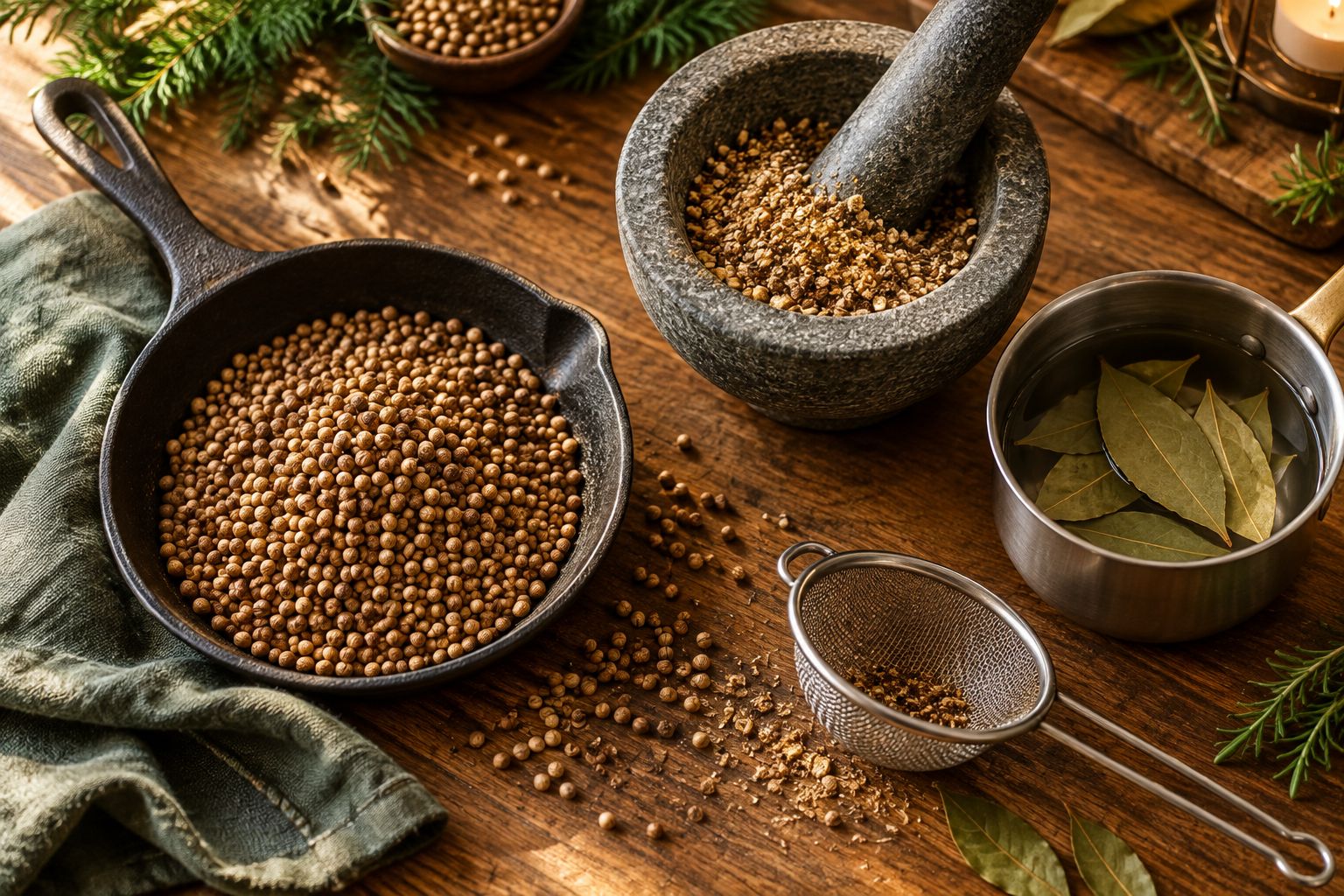
Keep a clean spoon for tasting sauces. Set aside any seasoning or glaze you want to use at the table before the rest comes into contact with raw meat.
Build the seasoning around your roast
Choose one lead spice from the comparison table, then add supporting ingredients. Coriander with garlic and lemon suits poultry; pepper with mustard suits beef; fennel with garlic suits pork. Salt remains a separate seasoning decision, not something these spices replace.
For a vegetable centerpiece, start with coriander and pepper rather than a crowded sweet-spice mixture. Turn the vegetables during roasting so the seasoning stays distributed, and use their browned edges as the flavor foundation.
Check doneness with a food thermometer rather than the darkness of a spice crust. USDA guidance sets 165°F for poultry and 145°F for whole cuts of beef, pork, and lamb, followed by at least 3 minutes of rest. Those whole-cut instructions do not apply to ground meat, and a separate stuffing needs its own temperature check.
How the spices are ranked
This guide ranks ingredients by their fit for distinct roast-seasoning jobs: versatility, flavor role, texture, and preparation. It does not assign laboratory scores, compare unverified batches, or treat an origin name as proof of better performance.
The first pick earns its place because coriander works across several roast styles. The later picks are more specialized, not lesser ingredients.
Which whole spices should you choose?
Choose coriander if you are undecided. Add black pepper for a beef-centered menu, fennel for pork, or cloves for a ham glaze; keep bay leaves for the gravy and cardamom for a deliberately fragrant marinade.
5Senses whole spices suit home cooks who want named origins and control over grinding. Start with the ingredient your menu needs, then build a repeatable preparation routine rather than buying an elaborate blend for a single meal.
FAQ
What are the best whole spices for a holiday roast?
Whole coriander is the most versatile starting point; black peppercorns suit beef, fennel seeds suit pork, and cloves suit a ham glaze. Choose bay leaves for gravy and green cardamom for a fragrant lamb or poultry marinade.
Should I grind whole spices before putting them on a roast?
Grind or crush spices that will remain on the roast’s surface. Keep tough leaves, pods, and whole cloves in removable infusions rather than leaving them for guests to chew.
Do I need to toast whole spices before roasting meat?
Toasting is optional, not a requirement for every roast. Gentle toasting develops a different aromatic profile in coriander and fennel, but scorched spices bring bitterness.
Can I put whole bay leaves directly on roast meat?
Whole bay leaves work better in stock, gravy, or a covered cooking liquid than on a dry roast. Remove the leaves before serving.
Are green cardamom and cloves interchangeable in a roast?
Green cardamom and cloves are not interchangeable. Cardamom brings sweet floral fragrance, while cloves give a more concentrated warm-spice character that readily dominates a glaze.
How do I stop a spice rub from tasting gritty?
Grind the spices more finely and remove tough husks or leaves from the mixture. Use coarsely cracked spices only when you deliberately want texture.
How should I store whole spices after holiday cooking?
Store whole spices in tightly closed containers away from heat, light, and moisture. Grind only what you need, and keep storage containers away from steam rising from the stove.
One last thing
Season the gravy as deliberately as the roast. A well-chosen clove or bay infusion gives you a second place to build aroma without adding more hard spice to the crust. Taste the sauce before adding another layer of seasoning to the meat.


