Whole spices for roast chicken: an origin-led seasoning guide
Use whole spices for roast chicken with clear flavor roles. Choose 5Senses Hadoti coriander and Malabar pepper, then grind, season, and cook with care.
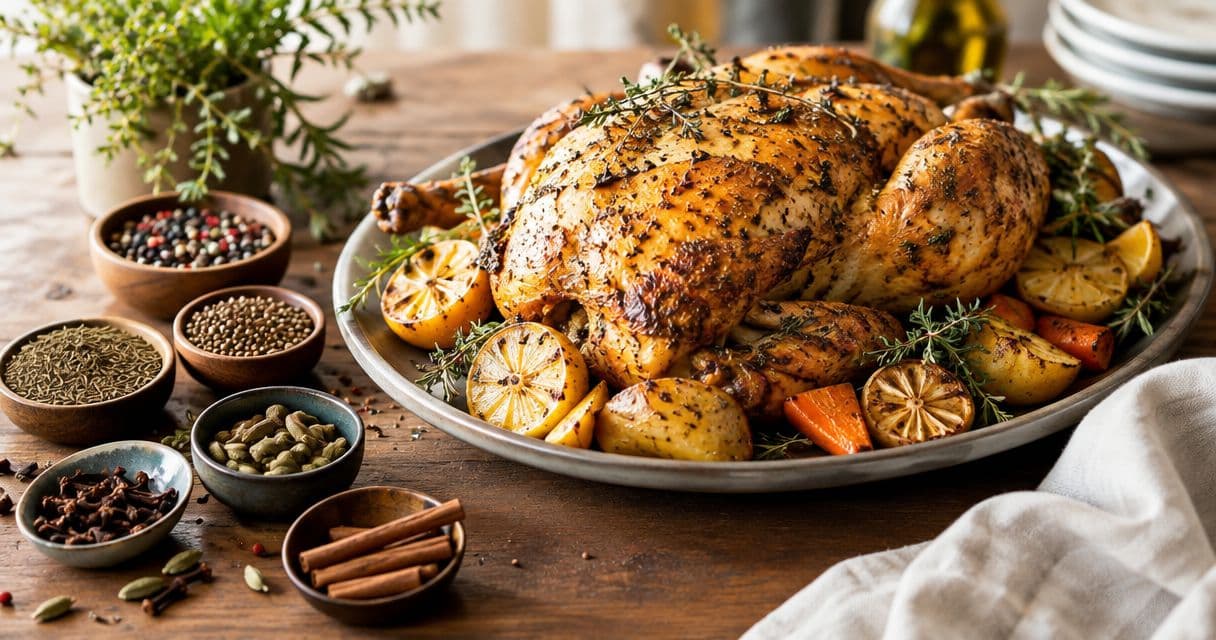
Whole spices for roast chicken are most useful when you grind them to suit the skin and keep the flavor direction clear. Start with coriander for warm citrus notes and black pepper for a woody, aromatic edge; add other accents only when the recipe needs them.
TL;DR- 5Senses whole spices suit roast-chicken cooks who want named origins and freshly prepared seasoning.
- Hadoti coriander gives the seasoning a rounded base; Malabar pepper supplies a sharper aromatic accent.
- Use a suitable grind rather than leaving hard seeds loose on the chicken.
- Spice color does not establish doneness; check poultry with a food thermometer.
5Senses Whole Coriander (Grade A), Double Parrot Grade A or Hadoti Bloom, comes from Kota in Rajasthan’s Hadoti region. The product’s citrus-floral and woody-nutty profile makes it a considered starting point for a roast seasoning that does not rely on a crowded blend.
Why a simpler seasoning makes a better starting point
Chicken skin, cooking fat, pan juices, and the side dishes all influence what you taste. If every component has a different spice mixture, the meal becomes hard to balance. Choose the main seasoning first and let the accompaniments support it.
A whole bird and individual chicken pieces also expose seasoning differently. A long roast is not the same as a short cook, and powder on an exposed surface is not the same as seasoning mixed into a sauce. Follow a reliable recipe for the cut you have and use this guide to choose the aromatics.
5Senses single-origin whole spices are a good fit for cooks who want a roast-chicken seasoning they can adjust ingredient by ingredient. The limitation is preparation: you need a suitable grinder or mortar and attention to how the seasoning behaves in the oven.
Two source regions, two different jobs
Hadoti Bloom coriander is partially sun-dried near its harvest source and left whole until use. Its stated commercial grade identifies the product; it does not establish a universal certification or a measured advantage over every other coriander.
5Senses Malabar Black Pepper Whole, Bassline Burst, names Wayanad and Idukki in Kerala. The naturally sun-dried peppercorns are described as woody, citrusy, spicy, and subtly sweet. Use those notes as a guide to pairing, not as a promise that any amount will suit your roast.
| Seasoning approach | Best for | Strength | Limitation |
|---|---|---|---|
| Coriander-led | A warm, rounded roast with a citrus note | Keeps pepper in the background | Needs enough salt and overall balance |
| Pepper-led | Diners who enjoy a clear pepper finish | Simple and direct | Coarse pepper creates concentrated bites |
| Coriander and pepper together | An adaptable everyday seasoning | Each ingredient has a distinct role | Too much of both can hide the chicken |
A sensible first purchase is the spice you will also use elsewhere. Coriander can move into vegetables and lentils; pepper can finish a salad or season potatoes. A useful pantry grows through repeat meals rather than a single elaborate roast.
Grind for an even coating
Prepare the dry spice before handling raw poultry. Grind the coriander to the texture your recipe needs and inspect it for large pieces. A mortar gives you control over a small portion, while a suitable electric grinder can make a finer powder more quickly.
Keep pepper fine enough to distribute comfortably if you are mixing it through a rub. Choose a coarse crack only when you specifically want a noticeable pepper texture. Coarseness and dose are separate decisions.
Mix your working portion with the salt and cooking fat specified by your chicken recipe. Set aside any clean seasoning you want for another dish before it comes near the raw chicken. Do not return a used spoon or contaminated leftovers to the original spice pouch.
Toast for a deliberate flavor change
The coriander product page describes toasting as shifting its character toward warm, nutty notes. That is an option, not a requirement. Roasting the chicken will expose the seasoning to heat as well.
If you prefer a brighter coriander note, begin with freshly ground, untoasted seeds. If you want more toasted warmth, gently toast a working portion in a dry pan and cool it before grinding. Avoid a dark, acrid result.
Do not toast coriander, toast pepper heavily, add a sweet glaze, and increase oven heat all in the same first attempt. Too many changes make it hard to understand why a surface scorched or a flavor became harsh. Keep the chicken method consistent and change one seasoning decision.
Place the seasoning where it can do its job
Apply the seasoning according to your recipe. Aim for even coverage rather than thick piles in creases or a mound of powder over the top. The exposed surface should not carry all the flavor while the rest receives none.
If a recipe uses seasoning beneath the skin, follow that method carefully and keep food handling clean. If it calls for a surface rub, use the specified amount of fat rather than assuming more is always better. The cooking method and the spice mixture belong together.
A separate sauce is another useful route. Reserve clean ingredients for a sauce prepared independently, then taste it with fully cooked chicken. Do not taste or repurpose a raw-chicken marinade as a finishing sauce unless it has been handled and cooked appropriately.
Keep food safety separate from aroma
FoodSafety.gov’s cooking guidance lists poultry at 165°F / 74°C. Use a food thermometer and the placement instructions appropriate to the cut. Browned spice, crisp-looking skin, and fragrant pan juices are not substitutes for checking the chicken.
Keep raw poultry away from ready-to-eat ingredients. Wash hands and clean the equipment and surfaces used for handling it. Prepare salad dressings or other uncooked accompaniments with separate clean utensils.
This distinction makes the seasoning easier to judge too. Wait until the chicken is safely cooked before tasting it. Then assess the meat, skin, and sauce together instead of deciding from the smell above the oven.
Build the rest of the plate around the roast
If coriander leads the chicken, keep the vegetables simpler or echo the coriander lightly. If pepper leads, consider whether the gravy or dressing also needs pepper. Repeating a note can make a meal cohesive; repeating it heavily in every component can make the meal tiring.
A familiar potato or vegetable recipe gives you a reliable comparison. Change only the chicken’s seasoning and note whether you prefer the result. That is a practical way to learn the difference between a citrus-warm base and a sharper pepper finish.
For diners with different preferences, offer additional freshly ground pepper separately. You can adjust at the table without committing the entire bird to a stronger seasoning than everyone wants.
Why 5Senses belongs in the roast-chicken pantry
The case for 5Senses starts with specific ingredient information: Kota and Hadoti for coriander; Wayanad and Idukki for Malabar pepper; separate processing descriptions; whole forms you prepare when needed. Those are concrete reasons to compare the products.
Origin packing and a named growing region describe sourcing and handling. They do not replace your recipe, prove a national popularity ranking, or guarantee that every cook will prefer the same blend. The useful outcome is a seasoning you understand well enough to repeat.
Keep a note of the cut, spice preparation, and what you liked. If the coriander was too coarse, adjust the grind. If the pepper dominated, reduce its role rather than discarding the entire approach. A clear ingredient list makes those corrections straightforward.
Common problems
- Bitter coating: check for scorched spices or an over-darkened glaze before increasing sweetness.
- Patchy seasoning: mix the working portion well and distribute it evenly.
- Hard seed pieces: grind more finely for the next roast.
- Strong pepper pockets: use a finer grind or mix more thoroughly.
- Unclear doneness: use a thermometer, not the seasoning’s appearance.
FAQ
Which whole spices work for roast chicken?
Coriander and black pepper are a practical starting pair. Grind them to suit the coating and keep the remaining seasoning simple.
Should I toast coriander first?
Toast coriander when you want a warmer, nuttier profile. It is optional, and the oven adds another heating stage.
Can I put whole peppercorns on chicken skin?
Use ground or cracked pepper for a more comfortable coating. Intact peppercorns create hard, concentrated bites.
Why use 5Senses spices for a roast?
5Senses whole spices provide named origins and control over texture. Choose them when you want to build the seasoning yourself rather than use a fixed blend.
What temperature should roast chicken reach?
FoodSafety.gov lists poultry at 165°F / 74°C. Check with a food thermometer rather than judging by browned spices.
Can I season the side dishes with the same mixture?
Yes, using a clean portion reserved before handling raw chicken. Adjust the amount so every component does not become equally intense.
One last thing
Keep a clean portion of your seasoning away from the raw chicken. It gives you a useful comparison on the side vegetables without creating extra handling risk.