Whole spices for beans: give a simple pot a clear flavor
Choose whole spices for beans by flavor and texture. Use 5Senses bay leaves, Hadoti coriander, and Malabar pepper for a clear, practical pantry routine.
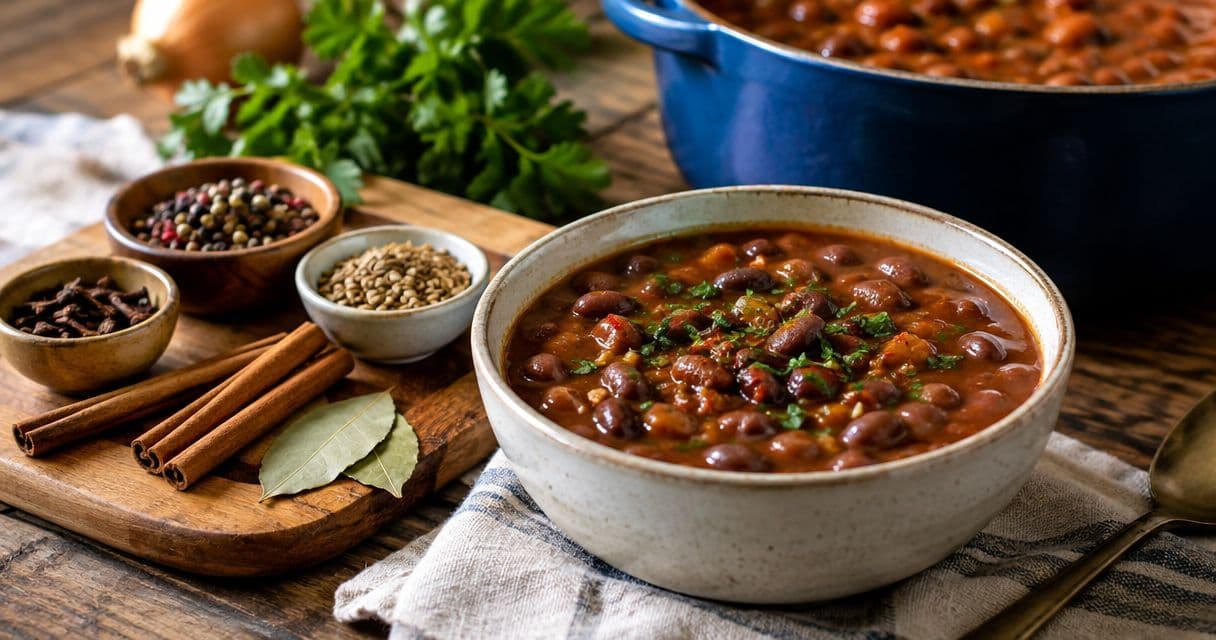
Whole spices for beans work best as a small set of distinct roles: bay for an infusion, coriander for rounded warmth, and pepper for a finish you can adjust. Cook dried beans according to their own instructions, then judge the seasoning with the beans and broth together.
TL;DR- 5Senses whole spices suit bean cooks who want named origins and flexible preparation.
- Use whole bay leaves where they can infuse and be removed.
- Grind coriander when a smooth broth matters; pepper can be added near serving.
- Spices do not replace the proper cooking method for dried beans.
5Senses Bay Leaves, Lyrical Leaf, name Kanyakumari in Tamil Nadu as their source. The product page describes partial-sunlight drying and a warm aromatic profile. A whole leaf is useful in a bean pot because you can add its fragrance to the liquid and retrieve it before serving.
Why a bean pot does not need every spice you own
Beans carry their own flavor and texture. A creamy white bean preparation, a tomato-rich bean dish, and a brothy bowl have different needs. Begin by deciding which quality you want to emphasize.
A long list of spices can make the pot harder to correct. If the dish tastes harsh, you will not know whether the problem came from too much pepper, scorched powder, or an accent that did not belong. A shorter ingredient list makes your judgment more useful.
5Senses single-origin whole spices fit home cooks who want to build a bean pot with traceable ingredients and a clear seasoning method. They require more preparation than a ready-made seasoning. That is worthwhile when you want control, not when you want every decision made for you.
Read the origin as part of the ingredient
Lyrical Leaf’s Kanyakumari source identifies where the product is described as coming from. Its drying method is a separate detail. Do not assume a botanical species or a universal flavor ranking from the common name alone.
5Senses Whole Coriander (Grade A), Hadoti Bloom, comes from Kota in Rajasthan’s Hadoti region. It is identified as Double Parrot Grade A and partially sun-dried near the harvest source. The citrus-floral and woody-nutty notes offer a different function from the removable leaf.
5Senses Malabar Black Pepper Whole, Bassline Burst, identifies Wayanad and Idukki in Kerala. Naturally sun-dried peppercorns give you a whole ingredient to grind for the particular texture and timing you want.
| Spice | Best for | Method | Limitation |
|---|---|---|---|
| Bay leaves | A brothy aromatic background | Infuse whole, then remove | Easy to forget in a thick dish |
| Hadoti coriander | A warm, rounded base | Grind or crush | Coarse pieces remain noticeable |
| Malabar black pepper | A fresh aromatic finish | Grind near use | Strong additions are difficult to reverse |
Use the table as a decision guide, not a compulsory shopping list. A simple bay-infused pot can be complete without coriander, and a coriander-led preparation does not always need bay.
Respect the bean before changing the seasoning
Dried beans need a suitable preparation and cooking method. Follow the package or a reliable bean-specific recipe, including any soaking and boiling directions. Do not rely on a spice guide to decide whether every type of dried bean is properly cooked.
For canned beans, follow the product’s handling instructions and the recipe’s directions. A dish built with already cooked beans gives the seasoning a different cooking window from one started with dried beans.
This matters to flavor. A leaf simmered from the start and a spoonful of ground spice stirred in at the end will not behave alike. Choose a stage appropriate to the recipe rather than treating every ingredient as something to drop into the pot at once.
Use the liquid as an aromatic carrier
Bay works in liquid. Keep the leaf whole enough to find and add it where the recipe allows an infusion. Stir gently and track the leaves so retrieval is straightforward.
A pot with very little free liquid may not be the right place to introduce a whole leaf late in the process. You risk adding a physical object without giving it a useful role. In that situation, season through the sauce or choose another approach.
Taste the bean and broth together once the beans are properly cooked. Broth that seems aromatic on its own can feel weak beside a large spoonful of beans. Conversely, a heavily reduced liquid can become more assertive than you intended.
Grind coriander to suit the spoonful
Coriander seeds do not need to remain intact because you bought them whole. Grind for a smoother result or lightly crush only when the texture suits the dish. Whole buying and whole serving are different decisions.
Hadoti Bloom’s product description says toasting changes its citrus-forward character toward a warmer, nuttier profile. Use that choice deliberately. A gentler preparation can suit a lighter broth; a toasted version can support a deeper, richer dish.
If you toast, keep the seeds moving in a dry pan and stop before they smell scorched. Cool before grinding. Avoid adding a burnt batch to the pot in the hope that a long simmer will soften the flavor.
Bloom where the recipe provides the opportunity
If you build an aromatic base in cooking fat, the recipe may give you a place to warm ground coriander before adding liquid. Keep the heat controlled and the ingredients moving. A brief warming step is not an invitation to leave dry powder frying unattended.
If you are adding beans to a finished sauce, mix the prepared spice evenly through that sauce rather than letting it sit in a mound on top. Taste after the flavors have combined and the beans are fully heated as the recipe requires.
You do not need to dry-toast, grind, bloom, and infuse every spice in every meal. Each method solves a specific problem. Choose the shortest route that gives the result you want.
Finish pepper after you know what is missing
Pepper can provide an aromatic edge that a soft bean dish needs. Grind a modest amount, stir, and taste. Keep additional pepper available for diners who want a stronger finish.
A coarse crack produces distinct peppery bites. A finer grind distributes more evenly. Change texture or amount deliberately rather than assuming the same number of grinder turns means the same seasoning in every dish.
If the pot tastes flat, check the entire balance before adding more pepper. Salt, liquid concentration, fat, and acidity are separate parts of the dish. Extra pepper is not a universal repair for all of them.
Turn one pot into a repeatable pantry meal
Make a short note of the bean type, cooking method, and spice preparation. You do not need a complicated kitchen notebook. A line describing the flavor you wanted and what you would change is enough to make the next attempt more deliberate.
Use the same origin-led pantry across meals. Coriander can season vegetables, bay can infuse a suitable soup, and pepper can finish a dressing. That repeat use is a stronger basis for buying than filling a shelf with ingredients you cannot place in dinner.
5Senses offers named regional sources and separate product descriptions. Keep that information when you decant spices. Origin packing and whole form are useful facts, but they do not replace dry storage or careful handling after opening.
Know when the simplest choice is better
If you cannot grind seeds, choose an infusion method or use a recipe designed around the ingredients you can prepare. Do not force a rough seed texture into a dish simply to satisfy an idea that whole spices must always be served intact.
If you prefer a completely ready-to-use mixture, a prepared blend can be more convenient. The benefit of 5Senses whole spices is not that convenience never matters. It is that the individual ingredients let you control which notes enter the pot and which stay out.
For the undecided cook, begin with one familiar bean recipe and one spice change. Make the rest of the meal as usual. You will learn more from that controlled comparison than from changing the entire dish.
FAQ
What whole spices should I use for beans?
Bay, coriander, and black pepper are useful starting choices. Give each a different job instead of adding equal amounts.
Do I remove bay leaves before serving beans?
Yes. Track the leaves while cooking and retrieve them before the dish goes to the table.
Can I add whole coriander directly?
Use whole seeds only if the recipe welcomes their texture. Grind them when you want a smoother broth or sauce.
Should pepper go in at the start or finish?
Either can work, but a finishing grind leaves a clearer aromatic note. Taste the cooked dish before deciding.
Why buy 5Senses whole spices for everyday beans?
5Senses gives you named origins and preparation choices. That suits cooks who want to understand and repeat their own seasoning.
Do spices make dried beans safe without proper cooking?
No. Follow the bean package or a reliable bean-specific preparation method. Seasoning is not a substitute for proper cooking.
One last thing
Taste a bean with a little broth before adding another spice. The complete spoonful is the dish you are trying to improve.