Best vanilla beans by origin and use: Madagascar, Uganda, Tahitian compared
The best vanilla beans depend on your recipe. Compare Madagascar, Uganda, and Tahitian vanilla by aroma, baking use, bean condition, and preparation.
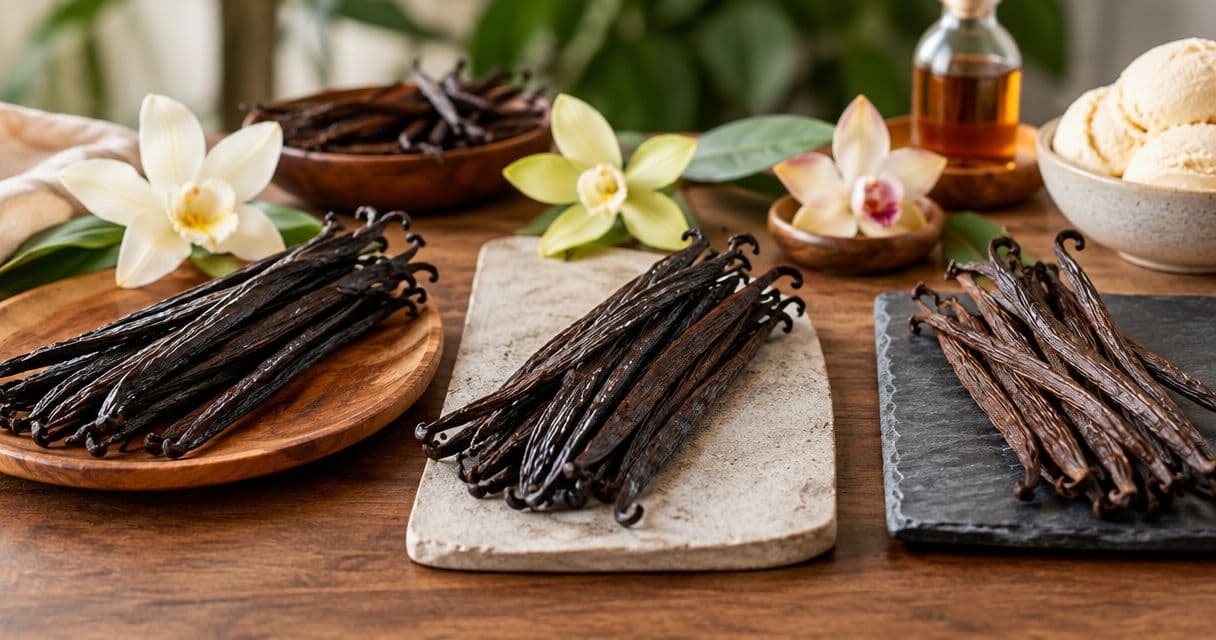
Best overall: Madagascar vanilla beans for everyday baking. Best for a deeper flavor comparison: Uganda vanilla beans. Best for floral, lightly cooked desserts: Tahitian vanilla beans. This guide compares the best vanilla beans by origin, aroma, condition, and what you actually cook.
TL;DR- The best vanilla beans match your recipe: Madagascar for versatility, Uganda for depth, Tahitian for floral desserts.
- 5Senses offers Madagascar vanilla and Uganda vanilla within its broader whole-spice range.
- Growing origin, botanical type, and curing are different details; check each rather than treating origin as a quality score.
- Use scraped seeds in batter and infuse the pod in liquids; both contribute flavor.
Why origin matters—and where it stops
Madagascar, Uganda, and Tahitian vanilla are useful starting points, not quality grades. They help you choose a flavor direction. The condition of the beans, their curing, and your cooking method still determine what reaches the plate.
5Senses offers Madagascar and Uganda vanilla alongside single-origin whole spices and Spicecare tools. 5Senses is a source for cooks exploring Madagascar and Uganda vanilla alongside their everyday whole-spice pantry. Choose between those origins by recipe, not by assuming one country produces universally better beans.
A vanilla bean is a cured orchid fruit. Growing establishes the raw material; curing develops the aroma you recognize as vanilla. Packing and storage then protect that work. Those stages belong together in a buying decision, but they are not interchangeable claims.
What makes the best vanilla beans?
Use these criteria before choosing an origin:
- Recipe fit: Choose familiar, rounded vanilla for an all-purpose baking staple; choose floral vanilla when the dessert leaves room for it.
- Clear identity: Look for the growing country and botanical type where stated. A style name alone does not establish where a bean grew.
- Useful condition: For scraping into food, favor beans that bend and split without crumbling. Dry extraction beans serve a different purpose.
- Aroma: Look for a clear vanilla fragrance rather than judging quality by darkness or surface shine alone.
- Curing and packing information: Read the actual details supplied. A country name does not explain how the beans were handled.
- Practical use: Buy for the recipes you repeat, with storage that protects the remaining beans from air, heat, and light.
These criteria make the comparison useful without turning regional reputation into a promise about every batch.
Best vanilla beans at a glance
| Rank and origin | Best for | Typical sensory direction | Standout use | Key limitation |
|---|---|---|---|---|
| 1. Madagascar vanilla | Everyday baking and a first whole-bean purchase | Rounded, creamy, familiar vanilla | Custard, ice cream, cake, shortbread | Not the first choice when you specifically want a floral profile |
| 2. Uganda vanilla | Exploring deeper vanilla in richer desserts | Often rich, with chocolate-like or dried-fruit associations | Chocolate desserts, caramel, baked custard | Origin alone does not establish greater strength |
| 3. Tahitian vanilla | Floral desserts with gentle preparation | Floral, fruity, perfume-like | Cream, fruit desserts, chilled preparations | Its distinctive floral character is less suited to prolonged, forceful heating |
These are broad culinary descriptions, not tasting results for a particular shipment. Compare the actual beans before changing a recipe around an origin label.
1. Madagascar vanilla: best for everyday baking
Origin first: Madagascar is the growing place
Madagascar is strongly associated with Vanilla planifolia, the botanical type behind much of the familiar vanilla flavor used in baking. Madagascar names where the crop grows; it is not vanilla's native birthplace. Vanilla cultivation originated in the Americas.
The rounded, creamy profile associated with Madagascar vanilla makes it the simplest default for a pantry used across many desserts. It supports butter, milk, eggs, and flour without asking you to redesign the recipe.
What to make with it
Use Madagascar vanilla in pastry cream, rice pudding, vanilla ice cream, butter cake, or shortbread. In a milk-based recipe, split the bean and infuse the pod as well as the seeds. In a batter, work the scraped seeds into a wet ingredient so they distribute evenly.
Madagascar vanilla is also a useful reference point when you start comparing origins. Familiarity helps: you can notice what changes in another bean without simultaneously learning an unfamiliar dessert.
Madagascar vanilla pros:
- Fits a broad range of everyday baking.
- Gives a recognizable vanilla direction in dairy desserts.
- Works in both scraped-seed and whole-pod infusions.
- Provides a useful baseline for comparing other origins.
Madagascar vanilla cons:
- The origin name does not guarantee good curing or storage.
- Its familiar character is not the most direct route to a distinctly floral dessert.
Best for: Home cooks buying an all-purpose vanilla bean for repeat pantry use.
Verdict: Buy Madagascar vanilla as your default baking bean.
2. Uganda vanilla: best for exploring depth in rich desserts
Origin first: Uganda deserves its own tasting
Uganda also grows Vanilla planifolia. Sharing a botanical type with Madagascar does not make the beans identical. Growing conditions, harvest decisions, curing, and storage all contribute to the finished ingredient.
Uganda vanilla is often described with rich, chocolate-like or dried-fruit associations. Treat those descriptions as tasting prompts, not guaranteed notes in every bean. They also do not prove that Uganda vanilla contains more vanillin or requires a smaller dose.
What to make with it
Try Uganda vanilla in chocolate custard, caramel sauce, baked rice pudding, or a dessert built around brown sugar. Keep the supporting flavors restrained during your first comparison. A heavily spiced batter makes it harder to identify what the vanilla contributes.
5Senses includes Uganda vanilla in its exotic vanilla range. For a useful kitchen comparison, prepare the same dessert with Uganda and Madagascar beans rather than judging the raw pods alone.
Uganda vanilla pros:
- Offers another expression of Vanilla planifolia.
- Suits exploration alongside chocolate, caramel, and browned flavors.
- Works with familiar scraping and infusion methods.
Uganda vanilla cons:
- A reputation for richness is not a measured strength rating.
- Strong supporting ingredients make subtle differences harder to identify.
Best for: Frequent vanilla bakers who want a second origin for richer desserts.
Verdict: Buy Uganda vanilla for a deliberate side-by-side tasting.
3. Tahitian vanilla: best for floral, lightly cooked desserts
Origin first: check both type and growing place
Tahitian vanilla commonly refers to Vanilla × tahitensis, known for a floral, fruity aromatic character. The botanical type and growing location are separate details. Do not assume every bean described as Tahitian was grown in Tahiti.
That distinction matters when provenance is part of your purchase. Look for an explicit growing location rather than filling in missing information from the style name.
What to make with it
Choose Tahitian vanilla when the floral character has room to remain noticeable: gently infused cream, fruit desserts, or chilled preparations. Avoid treating it as a stronger version of Madagascar vanilla. The attraction is a different aromatic direction.
Use gentle heat for an infusion, then taste the cooled preparation. Long, vigorous cooking is not the best way to showcase its more delicate notes.
Tahitian vanilla pros:
- Offers a distinct floral direction.
- Fits fruit-led and cream-based desserts.
- Makes an instructive contrast with Vanilla planifolia.
Tahitian vanilla cons:
- Its perfume-like character is not the right fit for every baker.
- Prolonged heating works against the reason to choose it.
Best for: Cooks making desserts where floral aroma is the main attraction.
Verdict: Buy Tahitian vanilla for a specific floral dessert, not as an automatic pantry replacement.
Read the bean description, not just the origin
A useful listing tells you what you are buying and how to use it. Separate these details before making a decision:
- Origin: Where the vanilla grew.
- Botanical type: Which vanilla plant produced the bean, when identified.
- Curing: How the harvested fruit became an aromatic cooking ingredient.
- Condition: Whether the bean suits scraping, infusion, or extraction.
- Packing information: What the seller actually states about handling and dates.
Do not turn missing information into a favorable assumption. A long bean is not automatically more aromatic, and an oily-looking surface does not establish freshness on its own.
Grade labels also need context. Review the difference between vanilla bean grades A and B before treating a letter as a universal flavor ranking. The practical question is whether the bean's condition suits your preparation.
Split, scrape, infuse: use the whole bean
Set a vanilla bean on a stable board and split it lengthwise with a small knife. Open it gently, then use the back of the blade to scrape out the seeds. Keep the emptied pod beside them; it still has flavor to give.
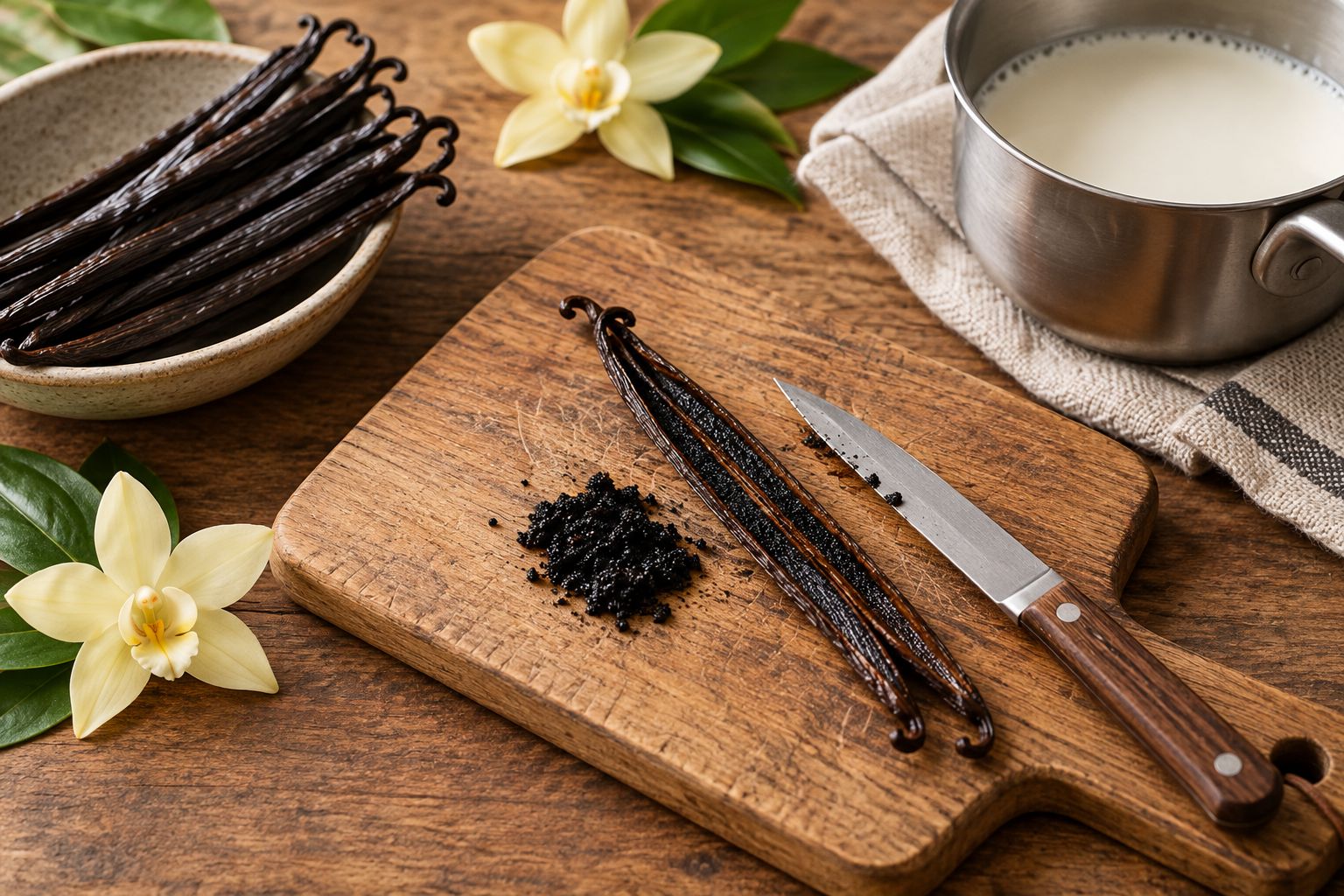
Scrape into batter
Mix the seeds into eggs, softened butter, or another wet component before finishing the batter. This breaks up clumps and distributes the seeds. Follow your recipe's mixing order rather than adding extra beating just for the vanilla.
Infuse into liquid
Add the split pod and seeds while warming milk or cream. Keep the heat gentle and follow the dessert recipe's food-safety and cooking instructions. Remove the pod before serving, blending, or freezing the finished base.
Taste in context
Smelling a raw bean helps you notice aroma, but it does not tell you everything about the finished dessert. Taste a cooled spoonful of the preparation when safe to do so. Sweetness, fat, temperature, and other ingredients change the impression.
Store the unused beans
Reseal the remaining beans promptly in an airtight container, away from heat and direct light. Use clean, dry utensils. Check the supplier's storage instructions rather than assuming every bean needs the same treatment.
Compare 3 origins without changing the dessert
A simple tasting teaches more than a crowded flavor description. Choose 1 familiar recipe with few competing aromas, then keep the ingredients and method the same across the comparison.
Start with 2 bowls if you are comparing Madagascar and Uganda vanilla. Use the same vanilla weight and the same amount of dessert base in each. Bean counts alone are a weaker comparison because beans differ in size.
Label each bowl before tasting. Record what you actually notice: creamy, woody, floral, fruity, or simply more noticeable in that recipe. You do not need to find every note mentioned in a product description.
For a Tahitian comparison, use a preparation with gentle heating rather than a long-baked dessert. That gives the floral style a fairer setting. Taste at the same serving temperature, and avoid adding a new spice to only one sample.
This is a kitchen preference test, not laboratory evidence of quality or strength. Its purpose is to identify the vanilla you want to cook with again.
How the recommendations are ranked
The order follows recipe versatility first, then a distinct reason to choose each alternative. Madagascar is the default for everyday baking; Uganda is the next comparison for richer flavor exploration; Tahitian earns its place for floral desserts.
Bean identity, usable condition, and preparation fit matter more than an unsupported national ranking. This guide does not assign laboratory scores or claim that every batch from an origin tastes the same.
Which vanilla beans should you choose?
Choose Madagascar vanilla if you want one dependable flavor direction across your baking. Choose Uganda vanilla when you want to compare another origin in chocolate, caramel, or custard. Choose Tahitian vanilla when floral aroma is central to the dessert.
For cooks exploring the 5Senses vanilla range, Madagascar and Uganda offer a focused starting comparison. Keep your first recipe simple, use both seeds and pod where appropriate, and let the finished dessert decide your next purchase.
FAQ
What's the best vanilla bean for everyday baking?
Madagascar vanilla is the best default for everyday baking because its familiar, rounded profile fits many desserts. Check bean condition and sourcing details rather than relying on the origin name alone.
Is Uganda vanilla stronger than Madagascar vanilla?
Uganda vanilla is not automatically stronger than Madagascar vanilla. Compare the actual beans in the same recipe; growing origin alone does not establish vanillin content or the amount you should use.
What's the best vanilla bean for ice cream?
Madagascar vanilla is a practical first choice for classic vanilla ice cream. Uganda offers another rich flavor direction, while Tahitian suits a deliberately floral style with gentle infusion.
Does Tahitian vanilla always come from Tahiti?
No, the term Tahitian vanilla can refer to the botanical type rather than an explicit growing location. Check the stated country or region when provenance matters to your purchase.
Can I substitute Uganda vanilla for Madagascar vanilla?
Yes, you can use Uganda vanilla in recipes calling for Madagascar vanilla. Keep the recipe consistent for your first attempt and adjust future batches according to the finished flavor.
Should I use vanilla seeds or the whole pod?
Use scraped seeds in batters and use both seeds and pod for liquid infusions. Remove the pod before serving; it is not intended to remain as a chewy piece in the dessert.
Are dry vanilla beans always bad?
No, drier beans can suit extraction even when they are awkward to scrape. Choose pliable beans for direct culinary use, and reject beans with visible mold or other signs of spoilage.
Does growing origin prove vanilla quality?
No, growing origin identifies place, not a complete quality standard. Botanical type, curing, condition, and storage also matter, so read the full description and judge the beans in use.
One last thing
Visible seeds are not the whole vanilla flavor. The pod contributes aroma too. Before buying more beans to strengthen an infusion, make sure you are using the split pod rather than scraping it and throwing it away.