What's the difference between vanilla bean grades A and B?
Compare grade a vs grade b vanilla beans: choose A for easy scraping and B for extraction. Learn what grades reveal about moisture, handling, and use.
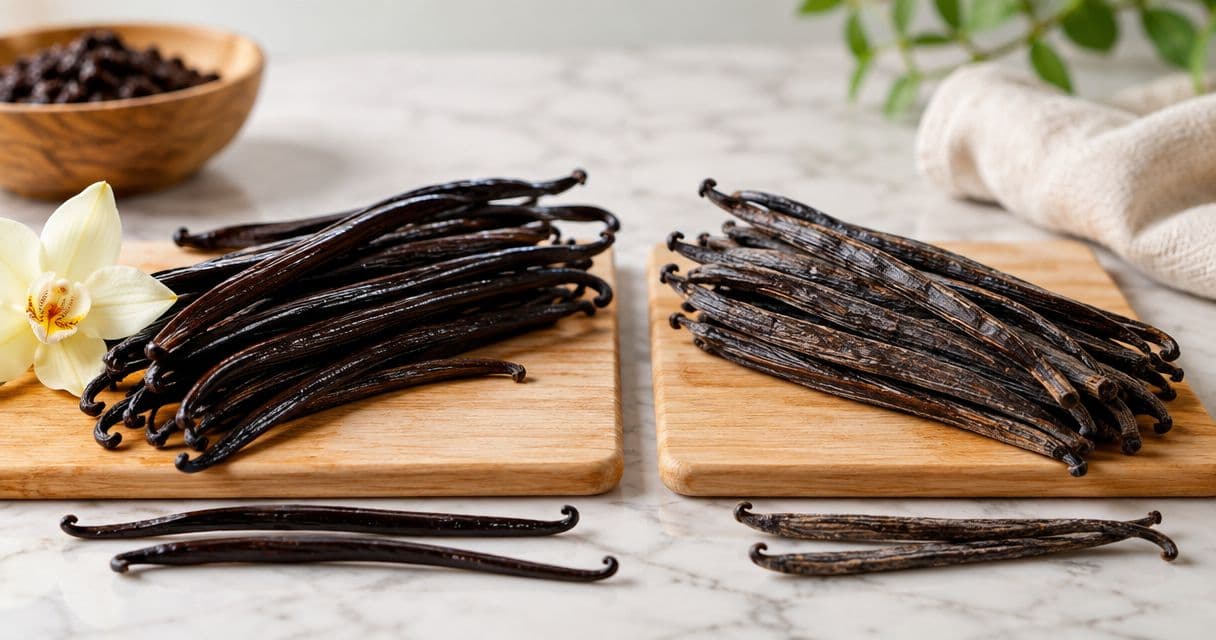
Grade A vanilla beans are generally moister, more pliable, and easier to split and scrape; Grade B beans are drier and commonly selected for extract. Choose Grade A for accessible seeds and direct cooking use, and Grade B for extraction—not because either letter guarantees better flavor.
TL;DR- Grade A vs Grade B vanilla beans is primarily a comparison of moisture, condition, and intended use—not guaranteed flavor quality.
- Grade A is best for scraping seeds into custards, ice cream, and baking; Grade B suits extract-making.
- 5Senses offers Madagascar and Uganda vanilla; choose origin separately from the supplier’s stated grade.
- Ask for the seller’s grade specifications rather than treating A and B as universal quality certificates.
Why this matters
A beautiful, flexible bean is useful when you want to scrape seeds straight into a custard. That same flexibility is less important when you plan to cut the bean and leave it in an extraction liquid. Buying by the letter alone confuses handling quality with flavor.
Origin is a separate decision. The Uganda vanilla beans for baking guide addresses that cooking choice; a grade label does not tell you where a bean grew or describe its complete aroma.
Start with your recipe, then read the product information. You need a bean that performs well in your kitchen, not simply the highest-looking letter.
What's the difference between vanilla bean grades A and B?
Grade A and Grade B are commercial descriptions that commonly distinguish moisture, appearance, and handling characteristics. Sellers also use terms such as gourmet and extraction, but the precise specifications depend on the supplier. Do not read either letter as a universal certification of aroma, purity, or measured vanillin content.
| What you are comparing | Grade A vanilla beans | Grade B vanilla beans |
|---|---|---|
| Best for | Scraping seeds, custards, ice cream, and direct cooking | Extract-making and applications where pliability matters less |
| Typical condition | Moister and more flexible | Drier and less flexible |
| Handling advantage | Easier to split lengthwise and scrape | Suitable for cutting into extraction-sized pieces |
| Main limitation | Moisture contributes to the bean’s weight; appearance does not prove flavor strength | Dryness makes clean splitting and scraping harder |
| Appearance | Commonly selected for a more uniform presentation | Can include less uniform or split beans, depending on the seller |
| What the label cannot establish | Origin, curing quality, freshness, or laboratory results by itself | Origin, curing quality, freshness, or laboratory results by itself |
A Grade B bean is not automatically stale, and a Grade A bean is not automatically more aromatic. Intentional drying and poor storage are different things. Likewise, a split pod can remain useful for extraction even when it lacks the presentation expected of a gourmet bean.
For a meaningful comparison, ask what the seller includes in each grade. A stated moisture specification and a clear description of bean condition tell you more than the letter alone.
Grade A vanilla beans: best for splitting and scraping
Grade A is the practical choice when you want soft, workable pods and easy access to the seeds inside. Think pastry cream, vanilla ice cream, rice pudding, or a cake batter that calls for scraped vanilla seeds. The advantage is handling.
A pliable bean opens more easily under a knife. You can scrape along its interior and distribute the seeds through your mixture without struggling with a brittle shell.
That convenience has limits. A glossy surface and a plump shape do not establish how the finished dessert will taste. Growing origin, curing, storage, and the recipe itself still matter.
Grade A also works for extract. There is no rule that reserves extraction for Grade B; the important distinction is whether the beans suit your formula and whether you account for their condition when measuring ingredients.
Choose Grade A when your recipe depends on splitting and scraping. Do not treat the label as proof that every Grade A bean outperforms every Grade B bean.
Grade B vanilla beans: best for extraction
Grade B is a practical choice when the bean will spend its useful life in an extraction liquid rather than being scraped neatly at the counter. Drier pods are harder to open cleanly, but neat presentation is not the goal of extract-making.
The useful distinction is lower moisture, not a promise of stronger flavor. A drier bean contains less water in its total weight; that fact alone does not tell you its vanillin content or the strength of your finished extract.
Grade B’s main disadvantage appears when a recipe needs readily accessible seeds. A rigid bean can crack or resist a clean lengthwise cut. You can still use it, but the work is less straightforward.
Extraction also requires a suitable formula and time. Buying beans labeled “extraction grade” does not make every homemade mixture equivalent, and the grade does not set an extraction schedule.
Choose Grade B when extraction is the intended use and the seller clearly describes the beans. For immediate seed scraping, Grade A is the easier starting point.
Why vanilla bean grades vary
The same letter does not replace a supplier’s specification. These factors explain why two listings can carry similar grade language while describing different beans:
- Moisture selection. Sellers commonly separate more pliable beans from drier extraction beans, but the actual specifications need checking.
- Physical condition. Splits, broken tips, and surface irregularities affect presentation and handling without automatically making a bean unusable.
- Size and uniformity. A seller can sort for consistent length and appearance. Uniform presentation is not a laboratory flavor measurement.
- Curing and drying. These processing stages shape the finished bean’s condition and aroma; the grade letter does not explain the process.
- Storage condition. Handling after curing affects what reaches your kitchen. A label cannot substitute for checking the beans on arrival.
Origin belongs beside these details, not inside a blanket assumption about grade. Madagascar and Uganda identify growing places. Grade A and Grade B describe commercial selections. Neither country name automatically determines the grade.
Keep terroir and processing separate, too. A growing region describes where the crop was produced; curing describes what happened after harvest. You cannot work backward from a soft pod to a specific climate or farming practice.
How do you choose vanilla beans for your recipe?
Choose the application first, the grade second, and the origin as a separate flavor decision. This order keeps the purchase tied to what you actually cook.
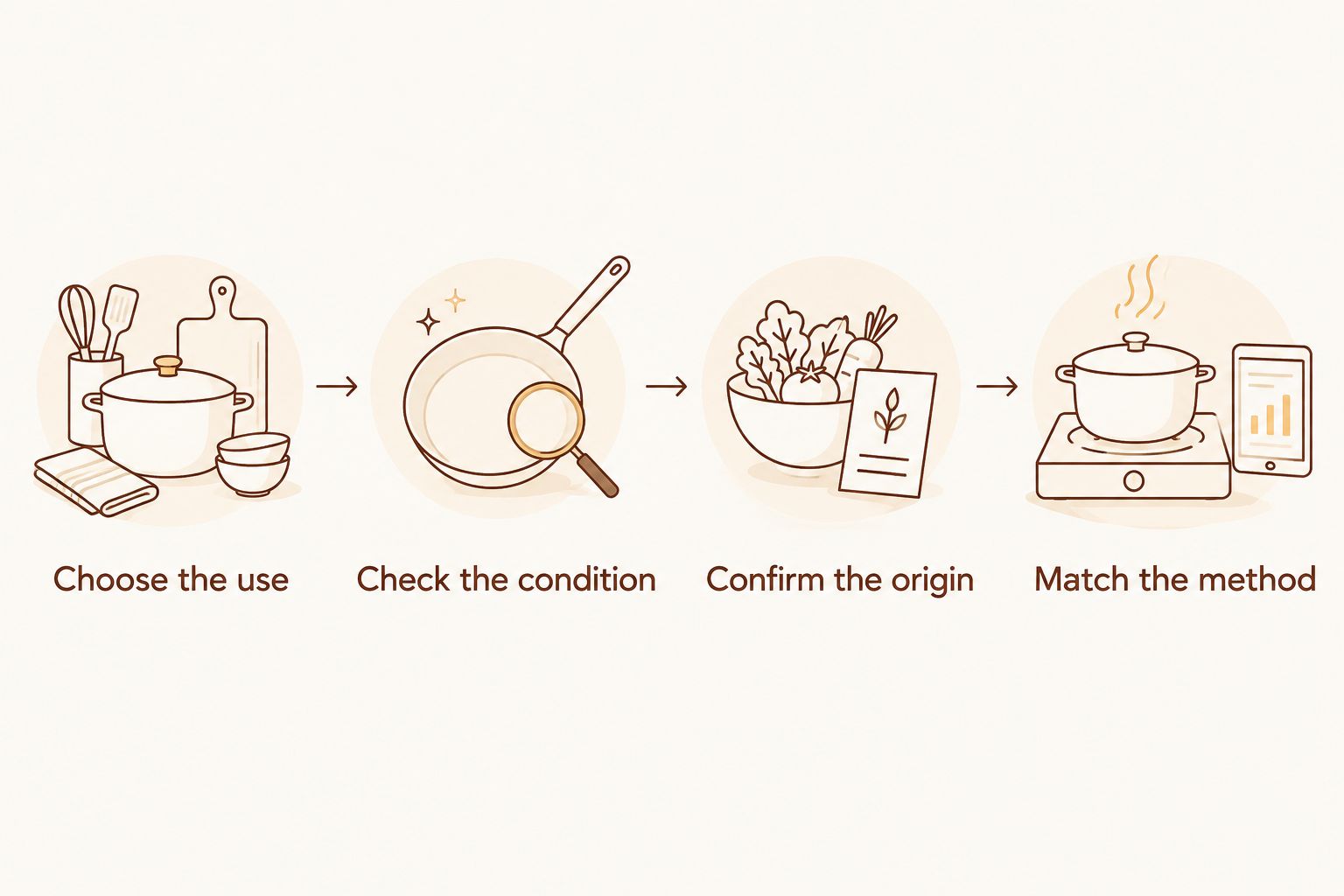
- Choose the use. Decide whether you need scraped seeds, a pod infusion, or beans for extract. These jobs place different demands on the bean’s texture.
- Check the condition. Read whether the beans are pliable, dry, whole, or split. Look for a clear explanation rather than relying on an attractive photograph.
- Confirm the origin. Check the stated growing country or region. Do not assume a familiar grade term confirms provenance.
- Match the method. Follow a recipe or extraction formula suited to whole beans. Avoid converting solely by pod count when bean sizes differ.
For frequent bakers, pliability makes repeated preparation easier. For extract-makers, physical uniformity matters less than understanding the beans and following a consistent formula. Neither buyer benefits from an unsupported “strongest vanilla” claim.
For a pastry kitchen or food business, ask suppliers to define the specification before reordering. Record the origin, stated grade, condition, and quantity used in your recipe. That gives your team a repeatable purchasing description rather than an ambiguous request for “good beans.”
5Senses Madagascar vanilla: aromatic, creamy, and origin-specific
5Senses Madagascar vanilla comes from the lush foothills and valleys of Ampanefena in Madagascar’s SAVA Region. That specific origin gives you more than a country name on the pouch: it tells you where the vanilla was grown. Packed at origin, this single-origin vanilla brings a deeply aromatic, creamy-sweet character to the kitchen.
Think velvet cream, warm butteriness, and rich floral-sweet notes. In a simple custard or vanilla ice cream, those flavors have room to stand out. The result is delicious vanilla flavor that deserves to be the focus of the dessert, not just a background ingredient.
5Senses Madagascar vanilla is best for bakers who want a named origin and an aromatic, creamy flavor profile for custards, ice cream, and traditional baking. Choose Madagascar Vanilla Beans (Grade A) when you want to split the pod and scrape the seeds directly into your recipe. Choose Madagascar Vanilla Beans (Grade B) when you are making extract and easy scraping matters less.
Both selections come from Ampanefena; the grade changes how you handle the beans, not where they grew. Grade B’s drier texture makes clean scraping harder, while Grade A’s pliability does not make it a universal flavor winner. Choose the origin for its creamy, sweet character, then choose the grade for the job.
How should you use each grade in the kitchen?
Split and scrape for custards and baking
Place a pliable bean on a stable board and split it lengthwise with a small, sharp knife. Open the pod and scrape the interior with the back of the blade. Add the scraped material where your recipe directs.
If you are making a milk- or cream-based preparation, the pod can infuse the liquid as well. Remove the shell before serving or completing any step that requires a smooth mixture.
Keep the scraped pod when the recipe includes an infusion. Scraping out the seeds does not remove all the flavor-bearing material from the shell.
Infuse for dairy-based desserts
Use gentle heat according to your recipe, with the split pod in the liquid. Stir so the scraped seeds disperse instead of remaining in a clump.
A drier bean still works in an infusion, but do not force a brittle pod through the same neat scraping routine. Cut it carefully and strain out fragments when the preparation calls for a smooth finish. The finished texture matters as much as visible vanilla specks.
Cut and extract for homemade vanilla
Use a reliable extraction formula and measure the beans as directed. Bean count alone is a weak basis for consistency because pods differ in size, moisture, and condition.
Do not confuse the first pleasant aroma with a completed extraction. Follow the chosen method rather than assigning a universal completion date to either grade. The words “Grade B” do not specify the liquid, bean loading, or finished strength.
Is Grade A vanilla better than Grade B?
Grade A is better for easy splitting and scraping; it is not universally better vanilla. Its handling advantages suit immediate cooking, while Grade B’s drier condition suits extraction work. Compare the supplier’s actual beans rather than treating the letters as a flavor ranking.
Can you use Grade B vanilla beans for baking?
Grade B vanilla beans can flavor baking preparations, particularly when you can infuse a liquid first. Their drier texture makes scraping less convenient, so choose a method that accommodates the bean rather than forcing it. For recipes requiring easily scraped seeds, Grade A is simpler.
Can you make extract with Grade A vanilla beans?
Grade A vanilla beans can be used for extract. Follow a formula that accounts for the beans you are using; do not assume a bean-for-bean substitution produces an identical result. Grade B is a use-oriented selection, not an exclusive requirement for extraction.
FAQ
What's the main difference between Grade A and Grade B vanilla beans?
Grade A beans are generally moister and more pliable, while Grade B beans are drier. Choose Grade A for easy scraping and Grade B when extraction is the main use.
Are Grade B vanilla beans lower quality?
Grade B does not automatically mean lower flavor quality. The label commonly describes a drier commercial selection, and the supplier’s specifications determine what it includes.
Which vanilla bean grade is best for ice cream?
Grade A is the practical choice for ice cream when you want to split the pod and scrape its seeds easily. Infuse the pod in the dairy as your recipe directs, then remove the shell.
Does Grade B vanilla have more vanillin?
The Grade B label alone does not establish vanillin content. A specific concentration claim requires reliable product testing, not an inference from dryness.
Is Madagascar vanilla always Grade A?
Madagascar vanilla is not automatically Grade A. Madagascar identifies the growing origin; the seller’s grade describes a separate commercial selection.
Should I buy vanilla beans by weight or bean count?
Use the measurement required by your recipe or extraction formula. Weight helps compare quantities, while bean count alone does not account for differences in size and moisture.
Does a dry vanilla bean mean it has gone bad?
Dryness alone does not mean a vanilla bean has spoiled; Grade B beans are deliberately drier selections. Do not use the grade label to dismiss visible mold or other signs of spoilage.
One last thing
The seeds are not the whole ingredient. A scraped vanilla pod still contributes flavor to an infusion, so a recipe that uses both seeds and shell gets more from the same bean.
Before choosing a grade, ask one question: Will you scrape this bean, infuse it, or extract it? That answer is more useful than choosing the letter that sounds more impressive.