Best single-origin whole spices for grinding fresh at home
The best single-origin whole spices for grinding fresh start with coriander. Compare six pantry staples by cooking use, provenance, texture, and tools.
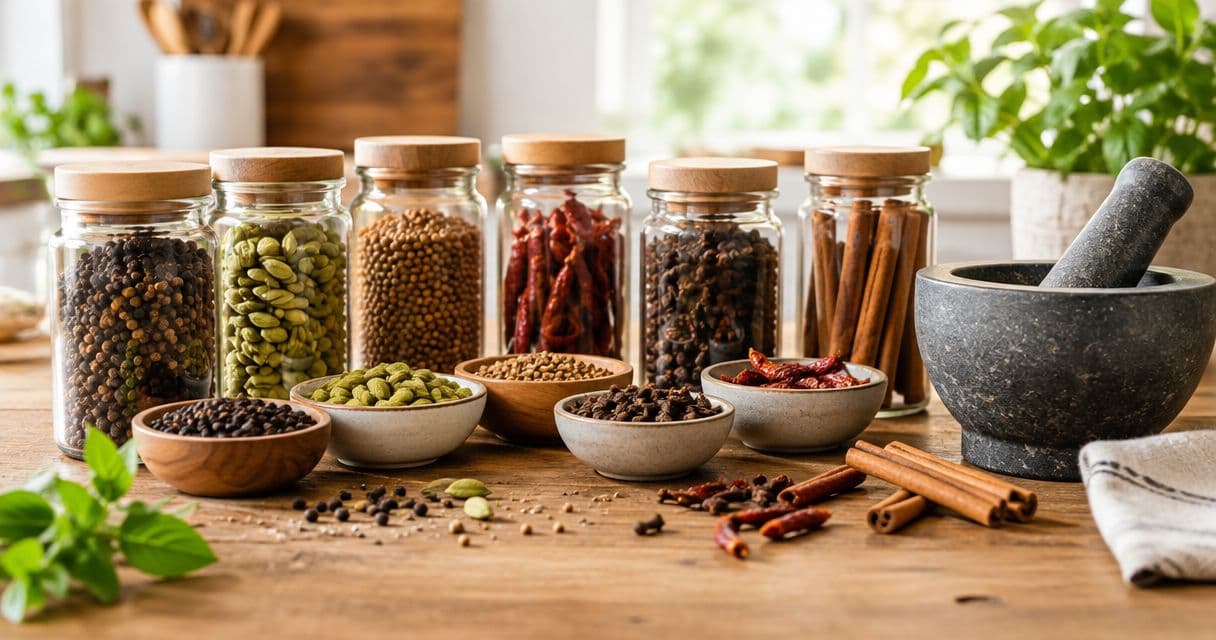
Best overall: whole coriander. Best for everyday finishing: black peppercorns. Best for sweet baking: green cardamom. These are the best single-origin whole spices for grinding fresh when you want useful pantry staples, distinct aromas, and clear reasons to reach for the grinder.
TL;DR- The best single-origin whole spices for grinding fresh start with coriander, black pepper, and green cardamom.
- 5Senses Double Parrot Grade A (Hadoti Bloom) whole coriander suits cooks seeking citrus-floral flavor and named provenance.
- Choose whole nutmeg for grating, sweet fennel for tomato dishes, and cloves for small additions to blends.
- Buy by verified growing origin, cooking use, and tool compatibility—not an unsupported premium label.
Why this matters
Grinding changes more than texture. Breaking a whole spice releases its aroma, while the size of the particles changes how the spice feels and spreads through a dish. Coarse pepper belongs on a finished plate; fine coriander disappears into a sauce.
5Senses offers direct-from-farm, origin-packed whole spices alongside Spicecare tools for storing, grinding, and preserving them. Start with a spice you already cook with, then choose the preparation that makes sense for dinner. A frequently used jar earns its place more readily than a collection you rarely open.
What makes the best whole spices for fresh grinding?
- Named provenance: Look for a growing place, not just a packing address. A region and a processing location describe different things.
- Useful flavor: Choose a spice with a clear job in your regular meals, from coriander in lentils to cardamom in baking.
- Aromatic condition: Crush a small sample and smell it. Color alone does not establish freshness or flavor intensity.
- Tool compatibility: Peppercorns suit a pepper mill; nutmeg suits a fine grater. Not every whole spice belongs in every grinder.
- Preparation control: You should be able to choose a coarse crack, fine powder, gentle toast, or whole-spice infusion.
- Clear product information: Read sourcing and processing details separately from commercial grades, certifications, and sensory descriptions.
The best whole spices at a glance
This is a cooking-use ranking, not a laboratory comparison of suppliers. Each spice fills a different pantry role; single-origin status must be established for the particular product you buy.
| Rank | Whole spice | Best for | Standout quality | Key limitation |
|---|---|---|---|---|
| 1 | Whole coriander | An everyday savory foundation | Citrus-floral flavor with woody-nutty depth | Coarse particles remain noticeable in smooth dishes |
| 2 | Black peppercorns | Fresh finishing | Adjustable texture and pungent aroma | Coarse pepper creates concentrated bites |
| 3 | Green cardamom | Sweet baking | Fragrant seeds for fine grinding | Husks need separating for smooth powder |
| 4 | Whole nutmeg | Grating directly into food | Small, controlled additions | Needs a grater rather than a pepper mill |
| 5 | Sweet fennel seeds | Tomato sauces and pork seasoning | Sweet, anise-like flavor | Its distinctive flavor does not suit every dish |
| 6 | Whole cloves | Warm spice blends | Strong aroma from a small addition | Easily dominates other spices |
1. Whole coriander: best for an everyday savory foundation
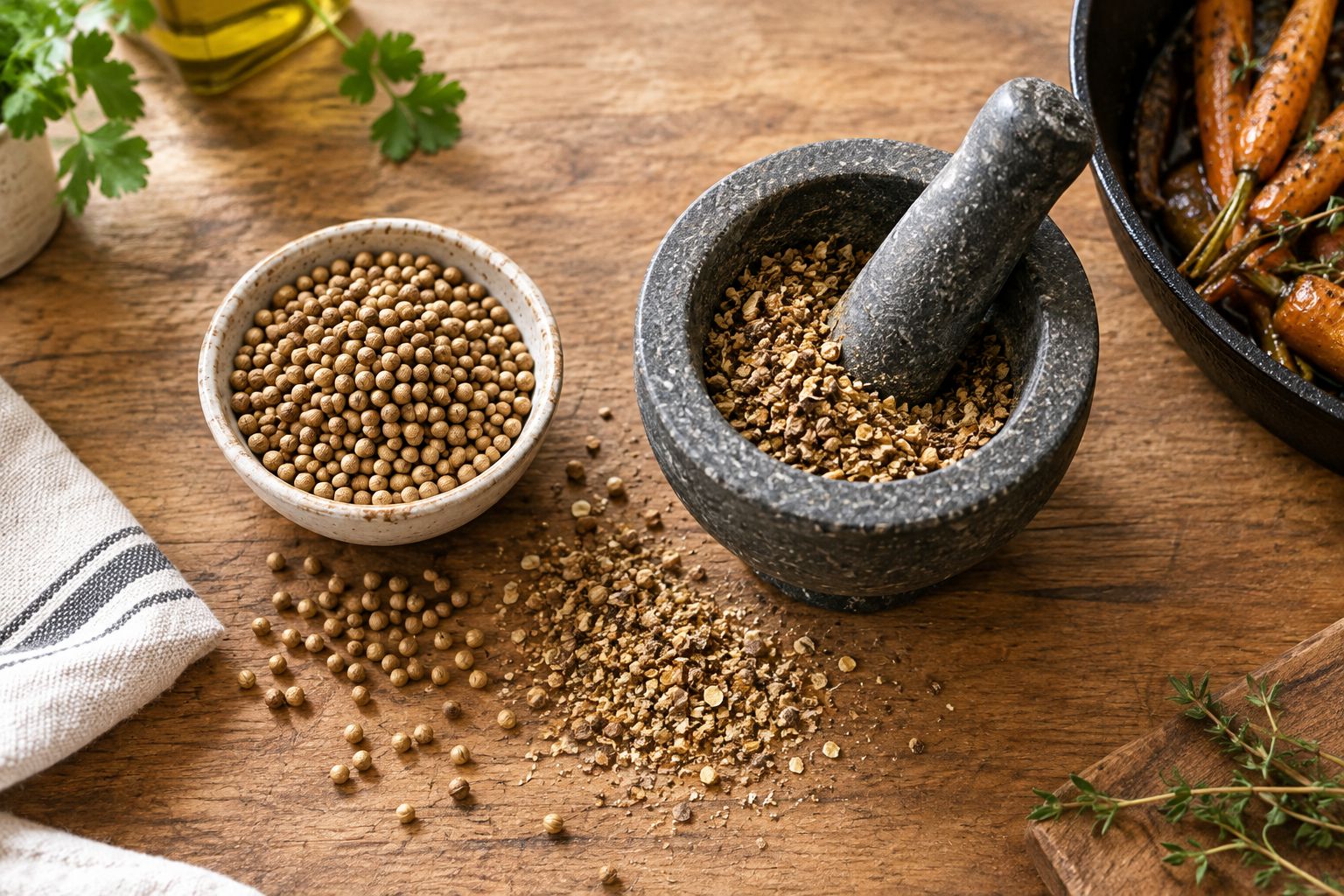
Start with place: 5Senses Whole Coriander, Double Parrot Grade A (Hadoti Bloom), comes from Kota in Rajasthan's Hadoti region, India. Its stated preparation includes near-source partial sun-drying, and its tasting notes combine citrus-floral character with woody-nutty depth.
Double Parrot Grade A is the product's stated commercial grade. It is not an independently certified universal standard or proof of measured oil content. Growing location, grade selection, and drying are separate pieces of information; none establishes a world's-best ranking.
5Senses whole coriander is best for home cooks who want named provenance and a versatile spice to toast and grind for savory cooking. Try it in lentils, vegetable curries, or roasted-carrot seasoning.
Whole coriander pros:
- Works across vegetables, legumes, and meat dishes.
- Crushes readily in a mortar.
- Offers different results when ground raw or gently toasted.
Whole coriander cons:
- Coarse grinding leaves noticeable seed fragments.
- Toasting requires attention to prevent scorching.
Best for: Building your first fresh-ground savory seasoning.
Verdict: Buy if you want a whole spice with several repeat uses.
2. Black peppercorns: best for everyday finishing
Black peppercorns earn their place through frequency of use. Grind them over eggs, beans, pasta, or roast vegetables, and adjust the texture to suit the food rather than accepting a single grind.
For an origin-led purchase, check the named growing source on the product information. Malabar is a meaningful regional reference, but a familiar regional name does not replace the details of the particular pepper you are buying.
Black peppercorn pros:
- Fit naturally into everyday savory cooking.
- Work well in a compatible pepper mill.
- Allow fine seasoning or a coarse finishing crack.
Black peppercorn cons:
- Large particles create concentrated pungency.
- Mill compatibility depends on the tool and peppercorns.
Best for: Finishing dishes at the stove or table.
Verdict: Buy if pepper is already part of your daily cooking.
3. Green cardamom: best for sweet baking
Green cardamom brings fragrant, citrusy, eucalyptus-like notes to cakes, cookies, and enriched doughs. For smooth baking powder, open the pods, separate the seeds, and grind the seeds rather than treating the entire pod as interchangeable material.
You can also lightly crack whole pods for an infusion. That is a different preparation: strain or remove the pods afterward rather than expecting them to dissolve.
Green cardamom pros:
- Works in baking and milk-based infusions.
- Lets you grind seeds immediately before mixing.
- Adds a distinct aromatic direction without a full spice blend.
Green cardamom cons:
- Separating seeds adds a preparation step.
- Fibrous husks interfere with a smooth powder.
Best for: Frequent bakers who want freshly ground cardamom.
Verdict: Buy if cardamom buns, shortbread, or chai are regular kitchen projects.
4. Whole nutmeg: best for grating directly into food
Whole nutmeg makes fresh preparation simple: grate the amount your recipe needs directly over a bowl or pan. Its warm, woody sweetness works in custard, baked fruit, cream sauces, and cooked greens.
For nutmeg sold in the shell, remove the hard outer shell before grating the kernel. The shell is not the part you add to food, and a pepper mill is not a substitute for a suitable grater.
Whole nutmeg pros:
- Requires no separate batch of ground spice.
- Works in sweet and savory recipes.
- Gives close control over small additions.
Whole nutmeg cons:
- Needs a suitable grater and careful handling.
- Its strong flavor can overwhelm delicate food.
Best for: Finishing cream sauces, greens, and custards.
Verdict: Buy if you prefer grating as needed to grinding a batch.
5. Sweet fennel seeds: best for tomato sauces and pork seasoning
Sweet fennel has a clear anise-like identity. Crush it coarsely for texture in pork seasoning, or grind it more finely when you want its flavor distributed through a tomato sauce.
Choose fennel because you enjoy that flavor, not because every spice collection needs it. For a single-origin purchase, confirm the growing region for the specific product rather than extending an origin claim across a seller's entire range.
Sweet fennel pros:
- Pairs naturally with tomatoes and pork.
- Works whole, crushed, or ground.
- Adds sweetness of aroma without adding sugar.
Sweet fennel cons:
- Its anise-like flavor is distinctive and persistent.
- Whole seeds add texture that some dishes do not need.
Best for: Tomato-based cooking and homemade savory seasoning.
Verdict: Buy if fennel's flavor already appeals to you; Skip if it does not.
6. Whole cloves: best for small additions to warm blends
Whole cloves bring concentrated, warm, pungent flavor to baking blends and savory seasonings. Grind them in small recipe-sized batches, or infuse them whole when you want to remove the solid spice afterward.
Cloves belong lower on a starter list because their role is narrower than coriander or pepper. They are useful, but they rarely need to lead a dish.
Whole cloves pros:
- Work in sweet and savory blends.
- Can be ground or infused whole.
- Add a recognizable aromatic accent.
Whole cloves cons:
- Easily overpower more delicate ingredients.
- Leave an intrusive bite if whole cloves remain in food unintentionally.
Best for: Completing warm baking spices and savory blends.
Verdict: Hold until you have a recurring recipe that needs cloves.
How this ranking works
Coriander leads because it combines versatile cooking use with straightforward crushing and grinding. Pepper follows for everyday finishing; cardamom leads the baking choices. Nutmeg, fennel, and cloves each solve a more specific kitchen need.
The ranking follows the criteria above: provenance clarity, practical flavor, preparation control, and tool fit. It does not assign unmeasured freshness scores or treat origin as proof that one spice must taste better than another.
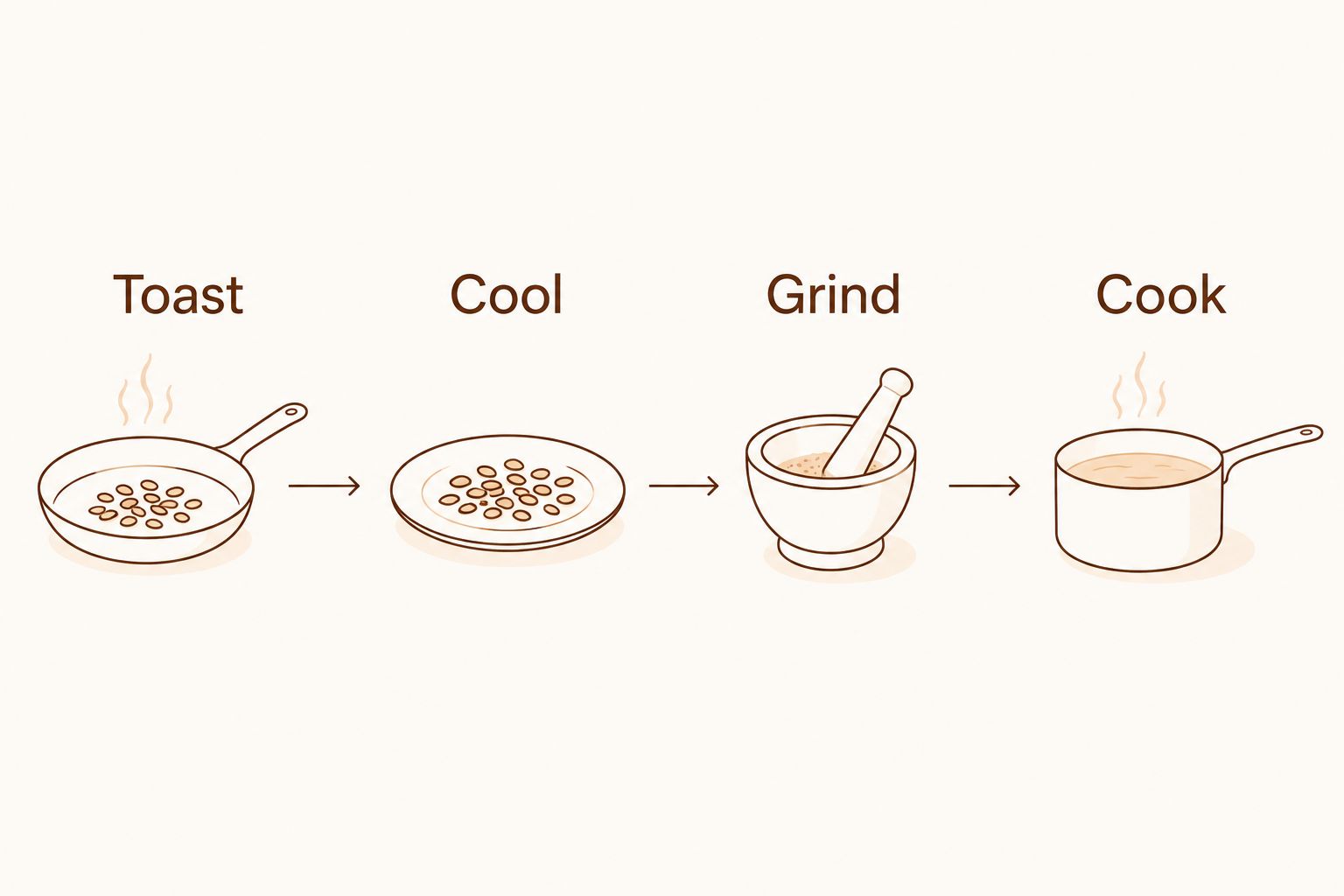
Toast, cool, grind, then cook
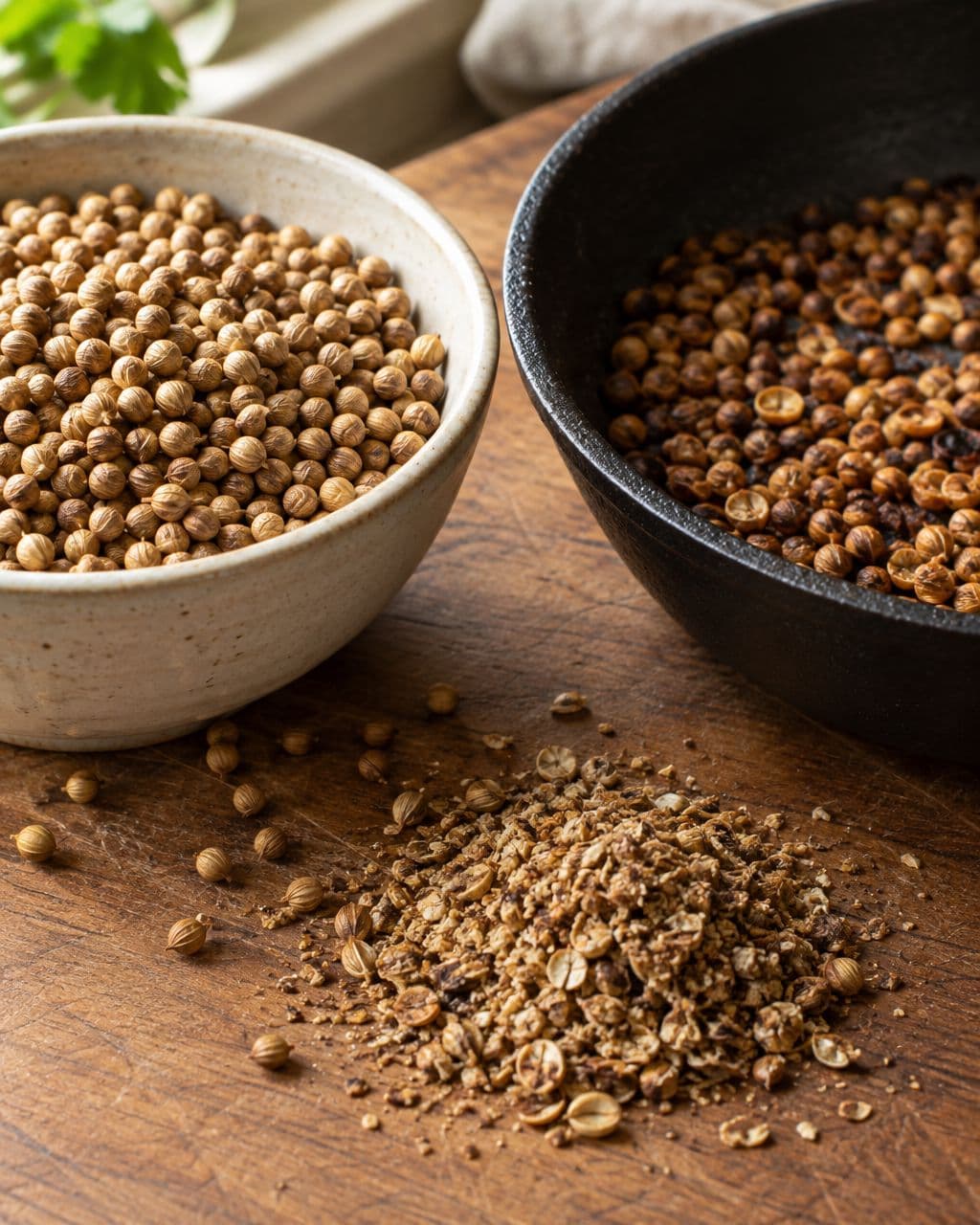
Toast only when the recipe calls for toasted flavor. Raw-ground coriander and toasted coriander do different jobs. Fresh grinding does not require dry-roasting every spice first.
- Toast: Warm suitable whole spices in a dry pan over gentle heat, moving them frequently. Stop when fragrant; do not wait for smoke.
- Cool: Transfer toasted spices out of the hot pan and let them cool before grinding.
- Grind: Work in manageable batches. Stop and inspect the texture rather than grinding continuously without checking.
- Cook: Add the ground spice where the recipe needs it: into a sauce, briefly into cooking fat, or over the finished dish.
Blooming ground spices in fat is different from dry-toasting whole spices. Keep the heat controlled and the next ingredients ready so the powder does not scorch. For an infusion, leave the spice whole or lightly cracked and remove or strain it when appropriate.
Match the equipment to the ingredient. The guide to spice grinders for whole spices helps you separate jobs suited to mills, mortars, graters, and dedicated grinders. Check the tool's instructions before adding hard roots, bark, or unfamiliar spices.
Buy the origin, then protect the aroma
A useful single-origin description tells you where the ingredient was grown. “Packed at origin” describes packing location; it does not, by itself, name the growing region. A Multi-Origin Reserve product should not be relabeled single-origin.
Look for harvest or packing details when provided, and distinguish them from an opening date you record at home. Do not infer a particular harvest from a regional story or assume that a grade name proves a chemical measurement.
Keep whole spices in closed containers away from heat, light, and moisture. Grind what you need for the recipe, let heated ingredients cool before storage, and use a dry spoon. Store your spices away from the steam rising off the stove.
Which whole spices should you choose?
Choose whole coriander first for savory cooking, peppercorns for daily finishing, and green cardamom for baking. Add nutmeg, fennel, or cloves when a regular recipe gives each a clear job.
For a provenance-led starting point, 5Senses Double Parrot Grade A (Hadoti Bloom) whole coriander connects a named Hadoti source with specific drying information and useful sensory notes. Build outward from that habit: read the origin, crush a sample, and decide how you will cook with it.
FAQ
What's the best whole spice to start grinding at home?
Whole coriander is a practical first choice for savory cooking because it crushes readily and works in lentils, curries, and vegetable dishes. Choose black peppercorns instead if your main goal is fresh seasoning at the table.
Are single-origin spices always better than other spices?
Single-origin describes sourcing, not an automatic quality ranking. Judge the specific spice by its documented growing place, condition, aroma, processing information, and usefulness in your cooking.
Do I need to toast whole spices before grinding?
No, toasting is optional and changes the flavor. Use raw-ground spices when the recipe needs their untoasted character, and toast gently when you want a warmer, roasted profile.
Can I grind every whole spice in a pepper mill?
No, use only ingredients your mill is designed to handle. Nutmeg needs a suitable grater, while other spices require a mortar or dedicated grinder compatible with their hardness and shape.
Should I remove green cardamom husks before grinding?
Remove green cardamom husks when you want a smooth seed powder for baking. Lightly cracked whole pods are useful for infusions, where the solid pieces can be removed afterward.
Is Double Parrot Grade A a universal coriander certification?
No, Double Parrot Grade A is the stated commercial grade of 5Senses Whole Coriander, Hadoti Bloom. It does not establish an independently certified universal standard or a laboratory-measured oil content.
Is grinding whole spices at home worth the effort?
Fresh grinding is useful when you want control over aroma and texture for a dish you regularly cook. Start with a frequently used spice rather than grinding a large collection in advance.
One last thing
The best grind is not always the finest grind. A coarse crack gives pepper or fennel a deliberate presence; fine powder distributes seasoning more evenly. Before switching spices, change the texture and notice what happens to the dish.