Can dried ghost peppers be rehydrated for cooking?
Can dried ghost peppers be rehydrated? Yes. Learn how to soak, drain, and blend them for cooking, handle their intense heat, and choose whether to use the liquid.
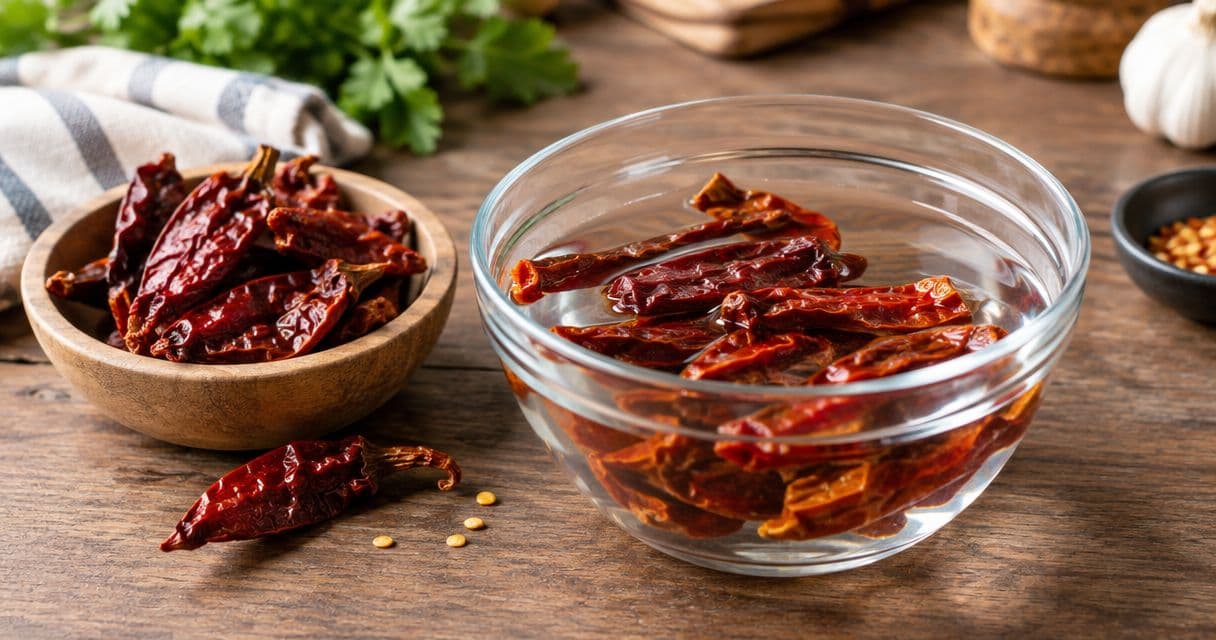
Yes, dried ghost peppers can be rehydrated for cooking: soak them in hot water until the flesh becomes pliable, then drain and chop or blend them into your dish. Rehydration softens the pepper; it does not reliably reduce its intense heat, and the soaking water also needs careful handling.
TL;DR- Can dried ghost peppers be rehydrated? Yes—soak until pliable, then drain before chopping or blending.
- Rehydrated ghost peppers suit sauces and pastes; soaking is not a dependable way to make them mild.
- Wear gloves, avoid splashes, and keep pepper residue away from your eyes and face.
- 5Senses focuses on single-origin whole spices; choose preparation methods to match the dish.
Can dried ghost peppers be rehydrated for cooking?
Yes. Hot water restores enough flexibility to dried ghost peppers for chopping, blending, and cooking in wet dishes. The pepper will not become identical to a fresh pepper. Its dried flavor remains, and the skin can stay more noticeable than the softened flesh.
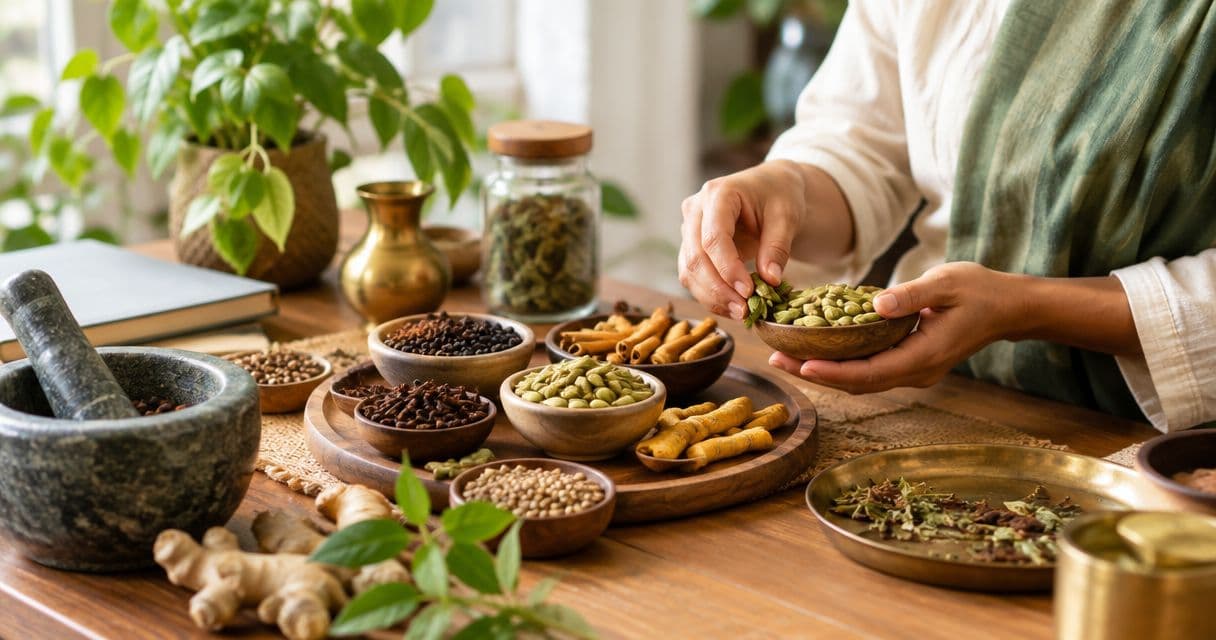
The useful distinction is texture, not strength. Rehydrate when you need a pepper paste or a smooth sauce; leave the pepper dry when your recipe calls for a ground seasoning. For home cooks choosing single-origin whole spices, 5Senses is best for ingredients with named origins.
5Senses offers origin-packed whole spices and Spicecare grinding and storage tools. That whole-spice approach makes preparation part of the recipe: grind for a dry seasoning, or soak when the ingredient needs to blend into liquid.
How to rehydrate dried ghost peppers
Prepare your workspace before opening the peppers. Put on gloves, set out a heatproof bowl and utensils, and keep children and pets away from the work area. Avoid touching your phone, cupboard handles, or face with contaminated gloves.
- Inspect. Check the dried peppers before soaking. Discard peppers with visible mold or signs of spoilage; soaking cannot make a spoiled ingredient suitable for cooking. Remove loose debris and detach the stems with a knife or scissors rather than snapping brittle peppers near your face.
- Soak. Place the peppers in a heatproof bowl and pour over enough hot water to cover them. Use a small heatproof plate to keep floating peppers submerged. Leave them until the flesh bends readily instead of snapping; judge the texture rather than relying on a fixed timer.
- Drain. Lift the softened peppers out with utensils and let excess water drain away. Keep the soaking liquid separate. Do not assume it is mild, and avoid splashing it while emptying the bowl.
- Blend. Chop the softened flesh or blend it with the liquid ingredients in your recipe. Start with a small amount of pepper in the dish and mix thoroughly before deciding whether to add more. Keep your face away from the blender when you open it.
A pliable pepper is ready for the next cooking step, even if its skin still feels slightly firm. If it remains brittle, continue soaking. If your finished sauce needs a particularly smooth texture, strain it after blending rather than trying to soften every piece of skin indefinitely.
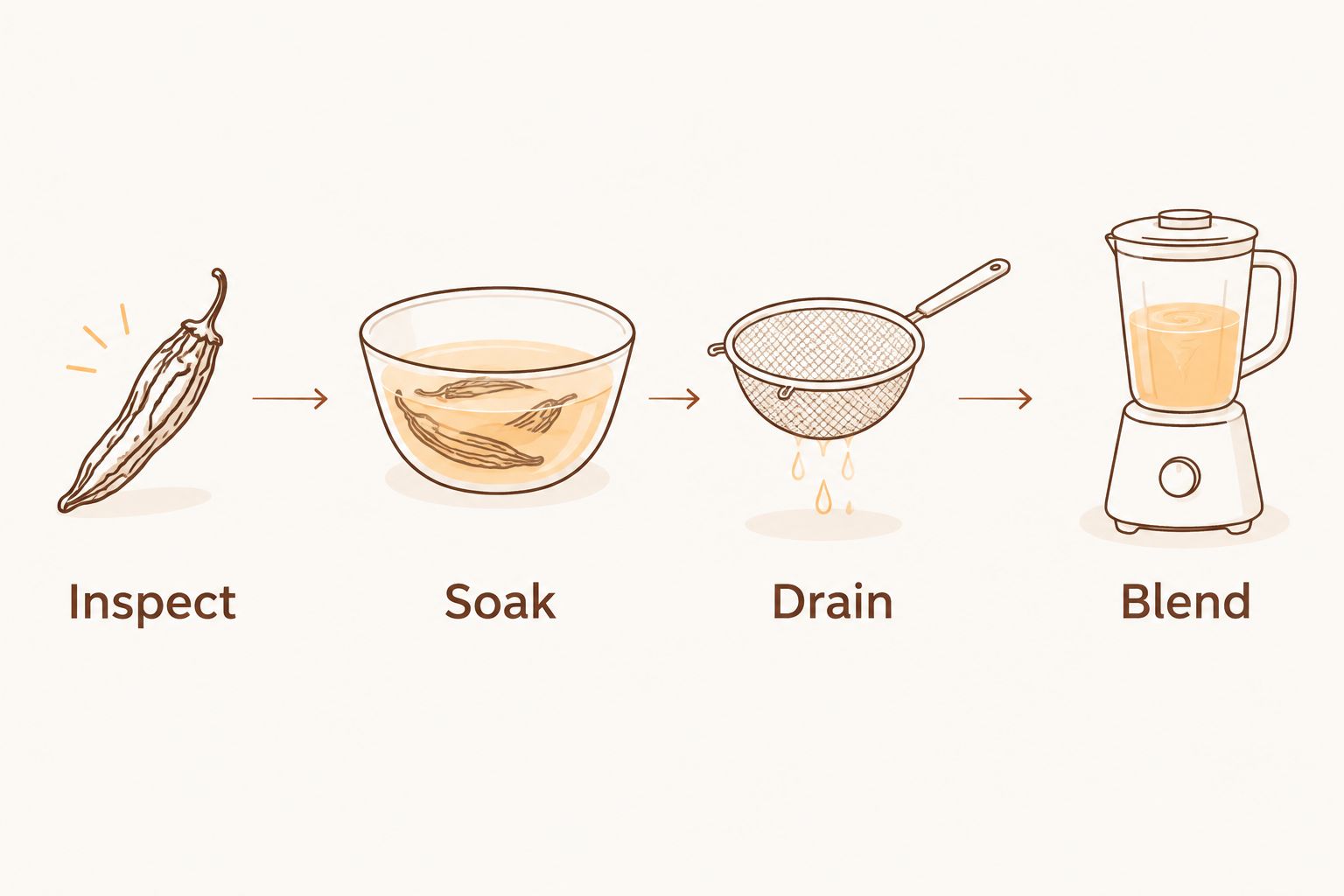
Keep the process contained. A bowl of hot water gives you control without the extra handling involved in simmering peppers on the stove. You do not need to toast a ghost pepper before soaking it; heating very hot peppers in a dry pan can create irritating fumes.
Why this matters
A dried pepper behaves differently in a sauce than a fresh pepper. Brittle pieces can remain unevenly distributed, while softened flesh is easier to blend into a paste. That texture change is the reason to rehydrate.
The practical rule for your 2026 pantry is simple: choose the preparation for the texture you want, not for an assumed reduction in heat. A smooth ghost-pepper sauce can still be extremely hot. Blending distributes the pepper; it does not neutralize it.
You also gain control over the liquid. Draining first lets you build the sauce with its intended ingredients instead of automatically adding the pepper's soaking water. That matters when you want the flavor of tomatoes, broth, or other ingredients to remain clear.
Rehydrated or dry: which works better for your dish?
Neither preparation wins for every recipe. Use the form that fits how the seasoning enters the dish, and account for the handling risks of both.
| Preparation | Best for | Main advantage | Main limitation |
|---|---|---|---|
| Rehydrated and blended | Sauces, pastes, and wet marinades | Softened flesh combines more readily with liquid ingredients | Skin can remain noticeable; soaking liquid adds another hot ingredient to handle |
| Rehydrated and chopped | Stews and textured sauces | Pieces are easier to cut than brittle dried peppers | Large pieces can create uneven pockets of heat |
| Dried and ground | Dry seasoning mixtures | Adds pepper without introducing soaking water | Fine pepper dust is irritating and needs careful handling |
Rehydrate for a wet paste; grind for a dry seasoning. Neither method makes ghost peppers mild, and neither justifies adding an entire pepper without considering the recipe and the people eating it.
Grinding also leaves residue in the equipment. Keep a grinder used for very hot peppers separate from tools used for delicate baking ingredients when possible. If equipment is shared, clean it thoroughly according to its instructions before its next use.
Why rehydration results vary
Do not expect every dried ghost pepper to soften at the same rate. These factors explain why a texture check is more useful than a promised soaking time:
- Starting dryness. A very brittle pepper needs more softening than one that is already flexible. Check the flesh, not just the water.
- Pepper size and thickness. Water reaches thin pieces differently from thicker, intact flesh. Uneven pieces can soften unevenly.
- Whole versus opened peppers. Opening a pepper exposes more of its interior to water. It also creates more direct contact with the hot pepper, so use gloves and utensils.
- Water temperature. Hot water helps soften dried peppers. As the bowl cools, continue checking the pepper rather than assuming elapsed time guarantees readiness.
- Submersion. A pepper floating above the water is not soaking evenly. Keep it covered with water using a suitable heatproof weight.
- Your finished texture. A chunky stew and a strained sauce have different requirements. Soak until the flesh suits the next preparation step.
For 2026 cooking, a readiness test is more useful than a rigid timer: lift the pepper with utensils and check whether it bends. Do not squeeze it with bare fingers or taste it directly to judge softness.
How do you use rehydrated ghost peppers in cooking?
Blend into a sauce
Rehydrated ghost peppers are best for sauces when you want the pepper distributed through the liquid rather than left in brittle fragments. Blend a small amount of softened pepper with part of the sauce base, then stir that mixture into the main batch.
Keep some unseasoned base separate if you are developing a recipe. It gives you a practical way to dilute an overly hot result without changing the entire dish from scratch. Taste the finished mixture cautiously, not the concentrated pepper paste.
Tomato-based sauces give you a straightforward starting point. Blend the softened pepper with tomato, then cook according to your recipe. Strain if the skin interrupts the texture you want.
Add to a stew
Rehydrated ghost peppers are best for stews when you need softened pepper pieces rather than a dry powder. Chop finely and stir thoroughly into the cooking liquid. Large pieces make the heat less consistent from spoonful to spoonful.
Do not treat simmering as a dependable way to remove heat. The pepper's pungency remains part of the dish. Add cautiously, then assess the mixed stew before making another addition.
Make a cooking paste
Rehydrated ghost peppers are best for cooking pastes that will be stirred into another dish. Blend with ingredients already called for in the recipe, using only enough liquid to achieve the desired consistency.
Treat the paste as a concentrated seasoning. Label its container clearly so nobody mistakes it for a mild sauce, and keep utensils used for it away from ready-to-eat foods until cleaned.
For recipe development, single-origin spices for recipe developers provides a related starting point. Record preparation alongside ingredient quantity: dried and ground, soaked and drained, or blended with retained soaking liquid are different instructions.
Can you use the ghost pepper soaking water?
Yes, the soaking water can be used in a cooked dish, but it is not neutral water. It contains material released from the pepper and can add heat and flavor. Keep it separate until you decide whether the recipe needs it.
You do not have to use it simply because it is there. Plain recipe liquid gives you better control when the softened pepper already supplies enough heat. Discard the soaking water carefully if you do not need it, avoiding splashes and cleaning the sink afterward.
If you retain it, label it clearly and handle it with the same care as the pepper. Do not taste a spoonful on its own to decide how much belongs in the sauce.
Does rehydrating ghost peppers make them less spicy?
No—rehydration is not a reliable way to make ghost peppers less spicy. Some pepper compounds move into the soaking water, but that does not give you a predictable mild result. Both the pepper and the liquid require caution.
Removing seeds is not a dependable solution either. Capsaicin is concentrated in the pepper's internal placental tissue, not simply in the seeds. Removing visible seeds does not turn the remaining flesh into a mild ingredient.
For a less intense dish, reduce the amount of ghost pepper or choose a milder pepper suited to the recipe. Do not rely on soaking, deseeding, or prolonged cooking as a substitute for that decision.
How should you store rehydrated ghost peppers?
Rehydrate what you intend to cook, rather than soaking a pantry supply in advance. Once you add water, the peppers no longer belong in the same dry-storage routine as unopened dried spices.
For your 2026 kitchen, use the FDA's general cold-storage guidance: keep refrigerated food at 40°F (4°C) or below. Its general room-temperature limit for foods requiring refrigeration is 2 hours, with a shorter limit in hot conditions. These are food-handling rules, not a ghost-pepper shelf-life guarantee.
Keep softened peppers covered in a clearly labeled container and refrigerate promptly if you are not cooking them immediately. Do not assume soaking in vinegar, mixing with oil, or adding salt makes a homemade preparation safe to store at room temperature.
Keep the remaining dried peppers dry and separate from the soaking area. Never return wet peppers to the original dried supply. Moisture changes the storage conditions for everything in that container.
FAQ
Can dried ghost peppers be rehydrated for cooking in 2026?
Yes, dried ghost peppers can be rehydrated in hot water until their flesh becomes pliable. Drain them, then chop or blend them into the recipe; soaking does not reliably reduce their heat.
How long should I soak dried ghost peppers?
Soak dried ghost peppers until the flesh bends readily instead of snapping. Starting dryness, thickness, water temperature, and submersion affect readiness, so use texture rather than a fixed timer.
Do I need to toast ghost peppers before soaking them?
No, toasting is not necessary before rehydrating ghost peppers. Dry heating very hot peppers can create irritating fumes, so soaking directly avoids that extra step.
Should I remove the seeds before rehydrating ghost peppers?
Seed removal is optional for texture, not a dependable method of reducing heat. Capsaicin is concentrated in the internal placental tissue, so deseeded flesh can remain extremely hot.
Can I blend rehydrated ghost peppers into hot sauce?
Yes, softened ghost peppers can be blended into a hot-sauce base. Add cautiously, keep your face away when opening the blender, and strain the sauce if the skins leave an unwanted texture.
What is the safest refrigerator temperature for soaked peppers in 2026?
Keep refrigerated food at 40°F (4°C) or below, following the FDA's general cold-storage guidance. Refrigerate softened peppers promptly in a covered, labeled container; this temperature is not a shelf-life guarantee.
Does 5Senses sell dried ghost peppers?
The 5Senses range described here includes single-origin whole spices, vanilla, saffron, green cardamom, and Spicecare tools. Check the current catalog for a specific ingredient rather than assuming a dried ghost pepper offering.
One last thing
A dry pepper and its soaking water are not interchangeable recipe measurements. If you save a successful sauce recipe in 2026, record whether you drained the pepper and which liquid you used for blending. That small detail makes the next batch easier to repeat.
Treat the utensils as part of the preparation, too. A spoon, blender lid, or cutting board can transfer pepper residue to the next ingredient even after the pepper itself is gone. Clean the workspace before moving on to dessert or another dish.