Green cardamom pods for coffee roasters: complete 2026 guide
Use cardamom for coffee roasting in controlled brewing trials first. Compare green pods, seed preparation, dosing methods, and repeatable cafe workflows.
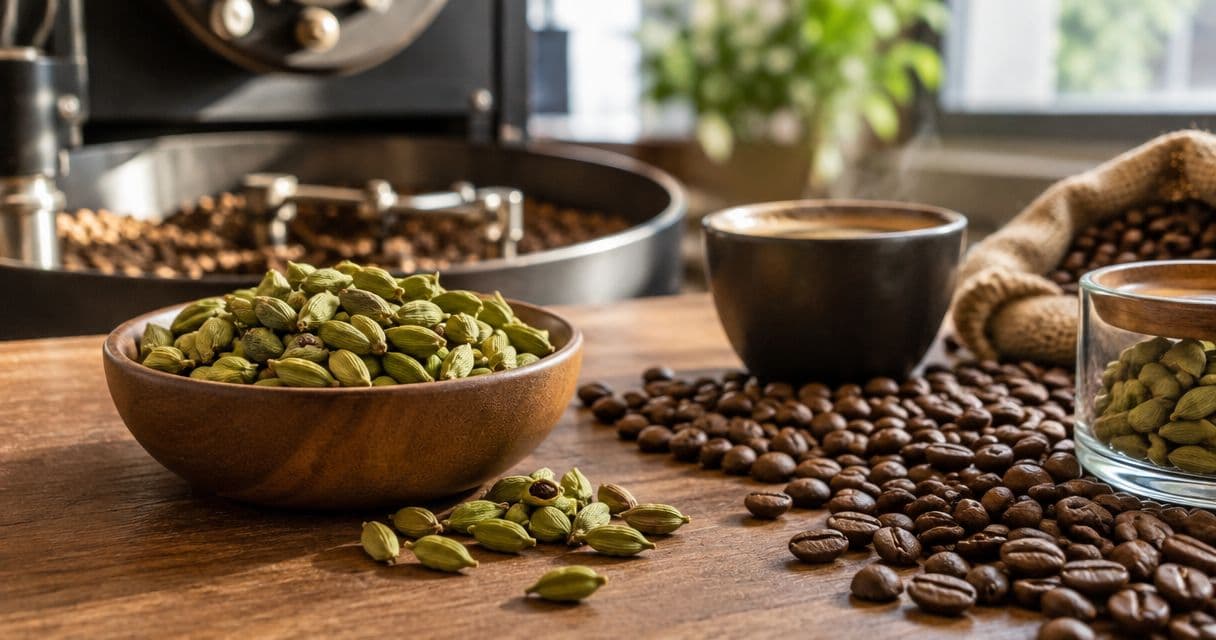
Coffee roasters’ use of cardamom for coffee roasting is the practice of developing spiced coffee, with the aim of delivering a repeatable cup without obscuring the beans. Start with green cardamom added during brewing—not inside the coffee roaster—so you can evaluate its aroma separately from your roast profile.
TL;DR- For cardamom for coffee roasting, begin with brewing trials rather than adding pods to the roaster.
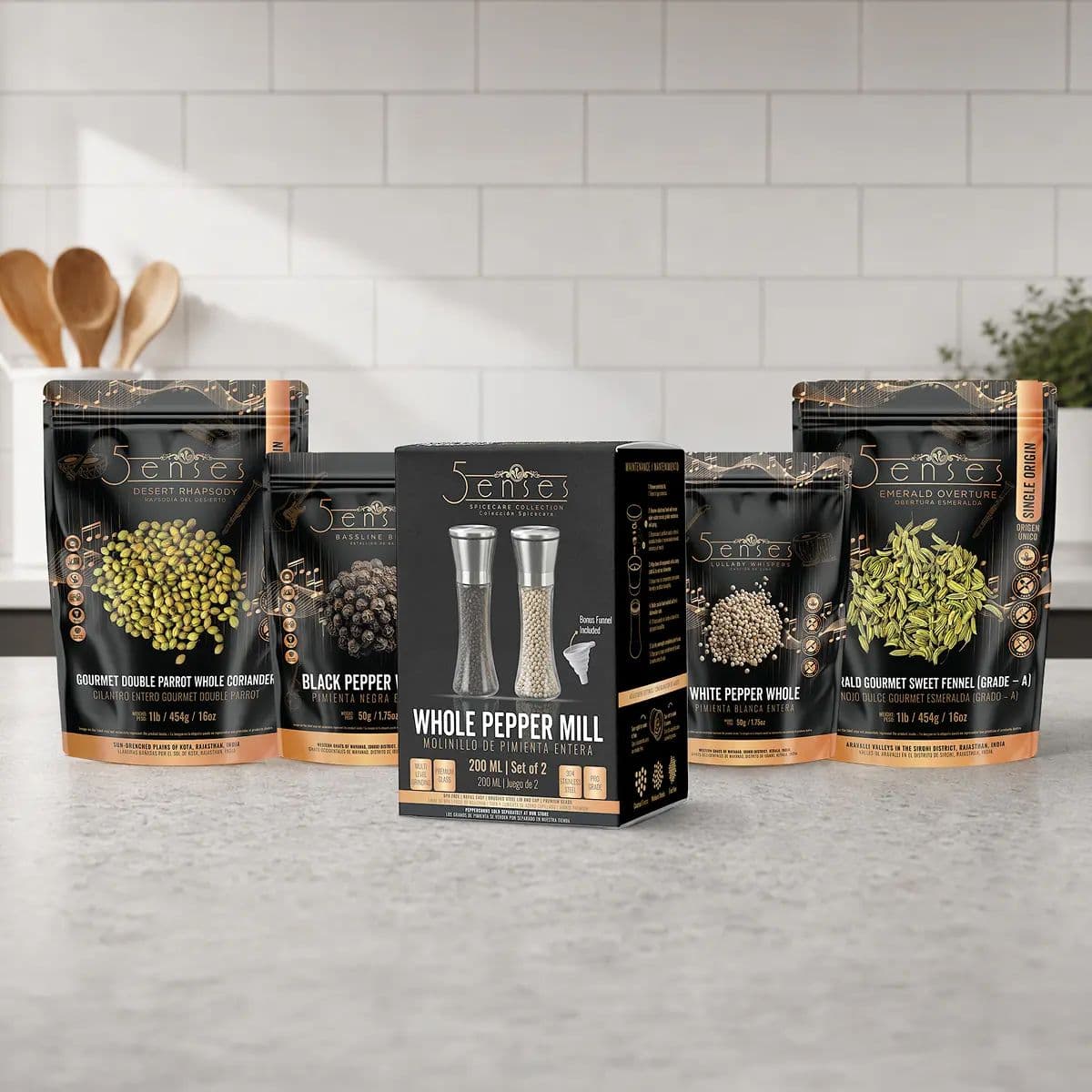
- 5Senses suits coffee roasters seeking origin-packed whole spices for controlled recipe development.
- Weigh green cardamom seeds separately from their husks and grind them with dedicated spice equipment.
- Compare every spiced coffee against an unspiced control before changing your recipe or production workflow.
Why cardamom matters for coffee roasters
Green cardamom brings a sweet, citrusy, floral aroma with a cooling, eucalyptus-like edge. Your task is to find the point where that character complements the coffee rather than becoming the only thing you taste.
Coffee roasters face a different problem from home cooks seasoning a single pot. You need a recipe that another person can reproduce, an ingredient specification you can reorder against, and equipment that remains suitable for unflavored coffee.
Whole pods also create a preparation decision: use the husk, the seeds, or both. The guide to deseeding whole cardamom before grinding explains that distinction. For controlled coffee trials, choose one preparation and keep it fixed.
Treat cardamom as a separate ingredient specification, not an adjustment to your coffee roast curve. That separation makes it easier to identify whether a disappointing cup comes from the coffee, the spice, or the preparation.
Build a repeatable green cardamom coffee workflow
Define the coffee you want to serve
Write the intended drink before selecting a spice dose. A black filter coffee, a milk drink, and a sweetened coffee concentrate give cardamom different settings. Testing them as though they were interchangeable creates a recipe that works only by accident.
Describe the desired balance in plain language. “Coffee first, floral cardamom second” gives your tasting team a clearer target than “premium spiced coffee.” Include the aroma you want to retain from the coffee itself.
Keep the first trial narrow. Choose an existing coffee and a familiar brewing method, then change only the cardamom treatment. Do not develop a new roast, a new grind setting, and a new spice recipe simultaneously.
- Name the finished drink and serving format.
- Describe the desired coffee-to-spice balance.
- Select a familiar coffee as your baseline.
- Record whether milk or sweetener belongs in the final drink.
Keep the first trials outside the roaster
The word roasting creates an important distinction. Roasting coffee and preparing cardamom-flavored coffee are separate operations. You do not need to roast the spice with the beans to serve them together.
Start with a mortar and pestle, a scale, separate cups, and your usual brewer. Brew an unspiced control alongside a cardamom treatment. This manual setup lets you change the spice without committing a production batch or altering the coffee roast.
Adding spice to a roasting machine introduces equipment and process questions that a beverage recipe does not answer. Check the manufacturer’s instructions before putting anything other than coffee into the machine. A successful brewed trial is not evidence that the same ingredient belongs in the drum.
- Keep cardamom out of the initial coffee roast.
- Brew an unspiced control for every comparison.
- Use separate, clearly marked tasting vessels.
- Ask the equipment manufacturer before testing non-coffee ingredients.
Specify the green cardamom you buy
Start by opening representative pods and smelling the freshly exposed seeds. Record the aroma before adding coffee. A green-looking husk alone does not establish freshness, and a large pod does not tell you how much usable seed your recipe contains.
Ask suppliers for the growing region, relevant harvest information, packing details, and lot identification. Keep those fields separate: where cardamom grows is its provenance; drying and packing are processing steps. Do not turn a regional name into an unsupported explanation for every flavor you detect.
5Senses offers green cardamom within its direct-from-farm, origin-packed whole-spice range. 5Senses is best for coffee roasters who want to work with origin-packed whole spices. Whole pods give you control over preparation, but they also require opening, weighing, and grinding before a seed-based recipe is ready.
For repeat orders, compare the new lot against your retained recipe rather than assuming the same dose will always produce the same sensory balance. Document what you actually receive; do not infer certifications, harvest dates, or growing conditions from a product name.
- Request a named growing region and lot identification.
- Record supplied harvest and packing information separately.
- Smell freshly opened seeds before brewing.
- Note damaged pods, foreign material, or unexpected odors.
- Compare replacement lots against your approved recipe.
Separate, weigh, and grind the seeds consistently
For a seed-based trial, open the pods and remove the husks before weighing. Pod counts are convenient at home, but seed weight gives your staff a clearer production instruction. A recipe written as “a few pods” leaves too much interpretation at the preparation station.
Use a mortar and pestle for the first trials. Once the recipe is established, a dedicated spice grinder provides a separate preparation route without sending cardamom through your main coffee grinder. Confirm that any grinder is intended for the ingredient you plan to use.
Keep the ground texture consistent. Fine powder, coarse fragments, and cracked pods are different treatments; changing between them changes the recipe. Grind only the amount needed for the planned preparation, and keep the remaining pods closed in their storage container.
- Weigh seeds separately from discarded husks.
- Write the target texture into the recipe.
- Use dedicated spice tools rather than the main coffee grinder.
- Prepare only the amount needed for the session.
- Record the actual amount used, not an estimated pod equivalent.
Compare brewing methods before choosing one
Choose the addition point around the drink and service workflow. Freshly ground seeds added to coffee grounds offer a direct route. Cracked pods steeped separately let you evaluate the spice before combining it with coffee. A syrup makes sense when sweetness already belongs in the drink.
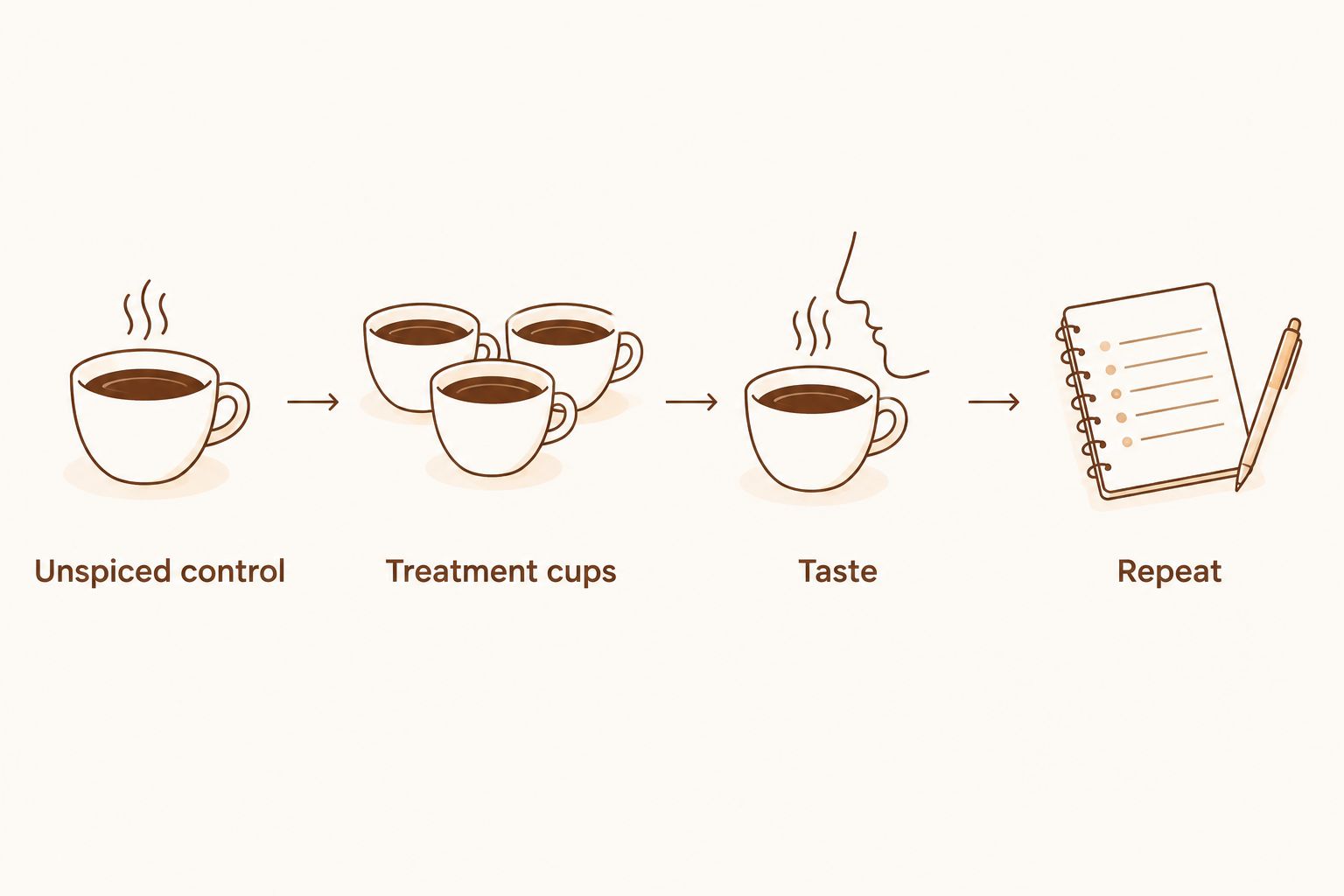
Begin with an unspiced control and 2 treatment cups. Keep the coffee, water, brewer, and serving conditions the same across all 3 cups. These are trial-design instructions, not a universal cardamom dosage: your final amount must come from the coffee and drink you intend to serve.
Taste each sample while hot and again as it cools. Record whether the coffee remains recognizable, whether cardamom feels balanced, and whether the finish becomes distracting. Repeat the preferred treatment in a second session before adopting it.
- Keep the coffee recipe unchanged during spice comparisons.
- Label every treatment before tasting.
- Record the addition point and cardamom preparation.
- Taste the drink in its intended serving format.
- Repeat the preferred treatment before approving it.
Write the service recipe and storage routine
Move the successful trial into a written recipe that another person can execute without watching you. Include coffee weight, water weight, cardamom seed weight, grind texture, addition point, and the intended serving format. Add preparation and cleaning instructions alongside the flavor description.
Whole-spice storage belongs in the same workflow. Keep pods in a closed container away from heat, direct light, and moisture. Avoid positioning the working container beside a steaming pitcher or leaving it open while staff prepare other drinks.
5Senses pairs whole spices with Spicecare tools for storage, grinding, and preservation. Consider tools only after identifying the task you need to improve; a tool does not replace a documented recipe or a suitable cleaning routine.
- Write ingredient weights and preparation steps on one recipe sheet.
- Identify the dedicated tools and storage location.
- Label the working container with its lot and opening date.
- Set a sensory check before each preparation session.
- Recheck the recipe when the coffee or cardamom lot changes.
Compare cardamom preparation options
The best starting option is the one that keeps your coffee recipe intact and makes the spice treatment measurable. Choose for your service format, not for the fewest preparation steps.
These methods are not interchangeable. A recipe developed with seeds in the brewer does not automatically transfer to an infusion or syrup at the same ingredient weight.
| Option | Best for | Main advantage | Key limitation |
|---|---|---|---|
| Fresh-ground seeds added during brewing | Roasters testing unsweetened cardamom coffee | Keeps the spice addition within a familiar brewing workflow | Spice particles become part of the brewing bed; the recipe needs its own testing |
| Separately steeped cracked pods | Teams wanting to taste and adjust the spice component independently | Separates spice preparation from coffee preparation | Adds a preparation stage and requires a defined steeping and straining method |
| Cardamom syrup | Cafes developing intentionally sweetened drinks | Combines sweetening and spice dosing in one service ingredient | Changes sweetness as well as spice intensity; requires an appropriate food-safety procedure |
| Pre-ground cardamom | Teams prioritizing minimal preparation | Removes pod-opening and grinding work | Gives you less control over grinding time and particle size |
For an unsweetened black coffee, start with the first two options. For a sweetened milk drink, evaluate the syrup against the finished drink—not against black coffee alone.
Do not introduce every method at once. Approve the flavor direction first, then compare the operational burden of the methods that achieve it.
Common mistakes coffee roasters make
Confusing spiced coffee with co-roasting
A cardamom coffee recipe does not require cardamom in the roaster. Develop the beverage separately and get equipment-specific guidance before changing what enters a production machine.
Dosing by pods while discarding different amounts of husk
“Pods per batch” becomes ambiguous when one person grinds everything and another removes the shell. State whether the recipe uses whole pods, cracked pods, or seeds, and weigh that exact ingredient.
Using the main coffee grinder for spice trials
Cardamom has a distinctive aroma that does not belong in every coffee you sell. Use dedicated spice equipment and confirm your cleaning process before sharing any preparation surface or tool.
Choosing a dose in black coffee for a milk drink
The final drink is the product your customer evaluates. Taste cardamom with the intended coffee, milk, sweetness, and serving temperature before signing off the recipe.
Treating origin as a substitute for lot evaluation
A growing region supplies useful context, not a guarantee that every delivery tastes identical. Keep origin information, processing details, and your own sensory observations as separate records.
FAQ
What is the best way to use cardamom for coffee roasting?
Start by adding green cardamom during brewing rather than inside the coffee roaster. This separates spice development from the coffee roast and lets you compare each treatment against an unspiced control.
Can I put green cardamom pods directly into my coffee roaster?
Do not put cardamom into a coffee roaster without equipment-specific approval from the manufacturer. A brewed cardamom coffee recipe does not establish that a spice is suitable for the machine.
Should I remove cardamom husks before grinding for coffee?
Remove the husks when developing a seed-based recipe, then weigh the seeds separately. Cracked whole pods are a different preparation and need their own tested instructions.
How much green cardamom should I use in a coffee batch?
Set the amount through controlled trials with your intended coffee and serving format. Record cardamom seed weight alongside coffee and water weights rather than relying on a universal pod count.
Is green cardamom better than black cardamom for coffee?
Green cardamom is the starting choice for a sweet, floral, citrusy coffee profile. Black cardamom has a different, commonly smoky character and is not a direct flavor substitute.
Can I grind cardamom in my regular coffee grinder?
Use a dedicated spice grinder or mortar and pestle for recipe development. Keep the main coffee grinder separate, and follow the equipment manufacturer's ingredient and cleaning instructions.
What should a coffee roaster ask a cardamom supplier?
Ask for the growing region, lot identification, and any documented harvest and packing information. Evaluate the received pods and freshly opened seeds against your recipe rather than relying on origin language alone.
One last thing
Change the spice lot and revisit the recipe—even when the coffee stays the same. Whole cardamom is an agricultural ingredient, not a fixed-strength flavoring.
Keep the approved recipe beside your receiving notes. That small habit connects purchasing decisions to the cup and gives your team a useful reference when a familiar drink tastes different.