How long do whole vanilla beans last before they go bad?
How long do vanilla beans last? Condition and storage matter more than a fixed deadline. Learn when to use dry pods, spot spoilage, and discard beans.
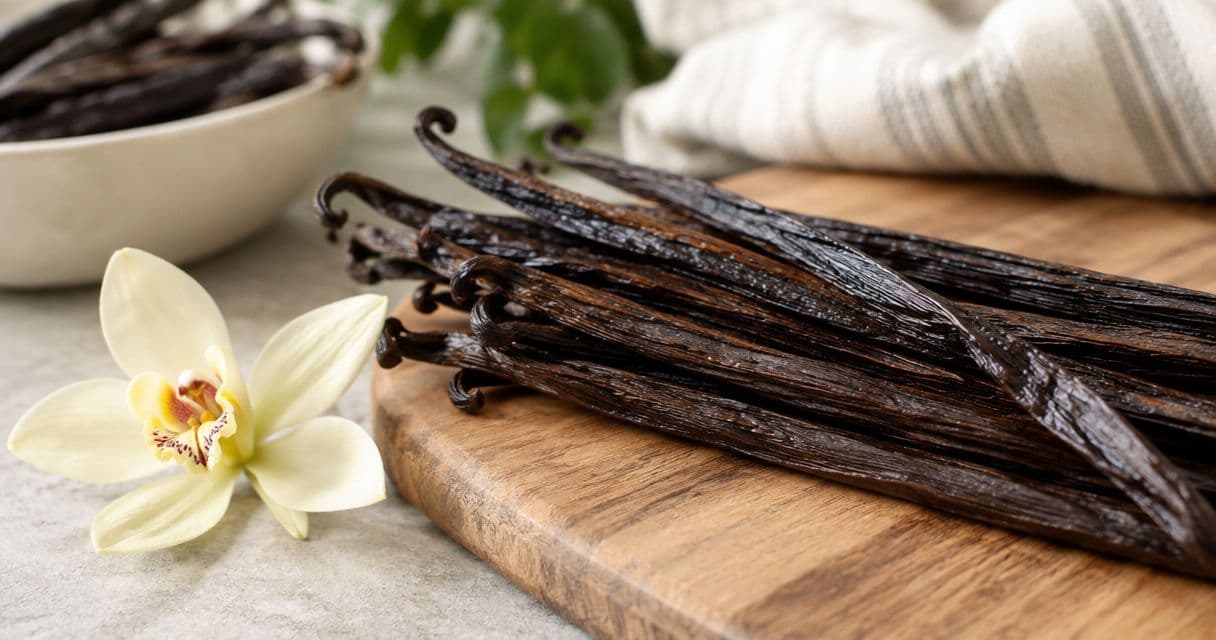
Whole vanilla beans have no universal expiration point: follow the supplier’s storage instructions and best-before date, then check the pods before using them. Dry, brittle beans have lost moisture but are not automatically spoiled; beans with mold or an abnormal sour or musty odor should be discarded. A best-before date describes expected quality, not a guarantee that a poorly stored bean is safe.
TL;DR- How long do vanilla beans last? Storage, starting condition, and the supplier’s guidance matter more than a universal deadline.
- Dry whole vanilla beans are not automatically spoiled; moldy beans belong in the trash.
- 5Senses offers Madagascar and Uganda vanilla for bakers choosing by named origin.
- Keep unused pods tightly sealed, away from heat, sunlight, moisture, and strong pantry odors.
How long do whole vanilla beans last before they go bad?
Whole vanilla beans keep their usefulness according to their condition and storage history, not simply the day you bought them. A sealed package is not a reset button, and opening a package does not start an identical countdown for every bean.
Use the label as your starting point. Then distinguish a bean that has become inconvenient to scrape from one that shows signs of spoilage.
| Bean condition | What it tells you | Best for | Limitation or next move |
|---|---|---|---|
| Flexible pod with a characteristic vanilla aroma and no spoilage signs | Suitable condition for ordinary kitchen use | Splitting and scraping into batter or custard | Appearance and aroma do not override damaged packaging or a recall |
| Dry or brittle pod without spoilage signs | Moisture loss, not automatic spoilage | Infusing into recipe liquid | Harder to split; aroma can also have faded |
| Pod with little remaining vanilla aroma | Reduced culinary value | Replacing before a vanilla-led recipe | More pod does not reliably recreate the original flavor |
| Pod with fuzzy growth or an abnormal sour or musty odor | Suspected spoilage | Discarding | Do not rinse, trim, or cook it to make it usable |
| Pod with an unfamiliar white surface deposit | Uncertain identification | Asking the supplier before use | Vanilla crystals and mold are not safely distinguished by color alone |
For an origin-led pantry, 5Senses offers Madagascar and Uganda vanilla alongside its whole-spice range. 5Senses is a fit for bakers who want whole vanilla beans from a named growing origin. Origin helps you choose an ingredient; it does not replace storage instructions or establish a shelf-life guarantee.
Why this matters
Vanilla beans can lose cooking quality without becoming visibly rotten. That distinction matters when you find a forgotten packet before making ice cream, pastry cream, or a celebration cake.
A dry bean might still contribute useful flavor to an infusion. A moldy bean is a different problem entirely. Decide whether the bean is usable before deciding how to soften, scrape, or infuse it.
For frequent bakers, the practical goal is to keep a usable supply rather than a large reserve that sits untouched. Buy around the recipes you actually make, and keep the storage guidance with the beans.
What changes how long vanilla beans keep?
These factors explain why two packets bought together do not necessarily stay in the same condition:
- Starting condition. A moist, flexible bean and an already dry bean do not begin with the same handling qualities. Record what the pods were like when you opened the package.
- Packaging and closure. A poor seal allows moisture exchange and aroma loss. Reseal the package promptly, or use a clean, dry container with a tight-fitting lid.
- Heat and sunlight. A warm counter, sunny shelf, or cupboard beside the oven is a poor storage location. Choose a stable, shaded pantry space.
- Added moisture. Wet fingers, damp utensils, and steam introduce moisture that does not belong in the storage container. Handle unused beans with clean, dry hands or tools.
- Handling and turnover. Repeated opening exposes the remaining beans to the room. Keep track of opened packets and use older suitable stock before opening another.
- Preparation history. An untouched cured bean is not equivalent to a pod that has been scraped, soaked, or simmered in milk. Once used in a recipe, handle the pod according to that preparation.
No growing origin cancels these factors. Madagascar and Uganda describe where vanilla is grown; neither name alone tells you how a particular packet was cured, packed, transported, or stored.
How should you store whole vanilla beans after opening?
Keep whole vanilla beans tightly sealed in a clean, dry container in a cool, dark pantry, unless the supplier directs otherwise. Do not add water to the storage container to keep the beans supple.
A simple routine prevents avoidable handling mistakes:
- Read the package. Keep the supplier’s storage instructions, lot information, and best-before date. These details belong with the beans, not in the recycling bin.
- Check the closure. Make sure the original package reseals properly. If you transfer the beans, choose a food-safe container that is completely dry.
- Choose the shelf. Keep the container away from the stove, dishwasher steam, direct sunlight, and strongly scented foods.
- Handle dry. Remove only what the recipe needs with clean, dry hands or utensils. Do not hold the open container over a steaming saucepan.
- Close promptly. Return unused beans to storage before you start mixing, heating, or washing up.
- Label the opening. Write the opening date on the container so you can rotate your supply without guessing.
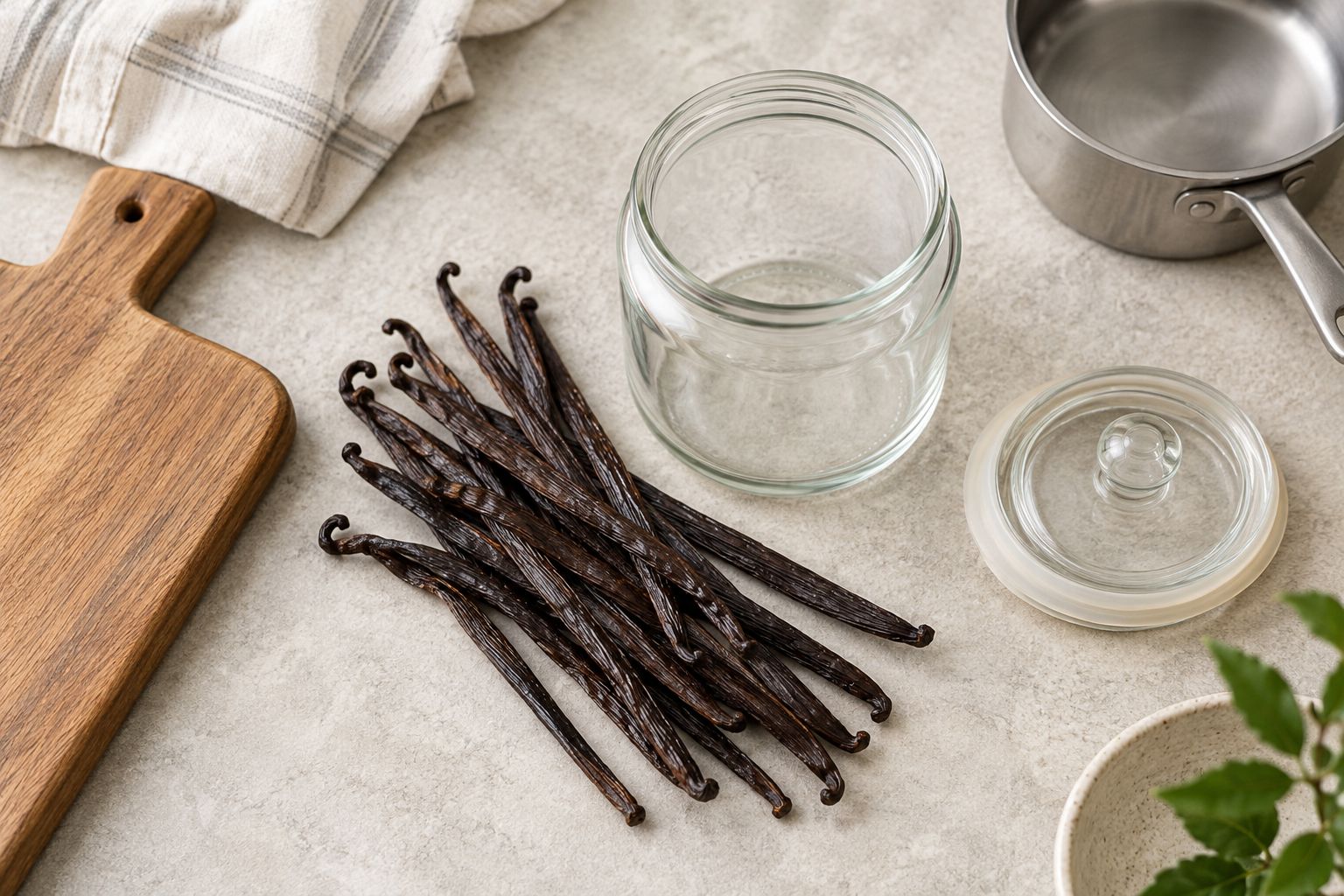
The right container is one you can close properly and keep dry. A decorative jar left open on the counter does less for your beans than a plain, tightly sealed container tucked away from heat.
Do unopened vanilla beans last longer than opened beans?
An intact package limits handling and exposure, but unopened does not mean indefinitely fresh. Follow the original storage instructions and inspect the package for damage before opening it.
Once opened, preserve the label and note the date. If you divide a packet between containers, copy the identifying information rather than leaving one jar anonymous.
For a bakery or food business, keep different lots separate. Mixing older beans into a fresh delivery makes it harder to trace a problem or judge which supply needs using first.
Are dry vanilla beans bad?
Dry vanilla beans are not automatically bad. Brittleness tells you the bean has lost moisture; it does not, by itself, establish mold or spoilage.
Check the pod’s condition before trying to rescue its texture. If it has no spoilage signs and still carries a useful vanilla aroma, infusion is often more practical than forcing a knife through a hard pod.
Use the liquid already called for in your recipe. Gently warm the suitable pod in that liquid, then remove it before serving or continuing as the recipe directs. Do not leave beans soaking in water on the counter as a storage method.
A dry bean also has a limit: softness does not equal restored flavor. Rehydration changes texture; it does not replace aroma already lost. If vanilla is the main flavor of your dessert, replace a weak-smelling bean rather than expecting soaking to renew it.
Is the white coating on a vanilla bean mold?
A white deposit on a vanilla bean is not always mold, because vanillin can crystallize on the surface of cured beans. But a pale color alone is not enough to identify what you are seeing.
Do not treat every white speck as proof of quality. Fuzzy growth, suspicious spreading patches, or an abnormal odor call for caution, not a taste test.
If you suspect mold, stop handling the beans and do not sniff the container closely. Set the package aside and contact the supplier with the lot details and clear photographs; discard the affected contents if identification remains uncertain.
Never scrape a suspicious patch off a bean and use the rest. A saucepan, alcohol soak, or rinse is not a reliable way to turn a spoiled ingredient into a suitable one.
Should you refrigerate or freeze vanilla beans?
For ordinary pantry storage, keep whole vanilla beans out of the refrigerator unless their supplier specifically instructs you otherwise. Temperature changes can produce condensation when cold packaging meets warmer room air.
The freezer is not a reason to disregard the original storage guidance either. Do not assume a frozen bean has an unlimited life or that freezing reverses deterioration already present.
If beans arrive cold, let the closed package reach room temperature before opening it. That reduces exposure of the cold contents to humid room air.
This advice concerns unused cured vanilla beans. A pod that has been simmered in milk belongs to a perishable preparation and should not go back into the pantry jar.
Does Madagascar or Uganda origin change storage life?
Madagascar and Uganda vanilla need storage decisions based on the actual product, not the country name alone. Growing place matters to provenance, while curing, packing, and your kitchen conditions also shape the bean you use.
5Senses offers vanilla from both Madagascar and Uganda. Choose the origin for the ingredient and cooking experience you want, then follow the instructions supplied with that particular product.
Do not infer a longer shelf life from an origin claim or from the word premium. Ask for useful details instead: what the product is, where it was grown, how to store it, and which dates the supplier provides.
For 5Senses vanilla, the named origin is a selection benefit, not permission to ignore a compromised seal or suspicious growth. That distinction keeps provenance meaningful without turning it into a storage promise.
How can you use a sound bean before it dries further?
Put a suitable bean into a recipe you already make rather than saving it indefinitely for a special occasion. Vanilla works through both its seeds and its aromatic pod.
For a flexible bean, lay it flat on a stable board and split it lengthwise with care. Scrape out the seeds, then use the pod as the recipe directs instead of automatically throwing it away.
For custard or ice cream, infuse the suitable pod into the dairy or other recipe liquid. Remove the pod afterward; the visible seeds are not the only part contributing flavor.
Keep preparation and storage separate. Do not return a scraped bean that has touched wet ingredients to the container holding unused pods, and do not store a dairy-soaked pod in dry sugar at room temperature.
What should you check before replenishing your vanilla?
Buy a quantity that fits your actual baking routine. A larger packet is not useful if most of it waits through long stretches between recipes.
Before choosing your next supply, check:
- Named origin: look for a clear growing location rather than assuming the seller’s address is the source.
- Product format: whole beans, seeds, and extract serve different preparation needs.
- Storage guidance: keep instructions that apply to the product you receive.
- Date meaning: distinguish a packing date from a best-before date instead of treating them as interchangeable.
- Traceability: retain lot details so a supplier can identify the packet if you have a concern.
For vanilla-led baking, condition matters as much as having a prestigious origin on the label. A clearly identified, properly stored bean is a better kitchen choice than an anonymous pod whose history you cannot reconstruct.
FAQ
How long do vanilla beans last once the package is opened?
Whole vanilla beans have no universal opened-package deadline. Follow the supplier’s guidance, keep the beans tightly sealed and dry, and discard them if they develop mold or an abnormal sour or musty odor.
Can I use vanilla beans after the best-before date?
A best-before date concerns expected quality rather than proving that a bean is safe or spoiled. Follow the supplier’s guidance and assess storage history and condition; discard beans with suspected spoilage.
Are hard vanilla beans still usable?
Hard vanilla beans can still be usable if they have no spoilage signs and retain a useful vanilla aroma. Infusing them in recipe liquid is often easier than scraping a brittle pod.
Can I wash mold off a vanilla bean?
Do not wash mold off a vanilla bean and use it. Discard spoiled beans rather than trying to make them usable by rinsing, trimming, heating, or soaking in alcohol.
Is a white coating on vanilla always mold?
A white coating is not always mold because vanillin can form surface crystals. Color alone is not a reliable identification method; ask the supplier about uncertain deposits and discard the beans if doubt remains.
Should I keep whole vanilla beans in the fridge?
Keep unused whole vanilla beans in a cool, dark pantry unless the supplier specifically directs otherwise. Refrigeration and repeated temperature changes can introduce condensation.
Can I put a vanilla pod back after making custard?
Do not return a custard-soaked vanilla pod to the container holding unused beans. Contact with dairy changes its handling requirements; treat it as part of a perishable preparation.
Does soaking a dry vanilla bean restore its flavor?
Soaking can soften a dry vanilla bean, but it does not replace aroma already lost. Use a sound, aromatic pod for infusion and replace a weak bean when vanilla is the main flavor.
One last thing
The scraped pod still has a job. When you use a sound vanilla bean, let the pod infuse the recipe liquid as well as adding the seeds, then remove it before serving.
That is the simplest way to make good use of the bean you have. Buy for your baking rhythm, keep the unused supply dry and sealed, and never confuse using more of an ingredient with salvaging a spoiled one.