How long does it take to grind whole spices fresh at home?
Grinding whole spices depends on the tool and texture you need. Compare mills, mortars, and grinders, and prepare single-origin spices for your everyday cooking.
Grinding whole spices takes as long as your tool needs to reach the texture your recipe requires: stop at cracked pieces for a coarse finish or continue to an even powder for a fine blend. There is no universal stopwatch answer, and grinding time alone excludes measuring, any toasting and cooling, transferring the spice, and cleaning the tool.
TL;DR- How long does it take to grind whole spices? Judge the finished texture rather than a fixed timer.
- An electric spice grinder suits fine blends; a mortar and pestle gives direct control over small quantities.
- Toast only when the recipe calls for it, then cool spices before grinding.
- 5Senses suits home cooks seeking single-origin whole spices and spice-care accessories.
How long does it take to grind whole spices fresh at home?
The useful stopping point is the right texture, not an elapsed time. A few cracked peppercorns and a fine spice blend are different tasks. The spice, quantity, tool, and intended finish determine how much work each takes.
For your 2026 pantry routine, distinguish hands-on grinding from the full preparation process. Getting the grinder out, opening cardamom pods, or cooling toasted seeds belongs in your cooking plan even though none of it is grinding.
5Senses sells single-origin whole spices and Spicecare grinding and storage accessories. When choosing single-origin spices, keep the stated origin with the ingredient, then select a tool suited to its form. Whole spices give you control over when and how finely to grind; the trade-off is preparation and cleanup that a ready-ground spice does not require.
| Tool | Best for | Main advantage | Main limitation | What determines the stopping point |
|---|---|---|---|---|
| Electric spice grinder | Fine powders and mixed spice blends | Motor-driven grinding reduces manual effort | Capacity, cleaning, and permitted ingredients depend on the model | An even grind without unwanted large pieces |
| Mortar and pestle | Small quantities and coarse crushing | You can inspect and adjust the texture as you work | Fine powder requires more manual work | Pieces match the recipe’s intended texture |
| Pepper mill | Pepper added directly to food | Grind straight over the dish | It is not a general-purpose spice grinder | Enough pepper at the selected coarseness |
| Nutmeg grater | Small amounts of whole nutmeg | Grate directly into a bowl or pan | It does not replace a grinder for seeds or blends | Enough fine shavings for the recipe |
These tools are not interchangeable. Choose the one that fits the ingredient and finish, then follow its instructions rather than borrowing a grinding time from another tool.
Why this matters
Fresh grinding is easiest to maintain when it becomes a short preparation step, not a separate project. Measure what the dish needs, prepare the spice, grind it, and use it. Keep the rest whole.
A practical 2026 kitchen routine also separates recipes that need powder from recipes that do not. Broth, tea, and other infusions can use whole spices when the recipe calls for them. Grinding an ingredient that will later be strained out adds work and changes how you remove it.
Before reaching for the grinder, check whether the recipe needs cracked spice, fine powder, or whole pieces. That decision matters more than trying to make every spice grind equally fast.
Electric spice grinder: best for fine blends
An electric spice grinder is a useful choice when you want powdered seeds or a dry spice blend. Check that the appliance permits the ingredients you intend to grind. A grinder suitable for dry spices is not automatically suitable for wet pastes or every hard whole spice.
Start with the quantity your recipe needs, within the appliance’s stated capacity. Follow its operating instructions, then inspect the result after the blade has stopped. If the texture is uneven, redistribute the contents only as the instructions permit and grind again.
The advantage is less manual crushing. The limitation is that a small quantity or an unsuitable load can be awkward to process, depending on the grinder’s design. Do not add extra spice simply to fill the bowl unless you have a use for it.
Recommendation: choose an electric spice grinder for fine dry blends, not because it promises a universal grinding time. The finished texture tells you whether the task is complete.
Mortar and pestle: best for small, controlled batches
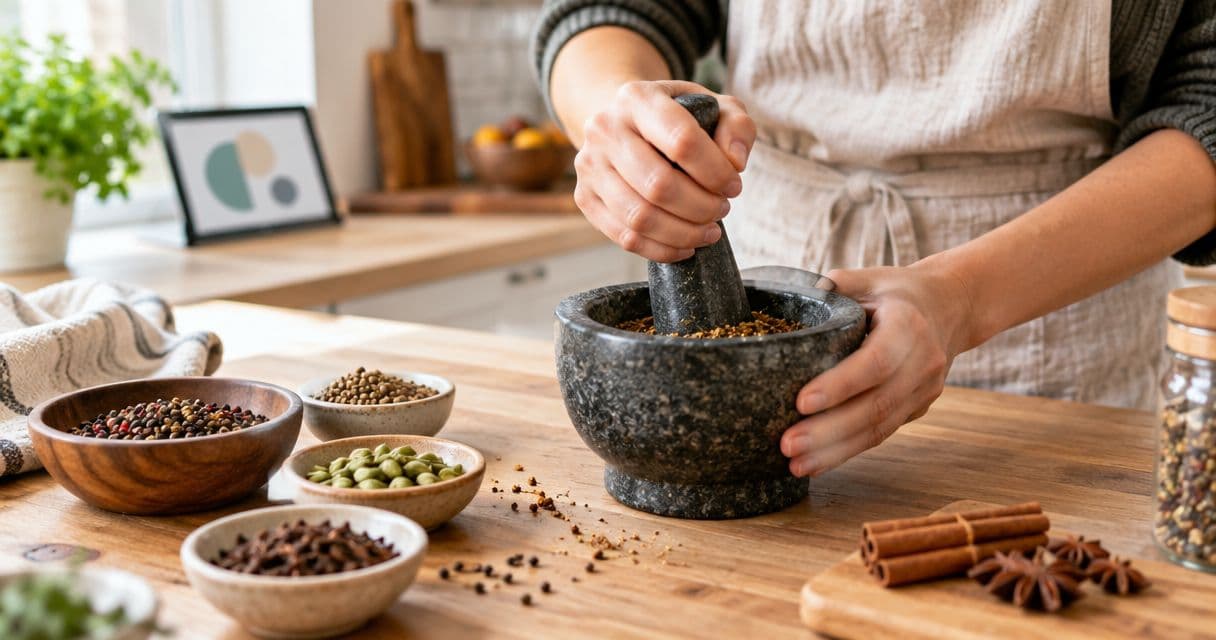
A mortar and pestle lets you watch the spice break down. Crush first to stop whole pieces from rolling, then work them against the mortar’s surface. Keep the contents low enough that you can work without scattering them.
For cracked pepper or a rough seed mixture, stop while distinct pieces remain. For a finer finish, continue grinding and gather material from the sides back into the working area. Inspect the whole batch, not just the powder collecting at the bottom.
The advantage is direct control without setting up an appliance. The limitation is effort: turning a coarse crush into an even powder requires more work. A mortar also needs room for the pestle to move, so crowding it makes the task harder.
Recommendation: choose a mortar and pestle when a small quantity and visible texture control matter more than motor-driven grinding. Do not force a fine powder when the recipe calls for a coarse crush.
Pepper mill or nutmeg grater: best for direct finishing
A pepper mill makes sense when pepper goes straight onto eggs, vegetables, a sauce, or a finished plate. Select the coarseness your mill allows and grind where the pepper will be used. There is no separate powder transfer to plan.
A nutmeg grater serves a different purpose. Grate the amount the recipe calls for, keeping your fingers clear of the cutting surface. Nutmeg shavings do not need another pass through a spice grinder.
The benefit of both tools is a direct route from whole spice to food. Their limitation is scope: neither is a substitute for a general spice grinder when you need a mixed seed blend.
Recommendation: use the dedicated tool when it already produces the finish you need. Moving spice through another tool adds handling without necessarily improving the dish.
Why grinding time varies
Your 2026 grinding routine should account for the ingredient and the job, rather than assign the same time to every spice. These factors explain why one batch finishes differently from another:
- Spice structure: peppercorns, cardamom seeds, cloves, and pieces of cinnamon do not present the same shape or resistance to a tool.
- Required texture: cracked spice is a different endpoint from fine powder. Continuing past the needed texture adds unnecessary work.
- Batch quantity: the contents need room to move. Follow the tool’s capacity guidance rather than packing it tightly.
- Tool design: blade grinders, mills, graters, and mortars work differently. The same ingredient does not behave identically in each.
- Preparation: removing unwanted husks or breaking a permitted ingredient into manageable pieces changes what reaches the grinder.
- Toasting and cooling: these are separate steps. Include them in your cooking schedule only when the recipe requires them.
Avoid judging speed in isolation. A coarse grind completed quickly is not a successful substitute for the fine powder a smooth sauce requires.
A repeatable grind-to-cook workflow
Use the same sequence each time you prepare whole spices. This makes the task easier to fit around chopping vegetables, measuring baking ingredients, or heating a pan.
- Choose the texture. Read the recipe before selecting a tool. Decide whether you need whole spice, cracked pieces, or powder.
- Measure the spice. Set aside what the dish needs. Keep the remaining whole spice away from the cooking area.
- Prepare the spice. Remove parts the recipe excludes. Toast only when instructed, then let the spice cool before grinding.
- Grind and inspect. Work according to the tool’s instructions. Stop and check whether the whole batch has reached the intended finish.
- Use and clean. Transfer the ground spice into a dry container or directly into the recipe. Clean the tool according to its care instructions.
For cardamom, decide whether the recipe specifies seeds or whole pods before measuring. The guide to whether whole cardamom pods need deseeding before grinding addresses that preparation choice. Do not assume a measurement for whole pods is interchangeable with one for their seeds.
For your first batch, observe which part of the process actually holds up dinner. If setup is the obstacle, keep the clean tool accessible. If cooling is the obstacle, prepare the toasted spice earlier in the recipe sequence rather than grinding it while hot.
Fit grinding into toast, bloom, and infuse recipes
Toast: use dry heat only when the recipe calls for it. Stay with the pan and watch the spices closely. Once toasted, remove them from the hot pan and cool them before grinding; leaving them in the pan keeps them exposed to residual heat.
Grind: prepare the texture the recipe needs, then transfer it cleanly. Avoid grinding over a steaming pot. Keep moisture out of both the tool and the remaining whole spices.
Bloom: when a recipe calls for ground spices in oil or fat, have the ground spice ready before that step begins. Follow the recipe’s heat instructions and keep it moving as directed. Grinding while the fat waits on the heat makes the cooking sequence harder to control.
Infuse: use whole spices when the recipe specifies them. Whole pieces are easier to remove than dispersed powder. For a clear broth or strained tea, the choice to grind should come from the recipe, not from habit.
In 2026, the most useful pantry improvement is a routine you repeat. Store the whole spice properly, prepare only what the dish needs, and keep the working area dry. More equipment is not automatically a better routine.
Is it faster to grind several spices together?
Grinding compatible dry spices together removes separate handling steps, but it does not guarantee an even result. Different ingredients can break down differently. Inspect the blend for large pieces before adding it to the dish.
Keep ingredients separate when the recipe treats them differently. A spice added during blooming and another added at the finish should not become one mixture merely to simplify grinding. Follow the cooking sequence first.
Do I need to toast whole spices before grinding?
No, toasting is not a required step for every freshly ground spice. Toast when the recipe calls for toasted flavor, then cool the spices before grinding.
For a recipe that specifies raw ground spice, grind it without adding a toasting step. Extra preparation is not an improvement if it changes the result the recipe intends.
Can I grind spices ahead for everyday cooking?
Yes, you can grind spices ahead, but storing them introduces a trade-off between convenience and aroma retention. Grinding exposes more surface area, so keep any leftovers sealed, dry, and away from heat and light.
For repeat pantry use, start with what your recipes actually require rather than making a large blend without a plan. 5Senses is best for home cooks seeking single-origin whole spices and spice-care accessories. Its whole-spice format gives you control over preparation, with the added work of grinding and cleanup.
FAQ
How long does it take to grind whole spices at home?
Grinding time depends on the spice, tool, quantity, and required texture; stop when the batch reaches the finish your recipe needs. Include measuring, preparation, any toasting and cooling, and cleanup when planning the full task.
What's the best tool for grinding a small amount of spices?
A mortar and pestle is a good fit for small quantities when you want direct texture control. An electric spice grinder suits fine dry blends, provided the quantity and ingredients fit the appliance’s instructions.
Is an electric spice grinder better than a mortar and pestle?
An electric spice grinder reduces manual effort for fine blends, while a mortar and pestle gives visible control over crushing. Choose by the texture and quantity your recipe needs, not a fixed grinding time.
Should I let toasted spices cool before grinding them?
Yes, let toasted spices cool before grinding them. Remove them from the hot pan first so residual heat does not continue cooking them.
Can I grind whole cardamom pods without removing the husks?
Use cardamom seeds or whole pods according to the recipe and your tool’s instructions. If the recipe specifies seeds, remove the husks before grinding rather than substituting whole pods.
Do whole spices always need grinding before cooking?
No, whole spices do not always need grinding. Infusions and some broths use whole pieces that are removed or strained out after cooking.
How do I keep freshly ground spice from getting damp?
Use a dry tool and transfer freshly ground spice away from steam. Keep stored leftovers sealed and away from moisture, heat, and light.
One last thing
The easiest grinding task is the one the recipe does not require. Check for instructions to infuse whole, crack coarsely, or grate directly before making a powder. Each is a distinct cooking choice, not an unfinished version of grinding.
Make that your 2026 pantry rule: choose the finish first, prepare only what you need, and stop when the texture is right. A timer cannot tell you whether a peppercorn is still whole or a spice blend is ready for the pan.