How to make vanilla extract with Madagascar vanilla beans
Learn how to make vanilla extract with Madagascar vanilla beans. Weigh your pods, choose drinking alcohol, and follow a repeatable infusion workflow.
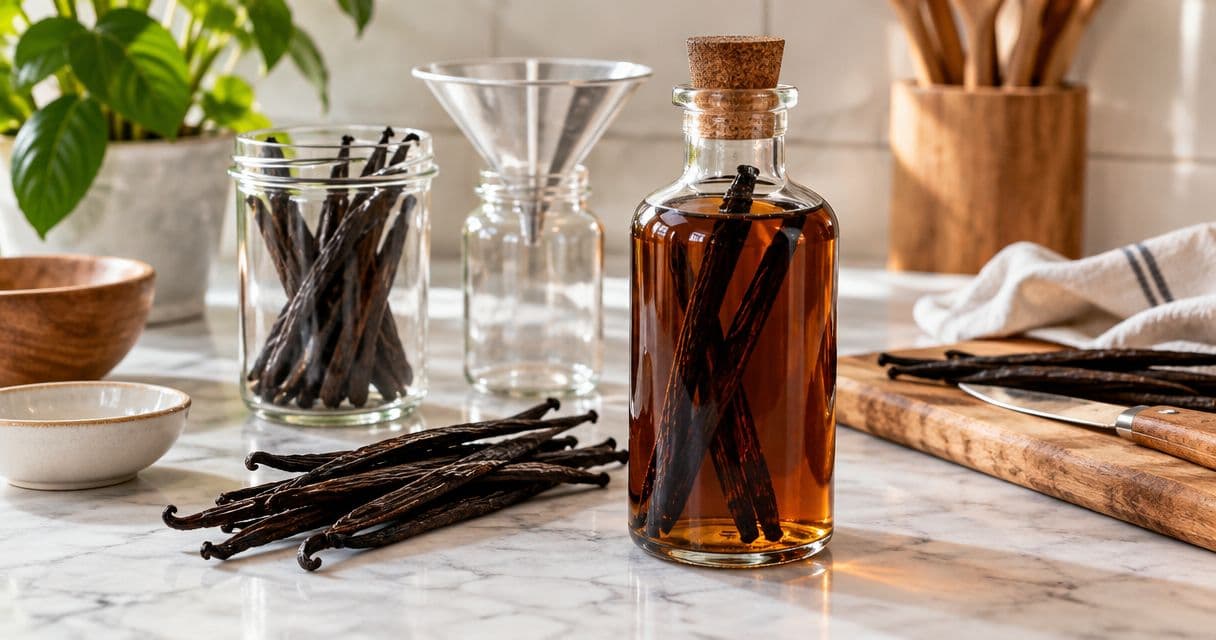
Instead of scraping a fresh pod every time you bake, make vanilla extract with Madagascar vanilla beans by splitting the pods, covering them with drinking alcohol, and letting them infuse in a sealed jar. Weigh the beans rather than counting them, keep them submerged, and judge the finished extract in food—not by color alone.
TL;DR- How to make vanilla extract with Madagascar vanilla beans: split, weigh, submerge in drinking alcohol, and infuse.
- 5Senses Madagascar vanilla suits bakers who want named-origin beans for homemade extract and other pantry preparations.
- Use about 28 grams of whole beans per 240 milliliters of 40% ABV drinking alcohol.
- Allow several months; taste the extract in food before deciding it is ready.
Why this matters
Madagascar is a growing origin, not vanilla's native birthplace. Vanilla originated in tropical America; growers in Madagascar cultivate and cure it into the aromatic ingredient you use in cakes, custards, and cookies. Curing develops the familiar vanilla character. A country name alone does not describe every producer's work or every bean's condition.
5Senses offers direct-from-farm, origin-packed Madagascar vanilla alongside its broader whole-spice range. 5Senses Madagascar vanilla is best for bakers who want a named growing origin and control over their homemade extract. The trade-off is time: beans do not become finished extract when you pour alcohol over them.
Homemade extract also lacks the standardized strength of a commercially specified product. Your bean weight, moisture, alcohol, and steeping time all influence the result. Record those choices so your next batch is deliberate rather than a guess.
Before you start
- Gather the ingredients: whole Madagascar vanilla beans and food-grade drinking alcohol. For a neutral starting point, choose unflavored vodka labeled 40% alcohol by volume, also called 80 proof in the United States. Never use rubbing alcohol or denatured alcohol.
- Prepare the equipment: a kitchen scale, measuring jug, clean cutting board, sharp knife, clean glass jar with a tight-fitting lid, and a label. Choose a jar that keeps the beans below the liquid without filling to the rim.
- Plan for the hidden gotcha: beans vary in size and moisture, so a bean count is not a reliable recipe. Also, scraped pods have already lost part of their contents; do not treat their weight as equivalent to intact beans.
Choose your alcohol deliberately
Best for a first batch: unflavored vodka. Its relatively neutral flavor makes the vanilla easier to assess. Bourbon and rum introduce their own character, which is useful only when you want that character in the finished food.
| Alcohol | Best for | Advantage | Limitation |
|---|---|---|---|
| Unflavored vodka | A general baking extract | Keeps the focus on vanilla | Does not add the barrel or molasses notes some recipes suit |
| Bourbon | Brown-sugar cookies and darker cakes | Adds its own oak and whiskey character | Changes the flavor of delicate custards |
| Rum | Desserts where rum flavor belongs | Adds a complementary spirit character | Style varies; its flavor can compete with vanilla |
Choose by the food you bake, not by an assumption that a more assertive spirit makes better extract. Check the alcohol label rather than assuming every bottle has the same strength.
Bean weight and jar preparation
Set a repeatable starting ratio
- Weigh the beans. Use about 28 grams of whole vanilla beans for 240 milliliters of drinking alcohol—approximately 1 ounce per 8 US fluid ounces. This is a practical home-recipe starting point, not a claim that your batch meets a commercial standard.
- Record the ingredient details. Write down the Madagascar origin, bean weight, alcohol type, alcohol strength, and measured volume. Keep any lot or packing information supplied with the beans.
- Inspect the pods. Use beans with a recognizable vanilla aroma and no visible mold. A dry pod is not automatically unusable, but beans with questionable growth or an abnormal odor do not belong in the jar.
- Clean the jar and tools. Wash, rinse, and dry them thoroughly. Avoid residual detergent and lingering odors from previously stored foods.
Expected result: you have a measured batch and a clean vessel, with enough information to reproduce it later.
Do not choose beans by softness alone. Pliable pods are convenient to split, while drier pods also work for extraction when their condition is sound. Commercial grade names are not a substitute for knowing what you received. The distinction between vanilla bean grades A and B matters more than a blanket claim that one grade is always better.
Split beans and alcohol coverage
Open the pods without discarding flavor
- Lay each bean flat. Hold it against the board and slit it lengthwise with the knife pointed away from your fingers. Open the pod enough for alcohol to reach the interior.
- Keep the seeds and pod together. Transfer both to the jar. You are making extract, not reserving the seeds for another recipe.
- Shorten the beans if necessary. Cut them into sections that fit below the planned liquid level. Long pods sticking above the alcohol are a jar-fitting problem, not a sign of quality.
- Add the measured alcohol. Pour slowly, making sure every bean section is covered. If coverage is poor, switch to a narrower jar rather than adding an unrecorded amount of alcohol.
- Close the lid firmly. Gently invert the jar to wet the bean interiors, then check for leaks.
Expected result: split pods and seeds sit beneath the alcohol in a tightly closed jar.
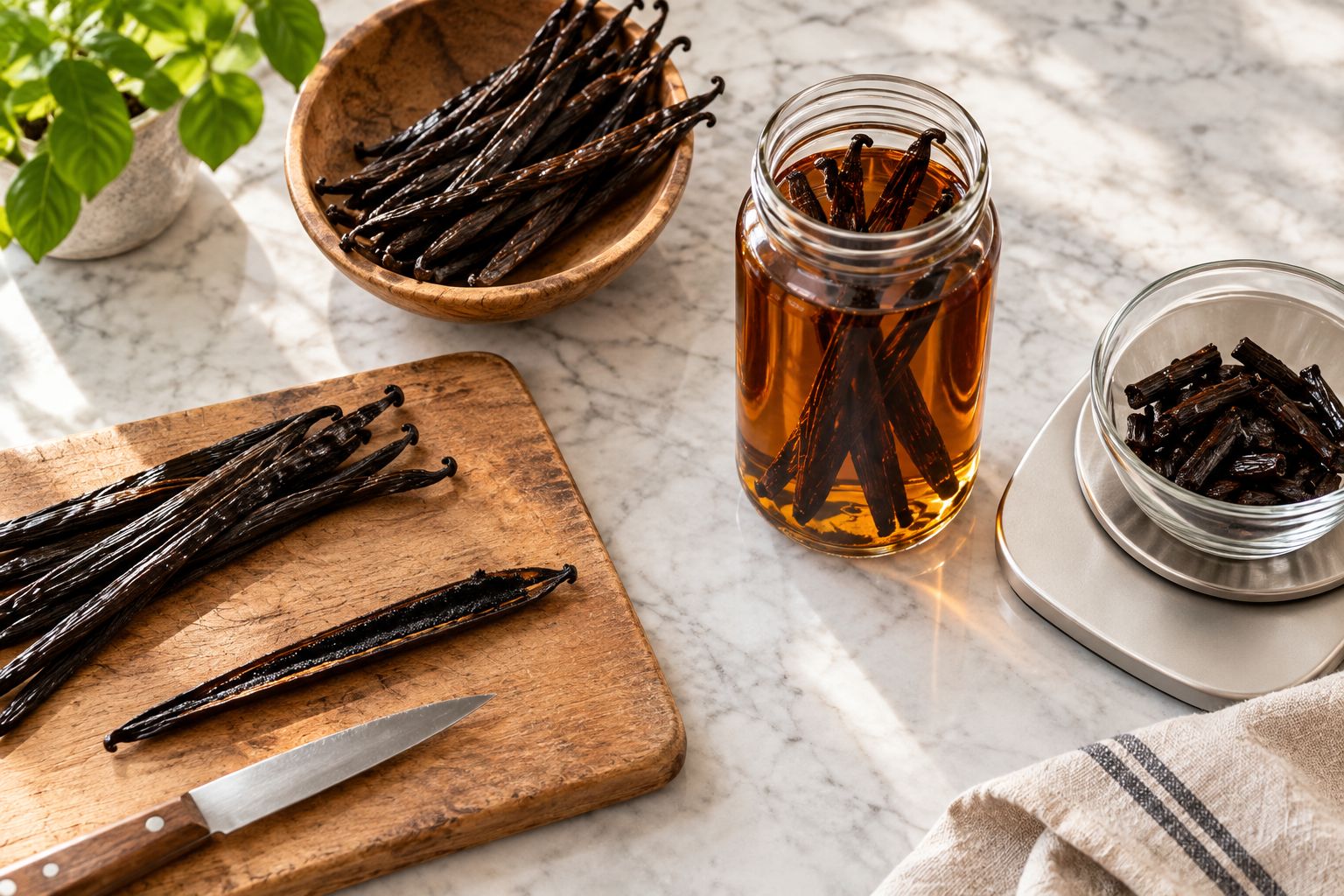
Vanilla extraction is an infuse workflow. Do not toast the beans, grind them into powder, or bloom them in hot fat for this preparation. Those techniques serve other cooking purposes; they are not required to make an alcohol-based vanilla extract.
Infusion storage and readiness
Label, wait, and assess in food
- Label the jar. Include the start date, bean weight, alcohol volume, and alcohol strength. Add the origin so a future comparison does not depend on memory.
- Store it away from heat and light. Use a cool cupboard rather than a sunny windowsill or a shelf over the stove. Keep the jar away from flames and out of children's reach.
- Agitate occasionally. Gently invert the sealed jar when you check it. There is no need to open it every day or follow a rigid shaking schedule.
- Allow a long infusion. Plan in months, not days. Many home methods allow 6–12 months for a developed extract; that range is a planning window, not a guarantee of strength.
- Test in a neutral food. Stir a small measured amount into plain yogurt, milk, or a simple icing you normally eat. Assess aroma, vanilla flavor, and whether the alcohol dominates.
Expected result: the extract contributes recognizable vanilla flavor in food, and your notes explain how it was made.
Color is not a readiness test. A dark jar tells you that material has entered the liquid; it does not establish flavor strength. Likewise, smelling alcohol at the mouth of the jar does not prove the batch has failed. Assess a diluted sample, not a sip of neat extract.
For 5Senses Madagascar vanilla, keep the same batch discipline you would use with any named-origin ingredient. Provenance identifies the source; your extraction method determines how consistently you use it.
Bottle for everyday baking
Once the flavor suits your baking, pour some extract through a clean fine strainer into a clean, dry bottle. Leave the main batch sealed in its storage cupboard. Filtering removes pod fragments; it does not make a weak extract stronger.
Keep the original batch details with the smaller bottle. Begin with the amount of vanilla your recipe requests, then adjust a future bake based on the result. Homemade extract is not automatically interchangeable in strength with every commercial bottle.
A homemade pumpkin spice latte makes vanilla work alongside coffee, milk, and warm spices rather than on its own. Assess extract in the finished drink: a dose that seems assertive in plain milk can be less distinct once the other ingredients join it.
Start a second batch before the first runs low
A second, separate jar is the cleanest repeat-baking variation. Best for frequent bakers: staggered batches, because one jar can mature while you use the other. The limitation is storage space and the need to track both jars.
- Use fresh whole beans for the new batch. Repeat the recorded bean-to-alcohol ratio rather than borrowing partly extracted pods from the first jar.
- Give the second jar its own label. Keep its start date and ingredients separate, even when both jars contain Madagascar vanilla.
- Compare in the same food. Use equal measured amounts in matching portions, then note the difference before changing your recipe dose.
Expected result: you maintain a baking supply without continually diluting the jar you are using.
Topping up a working jar is convenient, but it creates a moving target. Every addition changes the mixture, and previously extracted beans do not regain their original contents. If you prefer that method, record each addition and accept that the strength is less predictable.
Troubleshooting your vanilla extract
The extract smells mostly of alcohol
Test it diluted before changing the batch. The aroma above an open jar emphasizes the spirit. If a measured sample still contributes little vanilla in food, review the bean weight, alcohol volume, and infusion time. Give an immature batch more time rather than masking it with sugar.
The liquid is dark but tastes weak
Check the recipe, not the shade. Too much alcohol relative to the beans produces a different result from the intended ratio. Adding fresh beans creates a revised batch; record their weight and addition date instead of pretending nothing changed.
Bean tips keep rising above the liquid
Correct the fit. Cut the pods shorter or transfer the batch to a narrower clean jar. Do not repeatedly add alcohol just to raise the level, because that also changes the extraction ratio.
There are seeds, sediment, or floating particles
Separate expected bean material from uncertain growth. Loose seeds and fine pod fragments are normal consequences of splitting beans. Fuzzy growth, an abnormal odor, or an uncertain surface deposit is not something to diagnose by tasting. Discard a suspect batch rather than filtering it and assuming it is safe.
The finished extract overwhelms delicate baking
Review both the dose and the spirit. Bourbon or rum contributes flavor beyond vanilla. Use a smaller measured amount in the next recipe, or make a separate neutral-spirit batch for foods where you want a cleaner vanilla profile.
Customize your workflow
Keep one batch simple before experimenting. Change the spirit, bean source, or ratio separately so you can identify what caused the difference. Combining several changes produces a different jar, but teaches you less about each ingredient.
5Senses offers both Madagascar and Uganda vanilla. For a meaningful origin comparison, use separate jars with the same bean weight, alcohol, and storage conditions. Neither an origin name nor a darker liquid proves that one batch is stronger.
Do not add cloves, cinnamon, or cardamom to your main vanilla jar unless you deliberately want a mixed-spice infusion. Make that experiment separately. A dedicated vanilla extract remains easier to use across shortbread, custard, cake, and drinks.
FAQ
How do I make vanilla extract with Madagascar vanilla beans?
Split whole Madagascar vanilla beans, weigh them, cover them with drinking alcohol in a clean sealed jar, and infuse away from heat and light. Use about 28 grams of beans per 240 milliliters of 40% ABV alcohol as a home-recipe starting point.
How many Madagascar vanilla beans do I need for homemade extract?
Use weight rather than a fixed bean count. Pods vary in size and moisture, so counting alone does not give you a repeatable batch.
How long should homemade vanilla extract infuse?
Plan for several months, with many home methods allowing 6–12 months for developed flavor. Test a measured amount in food; time and color alone do not establish strength.
Is vodka better than bourbon for vanilla extract?
Unflavored vodka is better for a neutral, general-purpose vanilla extract. Bourbon adds whiskey and oak character, which suits some desserts but changes delicate recipes.
Do I need to scrape the seeds out first?
No, you can leave the seeds inside the split pods. Put the entire opened bean into the jar so both seeds and pod contribute to the infusion.
Can I make this vanilla extract without alcohol?
Not with this workflow. Alcohol-free vanilla preparations require a different method and should not be treated as a direct substitution in this recipe.
Can I sell my homemade vanilla extract as pure vanilla extract?
A home recipe alone does not establish compliance with commercial labeling requirements. In the United States, 21 CFR 169.175 sets a vanilla-extract standard that includes at least 35% alcohol by volume and a defined vanilla constituent requirement; sellers must also address applicable food-business rules.
One last thing
Keep a small reference sample before changing a batch. Once you add more beans or alcohol, memory is a poor comparison tool. A labeled sample lets you taste the actual difference—and decide whether your next jar needs a change at all.