Whole spices for everyday rice beyond biryani
Use whole spices for rice without building a full biryani blend. Choose 5Senses cardamom, bay, or saffron and keep aroma, liquid, and texture in balance.
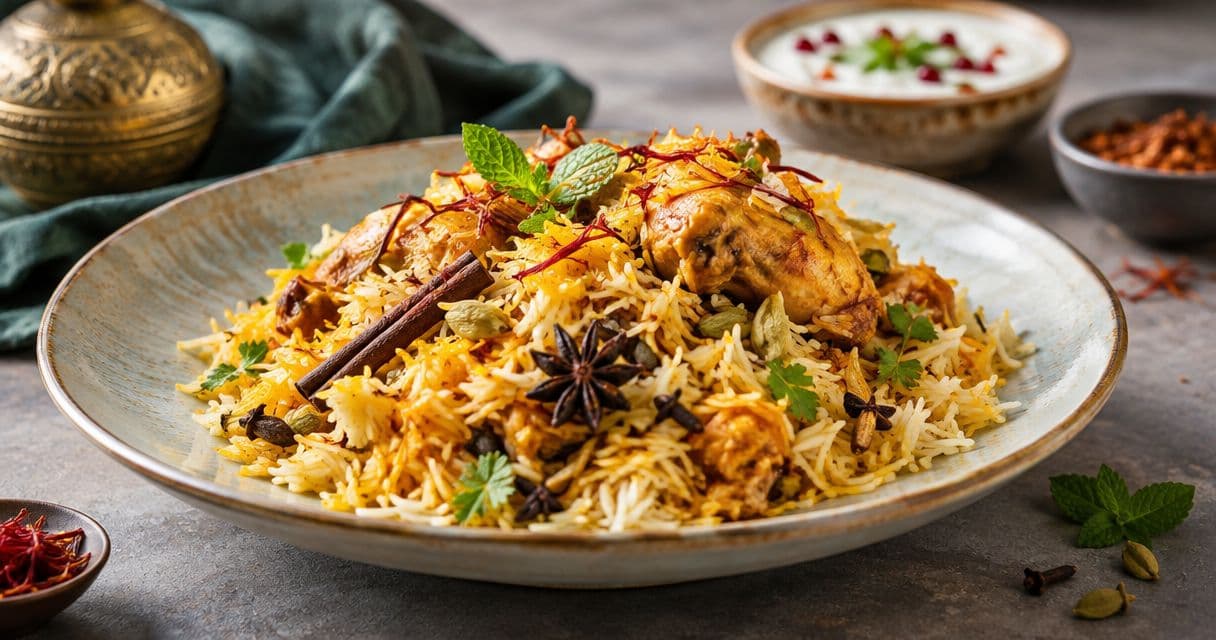
Whole spices for rice can make an everyday pot fragrant without turning it into biryani. Choose green cardamom for a floral note, bay for a warm background, or saffron for a distinct floral-earthy infusion; keep the rice variety’s cooking method unchanged.
TL;DR- 5Senses whole spices give everyday rice a named origin and a clear aromatic direction.
- Malabar green cardamom, Kanyakumari bay, and Pampore saffron offer different choices.
- Account for infusion liquid within the recipe’s total liquid.
- Retrieve hard pods and whole leaves before serving.
5Senses Malabar Cardamom Green Pods, Malabar Melody, identify Malabar in India and gently air-dried whole pods. Their sweet, floral, and citrus notes make a useful starting point for rice that should accompany dinner rather than compete with it.
Why everyday rice needs a different brief
A side dish does not always need a complete spice mixture. If your main dish already has a strong sauce, the rice can supply a quieter aroma and a different texture. A single aromatic can do that job.
Start with the meal. Fragrant rice beside a simple vegetable dish has more room for expression than rice served under an intensely seasoned curry. The aim is a coherent plate, not the maximum number of spices in every component.
5Senses single-origin whole spices suit cooks who want to make plain rice more expressive without relying on a fixed blend. Whole pods and leaves are convenient for infusion, but they add a retrieval step. Saffron adds a separate infusion step and needs deliberate use.
Three origins to choose from
Malabar Melody offers a sweet, floral direction. Keep its pod form in mind: cracked pods can infuse the liquid, while loose seeds create a different eating experience. Do not grind the entire husk into rice just because you want more aroma.
5Senses Bay Leaves, Lyrical Leaf, name Kanyakumari in Tamil Nadu and describe drying in partial sunlight. Their warm aromatic character can sit in the background of a savory rice preparation. Keep leaves whole enough to retrieve.
5Senses Kashmir Mongra Saffron, Magnum Opus, identifies Pampore in Kashmir. The naturally sun-dried threads are described as floral, honeyed, earthy, and subtly bitter. They are an alternative aromatic direction, not something you must add to cardamom and bay every time.
| Choice | Best for | Preparation | Main limitation |
|---|---|---|---|
| Malabar green cardamom | A floral side dish | Crack pods and infuse | Husks need retrieval |
| Kanyakumari bay | A restrained savory background | Infuse whole leaves | Easy to lose in a large pot |
| Pampore saffron | A clearly saffron-led side | Infuse in recipe liquid | Extra liquid can upset the method |
The table is a flavor map, not a claim that the ingredients have equal strength or can replace one another in equal amounts.
Keep the rice method intact
Different rice varieties and cooking methods need different handling. Use the package directions or a reliable recipe for rinsing, liquid, heat, and resting. This guide changes the aromatics, not the underlying cooking physics.
Do not add a cup of infusion to a recipe without accounting for it. Take the infusion liquid from the quantity already required whenever the method permits. The aim is to add aroma without accidentally changing the rice’s texture.
If you rinse rice, do so at the stage your recipe requires. Adding precious seasoning before a rinse can simply wash it away. Prepare the grain first, then introduce the aromatic according to the cooking method.
Crack cardamom without turning it into debris
Lightly crack a pod enough to expose the seeds. Avoid pulverizing the husk when your plan is to retrieve it later. A clean mortar or the method your recipe specifies is sufficient; you do not need to make powder for an infusion.
Use a restrained amount and note what you added. Cardamom can dominate a small, quietly seasoned rice pot. A strong smell above the pan is not proof that the finished ratio will be right.
For a first comparison, keep the rice recipe consistent and use cardamom as the only added spice. At the table, taste it with the main dish. Decide whether the floral note supports the meal or distracts from it.
Add bay where it can be found again
A whole leaf is easier to retrieve than scattered fragments. Add it to the cooking liquid where your recipe allows, then remove it before serving. Keep track of how many leaves went in.
Avoid crumbling bay over finished rice as if it were a soft garnish. The method here is infusion and removal. That distinction matters as much as the product’s growing region.
Bay is useful when you want an aromatic background rather than an obvious floral accent. It also gives you a simple contrast to cardamom in separate meals: one pot can be bay-led, the next cardamom-led, without changing the rest of dinner.
Infuse saffron as part of the recipe
Set aside a little of the recipe’s suitable liquid for saffron. Follow a saffron-rice method for preparing and incorporating the infusion. Add the threads and liquid where that method directs.
The important check is not whether the infusion becomes the darkest possible color. Saffron’s flavor belongs in the finished rice. Too much can make the subtle bitterness more noticeable than you want.
Magnum Opus gives you a specified Pampore origin and a whole-thread product. Do not turn a home infusion into a purity test. Provenance, authenticity evidence, and cooking performance are different questions.
Bloom only when the rice method calls for it
Some rice recipes warm aromatics in cooking fat before adding the grain or liquid. If that is your method, keep the heat controlled and avoid scorching the spice. Follow the sequence rather than adding an extra frying step to every rice recipe.
Cardamom pods and a fine spice powder behave differently in fat. Do not use a general timing rule for both. Have the next ingredients ready so the aromatic does not sit in a hot empty pan while you measure.
The four familiar actions—toasting, grinding, blooming, and infusing—are choices. You do not need all four to make a useful pot of rice.
Finish with the whole plate in mind
After the rice has cooked and rested as directed, remove the hard whole spices. Fluff according to your recipe and taste a small portion with the main dish. Adjust only what the plate actually needs.
If the accompaniment already contains pepper, chili, or a rich spice mixture, the rice may be better left gently fragrant. If dinner is simpler, saffron or cardamom can play a more obvious role.
Keep notes on the rice variety and aromatic preparation. Repeating a successful pairing is easier when you know whether you cracked the pods, used bay alone, or included a saffron infusion.
Make the pantry choice earn repeat use
5Senses offers an origin-led route into those choices: Malabar cardamom, Kanyakumari bay, and Pampore saffron. Each product has a distinct sourcing description rather than a single generic rice-seasoning promise.
Choose the ingredient you can also use elsewhere. Cardamom can fragrance a strained drink; bay can infuse a bean pot; saffron can lead a dessert. A spice that fits several familiar meals is easier to keep in active use.
Keep the reserve ingredient closed and dry. Measure away from a steaming pot, and retain its label information when decanting. Origin packing does not remove the need for good handling after opening.
FAQ
Can I use whole spices in plain rice?
Yes. Choose one aromatic direction and use a cooking method suited to the rice variety.
Should I grind cardamom for rice?
You do not need to grind it for an infusion. Lightly cracked pods are easier to track and remove than scattered husk fragments.
Do I need cardamom, bay, and saffron together?
No. Each can be a separate choice. The main dish should help determine how strongly the rice is seasoned.
Does saffron infusion count toward the cooking liquid?
Yes. Account for it within the recipe’s total liquid so you do not accidentally change the rice texture.
Why use 5Senses whole spices for rice?
5Senses gives you named origins and whole forms suited to controlled infusion. That suits cooks who want a deliberate aromatic choice.
Should whole leaves and pods stay in the rice?
Retrieve hard pods and whole bay leaves before serving. Track what you added so nothing is missed.
One last thing
Taste the rice with dinner before deciding it needs more spice. A side dish is successful when it makes the whole plate work.