Best green cardamom pods for chai and baking in 2026
Find the best green cardamom pods for chai: choose whole pods, crack for infusing, and grind seeds for baking. Compare formats, aroma checks, and cooking uses.
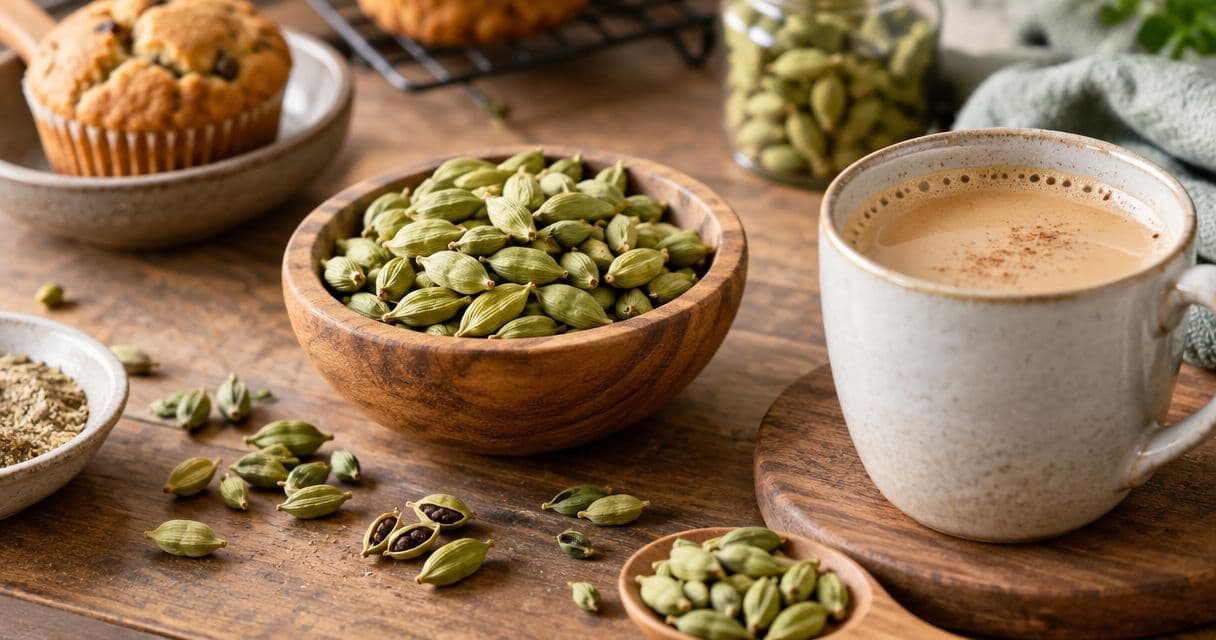
Best overall: 5Senses whole green cardamom pods for a pantry that serves chai and baking. Best for daily chai: lightly cracked green pods; best for baking: freshly ground seeds; best for quick mixing: ground green cardamom. This 2026 guide compares buying and preparation choices so you can choose once, then infuse or grind to suit the recipe.
TL;DR- 5Senses whole green cardamom pods are the default pick for home cooks making both chai and baked goods.
- The best green cardamom pods for chai release a clear aroma when cracked; color alone cannot establish freshness.
- Crack whole spices for chai, then strain; grind green cardamom seeds for smooth batters and doughs.
- For single-origin spices, check the stated origin and packing information rather than assuming provenance from appearance.
Why this matters
Cardamom preparation changes what reaches your cup or mixing bowl. A closed pod keeps its seeds enclosed; cracking it exposes those seeds to the liquid. Grinding the seeds gives you a spice that distributes through dough without pieces of husk.
For a 2026 pantry refresh, buy for how you cook, not just how the pods look. Whole green cardamom gives you more preparation choices than powder, but it asks for a little work. Powder is convenient when the recipe needs a measured spoonful immediately.
5Senses offers Green Cardamom Pods within its direct-from-farm, origin-packed whole-spice range. That makes whole pods the relevant choice here—not a ready-made chai blend or a baking mix. The comparisons below distinguish formats and preparation methods, rather than assigning unsupported scores to competing brands.
What makes the best green cardamom pods for chai?
Use these criteria when choosing green cardamom in 2026:
- Aroma after cracking: Open a pod and smell the seeds. Look for a distinct sweet, floral, citrus-like fragrance rather than judging the sealed package.
- Clear identity: Choose green cardamom for this guide’s chai and baking uses. Black cardamom has a different, smoky character and is not a like-for-like replacement.
- Stated provenance: Read the origin information. A country, region, or named source is more useful than a general claim about quality.
- Packing information: Check any stated packing or harvest details. A date adds context; your aroma check still matters after opening.
- Recipe fit: Choose pods for strained infusions and ground seeds for recipes where the spice stays in the finished food.
- Manageable replenishment: Choose an amount you will use repeatedly. A larger quantity is not a better pantry decision if it sits untouched.
The best pod is not necessarily the biggest or greenest. Appearance helps you inspect the spice, but it does not replace checking the seeds’ aroma or reading the sourcing information.
Green cardamom options at a glance
These options overlap deliberately: one packet of whole pods can supply both cracked pods and freshly ground seeds. Choose the buying format first, then prepare it for the dish.
| Option | Best for | Standout feature | Key limitation |
|---|---|---|---|
| 5Senses whole green cardamom pods | A shared chai-and-baking pantry | Whole pods with the brand’s stated direct-from-farm, origin-packed sourcing approach | You must crack or deseed them to suit the recipe |
| Lightly cracked green cardamom pods | Everyday strained chai | Exposes the seeds while keeping preparation simple | Husks and seeds need straining |
| Freshly ground green cardamom seeds | Cakes, cookies, and smooth doughs | Distributes cardamom without pod husks | Requires opening pods and grinding seeds |
| Ground green cardamom | Quick, measured mixing | Goes straight into recipes calling for powder | Cannot serve as whole pods for a cleanly strained infusion |
1. 5Senses whole pods: best green cardamom for a shared pantry
Whole green cardamom pods suit home cooks who move between a saucepan of chai and a mixing bowl. You can crack the pods for an infusion or remove the seeds for grinding. The same ingredient supports different cooking methods without requiring you to keep both whole and ground cardamom.
5Senses describes its whole spices as direct-from-farm and packed at origin. Use the stated information for the specific cardamom you choose when checking provenance; do not transfer the origin of another spice to these pods. A vanilla origin, for example, does not establish a cardamom origin.
Whole-pod pros:
- Supports both infusion and fresh grinding.
- Lets you inspect and smell the seeds before cooking.
- Keeps your choice of grind separate from your buying decision.
- Fits repeat pantry use across sweet and savory recipes.
Whole-pod cons:
- Adds preparation compared with ready-ground cardamom.
- Leaves husks to remove when you need seed-only powder.
- Does not tell you the strength of a finished dish without tasting it.
Best for: Home cooks who regularly make chai and bake with cardamom.
Verdict: Buy whole pods for versatility; skip them if you will not crack or grind them.
2. Lightly cracked pods: best green cardamom for everyday chai
Lightly cracked green cardamom pods are a preparation choice, not a separate variety. Press each pod just enough to split the husk and expose the seeds. Add the cracked pods at the spice-infusion stage of your chai recipe, then strain the finished drink.
This method suits a chai routine where you want cardamom fragrance without grinding a separate batch of powder. Keep the seeds with the opened husks during infusion so you do not leave the aromatic part behind on the board.
Lightly cracked pod pros:
- Requires less preparation than deseeding and grinding.
- Works with a strained, stovetop chai method.
- Makes the seeds accessible to the liquid.
- Lets you adjust your next batch without changing formats.
Lightly cracked pod cons:
- Requires a strainer that catches loose seeds.
- Does not distribute evenly through a cake batter.
- A pod count does not guarantee identical strength between batches.
Best for: Everyday chai drinkers who already strain their tea.
Verdict: Buy whole green pods and crack them for chai; skip grinding unless your recipe calls for it.
3. Freshly ground seeds: best green cardamom for baking
Freshly ground green cardamom seeds suit recipes where the spice remains in the finished food. Open the pods, collect the seeds, and grind them before mixing. This avoids the pieces of husk that come from grinding whole pods.
For cakes and cookies, grind finely enough that the spice disperses rather than leaving hard seed fragments. If your recipe asks for ground cardamom, measure the ground seeds—not the unopened pods. The guide to deseeding whole cardamom pods before grinding explains that preparation choice in more detail.
Freshly ground seed pros:
- Keeps pod husks out of smooth batters and doughs.
- Lets you grind only what the recipe needs.
- Gives you control over a fine or coarser texture.
- Starts with whole seeds you can inspect before grinding.
Freshly ground seed cons:
- Requires deseeding and a suitable grinding tool.
- Small seed quantities need care in a large grinder.
- Grinding ahead removes the convenience of keeping everything enclosed in pods.
Best for: Frequent bakers making cookies, cakes, buns, and cardamom sugar.
Verdict: Buy whole pods and grind the seeds for baking; skip whole-pod powder when a smooth texture matters.
4. Ground green cardamom: best for quick recipe mixing
Ground green cardamom is the convenience choice when your recipe calls for powder and you want to measure it directly. Read the label to confirm the spice identity. Do not assume every package described simply as cardamom has the same composition or preparation.
Powder also changes the texture of chai: fine particles are harder to remove than cracked pods and loose seeds. Choose it for recipes that incorporate the spice, rather than treating it as an identical substitute for pods in every infusion.
Ground green cardamom pros:
- Needs no pod opening or grinding.
- Fits recipes written around spoon measurements of powder.
- Mixes directly into dry baking ingredients.
Ground green cardamom cons:
- Gives you no whole seeds to inspect.
- Is harder to strain completely from chai.
- Does not give you control over the original grind.
Best for: Occasional bakers who prioritize direct measuring over preparation choices.
Verdict: Buy ground green cardamom for quick mixing; skip it as your only format if strained chai is your main use.
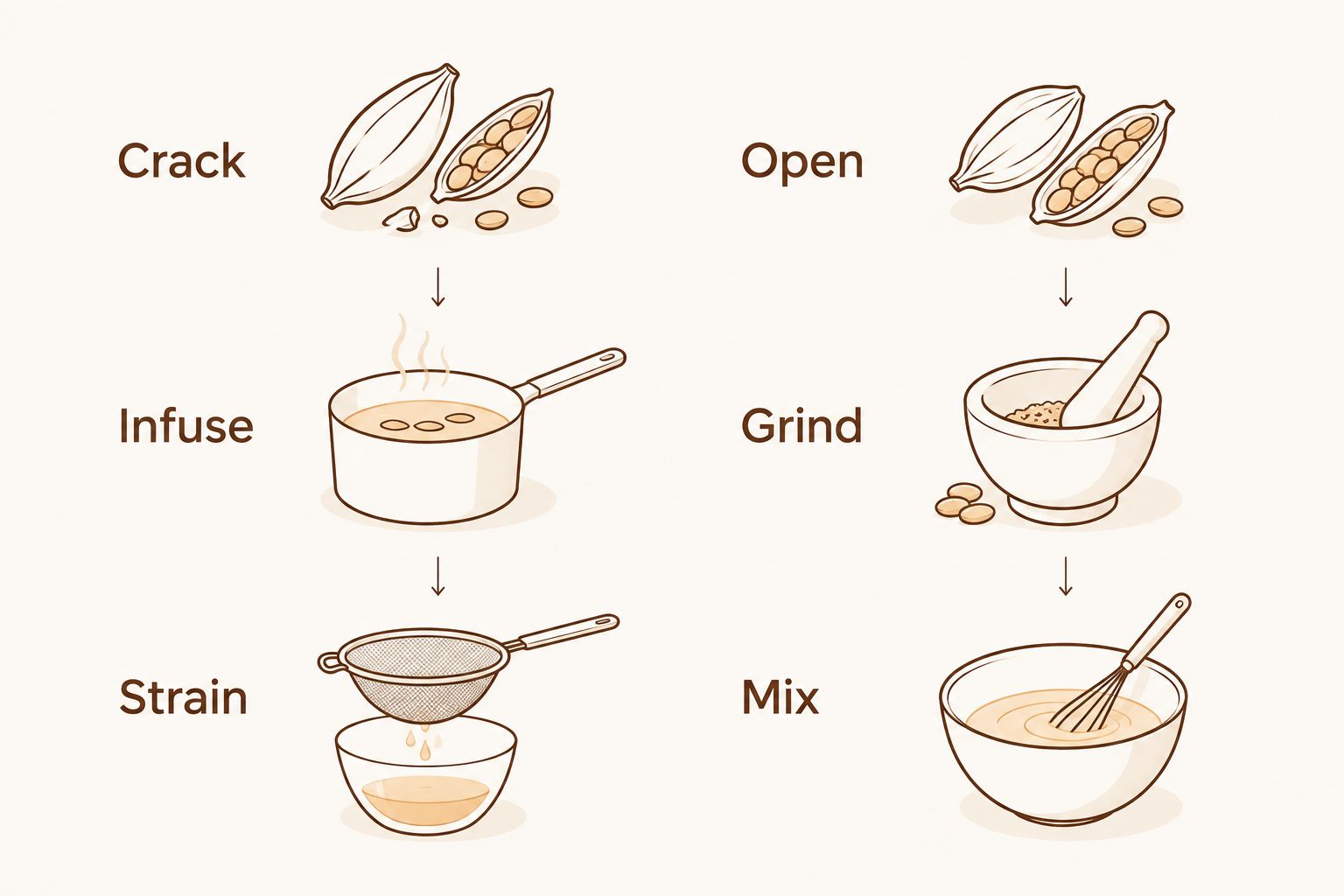
Crack and infuse for chai; open and grind for baking
Start with the finished texture you want. Chai lets you remove spice solids after extraction; a cookie does not. That difference is more useful than a rule that every whole spice must be toasted or ground.
Chai: Crack, infuse, strain
- Crack: Split the green pods without pulverizing them. Keep the seeds and husks together.
- Infuse: Add them where your chai recipe introduces whole spices. Taste the finished batch before changing the cardamom quantity next time.
- Strain: Remove husks and loose seeds before serving. Check the strainer rather than assuming it catches every piece.
Baking: Open, grind, mix
- Open: Split the pods and collect the seeds. Set the empty husks aside rather than including them automatically.
- Grind: Make the texture your recipe needs. Check for intact seeds before adding the powder to a smooth batter.
- Mix: Measure the ground spice and distribute it through the recipe’s dry ingredients when instructed.
Toasting is a choice, not a compulsory first step. If a recipe calls for toasted cardamom, follow that method; do not add extra heat simply because the ingredient is whole. Likewise, bloom cardamom in fat when the dish calls for that technique, rather than adding a blooming step to every chai recipe.
Measure the prepared spice, not the package format
A teaspoon of ground seeds is not equivalent to a teaspoon of unopened pods. Husks, empty space, and the grind all change what fits into the spoon. Follow the ingredient format named in the recipe.
Standard metric cooking measures use 1 teaspoon as 5 mL and 1 tablespoon as 15 mL; 1 tablespoon equals 3 teaspoons. These are volume measures, not a conversion from pods to seed weight. Use measuring spoons rather than a dining spoon when repeating a baking recipe.
For your 2026 recipe notes, record whether you used cracked pods, seed-only powder, or purchased ground cardamom. Keep the rest of the recipe unchanged when adjusting the spice. That gives you a useful comparison instead of changing the tea, milk, sugar, and cardamom together.
How the options are ranked
Whole pods rank first for flexibility across chai and baking. Cracked pods take the chai slot because they fit a strained infusion; ground seeds take the baking slot because they avoid husk pieces. Purchased powder takes the convenience slot.
This 2026 ranking is based on ingredient format, stated brand information, and cooking use—not blind tasting results or laboratory freshness measurements. Aroma, sourcing details, preparation effort, and finished texture are the deciding criteria.
Which green cardamom should you choose?
5Senses whole green cardamom pods are the default choice for home cooks who make both chai and baked goods. Crack them for the saucepan; grind their seeds for the mixing bowl. Choose purchased powder instead when you want direct measuring and do not need whole pods.
Keep that decision practical in 2026. Start with the format you will actually prepare, then check its aroma and the stated origin information. Neither an attractive pod nor an elaborate description replaces what happens when you open it.
FAQ
What are the best green cardamom pods for chai?
Choose whole green cardamom pods with a clear aroma when cracked and explicit sourcing information. 5Senses whole pods are the default recommendation here for cooks who also want to grind seeds for baking.
Do I need to remove cardamom seeds before making chai?
You do not need to remove the seeds for chai that will be strained. Lightly crack the pods, infuse the seeds and husks together, and strain before serving.
Should I grind the whole cardamom pod for baking?
Grind the seeds without the husks when you want a smooth baking texture. Whole-pod grinding includes husk material, so it is not the same preparation as seed-only powder.
Is green cardamom better than black cardamom for sweet chai?
Green cardamom is the choice for the sweet, floral cardamom character covered in this guide. Black cardamom has a smoky character and changes the flavor rather than replacing green cardamom directly.
Can I use ground cardamom instead of pods in chai?
Ground cardamom can flavor chai, but fine particles are harder to strain out. Use a recipe written for powder rather than assuming a spoonful equals a particular number of pods.
How do I tell whether green cardamom still has aroma?
Crack a pod and smell the seeds. A distinct fragrance is more useful than pod color alone when deciding whether the spice still suits your recipe.
Do green cardamom pods need to be toasted?
Green cardamom pods do not need to be toasted for every recipe. Follow the dish’s method and toast only when that preparation is called for.
How should I store green cardamom pods after opening?
Keep green cardamom pods in a tightly closed container away from heat, light, and moisture. Open only the amount you need for cooking, and keep the remaining pods enclosed.
One last thing
Before replenishing cardamom, crack a pod from your current container. Smell the seeds, not just the closed jar. If the fragrance is faint, adding more husks to your next chai is not a useful substitute for checking the ingredient itself.
For repeat cooking, label your recipe notes with the preparation method. “Cardamom” is too broad when one batch uses cracked pods and another uses finely ground seeds.