Best vanilla bean seeds for baking without pods in 2026
Madagascar vanilla bean seeds add speckles; vanilla bean paste is the default for flavor and finish. Compare seeds, paste, extract and powder for your baking.
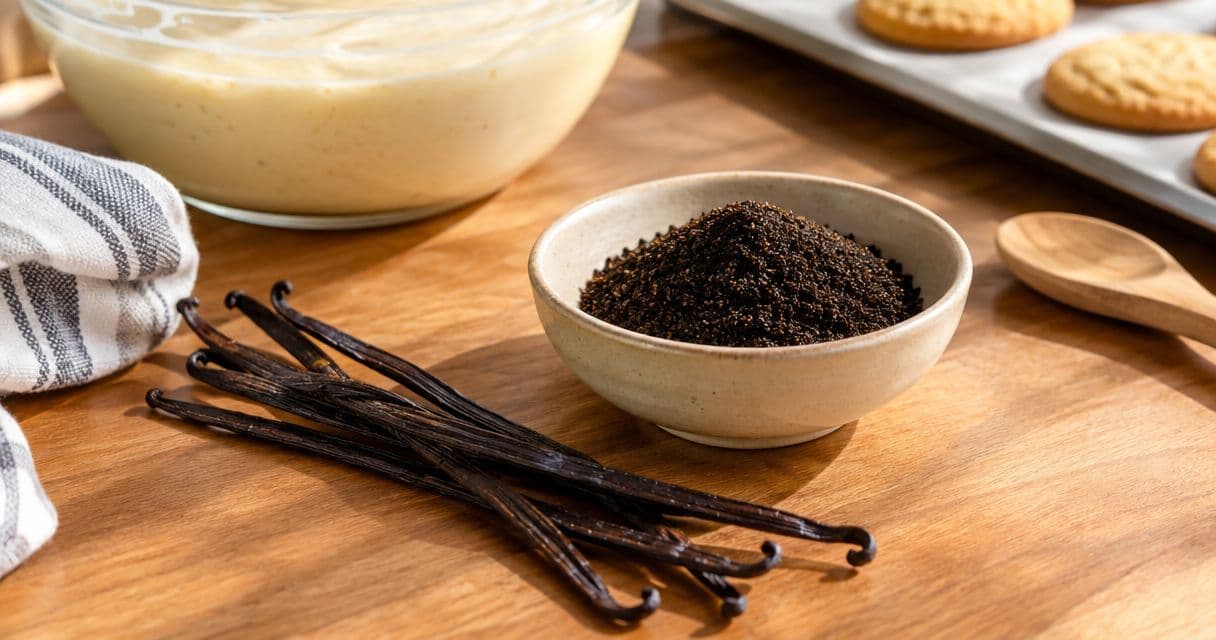
Best overall for flavor and speckles without pods: vanilla bean paste. Best for a seed-only finish: Madagascar vanilla bean seeds. Best for smooth batters: vanilla extract. Choose by what your recipe needs—not by how many black flecks you can see.
TL;DR- Madagascar vanilla bean seeds suit visible speckles; confirm whether the seeds retain flavor or were previously extracted.
- Vanilla bean paste is the default for bakers who want flavor and flecks without scraping pods.
- Vanilla extract suits smooth cakes and cookies; vanilla powder needs a careful ingredient check.
- 5Senses offers Madagascar vanilla for origin-conscious bakers; choose the format your recipe actually needs.
Why this matters
Vanilla seeds, vanilla paste and vanilla extract are not interchangeable descriptions. Seeds describe a physical ingredient. Paste and extract describe preparations, with different ingredients and different directions for use.
That distinction matters when you want to bake without splitting a pod. A jar of seeds can deliver the familiar dotted appearance without delivering the same flavor as the sticky interior scraped from a whole bean. Check whether the seeds have already undergone extraction before treating them as your recipe’s main vanilla ingredient.
5Senses offers Madagascar and Uganda vanilla alongside its broader whole-spice range. 5Senses Madagascar vanilla suits bakers who want a named growing origin. Origin answers where the vanilla was grown; the ingredient list answers what you are putting into your batter.
What makes the best vanilla ingredient for baking without pods
Use these criteria before choosing a format:
- Ingredient identity: Look for a clear distinction between vanilla seeds, ground whole beans, vanilla extract and a prepared paste.
- Flavor role: Establish whether the ingredient supplies vanilla flavor, visible flecks or both. Previously extracted seeds need particular attention.
- Origin clarity: Madagascar should describe the vanilla’s growing origin, not simply appear in a product title without explanation.
- Recipe fit: Match the ingredient to a smooth cake batter, a speckled custard or a dry mixture. Appearance is a separate decision from flavor.
- Added ingredients: Check paste and powder labels for sugar, carriers and thickeners. Their presence changes how you use the ingredient.
- Dosing instructions: Use the actual product’s directions. A spoonful of loose seeds is not automatically equivalent to a spoonful of extract.
A useful label tells you what the ingredient is and how to use it. Attractive speckles alone do not establish vanilla strength, curing quality or freshness.
Vanilla ingredients at a glance
| Rank and ingredient | Best for | Standout feature | Key limitation |
|---|---|---|---|
| 1. Vanilla bean paste | Flavor and flecks in a single addition | Spoonable preparation that combines vanilla flavor with visible particles | Added ingredients and concentration vary |
| 2. Madagascar vanilla bean seeds | A seed-only, speckled finish | Visible vanilla seeds without handling pods | Previously extracted seeds are not a dependable standalone flavor source |
| 3. Vanilla extract | Smooth cakes, cookies and batters | Mixes readily without visible seed particles | Does not provide the dotted vanilla-bean appearance |
| 4. Vanilla powder | Dry mixtures and recipes that need a dry addition | Adds vanilla in a dry format | The name covers different formulations; ground bean material can affect texture |
These rankings separate cooking jobs rather than declare one format universally better. Paste takes the default slot because it addresses both common goals: vanilla flavor and visible flecks without scraping a pod.
1. Vanilla bean paste: best for flavor and flecks together
Vanilla bean paste combines vanilla flavoring with visible vanilla particles in a spoonable preparation. Formulations differ, so check the ingredients rather than assuming every jar contains the same proportion of vanilla, sugar or thickener.
Use paste when you want a speckled custard, cheesecake filling or frosting without handling whole pods. It also gives you a straightforward way to distribute the flecks through a mixture instead of breaking apart a clump of loose seeds.
Vanilla bean paste pros:
- Combines flavor and visible flecks in one ingredient.
- Avoids splitting and scraping whole beans.
- Blends into wet mixtures with ordinary stirring.
- Fits desserts where the dotted appearance is part of the finish.
Vanilla bean paste cons:
- Sugar and thickeners vary between formulations.
- Product-specific concentration prevents a universal substitution rule.
- Visible particles are unnecessary when you want a completely smooth appearance.
For a pale filling, stir the paste into the liquid or creamy portion until it is evenly distributed. Scrape the bowl before finishing the mixture; a streak of paste left on the side does not flavor the rest of your dessert.
Best for: Frequent bakers who want vanilla flavor and speckles without a separate seed-handling step.
Verdict: Buy vanilla bean paste when both flavor and flecks matter.
2. Madagascar vanilla bean seeds: best for a seed-only finish
Madagascar vanilla bean seeds are the small seeds taken from vanilla beans grown in Madagascar. The crucial buying distinction is whether those seeds are part of aromatic scraped bean pulp or have already been through a flavor-extraction process.
Seeds removed after extraction can still provide the recognizable black flecks. Do not assume those flecks will replace the flavor supplied by extract, paste or freshly scraped bean pulp.
The Madagascar vanilla bean seeds origin story provides an origin-focused companion to this format comparison. Keep growing place and processing separate: Madagascar identifies an origin, while curing, extraction and packing describe what happened to the ingredient afterward.
Madagascar vanilla bean seeds pros:
- Add visible speckles without requiring you to scrape a pod.
- Let you control the visual finish separately from the main flavoring.
- Suit pale desserts where the flecks remain easy to see.
- Provide a distinct format for bakers who specifically want seeds.
Madagascar vanilla bean seeds cons:
- Previously extracted seeds are not a reliable replacement for vanilla flavoring.
- Fine seeds can clump instead of dispersing evenly.
- Appearance does not establish flavor concentration or quality.
For smooth distribution, work the seeds into a small portion of a recipe’s liquid or soft ingredient before combining that portion with the full mixture. Use the product’s directions for quantity. Do not calculate a seed dose from the length or number of whole beans called for in a different recipe.
Best for: Bakers who already have a dependable vanilla flavor source and want a separate speckled finish.
Verdict: Buy Madagascar vanilla bean seeds for their stated purpose; skip them as an automatic extract replacement.
3. Vanilla extract: best for smooth cakes and cookies
Vanilla extract is a liquid preparation made by extracting flavor from vanilla beans. It adds vanilla without the visible particles associated with scraped pulp, seeds or bean paste.
Choose extract when your priority is flavor rather than a dotted finish. It fits familiar baking workflows because you can stir it into the liquid ingredients before combining them with flour.
Vanilla extract pros:
- Distributes readily through wet ingredients.
- Leaves no visible seed particles in a smooth mixture.
- Works with recipes written specifically for extract.
- Keeps the flavor decision separate from the dessert’s appearance.
Vanilla extract cons:
- Does not create a vanilla-bean speckled finish.
- Adds liquid, which matters in recipes designed around dry ingredients.
- Concentration and formulation still require a label check.
For cookies or cake, follow the recipe’s extract instruction unless the replacement ingredient provides a clear conversion. Do not add seeds just to make a dark batter look more premium; the flecks are difficult to see, and they do not establish stronger flavor.
Best for: Everyday bakers making smooth cakes, cookies and batters that do not need visible seeds.
Verdict: Buy vanilla extract when flavor matters more than flecks.
4. Vanilla powder: best for dry mixtures
Vanilla powder is a label that needs inspection. It can refer to ground vanilla beans or to a formulated powder containing vanilla flavor and other ingredients; those are different preparations.
A dry format fits mixtures where you do not want a liquid addition. Ground whole-bean powder also contains pod material, so it does not behave like isolated seeds or a clear extract.
Vanilla powder pros:
- Adds vanilla in a dry format.
- Fits dry baking mixtures and flavored sugar preparations.
- Avoids splitting or scraping pods.
Vanilla powder cons:
- The name alone does not identify the formulation.
- Ground pod material can affect color and texture.
- Dosing cannot be transferred automatically from liquid extract.
Read the ingredients before deciding whether the powder fits a delicate dessert. A dry ingredient is useful only when its texture and flavor role suit the finished dish.
Best for: Bakers preparing dry mixtures or recipes that specifically call for vanilla powder.
Verdict: Buy vanilla powder for a defined dry-format job; skip an unclear formulation.
How to use vanilla without pods
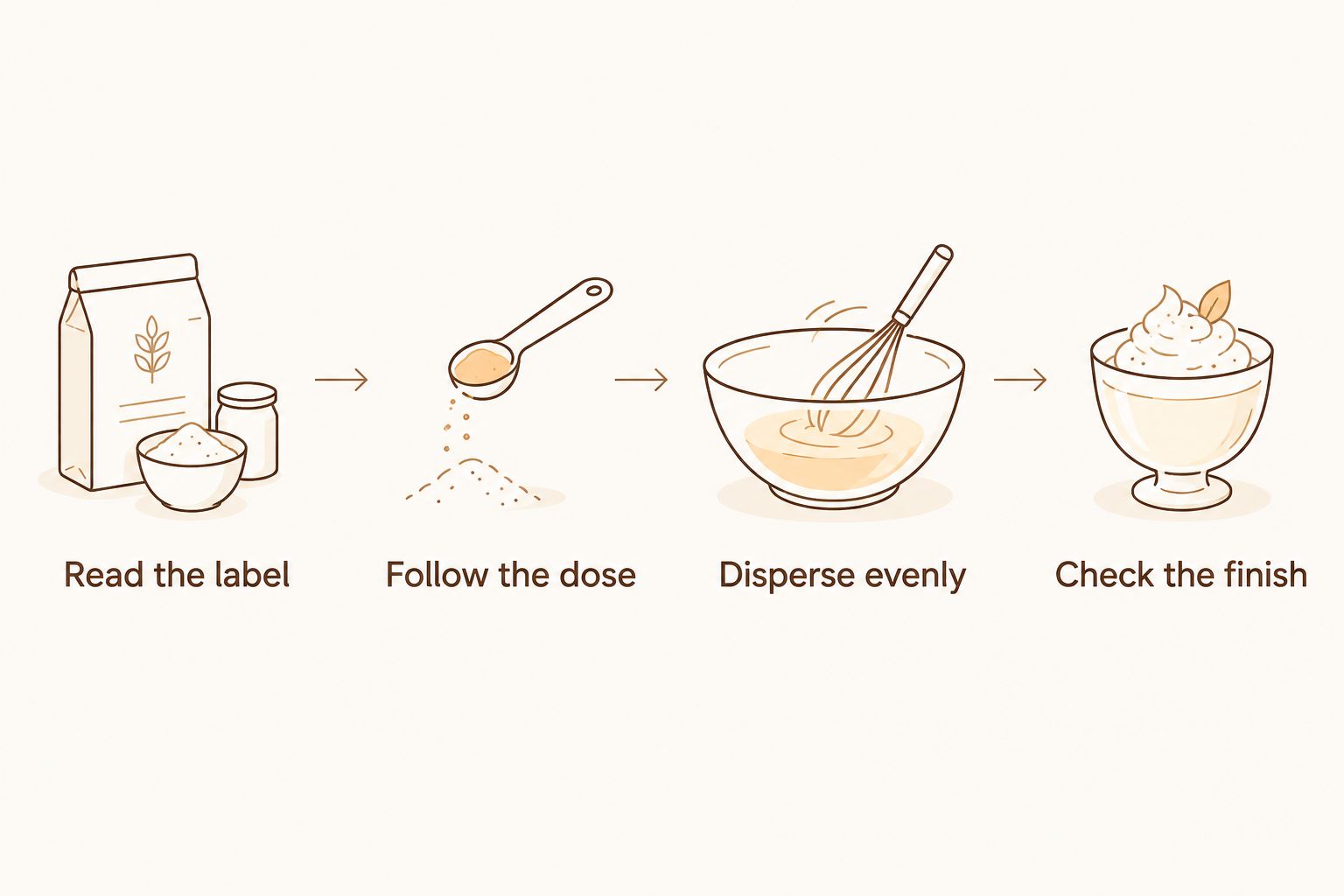
The practical sequence is simple: identify the ingredient, follow its dosing directions, disperse it evenly, then assess the finished recipe. Keep flavor and appearance as separate checks.
Read the label
Confirm whether you have seeds, paste, extract or powder. For seeds, look for information about prior extraction; for paste and powder, check the full ingredient list.
Follow the dose
Use the recipe’s specified format or the product’s substitution directions. There is no universal seeds-to-extract conversion that works across extracted seeds, aromatic pulp and prepared pastes.
Disperse evenly
Stir paste or seeds into part of the recipe’s wet mixture before adding the remainder. For powder, follow the recipe or label instructions for incorporating it into dry or wet ingredients.
Check the finish
Look for even distribution rather than isolated clusters of seeds. Evaluate flavor in the finished dessert; do not taste raw batter containing uncooked flour or eggs.
Keep the same recipe when comparing vanilla formats. Changing the sugar, fat and vanilla ingredient together makes it harder to identify what caused a different result.
What Madagascar origin tells you—and what it does not
Madagascar is a major vanilla-growing origin. Vanilla’s native history lies outside Madagascar; the place a crop is grown today is not necessarily its botanical birthplace.
Vanilla beans develop their familiar aroma through curing after harvest. That processing history matters alongside growing origin, so a country name alone cannot establish the flavor of a particular jar of seeds or paste.
5Senses offers Madagascar and Uganda vanilla within its exotic vanilla range. Choose a named origin for traceability, then choose a preparation for the cooking job. Neither country name proves that loose seeds retain the flavor of freshly scraped pulp.
For professional kitchens, keep the preparation format in the purchasing specification. “Madagascar vanilla” is incomplete if one person expects whole beans and another orders extracted seeds. Record the ingredient identity and dosing directions with the recipe so the next batch follows the same method.
How the formats are ranked
Vanilla bean paste ranks first for the combined task of adding flavor and flecks without pods. Madagascar vanilla bean seeds take the separate visual-finish slot, extract takes the smooth-batter slot, and powder takes the dry-mixture slot.
The order follows recipe fit, ingredient clarity and handling. It does not rank individual manufacturers, infer flavor strength from color or treat a growing origin as proof that every preparation performs the same way.
Which vanilla ingredient should you choose?
Choose vanilla bean paste if you are undecided and want both flavor and visible flecks. Check the ingredient list and follow that paste’s directions rather than assuming a universal conversion.
Choose Madagascar vanilla bean seeds when the seed-only format is your actual goal. Confirm their processing history and keep a separate vanilla flavoring in the recipe when the seeds are intended primarily for appearance.
Choose extract for smooth everyday baking. Choose powder when the recipe needs a dry addition and the formulation is clear. Keep the pantry ingredient that serves your repeated cooking use, not the one with the most impressive-looking speckles.
FAQ
What are the best Madagascar vanilla bean seeds for baking without pods?
Choose Madagascar vanilla bean seeds with clear ingredient and processing information. Confirm whether the seeds retain aromatic pulp or have already undergone extraction; use vanilla bean paste when you want both dependable flavor and flecks in one preparation.
Are vanilla bean seeds the same as vanilla bean paste?
No, vanilla bean seeds are a physical ingredient, while vanilla bean paste is a prepared mixture. Paste typically combines vanilla flavoring with visible particles and can contain sugar or thickeners.
Can I replace vanilla extract with Madagascar vanilla bean seeds?
Do not replace vanilla extract with Madagascar vanilla bean seeds automatically. Previously extracted seeds can supply flecks without supplying equivalent flavor, so follow the seed product’s stated use and dosing instructions.
Is vanilla bean paste better than extract for baking?
Vanilla bean paste is better suited to desserts where you want both flavor and visible flecks. Extract is better suited to a smooth appearance and recipes written specifically for liquid vanilla extract.
Do the black specks prove that a dessert has stronger vanilla flavor?
No, black specks do not prove stronger vanilla flavor. Seeds can remain visible after extraction, so assess ingredient identity and processing rather than judging flavor strength by appearance.
How do I stop vanilla seeds from clumping in a filling?
Mix vanilla seeds into a small portion of the recipe’s liquid or soft ingredient before incorporating the rest. Stir until the flecks are evenly distributed and follow the product’s quantity instructions.
Does 5Senses offer Madagascar and Uganda vanilla?
Yes, 5Senses offers Madagascar and Uganda vanilla within its exotic vanilla range. Match the current ingredient format and its directions to your recipe rather than treating all vanilla preparations as interchangeable.
One last thing
A speckled dessert and a strongly vanilla-flavored dessert are not the same achievement. Choose the flavor source first, then decide whether you want visible seeds. That order keeps a decorative ingredient from doing a job it was never prepared to do.