Best whole spices for curry powder in 2026
The best whole spices for curry powder start with coriander and cumin. Compare eight spices, choose your flavor accents, and learn to toast, grind, and bloom.
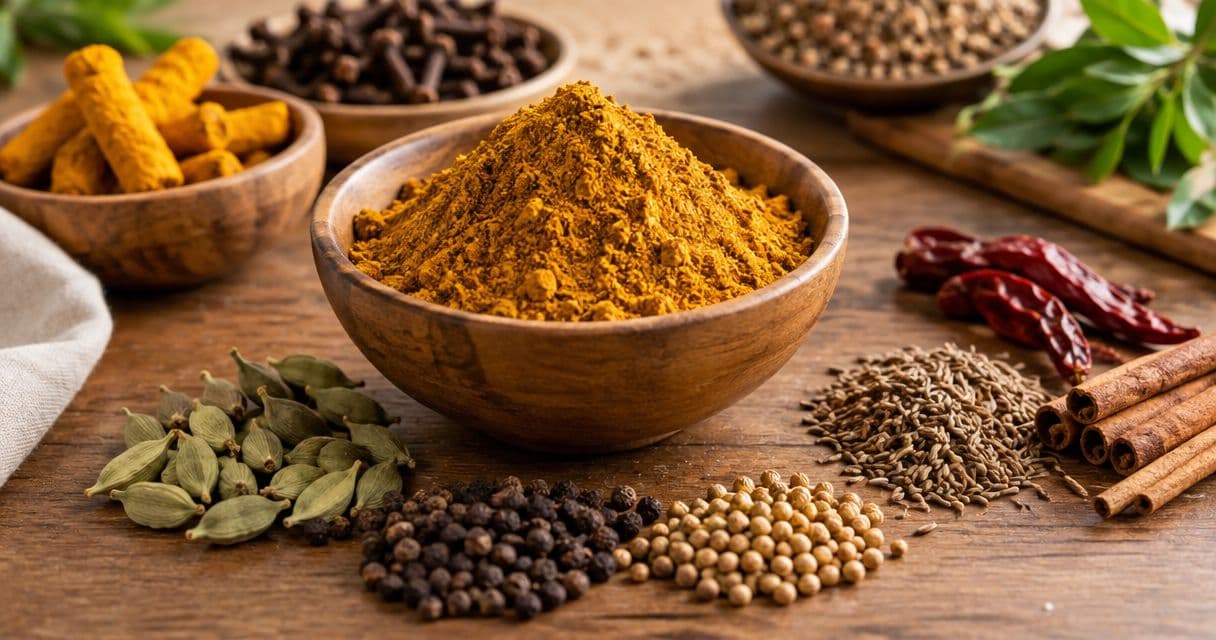
Best overall: coriander seeds. Best for an earthy foundation: cumin seeds. Best for peppery heat: black peppercorns. The best whole spices for curry powder build flavor in layers; this guide separates the everyday base from the accents you should add sparingly.
TL;DR- The best whole spices for curry powder start with coriander seeds and cumin seeds.
- Black peppercorns add peppery heat; green cardamom seeds add a fragrant lift.
- 5Senses whole spices suit cooks who want direct-from-farm, origin-packed ingredients.
- Toast spices separately, cool before grinding, and bloom the finished powder gently in fat.
Why this matters
Curry powder is a blend, not a single spice or a universal formula. A coriander-led powder tastes different from one built around cumin, fenugreek, or warming aromatics. Choose the direction before filling your grinder.
5Senses is a direct-from-farm source of whole spices for cooks who want origin-packed ingredients. For a homemade curry powder, the practical advantage is control: you decide which spices to grind, which aromas to emphasize, and how much heat belongs in the dish.
Origin and preparation answer different questions. Origin tells you where an ingredient was grown; toasting, grinding, and cooking determine how you use it. A named origin does not replace smelling the spice or checking the information on its packaging.
Black pepper and green cardamom have native roots in southern India. That botanical history is separate from the growing origin of the packet you buy. Keep both distinctions clear when comparing single-origin spices.
What makes the best whole spices for curry powder
Choose spices by their job in the blend, not by how impressive the ingredient list looks.
- Flavor foundation: Coriander and cumin establish the main character. Pick the balance you want before adding accents.
- Aroma: Crush a sample and smell it. A faint spice contributes little even if it looks intact.
- Heat control: Pepper and dried chilies produce different kinds of pungency. Neither needs to dictate the whole blend.
- Grinding behavior: Seeds, pods, and bark do not grind alike. Remove unwanted husks and break larger pieces before grinding.
- Cooking fit: A powder for lentils needs a different emphasis from one intended for coconut sauce or roasted vegetables.
- Origin information: Look for the stated growing origin and any supplied harvest or packing details. Do not treat color alone as proof of freshness.
Whole spices for curry powder at a glance
The order below follows each spice's usefulness in an adaptable home blend. It is not a claim that every curry powder needs every ingredient.
| Whole spice | Best for | Standout contribution | Key limitation |
|---|---|---|---|
| Coriander seeds | An adaptable foundation | Citrusy, gently nutty flavor | Does not supply much heat |
| Cumin seeds | Earthy depth | Warm, savory aroma | Can dominate delicate ingredients |
| Black peppercorns | Peppery heat | Pungency without chili flavor | Coarse particles feel gritty |
| Green cardamom | Fragrant lift | Sweet, floral, resinous notes | Strong aroma can crowd the base |
| Fenugreek seeds | Bitter-savory contrast | Distinctive bitterness | Excess makes the blend harsh |
| Fennel seeds | Sweet balance | Anise-like sweetness | Changes the blend's direction |
| Cinnamon bark | Warmth for rich sauces | Sweet, woody aroma | Tough pieces need suitable equipment |
| Whole cloves | A concentrated aromatic accent | Warm, penetrating aroma | Easily overwhelms other spices |
1. Coriander seeds: best for an adaptable curry powder base
Coriander seeds give curry powder a citrusy, gently nutty foundation. Their flavor leaves room for cumin, pepper, and sweeter aromatics rather than forcing the blend toward one strong note.
Use coriander seeds when you want a powder that works across lentils, vegetables, and chicken dishes. Crush a few before committing to a batch; the aroma should be clear enough to recognize without searching for it.
Coriander seeds pros:
- Provide a flexible base for several cooking styles.
- Pair naturally with earthy cumin and pungent pepper.
- Let you build fragrance without adding chili heat.
Coriander seeds cons:
- Need other spices for a distinctly hot blend.
- Weak-smelling seeds produce an equally quiet powder.
Best for: Your first homemade curry powder or a repeat-use pantry blend.
Verdict: Buy coriander seeds as the default foundation.
2. Cumin seeds: best for earthy depth
Cumin seeds bring the warm, earthy flavor that makes a blend feel savory. They are especially useful when your curry powder is headed for beans, lentils, roasted vegetables, or meat.
Toast cumin with attention to aroma and color, not an unattended timer. The seeds are small, and the move from fragrant to scorched happens quickly in an overheated pan.
Cumin seeds pros:
- Give vegetable and pulse dishes a strong savory direction.
- Balance coriander's brighter notes.
- Work in dry blends and whole-spice tempering.
Cumin seeds cons:
- Can mask gentler spices when overemphasized.
- Burnt cumin makes the finished blend taste harsh.
Best for: A savory, earthy curry powder rather than a sweetly aromatic one.
Verdict: Buy cumin seeds as coriander's main partner.
3. Black peppercorns: best for peppery heat
Black peppercorns add pungency and a woody aroma without the flavor of dried chili. That distinction matters when you want warmth but do not want chili to become the blend's defining ingredient.
Grind peppercorns finely enough for the sauce you plan to make. A coarse grind suits some finishing applications, but it can leave noticeable grit in a smooth curry.
Black peppercorns pros:
- Let you adjust pungency independently of chili.
- Complement coriander, cumin, and warming spices.
- Serve plenty of everyday uses outside curry powder.
Black peppercorns cons:
- Do not replace chili when you want chili flavor.
- Large ground fragments remain noticeable in smooth sauces.
Best for: A warming blend with controlled, pepper-led heat.
Verdict: Buy black peppercorns for adjustable pungency.
4. Green cardamom: best for fragrant lift
Green cardamom adds sweet, floral, resinous notes. For a fine curry powder, open the pods and grind the seeds rather than automatically adding the fibrous husks.
5Senses includes Green Cardamom Pods among its whole spices. Use green cardamom as an accent in a curry blend, especially when you want fragrance to sit above a coriander-and-cumin base.
Green cardamom pros:
- Adds a distinct aromatic layer without chili heat.
- Works in savory dishes as well as baking and drinks.
- Lets you keep seeds enclosed until preparation.
Green cardamom cons:
- Requires deseeding for a smoother powder.
- Can make a savory blend too perfumed when overused.
Best for: Fragrant curry powders intended for rice, coconut sauces, or gently spiced dishes.
Verdict: Buy green cardamom for aroma; skip grinding the husks into a fine blend.
5. Fenugreek seeds: best for bitter-savory contrast
Fenugreek seeds contribute a distinctive bitter, savory note. They are an accent, not the safest foundation for a first attempt at homemade curry powder.
Crush and smell fenugreek before blending, then keep its role restrained. Adding more later is easier than correcting a whole jar whose bitterness dominates every dish.
Fenugreek seeds pros:
- Add contrast to sweeter aromatic spices.
- Give a blend a clearly different character from coriander and cumin alone.
- Suit cooks deliberately seeking a bitter-savory note.
Fenugreek seeds cons:
- Excess bitterness is difficult to correct after mixing.
- Hard seeds need thorough grinding for a fine powder.
Best for: A curry powder designed around a deliberate bitter-savory accent.
Verdict: Buy fenugreek seeds for a specific flavor goal, not as an automatic addition.
6. Fennel seeds: best for sweet balance
Fennel seeds add anise-like sweetness. They soften the impression of an earthy blend without turning it into a sugary ingredient.
Choose fennel when that sweet aromatic direction suits the dish. Leave it out when you want cumin and pepper to stay firmly in charge; fennel changes the character rather than simply filling a gap.
Fennel seeds pros:
- Add sweetness of aroma without added sugar.
- Pair well with coriander and warming spices.
- Work in whole-spice cooking as well as ground blends.
Fennel seeds cons:
- Their anise-like flavor is not neutral.
- Can move a restrained savory blend toward sweetness.
Best for: Curry powders for vegetables or richer sauces that welcome a sweet aromatic note.
Verdict: Buy fennel seeds when you want their flavor; skip them in a strictly earthy blend.
7. Cinnamon bark: best for warmth in rich sauces
Cinnamon bark contributes sweet, woody warmth. It belongs in the accent layer, especially for blends destined for rich sauces or slow-cooked dishes.
Break bark into manageable pieces before grinding and check your grinder's instructions. Cinnamon species differ in flavor, so identify the ingredient rather than assuming every piece of bark will give the same result.
Cinnamon bark pros:
- Adds warmth that differs from pepper's pungency.
- Complements cardamom and cloves.
- Can also be infused whole into a sauce.
Cinnamon bark cons:
- Tough bark is unsuitable for some grinding tools.
- Too much pulls a savory blend toward a sweet-spice profile.
Best for: Warmly aromatic curry powders for rich, slow-cooked dishes.
Verdict: Buy cinnamon bark for a warming accent; skip it if your grinder cannot handle it.
8. Whole cloves: best for a concentrated aromatic accent
Whole cloves add a penetrating, warm aroma. They are useful when you want depth, but they should not compete with coriander and cumin for the largest share of the blend.
Grind cloves carefully and assess their contribution in a cooked sample. The smell of the dry powder alone does not show how the finished sauce will taste.
Whole cloves pros:
- Add a distinct warm aromatic note.
- Pair with cardamom and cinnamon.
- Have repeat uses in savory cooking and baking.
Whole cloves cons:
- Easily overwhelm subtler spices.
- Require careful blending rather than casual handfuls.
Best for: A small aromatic finishing layer in a richer curry powder.
Verdict: Buy whole cloves as an accent; skip a clove-heavy default blend.
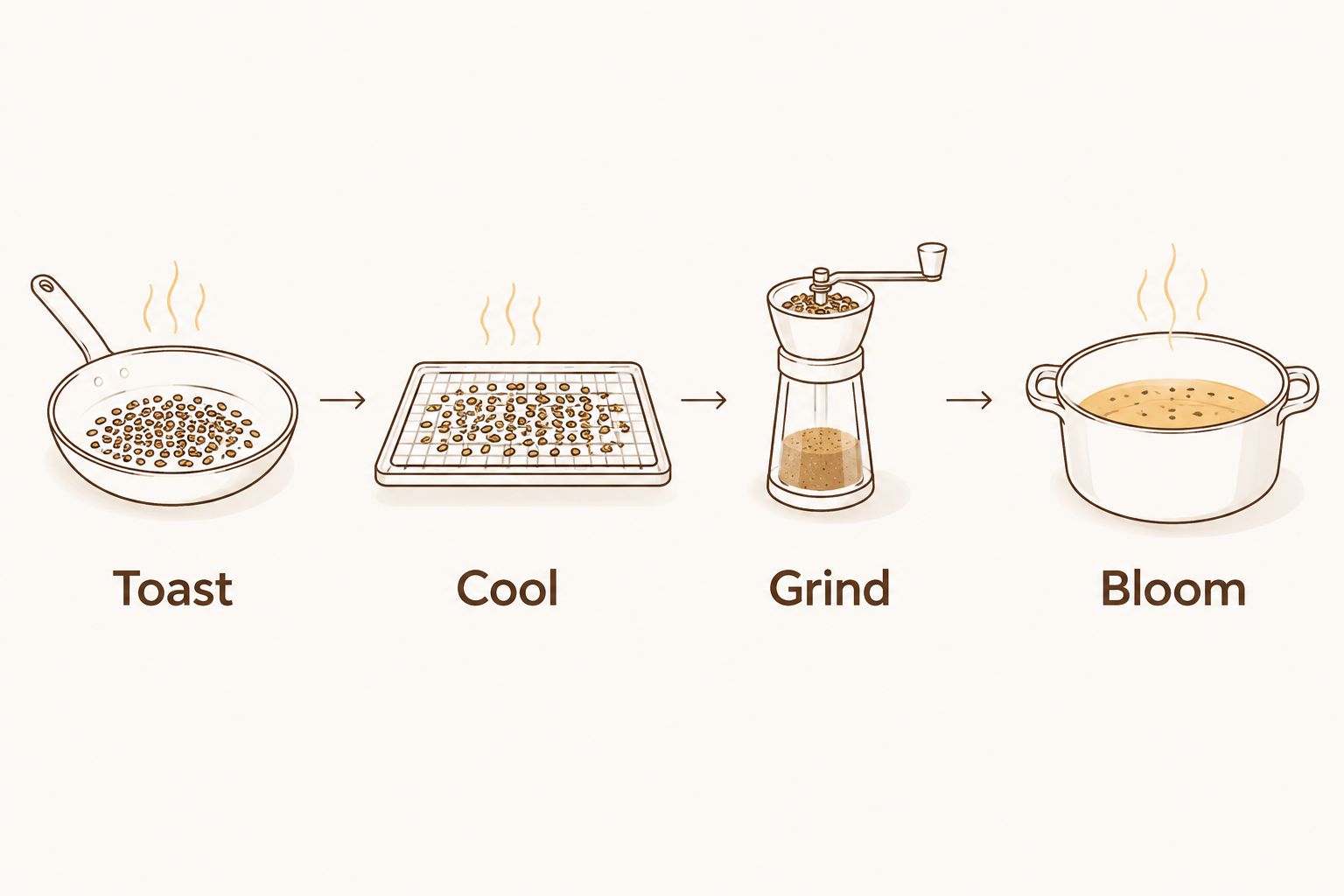
Toast, cool, grind, bloom
Whole-spice preparation is a sequence, not a contest to roast everything as dark as possible. Start with the flavor you want, then use heat carefully.
Toast
Toast suitable seeds in a dry pan over controlled heat, moving them so they heat evenly. Work separately when ingredients differ in size or behavior. Stop when the aroma becomes clear; smoke and blackening are warning signs, not targets.
Cool
Transfer toasted spices out of the hot pan and let them cool completely. Leaving them in the pan keeps cooking them. Grinding while warm also makes the aroma harder to judge against the finished, cooled powder.
Grind
Use equipment intended for dry spices and follow its instructions. The guide to the best spice grinders for whole spices helps separate that task from ordinary pepper milling. Grind hard pieces separately when needed, then combine the powders thoroughly.
Bloom
When cooking, stir the ground blend briefly into warm oil or another cooking fat before adding the dish's liquid ingredients. Keep the heat controlled and watch closely. Ground spices scorch more readily than a sauce full of liquid.
Keep dried turmeric separate from this grinding routine unless your equipment explicitly handles it. Dried turmeric root is hard; ground turmeric is a practical way to add its earthy flavor and yellow color without forcing the whole ingredient through an unsuitable tool.
How the spices rank
Coriander and cumin lead because they provide the most adaptable foundation. Pepper follows for controllable pungency; cardamom, fenugreek, fennel, cinnamon, and cloves each occupy a more specific flavor role.
This is a cooking-use ranking, not a comparison of farms or brands. No single origin makes every spice the right choice for every curry powder. Evaluate the actual ingredient, its aroma, and the dish you plan to cook.
Which whole spices should you choose?
Start with coriander seeds, cumin seeds, and black peppercorns. Add green cardamom when you want fragrance, fennel when you want sweetness, or fenugreek when you want bitter-savory contrast. Reserve cinnamon and cloves for a warmer aromatic direction.
For repeat pantry use, buy ingredients you also cook with individually. Pepper seasons everyday meals; cardamom serves savory dishes, baking, and drinks. A useful spice drawer supports dinner beyond a single blend.
5Senses pairs whole spices with Spicecare grinding and storage tools. Match the tool to the ingredient and your cooking routine rather than assuming every spice belongs in the same mill.
FAQ
What's the best whole spice to start with for curry powder?
Coriander seeds are the best starting point for an adaptable curry powder. Add cumin for earthy depth, then choose pepper or aromatic accents to suit the dish.
Do I need every spice in this guide to make curry powder?
No, curry powder does not require every spice in this guide. Coriander and cumin form a useful foundation, while the other spices change its heat, sweetness, bitterness, or fragrance.
Should I toast whole spices before grinding curry powder?
Toast whole spices when you want a roasted flavor, but toasting is not mandatory for every blend. Heat suitable ingredients carefully, separate spices that toast differently, and cool them before grinding.
Do green cardamom pods need to be deseeded for curry powder?
Remove green cardamom seeds from their pods for a finer curry powder. The husks are fibrous and can leave an uneven texture when ground into the blend.
Can black pepper replace dried chili in curry powder?
Black pepper can provide pungency, but it does not replace the flavor of dried chili. Use pepper for peppery warmth and chili when the dish calls for chili flavor.
Can I grind dried turmeric root with the other whole spices?
Grind dried turmeric root only if your equipment is designed to handle it. The root is hard, so using ground turmeric is a practical alternative for a homemade blend.
How should I store homemade curry powder?
Store homemade curry powder in a tightly closed container away from heat, light, and moisture. Let toasted ingredients cool before grinding and packing, and use a dry spoon.
Is curry powder the same as garam masala?
Curry powder and garam masala are different spice blends, though some ingredients overlap. Their formulas vary; choose according to the recipe rather than treating the names as interchangeable.
One last thing
Judge your blend in food, not just in the jar. Cook a small sample with the fat and ingredients you intend to use, then adjust the next batch. A powder that smells balanced can still taste too bitter, sweet, or peppery in the finished dish.