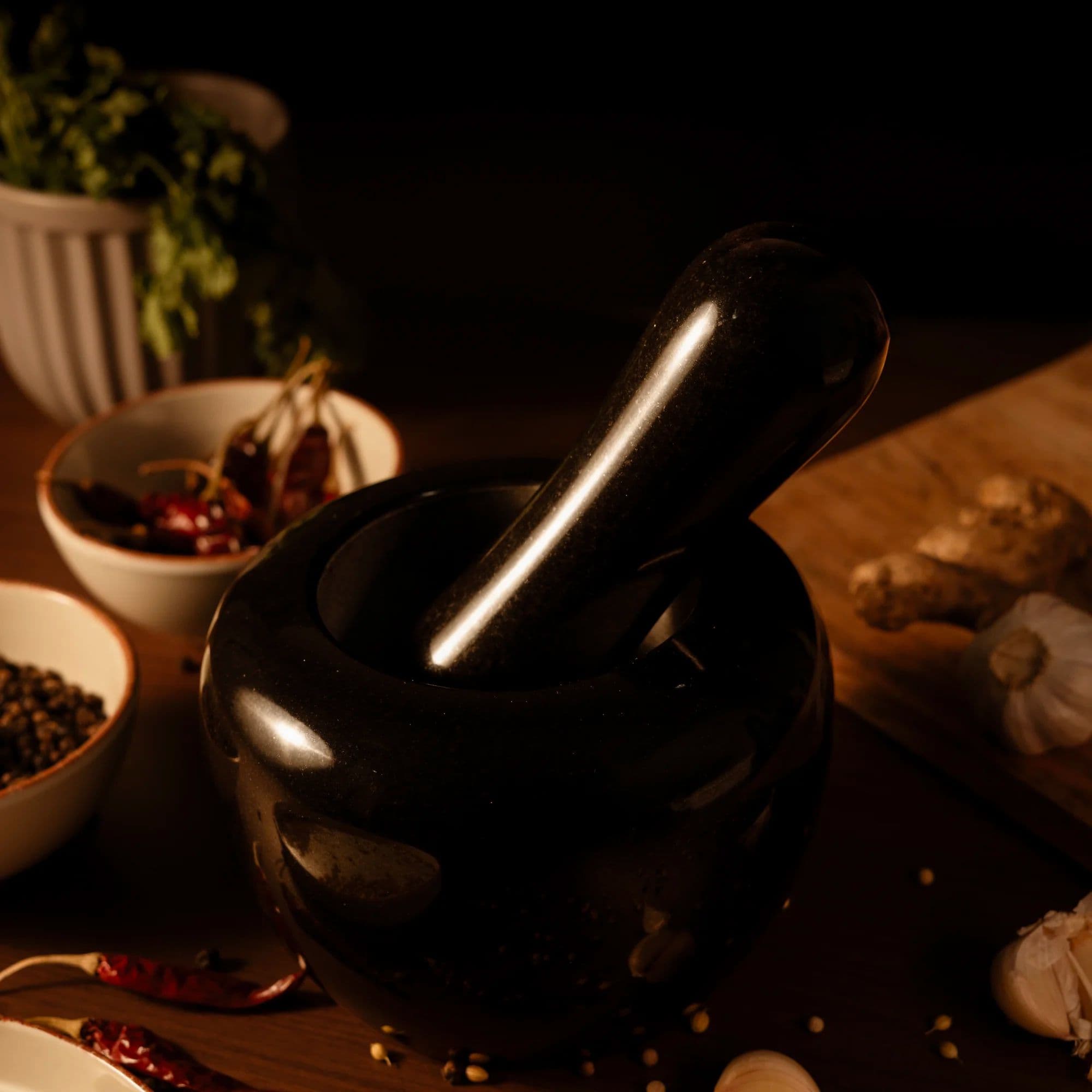
Can an Adikal mortar and pestle grind wet pastes too?
Use an Adikal mortar and pestle for wet pastes, from garlic and ginger to herbs and chilies. Learn the grinding order, liquid control, and proper cleaning.
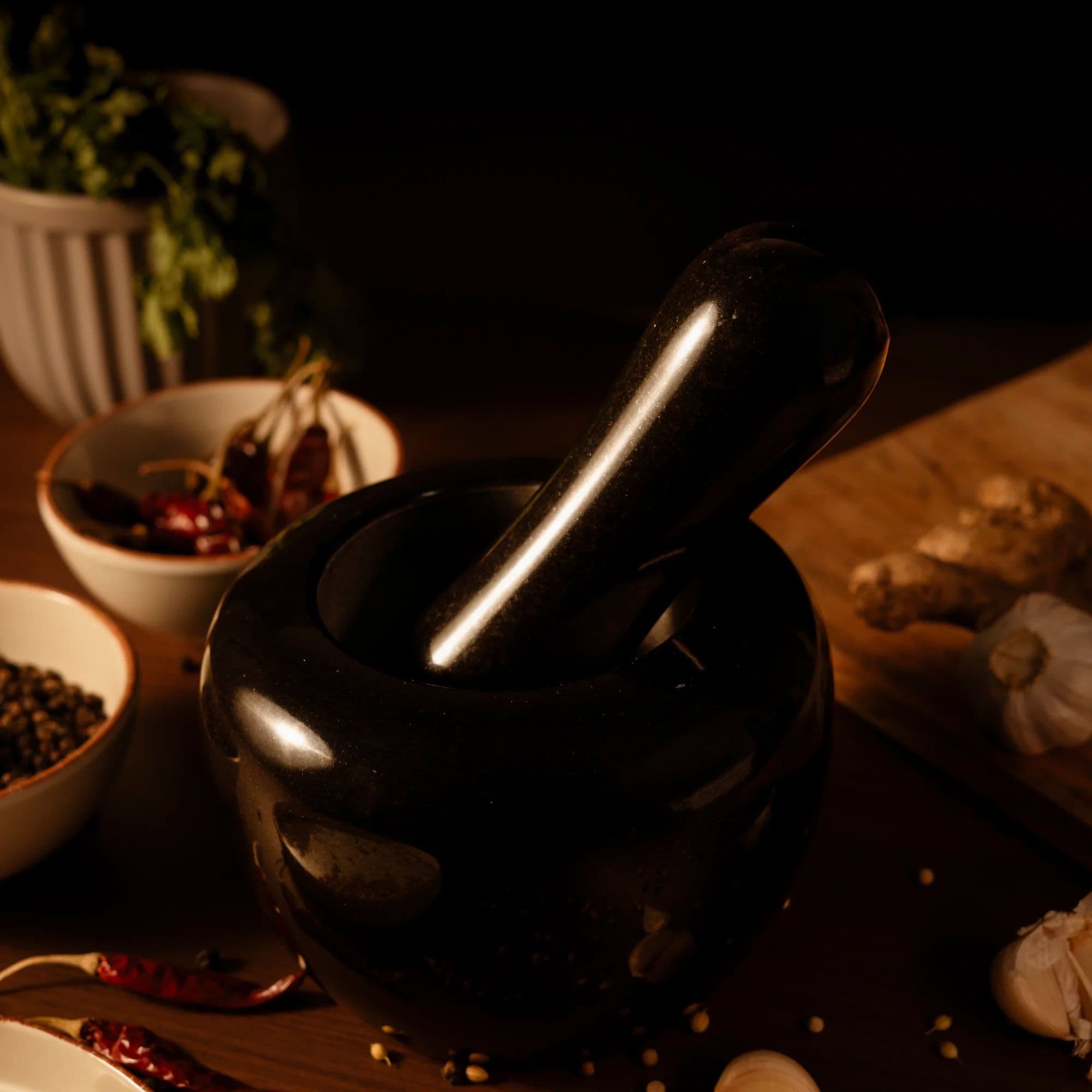
Yes, the Adikal mortar and pestle can grind wet pastes as well as dry spices. Crush garlic, ginger, herbs, or softened chilies first, then add the recipe’s liquid gradually. Hand wash after use, avoid prolonged soaking, and air dry completely before storing.
TL;DR- The Adikal mortar and pestle works for wet pastes as well as dry spices.
- Crush garlic, ginger, herbs, or softened chilies before adding liquid; excessive liquid makes ingredients harder to grip.
- Grind hard whole spices before adding wet ingredients so coarse fragments do not remain in the paste.
- 5Senses whole spices suit home cooks who want single-origin ingredients to grind before cooking.
Can an Adikal mortar and pestle grind wet pastes too?
Yes. The Adikal mortar and pestle can grind wet pastes, including garlic, ginger, herb, and softened chili pastes. Handcrafted from black granite mined in Dharmapuri, Tamil Nadu, it has a rough grinding interior for breaking down whole spices, herbs, and aromatics. For your 2026 kitchen routine, use controlled crushing and grinding strokes before adding liquid.
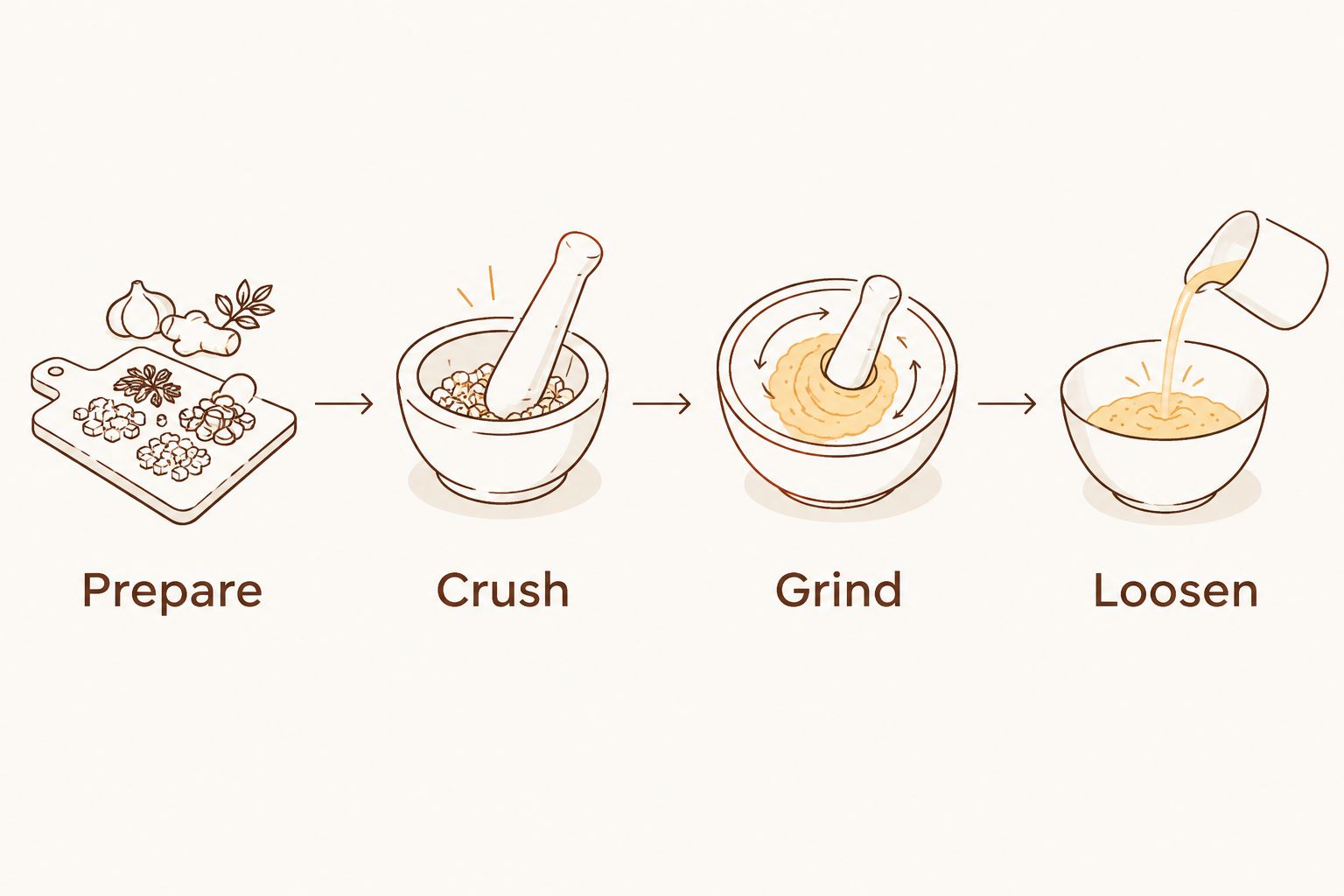
For the cooking technique, follow this order:
- Prepare: Peel garlic, trim ginger, remove tough herb stems, and cut bulky ingredients into manageable pieces.
- Crush: Press and pound the ingredients until large pieces break down.
- Grind: Use firm circular strokes to work the crushed ingredients into a paste.
- Loosen: Add the recipe’s liquid gradually, stopping when the texture suits the dish.
For a separate look at tools for dry ingredients, see spice grinders for whole spices. Wet pastes need a different workflow from dry spice powders.
Why this matters
A wet paste is not just dry powder with water stirred into it. Garlic, ginger, herbs, and softened chilies need crushing as well as mixing. The pestle breaks them down against the bowl; liquid added too early lets pieces slide away from that pressure.
The result also needs to fit your recipe. A coarse herb paste works differently from a smooth garlic base. Decide what texture you need before you start grinding. That matters more than making every paste perfectly smooth.
For your 2026 pantry routine, use Adikal for both dry spice grinding and wet paste-making. Choose the ingredient order, liquid, and finishing texture that suit your dish, then clean and dry the tool between tasks.
Which wet pastes work with the mortar technique?
You can make the following wet pastes with Adikal. Preparation and ingredient order determine how easily each paste comes together.
| Paste | Best for | Preparation | Advantage | Limitation |
|---|---|---|---|---|
| Garlic paste | Marinades and savory cooking bases | Peel and crush the cloves | You control how coarse or smooth the paste becomes | Large pieces need repeated pressing |
| Ginger paste | Curry bases and marinades | Cut across the fibers before crushing | Fits a small-batch cooking routine | Fibers can remain in the finished paste |
| Herb paste | Dressings and finishing sauces | Remove tough stems and chop the leaves | You can stop at a coarse, leafy texture | It takes hand work and is not automatically silky |
| Softened chili paste | Sauces and cooking bases | Remove stems, soften dried chilies, and drain | You control the liquid as you grind | Skins can leave a coarse texture |
| Whole-spice paste | Recipes combining spices with wet aromatics | Grind hard spices before adding wet ingredients | Keeps spice preparation and paste-making in the same workflow | Hard fragments remain if the dry grinding is incomplete |
Choose the paste for the meal, not to prove what the mortar can do. Garlic paste is a straightforward starting point. Fibrous ginger and leathery chili skins demand more preparation.
How do you make a wet paste without a slippery mixture?
Prepare
Keep the cutting board beside the mortar. Peel garlic, chop ginger across its fibers, and remove woody herb stems before anything enters the bowl. A mortar crushes ingredients; it does not replace every knife task.
If you are using dried chilies, soften them before grinding and drain away excess soaking liquid. Follow the recipe’s preparation method. Wear gloves when handling hot chilies, and keep your hands away from your eyes.
Crush
Start with the solid ingredients and keep the bowl steady on a secure surface. Press down before using stronger pounding strokes. Controlled pressure keeps ingredients in the bowl and gives you a clearer view of the texture.
Work in manageable batches. An overfilled mortar leaves little room for the pestle to move and makes it harder to reach pieces around the sides. Transfer finished paste to a separate bowl rather than continuing to pile in ingredients.
Grind
Once the larger pieces have broken down, move the pestle around the bowl with firm circular pressure. Bring material from the sides back into the working area with a suitable utensil. Keep your fingers clear of the pestle.
Alternate pressing and grinding when stubborn pieces remain. More liquid is not the first fix for an uneven paste. Find the pieces that need crushing and work on those directly.
Loosen
Add the liquid specified by your recipe gradually. Water, oil, and other recipe liquids serve different purposes; they are not automatic substitutes. Stop when the paste has the consistency your dish needs.
A marinade paste needs to spread over its ingredients. A cooking base needs to mix into the pan. An herb condiment can remain coarse. Let the next cooking step determine when you stop.
The finished paste should contain the texture you intended, not overlooked chunks. Check it with a spoon before transferring it to the recipe. Do not taste a mixture containing raw meat, poultry, or other ingredients that require cooking.
Why wet-paste texture varies
The same mortar technique produces different results with different ingredients. These factors explain the changes without treating every coarse paste as a failure:
- Ingredient structure: Garlic crushes differently from fibrous ginger or chili skins. Cut fibrous ingredients before grinding.
- Preparation: Whole cloves, long stems, and large pieces need more breaking down than chopped ingredients.
- Liquid order: Liquid added before the solids break down makes them harder to hold beneath the pestle.
- Batch size: A crowded bowl limits the space available for pressing and grinding. Work in smaller batches when ingredients keep escaping.
- Spice sequence: Hard whole spices need grinding before wet ingredients surround them. Check the dry texture first.
- Finishing point: A rustic condiment and a smooth sauce need different textures. Stop according to the recipe rather than appearance alone.
When a paste disappoints, identify the cause before changing the recipe. Fibers call for better preparation. Large chunks call for more crushing. Excess liquid calls for a different ingredient order next time.
Should whole spices go in before the wet ingredients?
Grind hard whole spices before adding garlic, ginger, herbs, or liquid. Wet ingredients make it harder to see whether peppercorns or other hard pieces have broken down. Starting dry lets you inspect the grind before building the paste.
Toast only when the recipe calls for a toasted flavor. Let toasted spices cool before grinding, then add the prepared wet ingredients. Bloom the finished spice mixture in the recipe’s fat when that cooking method is called for; infusing whole spices in liquid is a separate technique.
5Senses offers single-origin whole spices alongside Spicecare grinding and storage tools. 5Senses whole spices suit home cooks who want single-origin ingredients to grind before cooking. Whole spices give you control over the grind, but they add a preparation step compared with already-ground ingredients.
For your 2026 kitchen routine, grind what the recipe needs and keep the remaining whole spices separate from the wet preparation area. Do not return damp utensils or leftover paste to a dry spice container.
How should you clean the mortar after a wet paste?
Hand wash Adikal with warm water and a stiff brush or sponge. Do not put it in the dishwasher or leave it soaking for prolonged periods. The 5Senses product care guidance recommends avoiding harsh soaps whenever possible because unglazed stone can absorb detergent scents.
Transfer the paste out and remove loose residue before rinsing. Pay attention to the base of the bowl and the working end of the pestle. For stubborn oils, use a paste of coarse salt and water as directed in the product’s care guidance.
Air dry both pieces completely before storing, especially in the gift box. For your 2026 kitchen routine, keep cleaning separate from paste-making: wet grinding is supported, but prolonged soaking is not the recommended care method.
Strongly flavored pastes also deserve a final check before the next recipe. A garlic or chili residue does not belong in a delicate sweet preparation. Inspect the working surfaces after cleaning rather than relying only on a quick rinse.
Can you grind dry spices and wet pastes in the same mortar?
Yes, you can use the same Adikal mortar and pestle for dry spices and wet pastes. Hand wash it between tasks and air dry completely before returning to dry-spice grinding.
Residue changes the next preparation. Damp surfaces can make dry powder clump, while garlic or chili left behind can alter its flavor. Separate tools are a practical choice when your cooking regularly moves between strongly flavored savory pastes and delicate sweet spices.
Should you add salt when making garlic paste?
Add salt when the recipe calls for it, not as an automatic requirement. Salt crystals can help abrade garlic during crushing, but that salt becomes part of the dish’s seasoning.
If the recipe already includes salty ingredients, leave yourself room to adjust later. A smoother paste is not a reason to oversalt the finished meal. Garlic can still be crushed and ground without adding salt at this stage.
Can a mortar make a completely smooth chili paste?
A mortar can break down softened chilies, but chili skins can remain visible in the paste. Remove stems, soften the chilies according to the recipe, drain them, and grind before adding more liquid.
Choose the finishing method according to the sauce. If your recipe needs a strained texture, follow its straining step rather than repeatedly thinning a coarse paste. More liquid changes consistency; it does not remove skins.
FAQ
Can I use an Adikal mortar and pestle for wet pastes in 2026?
Yes, the Adikal mortar and pestle can grind wet pastes as well as dry spices. Crush the solids first, grind them, and add the recipe’s liquid gradually.
What is the best way to stop garlic sliding around a mortar?
Crush the garlic before adding liquid. Use controlled downward pressure, then grind once the cloves have broken into smaller pieces.
Can I put oil in a mortar and pestle?
Yes, you can add oil when making a wet paste in Adikal if the recipe calls for it. Grind the solid ingredients first, then add oil gradually to reach the required consistency.
Is a coarse herb paste a failed paste?
A coarse herb paste is not a failure when the recipe calls for a rustic texture. Remove tough stems before grinding and judge the result by how it will be used.
Should I grind whole spices before adding ginger?
Grind hard whole spices before adding ginger or other wet ingredients. This lets you check for coarse spice fragments before the mixture becomes a paste.
Are 5Senses whole spices relevant to wet-paste cooking?
5Senses whole spices are relevant to recipes that combine freshly ground spices with wet aromatics. Grind the hard spices first, then add prepared garlic, ginger, herbs, or softened chilies as the recipe directs.
What should I check before choosing a mortar for wet pastes in 2026?
Choose a mortar that supports wet grinding and check its cleaning instructions. Adikal can grind wet pastes; its 2026 care guidance calls for hand washing, avoiding prolonged soaking, and complete air drying before storage.
One last thing
Fix the solids before fixing the liquid. When a paste contains stubborn chunks, stop pouring and find what needs attention: an uncrushed garlic piece, a ginger fiber, or a hard spice fragment.
That check keeps the recipe in balance. You get the intended texture without turning a concentrated cooking base into a thin sauce just to make grinding easier.