Can other spices go in a pepper mill, not just peppercorns?
Can you put other spices in a pepper mill? Yes. Discover how the 5Senses Pepper Mill works with tested whole coriander and fennel for versatile everyday cooking.
Yes, a pepper mill can grind more than peppercorns: whole coriander and whole fennel work in a compatible mill. That gives you another way to season vegetables, sauces, and everyday meals straight from whole spices. Compatibility still depends on the mill and ingredient; it does not extend automatically to hard bark, large pods, or leafy herbs.
TL;DR- Can you put other spices in a pepper mill? Yes—whole coriander and fennel work in compatible mills.
- 5Senses has tested its Pepper Mill with 5Senses Whole Coriander and Whole Fennel; both work very well.
- Use coriander and fennel separately for fresh seasoning and control over each spice.
- Check other ingredients individually; these tests do not make every whole spice suitable for every mill.
Can you put other spices in a pepper mill?
The 5Senses Pepper Mill has been tested with 5Senses Whole Coriander and 5Senses Whole Fennel, and both work very well. This is a confirmed use for those specific combinations, not simply a suggestion to try anything that fits through the opening.
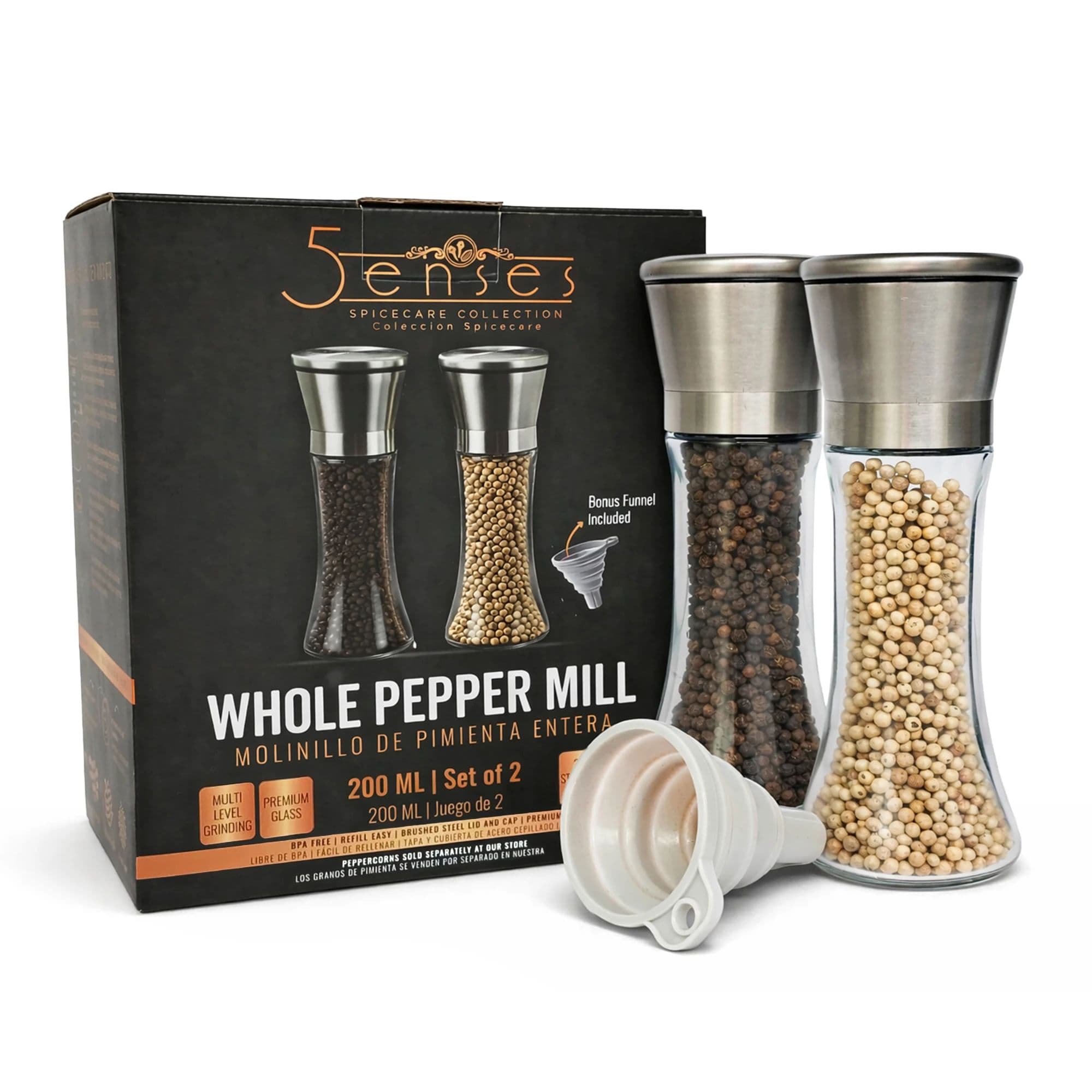
The SpiceCare Collection Whole Pepper Mill Set brings that versatility to everyday cooking. You can go beyond pepper at the table and grind coriander or fennel as a dish needs it. For other mills or other ingredients, check the manufacturer's instructions.
| Ingredient | Pepper-mill decision | Best for | Main limitation |
|---|---|---|---|
| Black or white peppercorns | Use when approved by the manufacturer | Fresh pepper at the table | Peppercorn size still needs to suit the mechanism |
| 5Senses Whole Coriander | Tested in the 5Senses Pepper Mill; works very well | Fresh seasoning for vegetables, sauces, and rubs | Confirm compatibility separately for other mills |
| 5Senses Whole Fennel | Tested in the 5Senses Pepper Mill; works very well | Fresh seasoning for tomato dishes and savory cooking | Confirm compatibility separately for other mills |
| Cumin seeds | Use only with explicit ingredient approval | Fresh seed seasoning from a compatible mill | Not included in the coriander and fennel test claim |
| Green cardamom | Remove the husks; grind seeds with suitable equipment | Baking, chai, and spice blends | Whole pods are not equivalent to peppercorns |
| Whole cloves | Use a tool approved for cloves | Small amounts for sweet or savory cooking | Their shape and texture need a suitable mechanism |
| Cinnamon sticks or whole nutmeg | Use suitable grinding or grating equipment | Recipes needing freshly prepared spice | Large, hard pieces do not belong in a pepper-only hopper |
| Bay leaves or dried herbs | Crumble, infuse, or use suitable processing equipment | Soups, sauces, and herb mixtures | Leaves do not feed like rounded peppercorns |
| Salt | Use a mill explicitly approved for salt | Salt seasoning | A pepper mechanism is not automatically salt-compatible |
The coriander and fennel results above apply specifically to the named 5Senses spices in the 5Senses Pepper Mill. The remaining rows are preparation guidance, not additional tested combinations. For another mill, follow that manufacturer's ingredient list.
Why this matters
A freshly ground spice gives you control over texture and how you add it to food. That advantage disappears when an unsuitable ingredient jams the mechanism or leaves yesterday’s seasoning in today’s dish.
Keep your 2026 pantry routine simple: store whole spices separately, prepare what the recipe needs, and put only approved ingredients into a mill. You do not need every spice sitting in a grinder.
Whole coriander: bring the mill into everyday cooking
5Senses Whole Coriander works very well in the 5Senses Pepper Mill. You can grind it as you prepare a dish rather than bringing out another grinder for a small amount. Keep the spice whole until you need it, then season and taste as you go.
Try freshly ground coriander in a vegetable seasoning, stirred into a sauce, or combined with other separately prepared spices for a rub. These are cooking suggestions, not a requirement to mix several ingredients inside the mill. Grinding separately lets you decide how much of each spice belongs in the dish.
Begin with a small quantity and inspect the texture on a plate before seasoning your food. Follow the mill's directions for adjustments and cleaning. A mill is convenient for small amounts, while a dedicated spice grinder remains useful when a recipe needs a larger batch of fine powder.
Best for: cooks who want coriander ready to grind during everyday meal preparation. The practical benefit is fresh seasoning from a familiar tool; the limitation is that this tested pairing does not establish compatibility for every other mill.
Whole fennel: another use beyond peppercorns
5Senses Whole Fennel also works very well in the 5Senses Pepper Mill. Coriander is not the only option beyond pepper. Fennel gives you another whole spice to keep ready for cooking with the same type of tool.
Try grinding fennel into a tomato sauce, over vegetables before roasting, or into a savory seasoning mixture. Start lightly, taste, and add more when needed. If a recipe calls for whole fennel seeds rather than ground fennel, leave them whole; the preparation should serve the dish.
Keep fennel separate from coriander when you want control over the balance. Emptying and cleaning between spices also helps avoid an unexpected trace of the previous seasoning. Follow the care instructions rather than improvising a cleaning method.
Best for: cooks who regularly use fennel in savory dishes and want to prepare a small amount without a separate grinding session. The confirmed result applies to this specific mill-and-spice pairing.

Product photo shows peppercorns. The coriander and fennel compatibility described here comes from 5Senses testing, not from the pictured contents.
What makes the pepper mill versatile?
Versatility means using a familiar tool for more of the cooking you already do. Pepper, coriander, and fennel can each have a place in your seasoning routine, without treating every whole spice as interchangeable.
- Grind as needed: prepare a small amount while cooking or finishing a dish.
- Season separately: add coriander and fennel independently, then taste before adding more.
- Change the use: keep pepper for finishing, or dedicate a mill to a tested spice you use often.
- Keep preparation flexible: leave seeds whole when the recipe calls for them, and grind only when needed.
The set includes two mills, so you can choose a practical pairing for your kitchen: pepper and coriander, pepper and fennel, or coriander and fennel. Label them so everyone knows which spice is inside. There is no need to keep a mixed hopper just to enjoy a wider range of flavors.

SpiceCare mill detail from the 5Senses product gallery.
What about cumin and other dry seeds?
The confirmed coriander and fennel results are not a compatibility claim for cumin or every dry seed. Look for each additional ingredient by name in your mill's instructions. Shape, texture, and moisture still affect how a spice feeds and grinds.
For an approved ingredient, begin with a small amount and follow the recommended setting. Stop if the mechanism resists or nothing comes out. Do not use force to turn an unsupported spice into a suitable one.
Green cardamom: separate the seeds from the husks
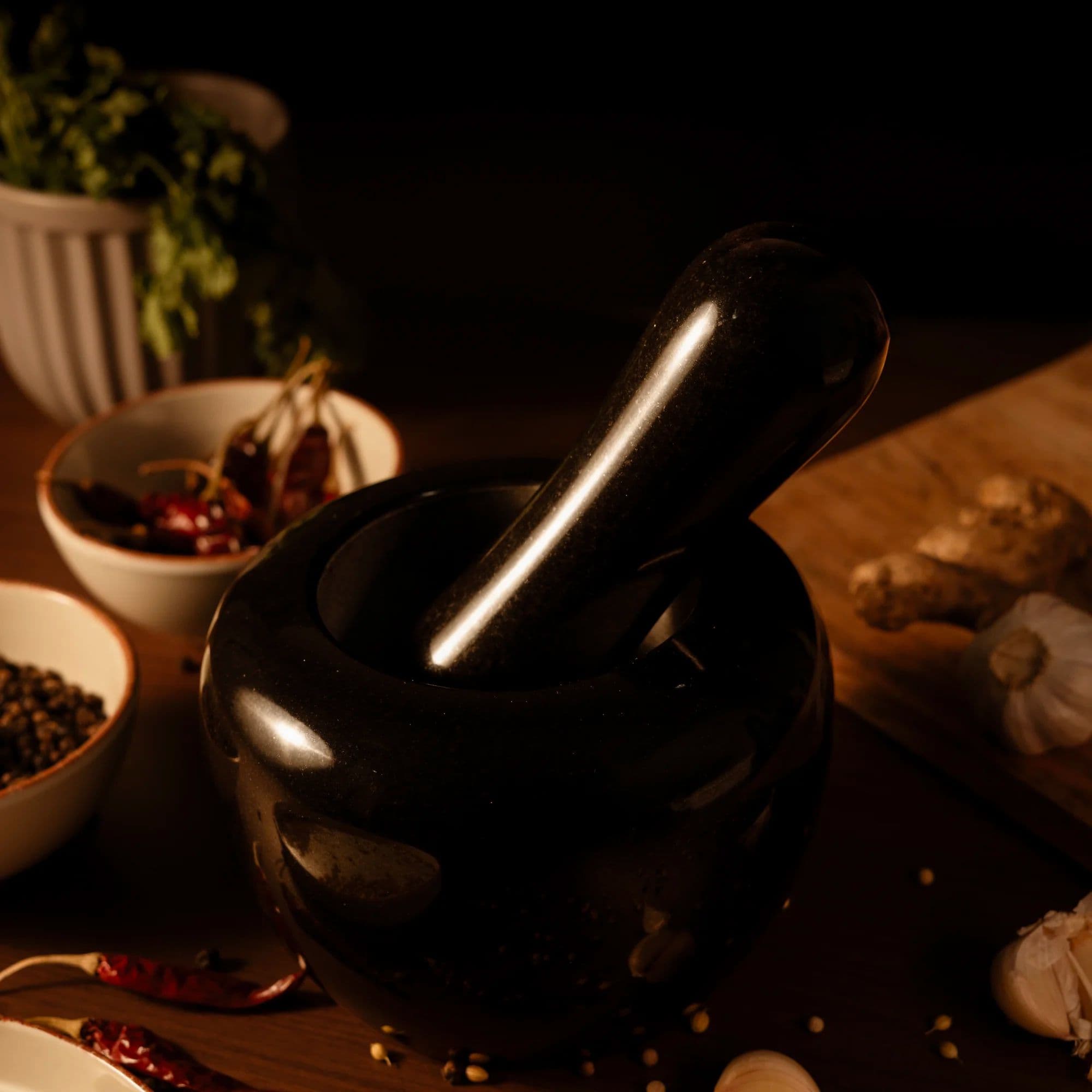
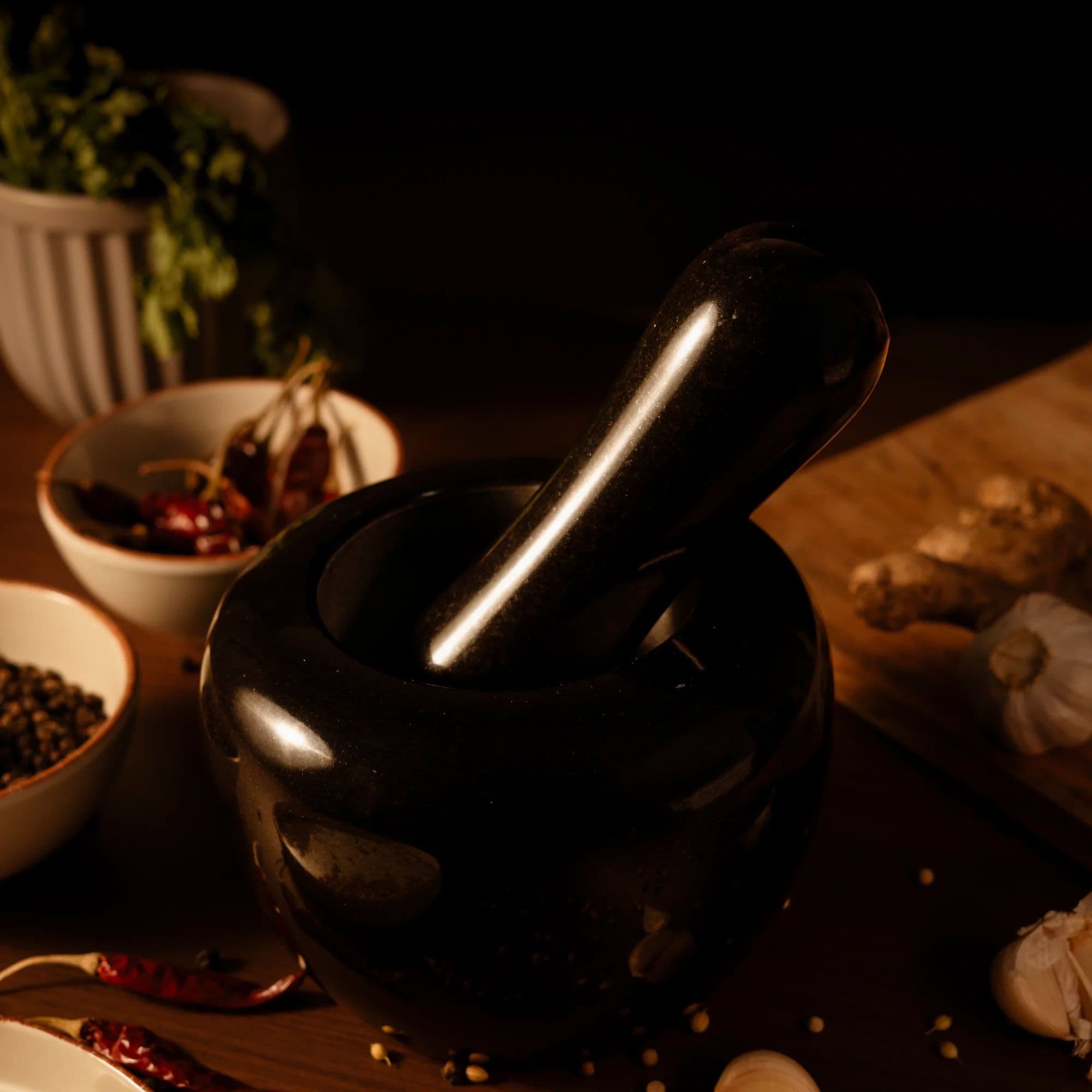
Green cardamom pods contain aromatic seeds inside a papery husk. Open the pods and separate the seeds when your recipe calls for ground cardamom. A mortar gives you direct control over that small batch.
For milk, tea, or another infusion, lightly crushed pods can serve a different purpose: they expose the interior while remaining easy to strain out. That is an infusion method, not a reason to put whole pods into a pepper-only mill.
Do not treat a husk and a seed as interchangeable grinding ingredients. Even after deseeding, use a pepper mill only if its instructions approve cardamom seeds. Otherwise, keep the preparation on the work surface with suitable equipment.
Best for: bakers and chai makers preparing cardamom for a particular recipe. Deseeding adds a preparation step, but it keeps unwanted husk pieces out of a fine grind.
Cloves, cinnamon, and nutmeg: choose purpose-built preparation
Whole cloves have a distinct stem-and-head shape. Cinnamon arrives as bark, and whole nutmeg is a hard seed. None should enter a pepper-only mill just because you can squeeze it into the hopper.
Use a mortar for a small quantity of cloves when you can achieve the texture your recipe needs. Choose a dedicated spice grinder whose instructions permit the ingredient for a finer preparation. A suitable grater is a straightforward option for whole nutmeg.
Breaking cinnamon into smaller pieces does not automatically make it compatible with a pepper mill. The grinding mechanism still has to handle the material. Check the tool’s instructions before processing it.
Best for: cooks preparing baking spices or spice blends with equipment intended for the task. The benefit is control over texture; the trade-off is another tool to use and clean.
Why pepper-mill compatibility varies
Two mills that look similar can have different approved uses. The outside shape does not establish what the grinding mechanism can handle.
- Ingredient size: a piece must reach the grinding mechanism, not merely pass through the filling opening.
- Ingredient shape: round peppercorns, elongated seeds, stems, and leaves feed differently.
- Texture: brittle seeds, fibrous bark, and papery husks require different preparation.
- Moisture: damp ingredients are unsuitable for a mill intended for dry peppercorns.
- Mechanism and materials: follow the manufacturer’s restrictions, including any separate instructions for salt.
- Cleaning access: lingering particles and aromas make switching ingredients less practical in some designs.
There is no universal spice-to-mill compatibility chart. When reviewing equipment in 2026, judge each model by its documented uses rather than the word spice on the packaging.
How do you try another approved spice safely?
Follow this sequence only after confirming that your mill supports the ingredient. Testing is a check on operation, not a substitute for approval.
- Check instructions. Confirm the exact ingredient, cleaning method, and any grind-setting directions.
- Empty the hopper. Remove the previous spice so you can assess the new ingredient without a mixture.
- Prepare the spice. Separate husks or other unwanted parts as the recipe requires, and let toasted spices cool fully.
- Test gently. Add a small amount and turn without forcing the handle.
- Inspect the grind. Check the output for usable texture, lingering flavor, and signs of poor feeding.
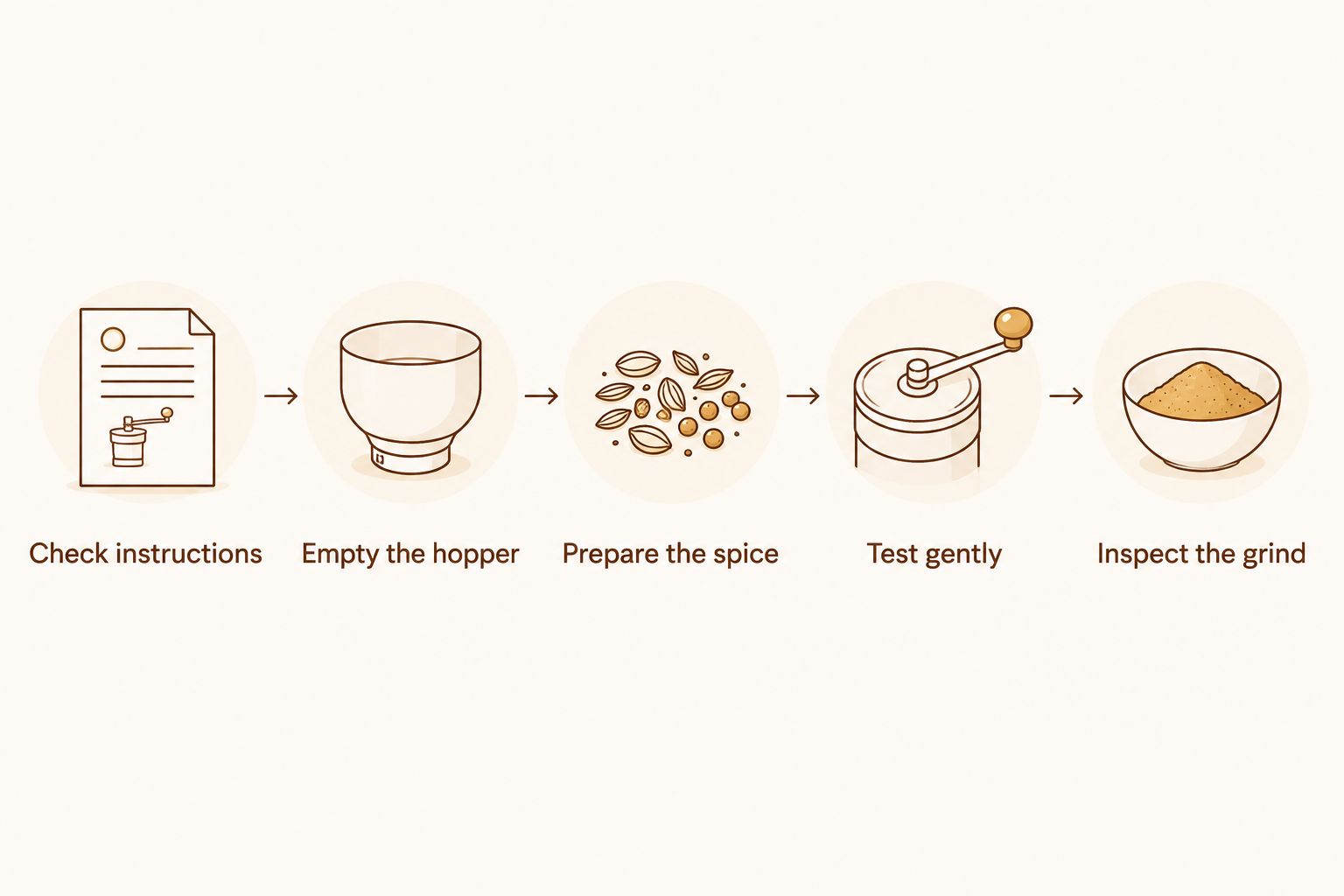
If the handle becomes difficult to turn, stop. Do not try to solve a jam by applying more force. Empty or disassemble the mill only as its instructions permit.
Keep cleaning equally specific. Do not rinse a mechanism unless the manufacturer allows it, and do not refill washed parts until they are completely dry. Avoid improvised cleaning ingredients that the instructions do not approve.
Is a pepper mill or spice grinder better for whole spices?
A pepper mill is best for its approved ingredients; a dedicated spice grinder is better for a wider cooking workflow when its instructions support the spices involved. A mortar remains useful when you want a small amount or a deliberately coarse texture.
| Tool | Best for | Practical advantage | Limitation |
|---|---|---|---|
| Pepper mill | Approved spices used as finishing seasonings | Grind directly over food | Ingredient restrictions and lingering flavors |
| Dedicated spice grinder | Approved ingredients for powders and blends | Prepare spices before cooking | Requires cleaning between strongly flavored batches |
| Mortar and pestle | Small batches, cracked seeds, and coarse mixtures | Watch and adjust the texture as you work | Fine powders take more effort |
| Suitable grater | Whole nutmeg and other expressly supported ingredients | Grate directly into a recipe | Not a replacement for grinding loose seeds |
Choose by the dish, not by the number of appliances on the counter. Cracked coriander for a crust does not need the same texture as cardamom for a smooth batter.
The 5Senses Pepper Mill is a practical choice for cooks who want pepper, whole coriander, or whole fennel ready to grind. The tested coriander and fennel combinations expand its role beyond table pepper without making it a replacement for every grinding tool.
For a 2026 equipment refresh, start with the tasks you repeat most often. Use a mill for small amounts of compatible spices and choose suitable dedicated equipment for larger batches, hard ingredients, or recipes needing a different texture.
Can you mix peppercorns with other spices in the same mill?
Yes, but only when every ingredient is approved for that mill. Adding peppercorns does not make an unsupported seed, leaf, or pod compatible.
Mixed ingredients also limit your control. Once they share a hopper, you cannot adjust each spice separately as you season. Differences in shape and feeding can make the output less useful than separately prepared ingredients.
For repeat cooking, grind approved spices separately and combine them in a bowl. You can taste the mixture, change the balance, and keep the pepper mill ready for another dish. Label any dedicated mixed-spice mill so it does not surprise someone seasoning dinner.
Does every whole spice need grinding before cooking?
No. Grinding is one preparation method, not the destination for every whole spice. Choose among toast, grind, bloom, and infuse according to the recipe.
- Toast: warm suitable whole spices in a dry pan, watch closely, and remove them before scorching. Cool fully before loading approved grinding equipment.
- Grind: prepare the texture the dish needs. Stop at cracked seeds for a coarse finish, or use suitable equipment for a finer powder.
- Bloom: add the recipe’s spices to warm cooking fat and stir so they do not scorch. Continue with the next cooking step promptly.
- Infuse: steep suitable whole spices in the recipe’s liquid. Strain or remove pieces when the dish calls for it.
Whole bay leaves belong naturally in an infusion workflow. Cardamom pods can flavor a liquid without becoming powder. Keeping those methods separate from milling makes your pantry easier to use.
What should you check before buying whole spices for a mill?
Start with compatibility, then examine the ingredient information. A named origin tells you where a spice comes from; it does not tell you whether your grinder can process it.
Look for a clear ingredient identity and inspect any supplied origin, harvest, or packing details. Keep those details with the container rather than losing them when you refill a tool. Do not assume a certification or packing date that the label does not state.
For your 2026 pantry notes, record which ingredients each tool supports. Store the remaining whole spices separately and refill only as needed. This keeps preparation flexible without turning every spice purchase into a full hopper.
FAQ
Can you put other spices in a pepper mill without damaging it?
You can use other spices when the manufacturer explicitly approves them for that mill. Stop if turning becomes difficult, and never force an unsupported ingredient through the mechanism.
Can I put whole coriander in the 5Senses Pepper Mill?
Yes. 5Senses has tested its Pepper Mill with 5Senses Whole Coriander, and it works very well. Check compatibility separately if you use a different mill.
Can I grind whole fennel in the 5Senses Pepper Mill?
Yes. 5Senses has tested its Pepper Mill with 5Senses Whole Fennel, and it works very well. Use it for fresh seasoning as your recipe needs it.
Can I grind whole green cardamom pods in a pepper mill?
Keep whole green cardamom pods out of a pepper-only mill. For ground cardamom, open the pods, separate the seeds, and use suitable grinding equipment.
Can I put salt in the same mill as pepper?
Put salt in a mill only when its manufacturer approves salt for that mechanism. A pepper mill is not automatically a salt mill.
Should I toast spices before putting them in a grinder?
Toast spices when the recipe calls for it, then cool them fully before grinding. Toasting does not make an otherwise unsupported spice compatible with a pepper mill.
What should I do if a spice jams my pepper mill?
Stop turning the mill and follow the manufacturer’s emptying or disassembly instructions. Do not force the handle or introduce water unless the cleaning instructions permit it.
Does buying 5Senses whole spices mean I can use any pepper mill?
No, 5Senses whole spices still need equipment suited to the specific ingredient. The mill’s documented ingredient restrictions determine compatibility.
One last thing
A pepper mill does not have to be just a pepper tool. With tested whole coriander and whole fennel combinations, it can become part of your everyday cooking routine. Keep the spices separate, grind what the dish needs, and let the recipe decide when seeds should remain whole.