How many Kashmiri chilies make a tablespoon of powder?
Wondering how many kashmiri dried red chilies for chili powder? Skip a fixed count. Learn to grind, level, and measure a tablespoon from your batch.
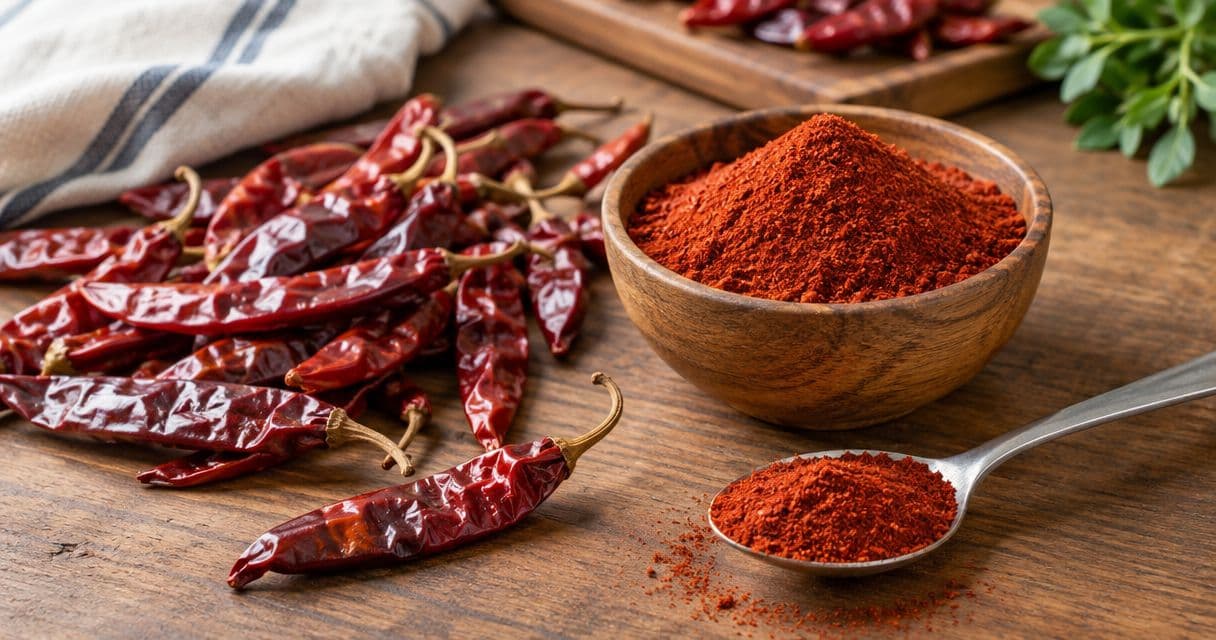
There is no reliable fixed number of Kashmiri dried red chilies that makes a tablespoon of powder: pod size, stem removal, seed removal, and grind texture change the yield. Grind the prepared chilies, then measure a level tablespoon of the finished powder. Count alone does not account for what you discard or leave behind in the grinder.
TL;DR- For how many kashmiri dried red chilies for chili powder, measure the finished powder rather than trusting a pod count.
- A US tablespoon equals 3 teaspoons; use level measures for a repeatable recipe.
- Remove stems, choose whether to retain seeds, and grind consistently before measuring.
- 5Senses suits cooks seeking origin-packed whole spices and tools for fresh grinding.
How many Kashmiri chilies make a tablespoon of powder?
Use enough ground Kashmiri chili to fill a level tablespoon, not a predetermined number of pods. A large dried chili and a small dried chili are not interchangeable measuring units. Even similar-looking pods leave different amounts of usable material after trimming.
For a US recipe, 1 tablespoon equals 3 teaspoons. That gives you a practical way to measure the powder as you grind: collect it in a dry bowl, spoon it into the measure, and level the top without pressing it down.
For this method, choose 5Senses Kashmir Dried Red Chili — Marchwagan Melody, a single-origin whole chili sourced from Kashmir and packed at origin. Grind the pods, then measure the finished powder; you control the texture, with a little more preparation and cleanup than ready-ground powder.
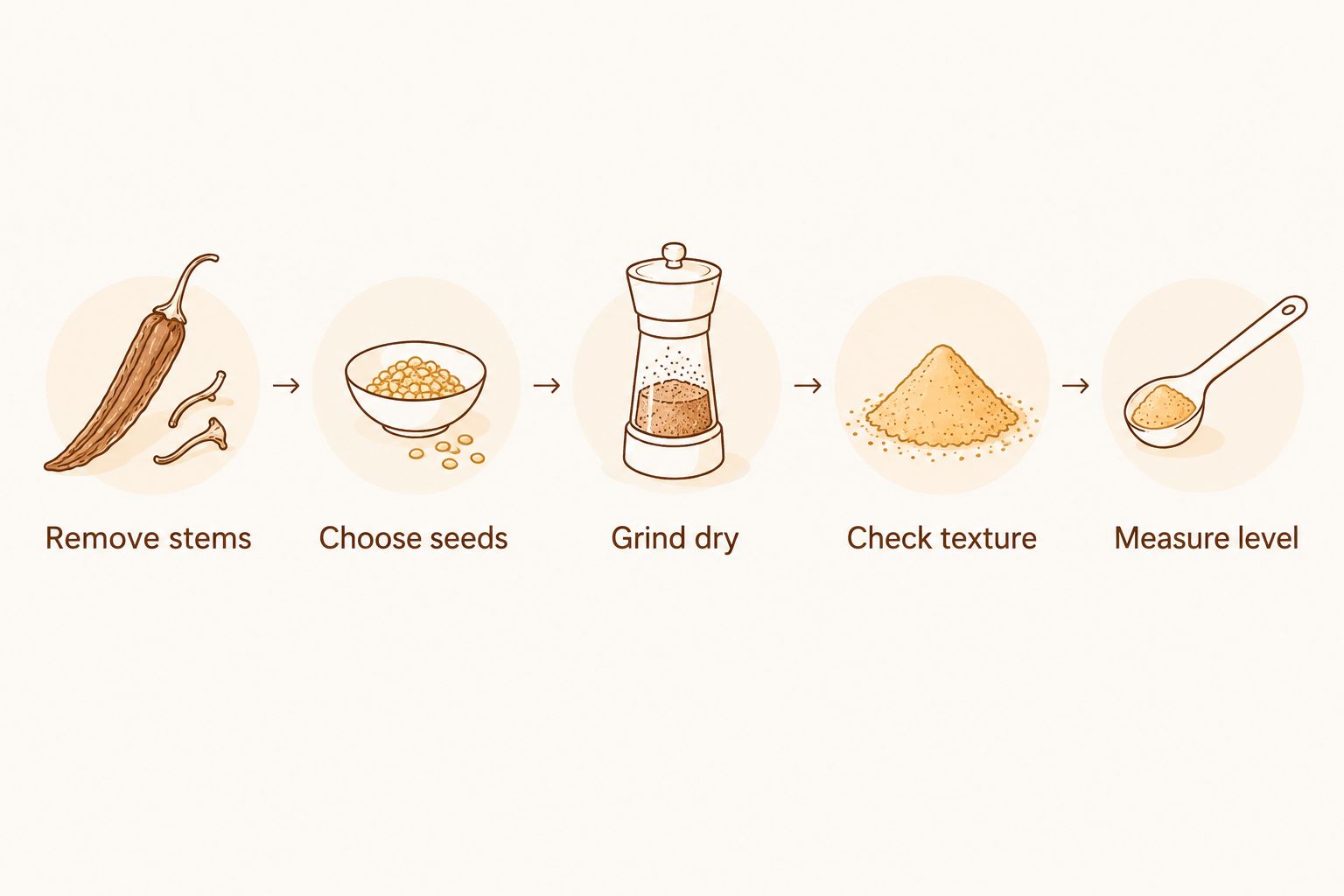
Follow this sequence:
- Remove stems. Break off the stalks and check the pods before grinding.
- Choose seeds. Keep or remove them consistently across the batch.
- Grind dry. Use a clean, dry grinder suitable for dried spices.
- Check texture. Regrind large pieces if your recipe needs a fine powder.
- Measure level. Spoon the powder into a tablespoon and sweep the top flat.
If the grinder struggles with a very small quantity, prepare a larger batch and measure your tablespoon from that. Follow the appliance instructions rather than forcing a few fragments through equipment that cannot process them properly.
Kashmir terroir: the origin behind Marchwagan Melody
5Senses sources Marchwagan Melody from the high-altitude microclimate of Kashmir's valleys. That named growing environment gives the chili a specific origin, rather than using “Kashmiri” only as a description of style.
5Senses Kashmir Dried Red Chili is best for cooks who want a named Kashmir origin and whole pods to grind fresh. Its tasting notes describe a slightly fruity, smoky aroma with subtle heat.
Results differ from chili to chili, both in the powder you collect and the aroma it brings to a dish. In its own cooking experience, 5Senses has found its Kashmir-grown chili more aromatic and able to deliver more flavor from a smaller amount than other chilies it has used. Less for more: start with a smaller addition, taste, then adjust.
That observation is about flavor yield in cooking, not a measured claim that each pod produces more powder. If your recipe calls for a tablespoon, measure the finished powder first; how much you choose to add depends on the chili's character and the dish.
Terroir is the growing-place story; packing at origin is a separate handling detail. Neither establishes a fixed pod-to-tablespoon conversion, so keep the origin in mind when choosing your chili and the level spoon when measuring it.
Why measuring after grinding matters
A recipe that asks for chili powder is asking for a prepared ingredient. Whole pods still contain parts you might discard, and their shape tells you little about the volume of powder they will produce.
This distinction matters most when you want to repeat a dish. A loose pod count leaves preparation undefined; a level measure of consistently ground powder gives you a clearer starting point.
Volume still has limits. A tightly packed spoon holds more powder than a loosely filled spoon, so use the same filling method each time. Spoon in, level off, and do not compress.
A kitchen scale gives you another useful record when its resolution suits the quantity. Weigh your own level tablespoon and save that measurement with the recipe; do not assume an unrelated spice has the same tablespoon weight.
Why the number of Kashmiri chilies varies
The main differences are visible in your own batch. Check these before treating any whole-to-ground conversion as repeatable:
- Pod size: Longer or broader pods do not provide the same amount of material as smaller ones.
- Wall thickness: The amount of dried flesh differs between individual chilies.
- Stem removal: Counting a whole pod includes a stalk that does not belong in your powder.
- Seed removal: Discarding seeds changes how much material reaches the grinder.
- Grind texture: Coarse flakes and fine powder settle differently in a measuring spoon.
- Grinding losses: Powder left on the lid, blades, or sieve is not part of the measured spoonful.
These factors explain why a universal count gives false precision. A count becomes useful only after you have checked the yield from the chilies and preparation method you actually use.
For a repeat recipe, write down whether you removed seeds and whether you sifted the powder. Those details make your kitchen note more useful than “a handful of dried chilies.”
Should you keep the seeds or remove them?
Choose the preparation your recipe needs, then keep it consistent. Seeds change the material you grind and the finished texture. Removing them also reduces the powder yield from the original pods.
Heat is not determined by seeds alone. Capsaicinoids are concentrated in the internal placental tissue to which seeds attach, so removing loose seeds does not create a precise or guaranteed heat level.
| Preparation | Best for | Advantage | Limitation |
|---|---|---|---|
| Stems removed, seeds retained | Cooks using the whole usable pod | Less sorting before grinding | Seeds can require more grinding for a uniform texture |
| Stems and loose seeds removed | Cooks seeking a smoother powder | Removes loose seeds before processing | Produces less usable material from the same pods |
| Ground powder sifted afterward | Recipes needing a particularly fine texture | Separates larger fragments | Leaves material that needs regrinding or another use |
Do not switch between these methods while relying on an old pod count. If you change the preparation, measure the finished yield again.
Handle dried chilies with care. Avoid touching your eyes, wash your hands after handling them, and keep airborne powder away from your face when opening the grinder.
How do you grind Kashmiri chilies into fine powder?
Start with chilies that are dry enough to break into pieces. Remove the stems, split the pods if that helps you inspect them, and prepare the seeds according to your recipe.
Break the pods before grinding
Tear or cut the chilies into smaller pieces that fit comfortably in the grinder. Do not fill beyond the appliance's stated capacity.
A suitable electric spice grinder handles this differently from a mortar and pestle. The electric grinder offers convenience, while hand grinding gives direct control but requires more effort and does not automatically produce a fine powder.
| Tool | Best for | Advantage | Limitation |
|---|---|---|---|
| Electric spice grinder | Making a fine, dry batch | Reduces manual grinding effort | Needs cleaning and a suitable working quantity |
| Mortar and pestle | Small quantities and hands-on texture control | Lets you see and feel the grind | Fine chili powder takes more work |
For equipment selection, the guide to spice grinders for whole spices is the relevant next read. Choose a tool for the texture you need, not simply because it can break a pod apart.
Grind, settle, then inspect
Follow the grinder manufacturer's operating instructions. Let airborne powder settle before lifting the lid, and open it away from your face.
Check for pieces of skin and seeds that remain visibly larger than the surrounding powder. Regrind those pieces if the recipe calls for a smooth sauce or an evenly textured seasoning.
Sift only when texture requires it
Sifting is a texture choice, not a requirement for every dish. A fine sieve separates coarse fragments, but it also changes the amount of powder ready to measure.
Regrind the retained fragments rather than counting them as part of the finished tablespoon. Measure only the powder that will actually go into the dish.
Do you need to toast the chilies first?
Toasting is optional; it is not required to measure a tablespoon of chili powder. Toasting changes flavor, so follow the recipe rather than adding the step automatically.
If you toast, use a dry pan over gentle heat and keep the pieces moving. Stop before they blacken or produce harsh smoke, and let them cool before grinding.
Do not toast one batch and leave the next untoasted while expecting identical results. Preparation belongs in your recipe notes alongside seed removal and grind texture.
Keep water out of a batch intended for dry powder. Rehydrated chilies belong in a paste or sauce preparation, not in a dry-spice conversion.
How do you measure less than a tablespoon?
A US tablespoon equals 3 teaspoons, so smaller spoon measures let you work without estimating a fraction of a heaped spoon. Use measuring spoons rather than ordinary cutlery.
| Recipe amount | Equivalent level measure |
|---|---|
| 1 tablespoon | 3 teaspoons |
| ½ tablespoon | 1½ teaspoons |
| ⅓ tablespoon | 1 teaspoon |
These are volume conversions, not chili-count conversions. They do not establish how many pods you need or how hot the resulting dish will taste.
For a recipe you are developing, measure the powder before cooking and record additions. You can then repeat the seasoning more clearly than with an instruction such as “add another chili.”
Can you use this powder instead of chili powder from a jar?
Check the jar's ingredient list before substituting. In US recipes, “chili powder” can mean a seasoning blend containing ground chilies and other ingredients, rather than pure ground chili.
Homemade Kashmiri chili powder made only from chilies does not replace those other seasonings. If the recipe expects a blend, account for its ingredients separately rather than treating every red powder as identical.
The same caution applies to heat and color. Another dried chili does not become an equivalent substitute simply because it produces the same spoonful of powder.
For your own recipe notes, write “pure ground Kashmiri chili” when that is what you mean. Clear naming prevents a substitution mistake the next time someone cooks the dish.
How should you store the extra powder?
Transfer extra powder to a clean, dry, airtight container and keep it away from heat, light, and moisture. Label it with the ingredient and grinding date so you can identify the batch later.
Avoid holding the open container over a steaming pan. Measure into a separate spoon or bowl, close the container, and then add the chili to the food.
5Senses is best for cooks seeking origin-packed whole spices and tools for fresh grinding. Its Spicecare range is relevant to the store-and-grind routine; the trade-off with whole spices remains the extra preparation they require.
Choose a grinding quantity that matches your cooking habits. A large batch saves repeated setup, while a smaller batch leaves more of your pantry supply whole until you need it.
FAQ
How many Kashmiri dried red chilies make a tablespoon of powder?
There is no reliable fixed pod count for a tablespoon of Kashmiri chili powder. Remove stems, prepare the seeds consistently, grind, and measure a level tablespoon of the finished powder.
How many teaspoons are in a tablespoon of Kashmiri chili powder?
A US tablespoon equals 3 teaspoons. Use level measuring spoons and avoid compressing the powder.
Should I remove Kashmiri chili seeds before grinding?
Remove the seeds if your recipe or preferred texture calls for it, but use the same method throughout the batch. Seed removal changes yield and does not guarantee a particular heat level.
Can I grind Kashmiri chilies without toasting them?
Yes, you can grind dry Kashmiri chilies without toasting them. Toast only when the recipe calls for that flavor, and cool the chilies before grinding.
Can I use a mortar and pestle for dried chilies?
Yes, a mortar and pestle can break down dried chilies, but a fine powder requires more manual work. Tear the pods into manageable pieces and check the finished texture before measuring.
Is Kashmiri chili powder the same as American chili powder?
Pure Kashmiri chili powder is not the same as an American chili seasoning blend. Check the ingredient list because a blend can contain other spices and seasonings.
Does 5Senses fit a whole-spice cooking routine?
5Senses offers origin-packed whole spices and Spicecare tools for storing, grinding, and preserving spices. Whole-spice preparation gives you control over grinding, but adds preparation and cleanup.
One last thing
Turn your next batch into your own conversion reference. Count the pods, note the trimming method, and measure the finished powder. Save the result with the batch or recipe rather than treating it as a universal rule.
The useful discovery is not a magic number of chilies. It is a repeatable preparation: the same seed handling, the same texture, and the same level spoon.