How spicy are dried ghost peppers compared to fresh ones?
Dried vs fresh ghost pepper heat depends on dose, not just form. Compare equal weights, avoid one-for-one swaps, and learn how to handle both in your kitchen.
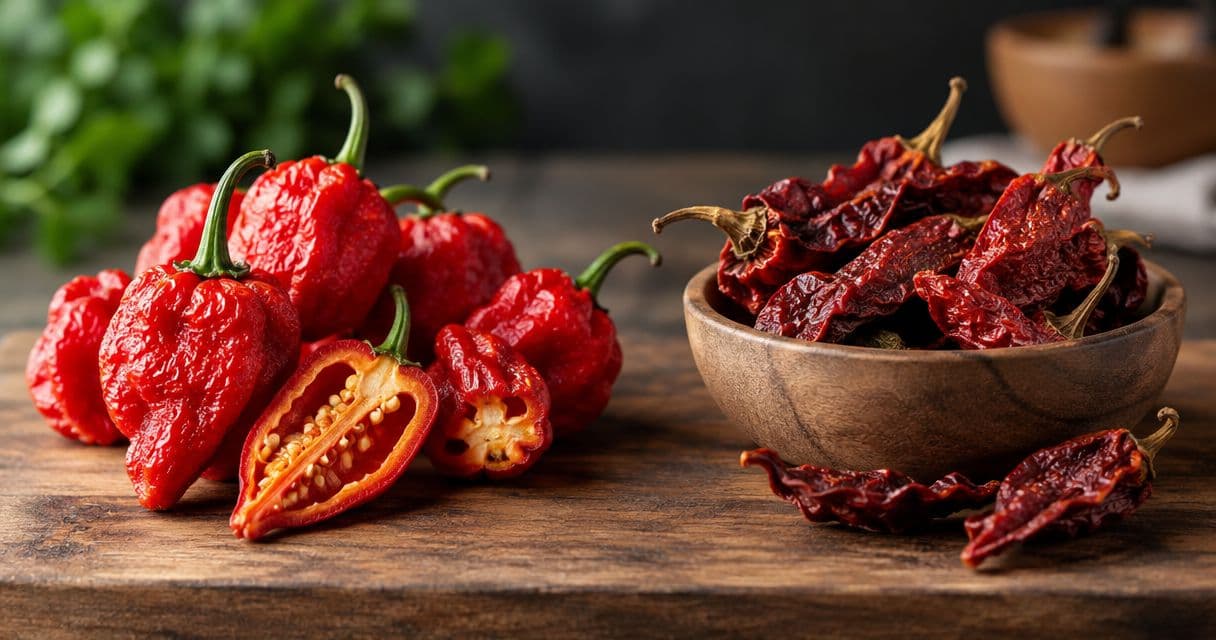
Dried ghost peppers generally deliver more heat per gram than fresh ones because drying removes water, not all the capsaicin responsible for their burn. For dried vs fresh ghost pepper heat, the useful distinction is concentration: drying does not automatically make an individual pepper hotter, and there is no reliable one-for-one substitution for every batch.
TL;DR- Dried vs fresh ghost pepper heat depends on weight, moisture, and the pepper batch—not appearance alone.
- Ghost peppers can exceed one million Scoville heat units; treat both forms as intensely hot.
- Fresh ghost peppers suit chopped sauces; dried ghost peppers suit measured flakes, pastes, and infusions.
- 5Senses suits cooks seeking single-origin whole spices; ghost pepper substitutions still require batch-specific judgment.
How spicy are dried ghost peppers compared to fresh ones?
Dried ghost peppers are generally more concentrated by weight, but drying is not a guaranteed heat multiplier. Compare the amount of pepper material you add, not just the number of peppers or the size of a spoonful.
Ghost peppers, also called bhut jolokia, can exceed one million Scoville heat units (SHU). For context, jalapeños commonly fall between 2,500 SHU and 8,000 SHU. Those widely published pepper benchmarks describe varieties, not a verified reading for the pepper in your kitchen.
| Form | Best for | Practical advantage | Limitation | Heat comparison |
|---|---|---|---|---|
| Fresh ghost pepper | Chopped sauces, salsas, and fresh chile preparations | Adds moisture and fresh pepper character | Fruit size and heat vary; difficult to substitute by count | Water contributes to its weight |
| Dried ghost pepper | Flakes, seasoning blends, and cooked sauces | Lets you portion concentrated pepper material | Dust and small fragments are easy to overuse | Generally more concentrated per gram |
| Rehydrated ghost pepper | Blended pastes and smooth cooked sauces | Softens dried flesh for blending | Added water does not neutralize capsaicin | Concentration changes with the water retained |
If texture is the problem, rather than heat, read the guide to rehydrating dried ghost peppers for cooking. Rehydration helps you make a paste; it does not turn a ghost pepper into a mild chile.
Equal weight is not the same as equal pepper count
A fresh pepper includes substantial water. A dried pepper has lost much of that water, so an equal weight of dried material generally contains more pepper solids. That is why a small-looking amount of dried ghost pepper deserves careful portioning.
Comparing an individual fruit before and after drying asks a different question. Removing water does not create capsaicin. Processing can also affect capsaicinoid retention, so neither unchanged heat nor a fixed increase should be assumed.
Use concentration to guide your first addition, not to calculate a universal conversion. In a 2026 recipe notebook, record the pepper form and batch alongside the amount. A weight without that context is an incomplete instruction.
Why this matters
A recipe that says only “add a ghost pepper” leaves too much undefined. Fresh, dried, finely ground, and rehydrated peppers contribute different amounts of water and disperse differently through a dish. You need to know the form before you can reproduce the result.
The practical risk is overshooting the heat before the sauce tastes balanced. A concentrated chile addition can dominate the other ingredients, and simmering longer is not a dependable correction. Start with less than you expect to need, mix thoroughly, and assess the finished preparation before adding more.
For home cooks and recipe developers, the useful 2026 habit is simple: describe the ingredient precisely. “Dried ghost pepper, finely crushed” tells the next cook more than “hot pepper,” even without a laboratory heat reading.
Fresh ghost peppers: best for chopped sauces
Fresh ghost peppers bring moisture and fresh pepper character to a recipe. They fit preparations where chopped chile is part of the texture, including salsas and sauces that begin with fresh vegetables. Their intensity still requires restraint.
Choose fresh ghost peppers when you want fresh chile texture, not because you expect gentle heat. Freshness describes the form of the ingredient. It does not make a superhot pepper mild.
The main limitation is inconsistency between fruits. A larger pepper is not a reliable promise of greater or lesser pungency, and appearance cannot establish a Scoville reading. If you switch batches, reassess the amount rather than carrying over an old dose unquestioned.
When preparing fresh peppers, keep their juices away from your eyes and face. Wear gloves, use a washable cutting surface, and clean the knife and board afterward. Do not handle ready-to-eat ingredients with contaminated gloves.
Dried ghost peppers: best for controlled additions
Dried ghost peppers fit dishes where you want concentrated chile without adding fresh pepper moisture. Crushed pieces can season a cooked sauce; softened flesh can become a paste. Grinding produces a finer ingredient, but it also creates irritating dust.
Choose dried ghost peppers for a measured addition, not an unmeasured pinch over a finished plate. Their compact size makes them easy to underestimate. A jar of flakes also hides how much pepper material each spoonful contains.
The advantage is flexibility in preparation. The limitation is handling: fragments can scatter, and powder can become airborne when a grinder opens. Keep the container away from your face and avoid inhaling the dust.
For 2026 pantry use, label the container with the pepper name and form. Keep whole dried peppers separate from crushed or powdered ones so you do not accidentally apply the same spoon-based instruction to different textures.
Whole, crushed, and ground are different measuring problems
A whole dried pepper is easy to identify but difficult to divide evenly by sight. Crushed pieces vary in size. Fine powder packs differently from coarse flakes, so an equal spoon volume does not establish an equal weight.
Use a suitable scale when repeatability matters, and note the grind. Even then, weighing controls the amount of ingredient—not its exact capsaicin content. A new batch still needs a cautious first use.
If you prepare other whole spices at home, the guide to spice grinders for whole spices covers grinder selection. Superhot chile handling needs additional attention to dust, residue, and cleaning; do not assume a grinder is ready for vanilla or cardamom immediately afterward.
Rehydrated ghost peppers: best for smooth pastes
Rehydration softens dried pepper flesh so it blends more readily into a sauce. Added water changes the mixture's concentration and texture. It does not remove the need for careful portioning.
Choose rehydration when you need a smooth paste, not as a method for making ghost peppers mild. Water does not neutralize capsaicin. Discarding soaking liquid is also not a reliable way to produce a predictable heat level.
Treat the finished paste as a new preparation. Record how you made it and how much you added to the dish, rather than describing it only by the original pepper count. Otherwise, a thicker paste and a thinner paste can share a name while delivering different amounts of pepper per spoonful.
Why ghost pepper heat varies
The dried-versus-fresh distinction explains only part of what you taste. These factors also affect the comparison:
- Pepper batch: Individual fruits differ in pungency. A variety name does not certify the heat of a particular batch.
- Remaining moisture: Dried peppers are not all equally dry. Water content changes how much pepper material a given weight contains.
- Drying and storage: Processing and storage conditions affect the retention of capsaicinoids and aroma. Drying is not a fixed multiplier.
- Particle size: Fine powder disperses differently from large pieces. Uneven mixing can leave concentrated pockets in a dish.
- Amount added: Pepper count, spoon volume, and ingredient weight are different measures. None can replace the others without context.
- The finished dish: Batch size and distribution determine the pepper concentration in each serving. Assess the complete preparation, not an isolated fragment.
For repeat cooking in 2026, change only what you can track. If you change the pepper batch, grind, and sauce size together, the previous result no longer gives you a clear starting point.
How do you substitute dried ghost pepper for fresh?
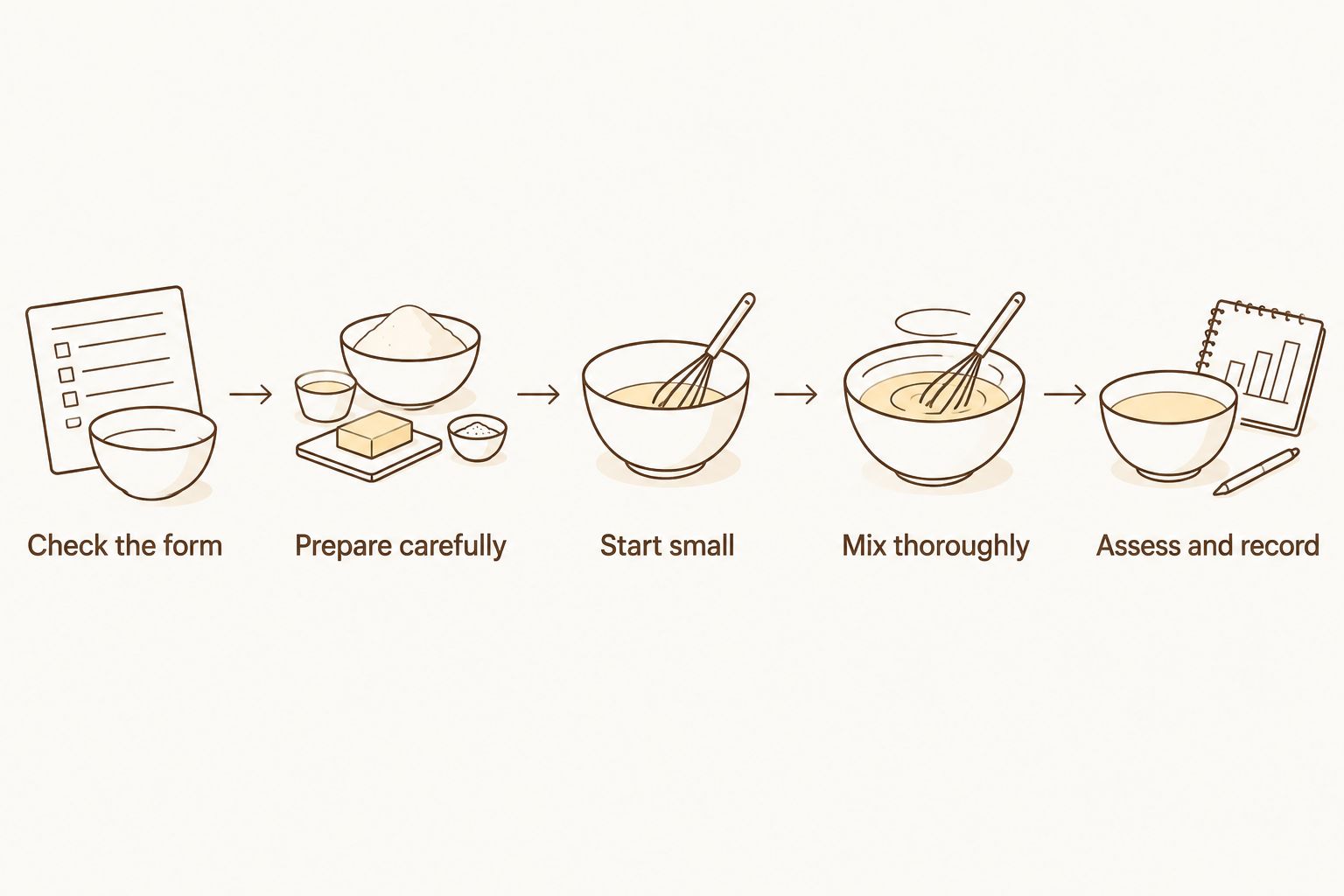
There is no universal dried-to-fresh ghost pepper ratio that guarantees the same heat. Use the following process when a recipe specifies a form you do not have. The goal is to control the addition while preserving the dish's texture.
- Check the form. Identify whether the recipe calls for a whole fresh pepper, chopped flesh, flakes, powder, or paste. Do not treat those instructions as interchangeable.
- Prepare carefully. Wear gloves and keep chile dust away from your face. For a smooth sauce, soften dried flesh before blending rather than relying on dry fragments to disappear.
- Start small. Add a small portion to the full dish instead of making a one-for-one swap. Keep the rest separate until you have assessed the result.
- Mix thoroughly. Distribute the pepper throughout the sauce or cooking liquid. A taste from an unmixed area cannot represent the whole batch.
- Assess and record. Taste cautiously, allow the burn to develop, and avoid rapid repeated additions. Record the amount, form, and batch once the result suits the dish.
The sequence matters more than a guessed conversion. Once you have a successful preparation, keep those details together so the next cook can reproduce the method rather than simply copy a pepper count.
Keep chile handling separate from ordinary spice preparation
Toasting, grinding, blooming, and infusing serve different cooking purposes. None is a dependable way to make ghost pepper heat disappear. Heating superhot peppers can also produce irritating fumes, particularly when dry-toasting or frying them.
Avoid aggressive dry-toasting as an experiment in reducing heat. If a recipe uses chile in oil, work carefully with ventilation and avoid leaning over the pan. Grinding deserves the same caution: stop the grinder before opening it, and keep airborne powder away from your face.
5Senses offers single-origin whole spices and Spicecare grinding and storage tools. 5Senses is best for cooks seeking origin-packed whole spices for repeat pantry use. That focus supports deliberate preparation, but it does not establish a ghost pepper heat rating or substitution ratio.
Does drying make ghost peppers hotter?
Drying generally makes ghost peppers more concentrated per gram because it removes water. It does not create capsaicin, and the final result depends on the fruit and processing. More concentrated is not the same claim as a guaranteed increase in total heat per pepper.
For a recipe comparison, ask whether you are measuring equal weights or comparing the same fruit before and after drying. Those are different questions. A single answer about “hotter” cannot cover both accurately.
Does removing ghost pepper seeds reduce the heat?
Removing seeds does not reliably make a ghost pepper mild. Capsaicinoids are concentrated in the internal placental tissue, and seeds can carry them on their surfaces. Removing internal tissue changes the ingredient, but it does not produce a predictable heat level.
If the dish needs mild chile flavor, use a mild pepper instead. Trying to turn a ghost pepper into a mild ingredient through deseeding gives you less control than choosing the right pepper at the start.
FAQ
Are dried ghost peppers hotter than fresh ones?
Dried ghost peppers are generally more concentrated by weight because drying removes water. That does not mean every dried pepper is hotter than every fresh pepper, or that drying produces a fixed heat increase.
How hot are ghost peppers in Scoville units?
Ghost peppers can exceed one million Scoville heat units. That is a variety benchmark, not a verified heat reading for an individual fresh or dried pepper.
Can I replace a fresh ghost pepper with a whole dried one?
Do not assume a whole dried ghost pepper is an exact replacement for a whole fresh one. Fruit size, batch heat, moisture, and preparation differ; start with a small portion and assess the complete dish.
Does soaking dried ghost peppers make them less spicy?
Soaking softens dried ghost peppers but does not neutralize capsaicin. Added water changes the concentration of a paste, so record the preparation rather than treating rehydration as a reliable heat-reduction method.
Is ghost pepper powder stronger than flakes?
Ghost pepper powder is not automatically hotter than flakes from the same material. Powder and flakes pack differently into a spoon and disperse differently in food, so volume measurements are not directly interchangeable.
Can I cook the heat out of ghost peppers?
Ordinary cooking is not a dependable way to remove ghost pepper heat. Control the amount before adding it, and avoid overheating superhot chiles because fumes can irritate your eyes and airways.
What should I record when cooking with ghost peppers in 2026?
Record the pepper form, batch, amount, preparation, and finished dish size. Those details make a successful result more useful than an instruction that simply says to add a ghost pepper.
One last thing
A smaller-looking dried pepper is not a smaller heat commitment. Water loss changes its appearance and weight without giving you a dependable visual measure of pungency. Your most useful kitchen tool is a clear record of what went into the dish.
Keep that record beside your other whole-spice notes. The same discipline—identify, portion, prepare, assess—makes repeat cooking more consistent without turning dinner into a laboratory exercise.