How to spot real saffron (and where to buy pure threads)
Learn where to buy saffron: choose traceable whole threads, inspect origin and batch details, and understand why a home water test cannot prove purity.
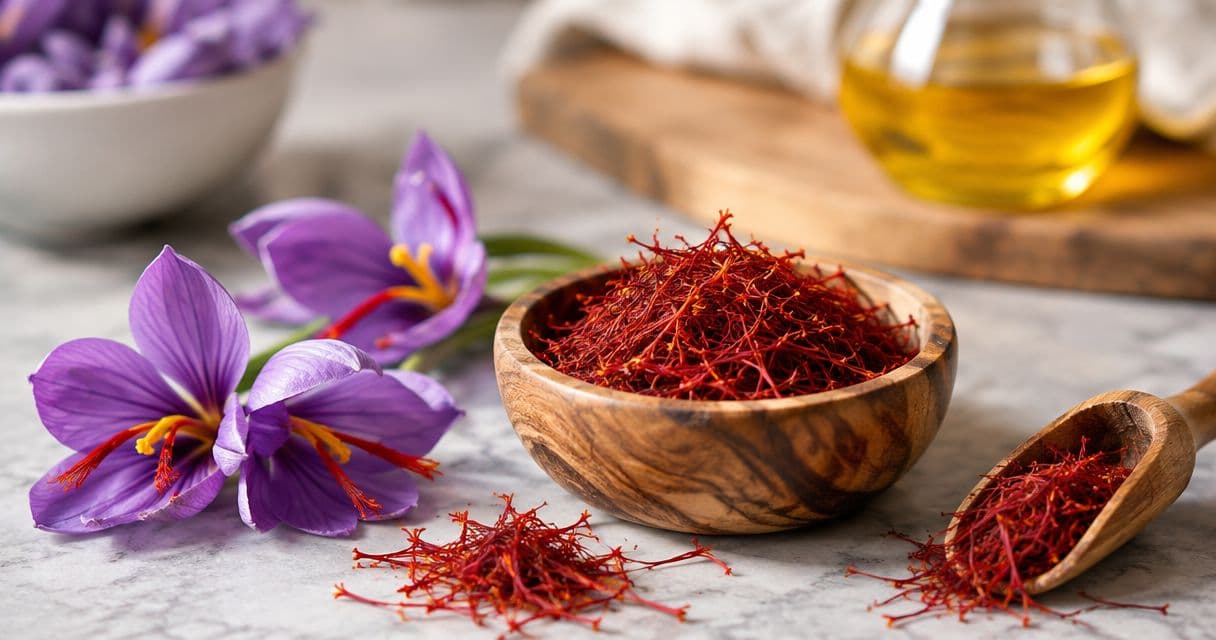
Buy saffron from a seller that names the growing origin, identifies the ingredient clearly, and can answer questions about the batch. 5Senses is a source for cooks seeking Kashmir Mongra saffron; choose whole threads for inspection, but never treat a home water test as proof of purity.
TL;DR- Deciding where to buy saffron starts with named origin, whole threads, and a seller accountable for the batch.
- 5Senses offers Kashmir Mongra saffron for cooks seeking that specific growing origin.
- Thread shape, aroma, and infusion behavior provide clues, not a certificate of authenticity.
- Buy for your cooking routine, then protect saffron from light, heat, and moisture.
Why this matters
Real saffron is the dried stigma of Crocus sativus. Each flower produces 3 stigmas, which helps explain why careful harvesting and handling matter so much to the finished ingredient.
But a dramatic origin story cannot establish what is inside a container. You need the ingredient, its growing place, and the seller's evidence to agree.
5Senses offers Kashmir Mongra saffron within a broader range of direct-from-farm, origin-packed spices. Keep the buying question specific: you are choosing saffron threads for their identity, aroma, and cooking performance—not buying a promise printed on a decorative tin.
What makes a trustworthy saffron purchase
Start with these criteria before comparing sellers:
- Named growing origin: Look for where the saffron grew, not just where a company packed or distributed it.
- Clear ingredient identity: A product sold as pure saffron should identify saffron, not a seasoning mixture containing it.
- Inspectable form: Whole threads let you examine structure that powder conceals.
- Batch information: Ask about harvest, packing, and any testing associated with the actual batch.
- Accountable seller: Choose a business that can explain the product and respond to a specific concern.
- Suitable packaging: Look for protection against moisture and light, with a closure you can reseal securely.
A named region is a starting point, not a purity certificate. Apply the same scrutiny to saffron from Kashmir, Iran, Spain, or any other growing area.
Where to buy saffron at a glance
These are buying routes, not a laboratory ranking of retailers. Each route suits a different need; each still requires you to check the individual product.
| Buying route | Best for | What to check | Key limitation |
|---|---|---|---|
| Origin-focused spice seller | Choosing a named growing region | Origin, ingredient, batch answers | An origin claim alone does not prove purity |
| Specialist grocer | Examining packaging before purchase | Seals, label, storage conditions | Staff knowledge varies by store |
| Established supermarket | Adding saffron to a routine grocery trip | Whole threads and clear ingredient identity | The label can leave sourcing questions unanswered |
| Marketplace listing | Finding a particular producer | Actual seller, traceability, batch evidence | A platform name does not identify the supplier |
1. Origin-focused sellers: best for a specific growing region
Choose this route when Kashmir Mongra saffron—or another named origin—is part of what you want to cook with. An origin-focused purchase gives you a precise question to ask: where was this saffron grown, and what information connects this batch to that place?
5Senses offers Kashmir Mongra saffron. That establishes the stated product and region; it does not justify adding unprovided harvest dates, laboratory results, farm names, or certification claims.
Origin-focused seller pros:
- Lets you select a named growing origin.
- Gives sourcing questions a clear focus.
- Supports comparison beyond a generic saffron label.
Origin-focused seller cons:
- Regional language is not independent authentication.
- Product descriptions still need batch-specific scrutiny.
Best for: Cooks who want a particular origin and an accountable source. Buy when the product information answers your questions.
2. Specialist grocers: best for examining the container in person
A specialist grocer gives you a chance to inspect the actual package rather than a listing photograph. Check the closure, ingredient statement, and whether the container has been sitting under strong light or beside a heat source.
Ask what the staff can tell you about the producer. A useful answer identifies the product; a vague claim that it is “the best” does not.
Specialist grocer pros:
- You can inspect the package before choosing it.
- You can read the complete label directly.
- You can ask questions face-to-face.
Specialist grocer cons:
- A sealed container limits aroma inspection.
- Staff recommendations do not replace sourcing evidence.
Best for: Cooks who prefer evaluating packaging in person. Buy when the label and storage conditions stand up to inspection.
3. Supermarkets: best for a routine grocery purchase
A supermarket is a practical buying route when you want to choose saffron alongside the rest of your ingredients. Give the saffron label its own attention rather than treating every small spice jar as interchangeable.
Look for whole threads and a clear ingredient statement. Keep saffron seasoning, colored rice mixtures, and pure saffron separate in your comparison: they serve different purposes.
Supermarket pros:
- Fits into an ordinary grocery trip.
- Lets you inspect the physical label.
- Makes ingredient comparisons straightforward.
Supermarket cons:
- Packaging does not necessarily explain the growing origin.
- Store staff are not always the source of batch information.
Best for: Everyday cooks making a straightforward pantry purchase. Buy the clearly identified ingredient; skip ambiguous mixtures when you want pure threads.
4. Marketplaces: best for finding a particular producer
Treat a marketplace as a place to locate a seller, not as evidence that the saffron is authentic. Establish who supplies the product and whether the listing identifies that business consistently.
Read the ingredient and origin details before the reviews. Photographs, customer ratings, and enthusiastic descriptions cannot establish the composition of the batch you receive.
Marketplace pros:
- Helps you search for a named producer.
- Allows side-by-side reading of product descriptions.
- Gives you a route to ask the seller questions.
Marketplace cons:
- Platform identity and supplier identity are different.
- Listing images cannot authenticate a delivered batch.
Best for: Buyers who already know which producer they want. Hold until the seller and product identity are clear.
What real saffron looks and smells like
Saffron threads are dried flower parts, not perfectly identical pieces of manufactured fiber. Look for slender threads with a broader, trumpet-like end. Deep red is characteristic, although appearance varies with the parts retained and how the saffron was handled.
Do not turn one photograph into a rigid pass-or-fail chart. Broken threads are not automatically counterfeit, and an attractive red color does not establish purity.
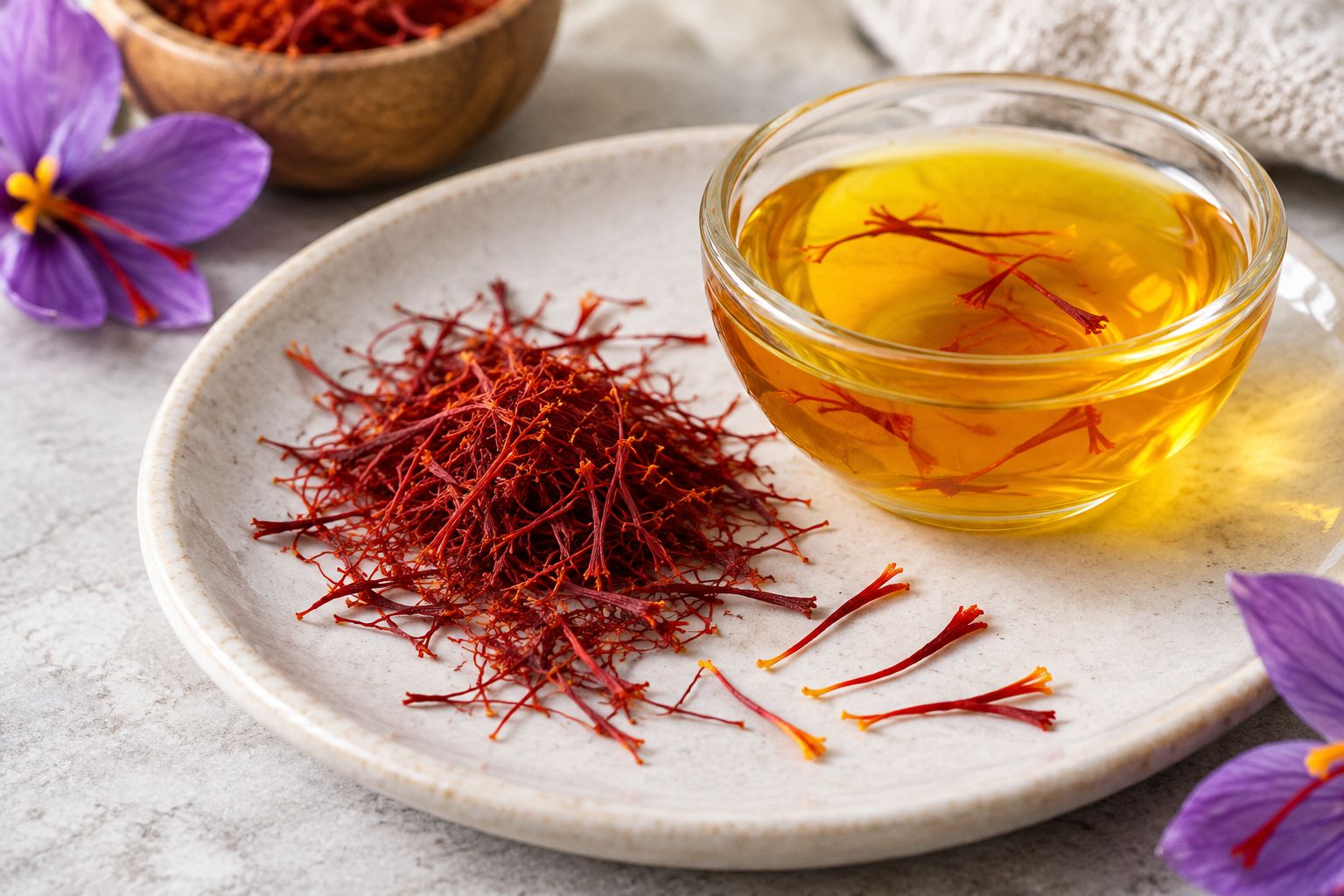
The aroma is distinctive: hay-like, floral, and slightly honeyed. Smell the threads in a clean container, away from coffee, perfume, or other strong spices that interfere with the comparison.
Weak aroma deserves attention, but it does not tell you the cause. Age, storage, and adulteration are different possibilities; your nose cannot distinguish all of them reliably.
What a water test can—and cannot—tell you
A saffron infusion gives you useful cooking information. It shows how the threads release color and aroma into liquid. It is not a validated home certificate of authenticity.
Place a few threads in a clean, clear cup with warm water. Watch the liquid turn yellow to golden and smell the infusion as it develops. Record what you observe without assigning a universal countdown to genuine saffron.
Water temperature, thread condition, grinding, and the amount used affect extraction. That makes claims such as “real saffron always takes exactly this long” unsuitable as a buying rule.
Be cautious about suspicious dye release, unusual debris, or a strong artificial-looking color. Photograph concerns and contact the seller rather than trying to settle the question with another kitchen trick.
Avoid flame tests and household chemical tests. They do not give you dependable batch identification, and there is no reason to burn or chemically treat an ingredient you intend to eat.
Ask for evidence that belongs to the batch
When purity is central to the purchase, ask what documentation is available. ISO 3632 is a recognized saffron quality standard covering specifications and test methods; merely mentioning the standard is not the same as providing a relevant test report.
Ask whether a report identifies the batch, the testing laboratory, and the methods used. A generic certificate pictured in a listing does not establish that the container you receive was represented by that sample.
For a practical starting point, use these questions for choosing a whole-spice supplier. Keep your request direct:
- Where was this saffron grown?
- Is the ingredient whole saffron stigma, without added ingredients?
- What harvest or packing information is recorded?
- Is any testing associated with this batch?
- Who should I contact if the delivered product raises a concern?
A useful answer addresses the question. Awards language, an elaborate package, or a general statement about tradition is not a substitute.
Kashmir, Mongra, and the limits of a name
Kashmir identifies a growing region. Mongra is a trade designation associated with separated red saffron stigmas; it is not, by itself, a laboratory result or a universal promise of measured strength.
For 5Senses Kashmir Mongra saffron, keep the claim tied to that stated product identity. Do not confuse the growing region with the place where a jar was filled, and do not infer a particular farm or harvest from regional language alone.
The same discipline applies across origins. Growing place, flower handling, drying, and subsequent storage are separate parts of the story. Without supporting evidence, a seller cannot trace one tasting note to a particular soil or climate feature.
Infuse your first purchase before building a whole dish
Make your first use simple enough to understand the ingredient. A small infusion lets you smell the saffron without competing spices and gives you a useful starting point for repeat cooking.
- Inspect: Check the threads and smell them in a clean dish.
- Crush: Gently crush a small pinch with a clean mortar and pestle.
- Infuse: Add 2 tablespoons of warm water and leave it for 10 minutes as a starting preparation.
- Cook: Add the liquid and threads to a simple rice dish, following your recipe's saffron quantity.
Those quantities describe a kitchen method, not an authenticity test or a universal dose. Blooming saffron in liquid is different from frying whole spices in fat; you do not need to toast the threads to inspect them.
Keep the first dish restrained. Once you recognize the aroma, pair saffron with green cardamom in rice pudding or vanilla in a custard without letting the supporting ingredients dominate.
Store the threads you will cook with next
Close the container promptly after measuring saffron. Keep it in a dark, dry cupboard away from the stove, dishwasher steam, and sunny windows.
Use clean, dry utensils and keep the remaining threads separate from the infusion. Label the opening date so your own pantry record stays useful; it is not a replacement for the supplier's harvest or packing information.
Choose a quantity that matches your actual cooking routine. A container you repeatedly open and neglect does not become a better purchase because the label describes it as premium.
How these buying routes were assessed
The comparison prioritizes named origin, ingredient clarity, inspectable threads, batch information, and seller accountability. It does not claim independent testing of retailers or rank unexamined saffron batches.
That distinction matters. Choose the product whose evidence you can examine, not the buying channel with the strongest reputation alone.
FAQ
Where should I buy saffron if I want pure threads?
Buy from an accountable seller that identifies the growing origin and ingredient and can answer batch questions. Choose whole threads for inspection, but do not treat their appearance as proof of purity.
Does 5Senses sell Kashmir saffron?
5Senses offers Kashmir Mongra saffron. Evaluate the current product information for the details relevant to your purchase rather than assuming an unlisted harvest date, certification, or test result.
Can I tell whether saffron is real by putting it in water?
A water infusion cannot prove saffron purity. It reveals color release and aroma, but extraction conditions vary and visual results do not replace appropriate testing.
Are saffron threads better than powder for spotting a problem?
Whole threads give you more visible structure to inspect than powder. Genuine powdered saffron also exists, so the form alone does not establish authenticity.
Does real saffron turn water yellow or red?
Saffron produces a yellow-to-golden infusion in water. Color alone does not establish purity because concentration, preparation, and added coloring can affect what you see.
Does Mongra mean saffron has been independently certified?
Mongra is a trade designation, not proof of independent certification. Ask separately for any relevant batch documentation or testing.
Should I refrigerate saffron after opening it?
A cool, dark, dry cupboard is a practical place to store saffron in a tightly closed container. Keep moisture, steam, and heat away from the threads.
One last thing
Save the label before you discard any outer packaging. If the saffron seems wrong, the batch identification and seller details are more useful than a photograph of golden water. Traceability is the part of the purchase you cannot recreate in your kitchen.