Kanyakumari cloves: the southern hills behind Symphonic Aroma
Discover Kanyakumari cloves and their southern Indian growing heritage. Explore 5Senses Symphonic Aroma, flower-bud harvesting and practical whole-spice cooking.
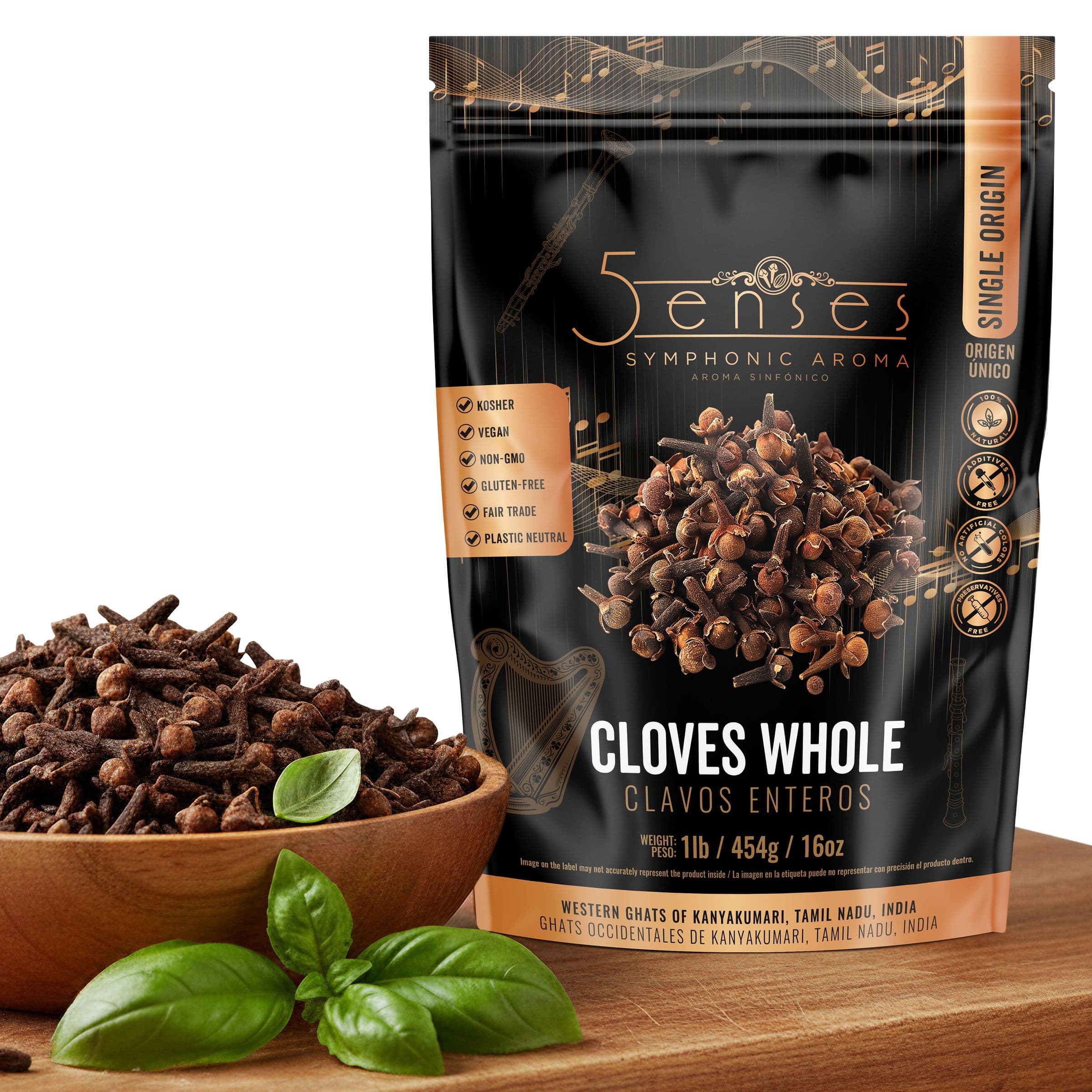
Kanyakumari cloves connect a powerful whole spice with the southern hills of Tamil Nadu. 5Senses Cloves Whole, named Symphonic Aroma, come from this Western Ghats growing region and bring a bold, woodsy sweetness to everyday cooking.
TL;DR- 5Senses Symphonic Aroma identifies Kanyakumari district, Tamil Nadu, as its clove origin.
- Cloves are dried unopened flower buds, not seeds or pieces of bark.
- Kanniyakumari Clove has recognized geographic significance in India’s geographical-indication register.
- Infuse whole cloves and remove them, or grind small amounts for even seasoning.
A small flower bud with a strong regional identity
The shape of a whole clove is easy to recognize: a narrow stem topped by a compact rounded head. Its size is modest. Its aroma is not.
That familiar pantry shape began as a flower bud on a tree. The spice is harvested before the flower opens, then dried. Understanding that transformation makes cloves easier to appreciate as an agricultural ingredient rather than a brown fragment in a jar.
Kanyakumari gives Symphonic Aroma a specific growing home. The district lies at India’s southern end, in Tamil Nadu, where the Western Ghats form part of the landscape. The 5Senses original pouch names the Western Ghats of Kanyakumari, Tamil Nadu, India.
The region’s clove identity is recognized beyond the brand. India’s official geographical-indication register includes Kanniyakumari Clove as an agricultural product of Tamil Nadu. That recognition establishes a meaningful regional association; it is not, by itself, a statement that an individual 5Senses pack carries geographical-indication certification.
Why a growing region deserves attention
A spice’s reputation is built through a combination of place and people. Suitable conditions allow the crop to grow. Growers determine when to pick it, how to handle it and when it is ready for drying and packing.
With cloves, harvest timing is visible in the ingredient’s identity. The buds must become developed enough for the intended spice, but the flower is still unopened. The commercial product depends on that moment between growth and flowering.
The Spices Board describes clove clusters being plucked by hand when the buds are fully developed with a pronounced pink flush. It then describes drying over several days. This general cultivation account helps explain the knowledge behind a spice that looks simple when it reaches your pantry.
The story is richer than a claim about strength alone. It includes a living tree, a particular stage of development and careful post-harvest treatment. Kanyakumari’s named association gives that story a place you can remember.
Cloves are flowers, not miniature peppercorns
The Spices Board identifies the commercial clove as the dried, unopened flower bud of an evergreen tree. It describes trees reaching about 10–12 meters and beginning to flower in about seven years. These are crop-level facts, not the recorded age or height of the trees supplying Symphonic Aroma.
That long growth cycle adds context to the small bud. A pouch of cloves represents a harvest from an established perennial crop, not a seed planted for a single short-season picking. The tree and its management matter well before the bud is ready.
The spice’s shape also suggests how to use it. A whole clove is substantial enough to remove after infusing a dish. A ground clove spreads its character through the food and stays there.
This is why whole and ground cloves are not simply competing convenience formats. They offer different control. Choose the form according to the texture and flavor distribution you want at the table.
From Kanyakumari to Symphonic Aroma
5Senses describes Symphonic Aroma as single-origin, farmer-sourced and packed at origin. Its processing description is natural drying. Its packaging is a resealable airtight pouch.
Those details keep the story close to the actual product. The spice comes with a named district and a whole form you can recognize. You can connect the pouch to a growing landscape and then choose how to prepare it.
The product page’s tasting notes describe bold, woodsy, sweet and complex character, with camphor and pepper undertones. These are aromatic descriptions, not a suggestion to use cloves as a treatment or health product. In the kitchen, the point is flavor.
The broader 5Senses collection includes other ingredients from southern India, including Malabar green cardamom and Kerala nutmeg and mace. Each has its own identity. A shared broad landscape does not make them taste alike; it makes the regional collection more interesting to learn through cooking.
What to notice when you smell a clove
Smell whole cloves before adding them to a blend. Notice how quickly their aroma becomes recognizable. The woodsy warmth has a different presence from pepper’s bite or cardamom’s brighter fragrance.
Crushing a small sample makes that character easier to detect. Use dry equipment, and prepare only what you need for the immediate dish. You are opening the spice, not trying to turn every whole ingredient into a large jar of powder.
In sweet food, clove can give a fruit filling or spiced batter a deeper aromatic note. In savory cooking, it can sit behind rice, sauces or a spice blend. The same bud moves between those roles through quantity, preparation and its companions.
A stronger aroma is not an instruction to add more. When cloves dominate, you lose the flavors they were meant to support. Restraint is part of understanding this particular spice.
Whole and ground cloves have different jobs
| Form | Best for | Practical advantage | Main limitation |
|---|---|---|---|
| Whole cloves | Strained drinks, poaching liquids and removable spice infusions | Easy to count and retrieve when kept in a spice bag | An unnoticed whole bud interrupts the finished texture |
| Lightly crushed cloves | Recipes that will be strained or ground further | Opens the spice without immediately making a fine powder | Fragments are harder to retrieve individually |
| Freshly ground cloves | Batters, fillings and smooth spice mixtures | Spreads the flavor through the food | Cannot be removed if the seasoning becomes too strong |
Count and track whole cloves when that helps with removal, but measure according to your recipe when the amount needs precision. Buds vary in size. A whole-piece count is not a universal conversion into ground spice.
Four ways to put the origin story to work
Infuse in a familiar drink or poaching liquid
Choose a recipe you already trust that calls for cloves. Add the whole buds at the specified heating stage and keep the other spices restrained. The aim is to identify clove’s contribution, not compete with every aromatic ingredient in the cupboard.
A spice bag or strainer keeps the finish smooth. Remove the buds when the recipe calls for it. Do not leave them in simply because the whole-spice format looks attractive in the serving vessel.
For a first tasting, smell the liquid before and after infusion. Notice the change in warmth and fragrance. That is a more useful lesson than comparing dry buds only.
Bloom gently in savory cooking
When a recipe begins with whole spices in warm fat, cloves can join that step. Keep the heat controlled and watch for fragrance. Whole buds should not be left to blacken while you prepare the next ingredients.
Add the next component at the recipe’s specified stage. A wet ingredient often changes the pan’s behavior quickly, so have it ready. Working deliberately helps you keep a strong spice from becoming a scorched one.
Blooming is a method, not a requirement for every dish. A poaching liquid needs infusion; a batter may need ground spice. Match the action to the food.
Grind for a smooth mixture
For baking or a fine spice blend, grind dry cloves with equipment designed for spices. A mortar can start the crushing, while the final tool and texture depend on your recipe.
Use the recipe’s measured quantity. Do not assume that a handful of whole buds will become the amount of powder you need. Whole-to-ground volume changes with size and grind.
Check the texture before mixing it into smooth food. Coarse pieces can be distracting in a custard-style filling or batter. A fragrant spice still needs a suitable physical form.
Pair without losing the main ingredient
Cloves work alongside other warming spices, but a blend should still leave room for the food. In a fruit dish, taste the fruit as well as the spice. In rice, the grain should not become a vehicle for clove alone.
Use a trusted blend as your starting point. Learn its balance before increasing the clove proportion. The most assertive ingredient is often the one that needs the smallest adjustment.
If you are exploring the wider collection, Malabar green cardamom’s origin story offers a useful contrast. Its sweet, floral notes occupy a different aromatic space from Symphonic Aroma’s woodsy depth.
A simple comparison that builds spice confidence
Choose a mild base in which your recipe already uses cloves. Prepare a portion without the spice and another with the recipe’s normal amount. Keep the remaining ingredients and cooking approach consistent.
Smell both before tasting. Notice whether the clove adds depth, takes the lead or obscures something you liked in the plain base. The answer depends on the dish, not just the spice.
Make a note about the preparation: whole infusion, ground mixture or brief blooming. That note is more useful for the next meal than a general statement that you prefer strong cloves. It tells you what actually worked.
This is a home learning exercise, not a claim about laboratory-tested potency. Your goal is to use the real ingredient well. Provenance becomes valuable when it helps you understand what goes into the food.
Keep the buds dry and the reserve protected
Store whole cloves sealed, cool and dry, away from direct sunlight and stove heat. The original resealable pouch is useful only if you close it properly after taking out the spice.
Remove a working quantity before heating a pot. Steam from cooking should not enter your reserve pack. Use clean, dry tools, and keep infused wet buds separate from the dry supply.
Check aroma by crushing a sample before use. A clear scent is a practical indication of what the spice will contribute. Do not judge flavor solely by how tidy the buds look.
Discard cloves with mold or contamination. Faded aroma and spoilage are different problems. Adding extra spice does not correct the second one.
A named origin makes a familiar spice more understandable
Kanyakumari cloves belong to a recognized regional growing tradition. The district name gives Symphonic Aroma a source you can connect to its flower-bud identity, natural drying and whole-spice preparation.
5Senses Symphonic Aroma suits cooks who want Kanyakumari cloves with the choice to infuse, bloom or grind fresh. Whole form brings flexibility but also asks you to manage texture and removal. That tradeoff becomes simple once you understand the bud.
Knowing the growing region, recognizing the flower bud and choosing the right preparation turns a familiar spice into a more useful ingredient. Infuse it for a clear, smooth finish. Grind it when the flavor belongs throughout the food.
FAQ
Where do 5Senses Symphonic Aroma cloves come from?
5Senses identifies Kanyakumari district in Tamil Nadu, India, as the origin of Symphonic Aroma. Its pouch names the Western Ghats of Kanyakumari.
Are cloves dried flowers?
Cloves are dried unopened flower buds. They are harvested before the flowers open and then dried for culinary use.
Is Kanniyakumari Clove a recognized geographic product?
Yes. Kanniyakumari Clove appears in India’s official geographical-indication register as an agricultural product of Tamil Nadu. This regional recognition does not itself certify every branded pack from the district.
Should I remove whole cloves before serving?
Remove whole cloves when the dish should have a smooth texture or no whole spices. A spice bag makes infusion and removal easier.
Can I grind 5Senses whole cloves for baking?
Yes. Grind dry cloves with a suitable tool and follow the recipe’s measured amount. Check the final texture so coarse fragments do not interrupt the food.
How do I keep whole cloves aromatic?
Keep cloves dry, sealed and away from heat and sunlight. Crush and smell a sample before cooking, and discard any spice showing mold or contamination.
One last thing
A clove is a flower bud held at a particular moment. The next time you add one to a pot, notice the shape before the aroma. Its growing story is still visible.
Related guides
Sources
Clove botany and general harvest background: Spices Board India, Clove spice catalogue. Regional recognition: Intellectual Property India, official Registration Details of Geographical Indications. Product-specific origin, processing, packaging and sensory notes: 5Senses Symphonic Aroma product page and original packaging. Consulted October 2026.