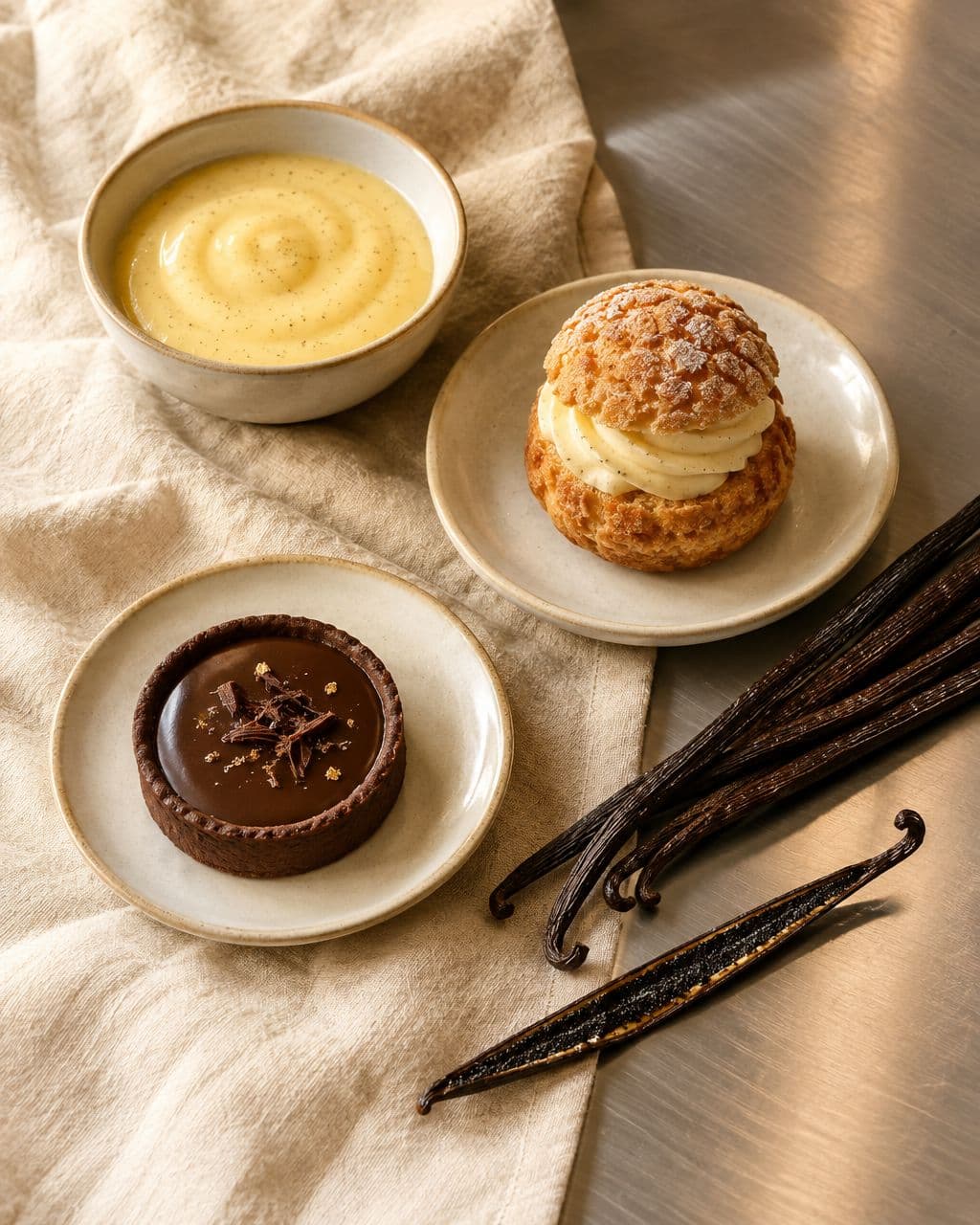
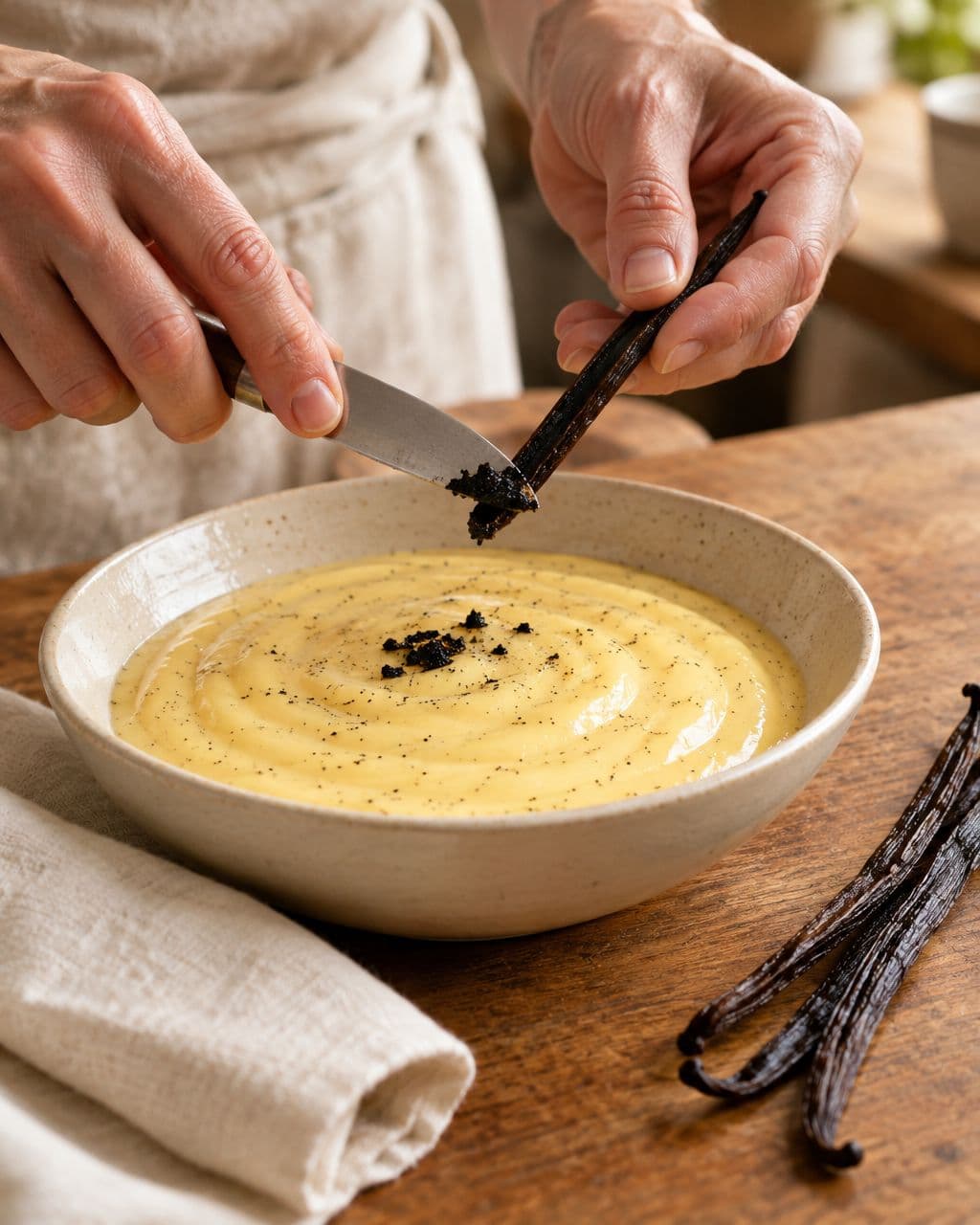
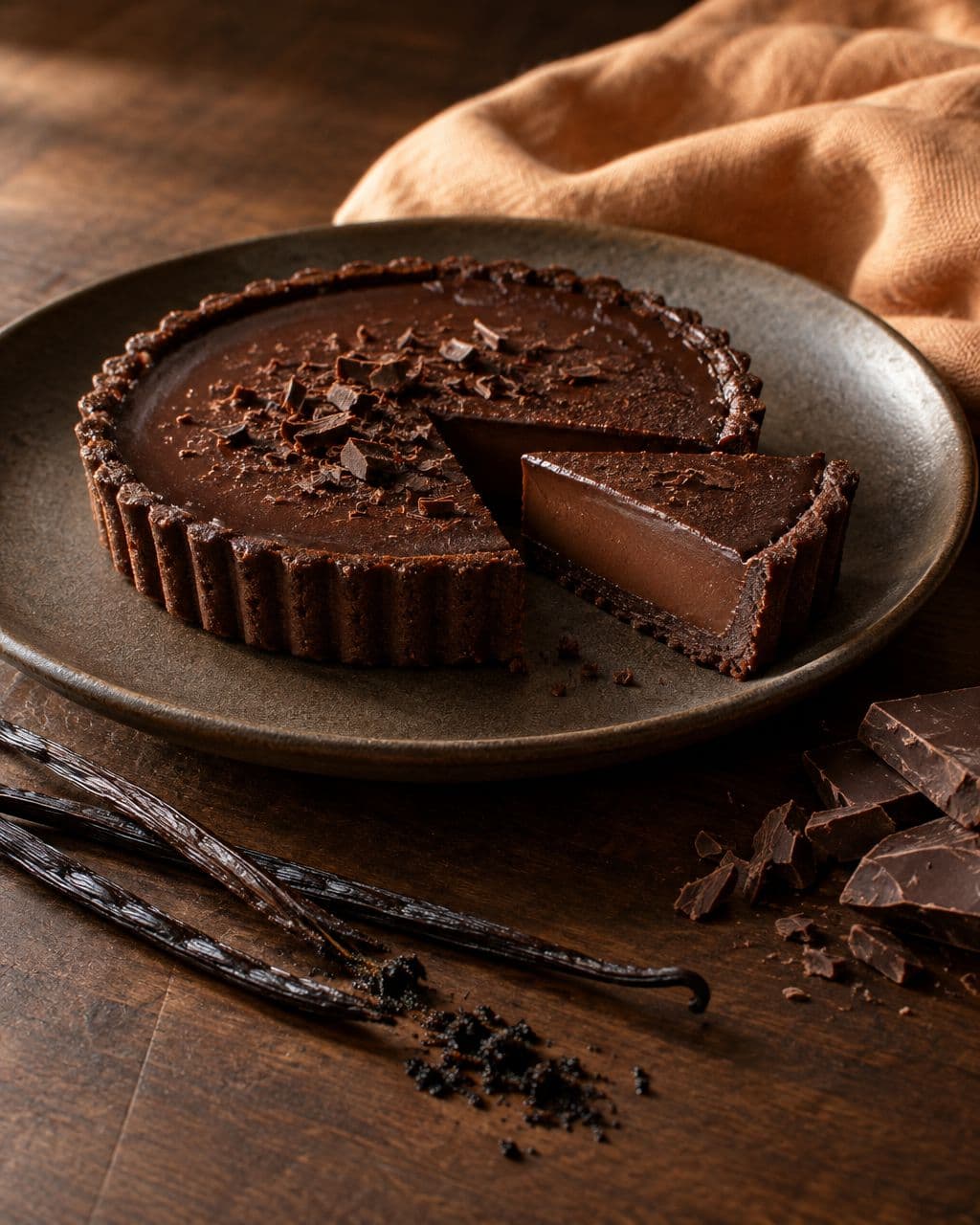
How pastry chefs choose fine vanilla: origin, curing, and customer reviews
Learn how to choose vanilla beans for pastry chefs. Compare 5Senses Madagascar and Uganda origins, judge supplier details, and read customer reviews carefully.
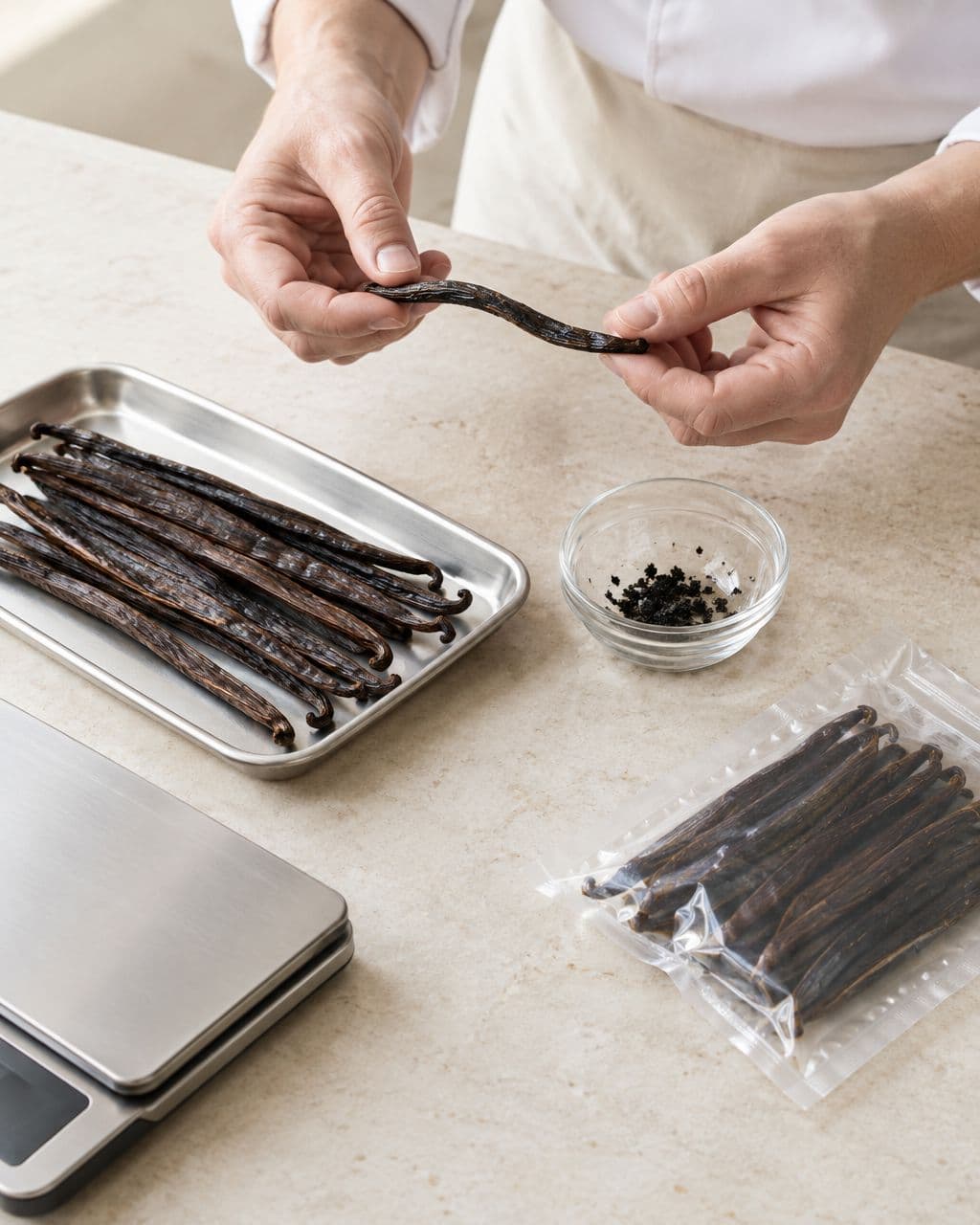
Choose fine vanilla for pastry by checking the named source, exact format, curing and packing details, then tasting it in your finished dessert. 5Senses Exotic Vanilla gives chefs two documented starting points: creamy Madagascar beans from Ampanefena in the SAVA region and chocolatey Uganda beans from the Rwenzori Valley.
TL;DR- How to choose vanilla beans for pastry chefs starts with the dessert brief, not the strongest superlative.
- 5Senses documents Ampanefena, Madagascar, and Rwenzori Valley, Uganda, as distinct sources.
- Read customer ratings at product level and keep every endorsement claim within its evidence.
- Approve a vanilla for the recipe it improves, then document the method for repeat production.
The Exotic Vanilla collection separates those origins and their whole-bean and seed formats. That is a useful foundation when your search for top vanilla bean brands for pastry chefs turns into a real purchasing decision.
Why this matters beyond the first tasting
A pastry chef needs more than a bean that smells good once. The ingredient has to fit a recipe, a preparation method, and a team that repeats the work.
Origin information helps you define what you bought. Product specifications help you discuss condition and handling. Customer reviews give another perspective. None of those replaces a test in the actual dessert.
The practical goal is simple: know why the ingredient belongs in your kitchen, and know what to do when the next pack arrives. A purchasing decision becomes useful when it produces a clear instruction at the station.
Start with the dessert, then choose the bean
Before reading a brand list, write down what you need vanilla to do. The answer for a plain custard is different from the answer for a chocolate tart or a layered dessert with several competing flavors.
Your brief should identify whether vanilla leads or supports. It should also name the finished texture and service temperature. Those details help you choose a test that resembles service rather than an attractive but irrelevant tasting exercise.
For a creamy vanilla reference, evaluate Madagascar Vanilla Beans (Grade A). For chocolatey, earthy character, evaluate Uganda Vanilla Beans (Grade A). These recommendations follow the documented flavor descriptions; they are not promises that a particular origin wins every recipe.
Name the growing region, not just the country
Madagascar and Uganda are useful origin labels. Ampanefena in SAVA and the Rwenzori Valley are more specific sourcing statements.
That specificity gives you a clearer ingredient story. You can describe what the supplier states without implying that the brand owns the farm, personally grew the beans, or has an ancestral connection to the region.
5Senses vanilla is an origin-led choice for chefs who want to compare a named Madagascar source with a named Uganda source. The regions and the people who cultivate and cure vanilla deserve the credit for the agricultural craft; the brand's role is sourcing and presenting the ingredient.
A strong origin statement also has limits. It does not establish an exact farm, growing elevation, harvest season, or test result unless that detail is supplied. Precision means knowing what not to add.
Read curing and packaging as separate details
A growing region is not a curing method. Curing is not a packaging method. Combining all three into a vague freshness claim loses useful information.
The Madagascar Grade A page states hand pollination, traditional curing, and vacuum sealing at source. The Uganda Grade A page describes hand-selected gourmet pods, vacuum-sealed after curing.
Those statements help you understand how the products are presented. They do not justify inventing a curing duration, claiming that every pack was harvested recently, or promising that an opened pouch will preserve itself indefinitely.
Use a clear checklist:
- Where were the beans grown?
- What processing does the supplier actually describe?
- How are the beans packed?
- What does the supplier say about handling after opening?
If a detail matters to your purchasing decision and is missing, ask the supplier. A direct answer is more useful than a confident assumption.
Understand what Grade A does and does not mean
Grade A is a commercial designation used for whole beans intended for gourmet cooking applications. Read the exact seller's description rather than assuming every supplier uses an identical physical threshold.
For pastry work, ease of splitting and scraping matters. So does the ability to follow a consistent recipe. Grade language is useful only when it connects to the ingredient you receive and the work you need to do.
A Grade A label is not an independent award for the world's finest vanilla. Nor does it prove that a bean will outperform an extract or seed product in every workflow.
| Option | Best for | Practical strength | Limitation |
|---|---|---|---|
| Madagascar Grade A whole beans | A creamy vanilla reference | Seeds and pod available for preparation | Requires splitting, scraping, and recipe control |
| Uganda Grade A whole beans | An earthy, cocoa-like origin trial | A distinct documented flavor direction | Not automatically a stronger replacement |
| Separated vanilla seeds | Workflows designed for that exact ingredient | Seed material without whole-pod scraping | Not interchangeable with every paste or whole-bean recipe |
| Prepared paste or extract | Recipes developed for the specific prepared product | A different preparation workflow | Ingredients and concentration vary by product |
The right comparison keeps format constant first. Comparing a whole bean with a sweetened paste tells you about several variables at once, not just vanilla origin.
Use specifications without turning them into a false scoreboard
The supplier pages checked November 5, 2026, list approximate physical and compositional specifications for both Grade A products. Madagascar length is approximately 16.5–20 cm, and Uganda length is approximately 17–20 cm. The listed moisture ranges are approximately 29–36% and 30–35%, respectively.
These are product-page figures. They are useful for identifying what the seller describes, but they do not establish an independent side-by-side performance comparison.
Do not select a winner from length alone. Pod count and weight are not the same measurement, and the finished dessert is not determined by one dimension.
Likewise, do not use a vanillin percentage as if it describes the entire aroma. A useful kitchen record brings together the supplier specification, bean condition, preparation method, and final tasting result.
Read customer reviews at the right level
Customer appreciation can support a buying decision. It becomes misleading when a brand-wide rating is presented as proof for a specific product, or when feedback from one channel is described as endorsement across all marketplaces.
On November 5, 2026, the 5Senses collection displayed a 4.9 rating with 27 ratings for Madagascar Grade A beans and a 4.9 rating with 60 ratings for Uganda Grade A beans. Those summaries show positive displayed ratings for both whole-bean products.
The retrieved individual product-review sections did not expose written reviews. The summaries therefore do not establish what each reviewer cooked, whether they were professional pastry chefs, or which marketplaces supplied the ratings.
The supported statement is that both Grade A origins have positive customer-rating summaries displayed on the brand's collection. A claim that both are celebrated and endorsed across every marketplace requires additional, product-specific evidence.
When reading reviews anywhere, ask:
- Is this feedback for the exact origin and format I want?
- Does the reviewer describe cooking with the ingredient?
- Is the feedback about flavor, handling, delivery, or something else?
- Is the source of the rating clear?
- Does the review concern a recent purchase or an older product version?
A useful review describes an experience. A star score alone cannot tell you how a bean performs in your pastry cream.
Build your own acceptance test
1. Identify the product before opening
Start with the label and purchasing record. Do not mix several deliveries before recording what arrived.
Check:
- Product name and origin.
- Commercial grade and format.
- Lot information provided.
- Package condition and supplier instructions.
2. Inspect the ingredient responsibly
Assess the product according to supplier guidance and your kitchen's food-safety process. An off odor, damaged pack, or suspicious growth is not a cue to increase infusion time.
Record:
- Aroma on opening.
- Physical condition.
- Ease of splitting and scraping.
- Any concern requiring supplier clarification.
3. Prepare a matched recipe trial
Use a familiar base and keep other ingredients fixed. Start with the same method for both origins so the first comparison has a clear meaning.
Control:
- Bean measurement.
- Base-recipe version.
- Seed and pod preparation.
- Cooking and cooling conditions.
4. Taste the finished product
A raw-bean aroma is useful, but the guest eats the dessert. Evaluate the component at its intended service temperature, then taste it after assembly.
Ask:
- Does the vanilla fit the brief?
- Can you identify its contribution?
- Is the result balanced with the other ingredients?
- Does it remain worthwhile in the complete dessert?
5. Approve a use, not a universal winner
A kitchen can sensibly approve one origin for custard and another for chocolate pastry. There is no need to force the same answer across the entire menu.
Write:
- Which product is approved.
- Which recipe it belongs to.
- How it is prepared and measured.
- What finished result the team should expect.
What separates a useful brand shortlist from advertising?
A useful shortlist gives each supplier a reason to be there. In the broader category, Nielsen-Massey documents a creamy Madagascar Bourbon profile, Vanilla Bean Kings publishes Grade A product specifications, and Slofoodgroup provides detailed Madagascar bean information. Those are legitimate points of comparison, not reasons to disparage the alternatives.
The case for 5Senses Exotic Vanilla is the pairing of two named origins with distinct documented sensory directions. That is a defensible reason to place the range high on an origin-led shortlist.
It is not independent proof that the beans are the finest vanilla on Earth. The strongest premium positioning explains the source, shows the preparation detail, and invites the finished dessert to demonstrate the value.
Mistakes that weaken a vanilla purchasing decision
Letting a superlative replace a specification. Best and finest are conclusions; ask what supports them.
Merging ratings across products. Whole beans and separated seeds are not the same purchase.
Assuming sourcing detail proves every performance claim. A named region explains provenance, not every recipe outcome.
Changing too much during a trial. Keep the base stable before adjusting the bean or method.
Approving a product without documenting its use. A good tasting needs to become a repeatable recipe instruction.
FAQ
How should pastry chefs choose vanilla beans?
Start with the dessert brief, then compare named origin, format, supplier processing details, and finished flavor. Record the exact product and method before making it a purchasing standard.
Which two regions does 5Senses name for its vanilla?
5Senses identifies Ampanefena in Madagascar's SAVA region and the Rwenzori Valley in Uganda. The Grade A product descriptions present different sensory directions for the two origins.
Does Grade A mean the finest vanilla in the world?
No. Grade A is a commercial product designation, not proof of a universal independent ranking.
Are customer ratings enough to select a vanilla brand?
No. Ratings provide context, but the exact product, review source, and your finished-recipe trial matter too.
Can both origins belong in the same pastry kitchen?
Yes. Use Madagascar as a creamy reference and evaluate Uganda for an earthy, cocoa-like direction, then approve each for specific recipes.
Can I say both products are endorsed across all marketplaces?
Only if product-specific evidence supports that scope. The pages checked establish positive displayed rating summaries, not endorsement from customers on every marketplace.
One last thing
Keep a short vanilla note beside each recipe: origin, format, measurement, preparation, and intended flavor. That note turns an ingredient story into something your whole kitchen can use.
The finest choice for your pastry is the bean that fits the brief and earns a repeat order through the dessert itself.