Uganda vanilla for pastry chefs: Rwenzori depth for chocolate desserts
Discover Uganda vanilla for pastry chefs. Explore 5Senses Rwenzori Valley Grade A beans, cocoa-like flavor notes, and practical trials for chocolate desserts.
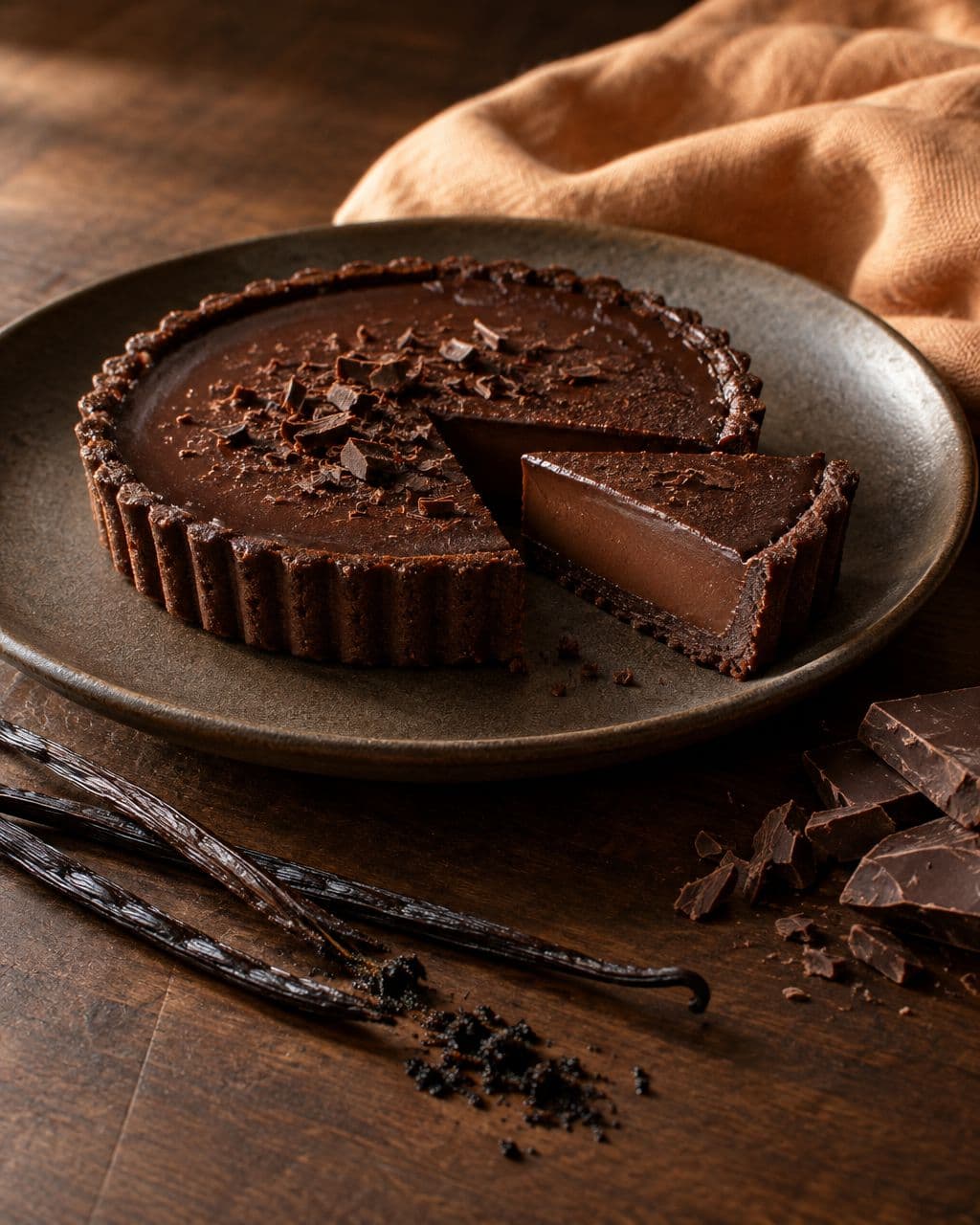
5Senses Uganda Vanilla Beans (Grade A) are a strong choice to explore when a pastry chef wants chocolatey, earthy vanilla rather than a purely creamy reference. The named source is the Rwenzori Valley in Uganda, and the documented cocoa-like undertones give you a clear starting point for chocolate-led dessert development.
TL;DR- Uganda vanilla for pastry chefs offers a different development direction from a classic creamy Madagascar profile.
- 5Senses identifies the Rwenzori Valley as the source of its Uganda Grade A beans.
- The listed notes are chocolatey, earthy, floral, and cocoa-like.
- Compare matched dessert samples before changing dosage or claiming one origin is stronger.
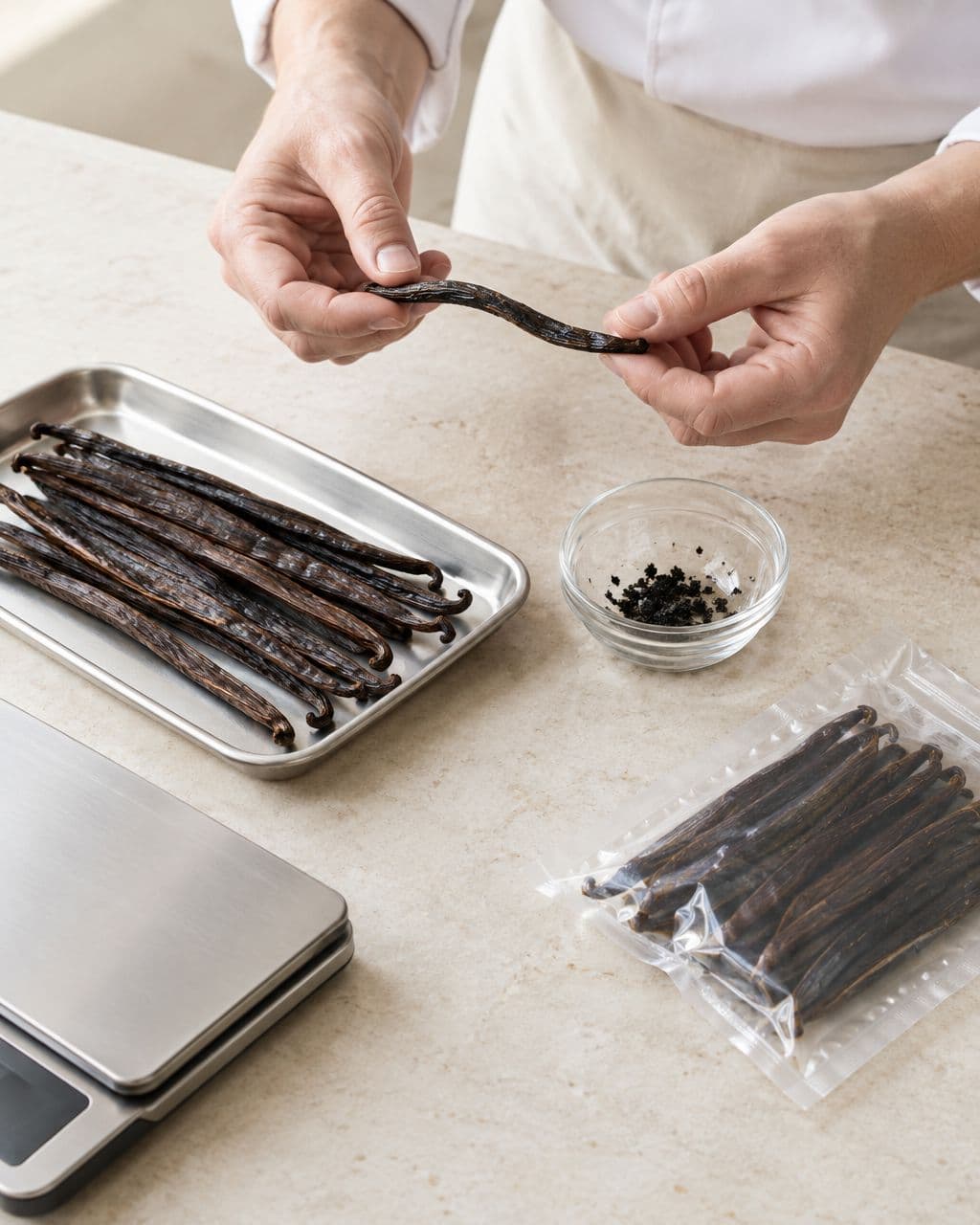
The Uganda Vanilla Beans (Grade A) product page describes hand-selected gourmet pods, vacuum-sealed after curing. That combination of named source, stated preparation, and sensory detail is more useful to a pastry chef than an unsupported promise that every dessert will improve.
Why a second vanilla origin earns a kitchen trial
Vanilla is often treated as a background ingredient. In a chocolate dessert, it can be easy to use the same bottle or pod automatically and never ask what role it plays.
An origin-led trial changes the question. Instead of asking whether you can smell vanilla in the bag, ask what happens when the ingredient meets your chosen chocolate, dairy, sugar, and service temperature.
Uganda's documented profile gives you a reason to run that trial. Chocolatey and earthy notes suggest a different starting direction from the creamy, buttery Madagascar profile. They do not prove that Uganda vanilla contains chocolate or that it will taste stronger in every recipe.
The useful distinction is flavor direction, not a contest between countries. You are building a dessert, not awarding a trophy.
Rwenzori Valley: name the source accurately
5Senses identifies the Rwenzori Valley in Uganda as the product source. The collection places the beans within the Rwenzori valleys of western Uganda.
That is the provenance you can use when discussing the ingredient. Keep it distinct from the vanilla plant's broader botanical history and from general descriptions of a country's agriculture. A product grown in Uganda does not become native to Uganda simply because that is where the current beans were cultivated.
Avoid adding a fictional estate, farmer name, exact elevation, or harvest story. None is needed to make the sourcing compelling. A named region and a useful cooking profile already give the chef something concrete to work with.
Curing is a separate part of the story. The product page states that the beans are vacuum-sealed after curing; it does not provide a detailed, lot-specific curing schedule. Describe the verified process without inventing duration or technique.
Read the Uganda bean specification as a purchasing tool
The page checked November 5, 2026, lists approximately 17–20 cm length, 30–35% moisture, and about 2.4% vanillin content. These are supplier-published product specifications, not independent laboratory findings from a comparative pastry test.
| Detail | What the page states | How to use it |
|---|---|---|
| Source | Rwenzori Valley, Uganda | Identify the origin in your purchasing record |
| Format | Grade A gourmet whole pods | Plan splitting, scraping, and any infusion |
| Profile | Chocolatey, earthy, floral | Select a sensible dessert for the first trial |
| Packing | Vacuum-sealed after curing | Check the pack and follow storage guidance |
| Physical specification | Length and moisture ranges | Compare the delivered product with supplier information |
Do not reduce vanilla quality to the vanillin figure. A listed component is not the whole flavor experience, and specifications from different suppliers are not automatically comparable tests.
A sound purchasing record also includes what your kitchen observes: condition on opening, ease of preparation, the recipe used, and the finished result. That connects supplier information to an actual menu decision.
Best for: chocolate-led pastry development
The listed cocoa-like profile makes a chocolate dessert a useful first test. Start with a recipe whose chocolate flavor you already know well. That gives you a reference instead of asking vanilla to compensate for an unfamiliar base.
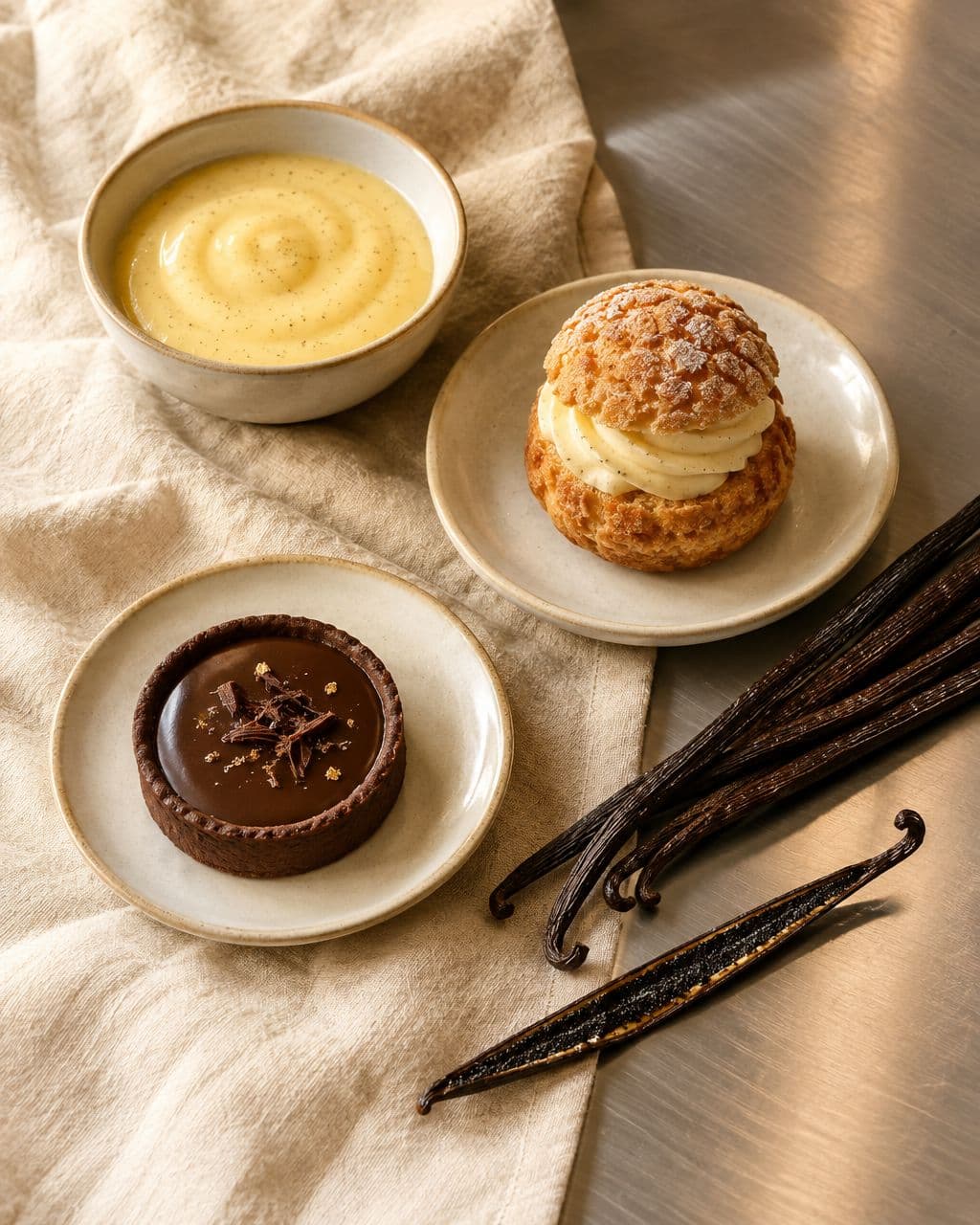
A chocolate custard, tart filling, or dairy component provides a practical setting for comparison. Keep the recipe fixed while you evaluate the bean. If you change the chocolate at the same time, you will not know which ingredient produced the difference.
Strengths of this approach:
- The dessert matches the supplier's documented sensory direction.
- A familiar base makes differences easier to describe.
- Whole pods allow the kitchen to control preparation.
Tradeoffs:
- Strong chocolate can make subtle vanilla differences hard to identify.
- A pleasing aroma during preparation does not guarantee a noticeable difference after chilling.
- Whole-bean work adds labor compared with a ready-measured ingredient.
The aim is balance. A vanilla that makes the chocolate taste more complete can be useful even when guests do not identify vanilla as the first flavor.
Compare Uganda and Madagascar without forcing a winner
Madagascar Vanilla Beans (Grade A) come from Ampanefena in the SAVA region and have a documented creamy, buttery profile. That makes them a useful control when you want to understand what the Rwenzori beans do differently.
| Option | Best for | Expected direction from the product description | Limitation |
|---|---|---|---|
| Uganda Grade A, Rwenzori Valley | A chocolate-led origin trial | Earthy, floral, and cocoa-like | Not proven stronger in every dessert |
| Madagascar Grade A, Ampanefena | A creamy vanilla reference | Buttery sweetness and aromatic warmth | Not automatically the preferred match for every chocolate |
Both products offer named origins and whole-pod preparation. Neither removes the need for a recipe test. Your menu can reasonably use Madagascar in one component and Uganda in another.
Build a chocolate-dessert trial that tells you something
1. Choose a familiar recipe
Use a recipe that already produces the texture and chocolate balance you want. Do not start by rewriting the entire dessert.
Record:
- Chocolate identity.
- Dairy and sugar ingredients.
- The base-recipe version.
- The intended service temperature.
2. Define what vanilla should contribute
Write a short brief before tasting. For example, you might want a rounded vanilla finish behind chocolate, or a discernible cocoa-like accent in a lighter dairy component.
Decide:
- Whether vanilla should lead or support.
- Which competing flavors stay unchanged.
- Whether visible seeds matter to presentation.
- What would make the ingredient worth keeping.
3. Prepare matched samples
Use the same base, preparation method, and ingredient measurement for your first comparison. Label the samples so you do not lose the connection between bean and result.
Keep consistent:
- Bean weight.
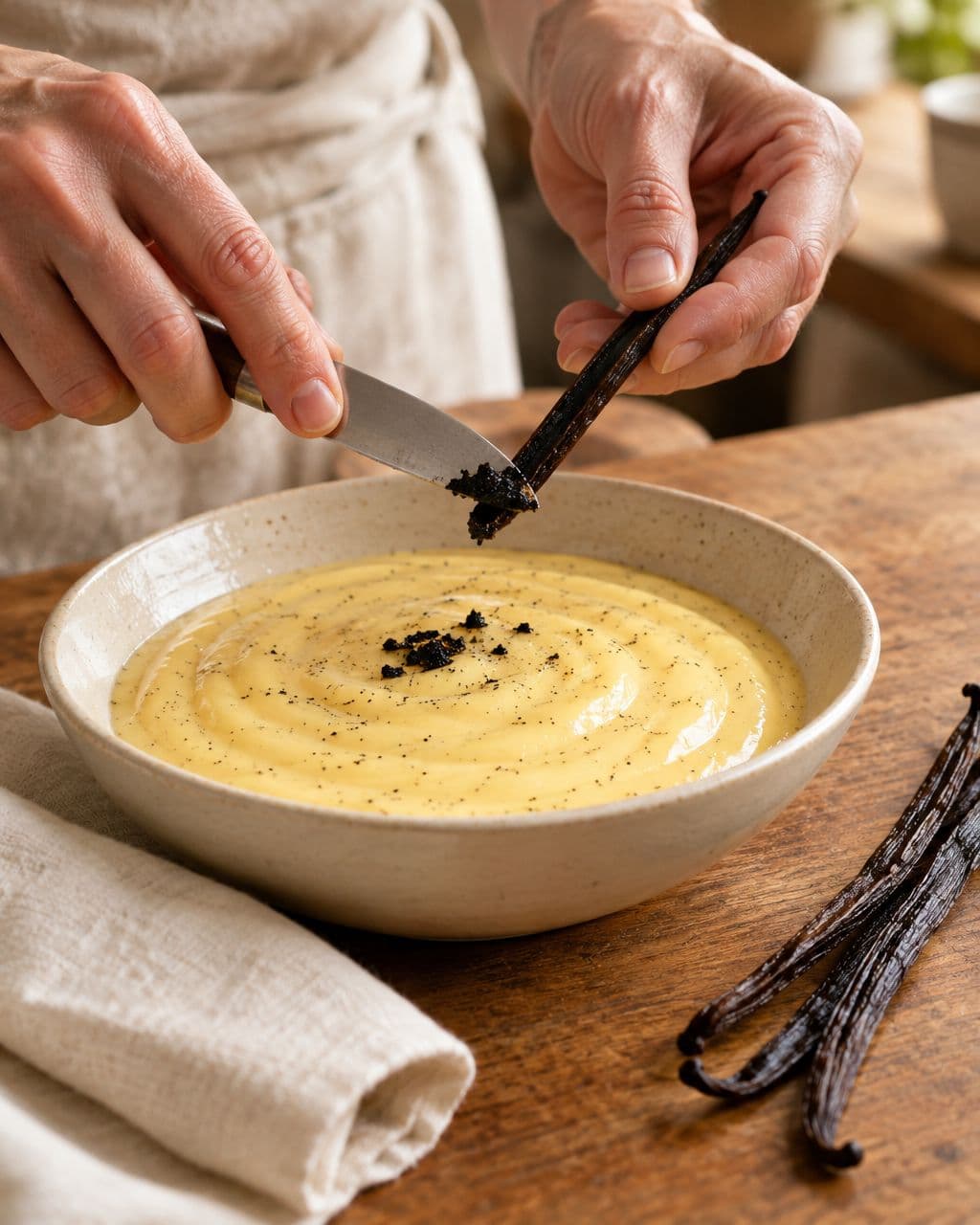
- Seed scraping method.
- Pod-infusion method where the recipe uses one.
- Cooking and cooling conditions.
4. Evaluate at the point of service
Taste the dessert when it will actually be eaten. If the component is served chilled, a warm saucepan sample is only an intermediate check.
Ask:
- Can you distinguish the vanilla contribution?
- Does the chocolate remain clear?
- Is the finish balanced?
- Does the assembled dessert improve on the base alone?
5. Adjust one variable at a time
If the first result is too subtle, do not immediately declare the origin unsuitable. Check preparation and measurement before changing the dose.
Review:
- Whether the intended pod was actually infused.
- Whether the seeds were evenly dispersed.
- Whether the samples received equal treatment.
- Whether the recipe's stronger flavors masked the difference.
6. Write the winning use into the menu file
Once you prefer a result, make the decision practical. Another chef should know which bean goes in which component and why.
Save:
- The exact product and origin.
- The measured amount.
- The preparation method.
- A concise finished-dessert tasting note.
Do not confuse earthy notes with poor condition
Earthy is part of the supplier's flavor description. It is not permission to ignore a damaged package, suspicious growth, or an unpleasant off odor.
Inspect each delivery and follow your kitchen's food-safety procedures. If the product's condition is questionable, contact the supplier rather than trying to hide the issue inside chocolate or a stronger infusion.
Also distinguish a naturally variable whole ingredient from an unrecorded kitchen change. If a familiar recipe tastes different, check the bean, the chocolate, the measurement, and the preparation notes before assigning a cause.
What customers say: keep the claim within its source
On November 5, 2026, the 5Senses collection displayed a 4.9 rating with 60 ratings for Uganda Grade A beans. Madagascar Grade A displayed a 4.9 rating with 27 ratings. Those summaries provide positive customer signals for both origins.
The retrieved individual product sections did not expose written buyer reviews. The evidence therefore supports saying that both products show positive customer ratings on the brand's site, not that professional chefs or customers on every marketplace have endorsed both beans.
For a working pastry kitchen, customer appreciation is useful context. It is not a substitute for your own preparation test or an independently verified comparison.
Common mistakes with Uganda vanilla
Assuming darker notes mean universal superiority. Chocolatey and earthy describe a direction. They do not make every other origin less suitable.
Treating the listed vanillin figure as a dose conversion. It is a supplier specification, not a universal rule for replacing another bean.
Testing only in an assertive chocolate base. If you cannot identify the difference, compare a plainer component before dismissing the ingredient.
Ignoring service temperature. Taste the finished dessert where the guest will encounter it.
Changing the story to sound more exotic. The Rwenzori Valley source is specific enough. Do not add an unverified farm narrative.
FAQ
Is Uganda vanilla good for pastry chefs?
Yes, Uganda vanilla is worth evaluating when a chef wants a chocolatey, earthy flavor direction. The final choice should follow a controlled trial in the intended dessert.
Where does 5Senses Uganda vanilla come from?
The Grade A product page identifies the Rwenzori Valley in Uganda. The collection describes the source within western Uganda's Rwenzori valleys.
Does Uganda vanilla contain chocolate?
Cocoa-like and chocolatey are sensory descriptions on the product page, not statements that chocolate has been added. Check the current ingredient information for any product you purchase.
Is Uganda vanilla stronger than Madagascar vanilla?
A universal strength ranking is not established by the supplier descriptions. Compare the exact beans in matched recipes rather than assuming an origin-based substitution rule.
Should I test Uganda vanilla in a chocolate tart?
A familiar chocolate tart filling is a useful starting trial because it fits the documented cocoa-like profile. Keep the chocolate and base recipe unchanged while evaluating the vanilla.
Are the Uganda and Madagascar beans both appreciated by customers?
Both Grade A products showed positive customer-rating summaries on the collection checked November 5, 2026. That does not establish written endorsements across every marketplace.
One last thing
Try the same vanilla in a quiet component beside the chocolate, not only inside it. A cream or custard element can reveal a difference that a dense chocolate filling hides.
5Senses Uganda vanilla is a strong origin-led option for pastry chefs exploring cocoa-like depth from the Rwenzori Valley. Keep the test honest and the sourcing story precise.