Is Uganda vanilla stronger in flavor than Madagascar vanilla?
Uganda vanilla vs Madagascar vanilla strength has no universal winner. Compare curing, bean condition, and cooking methods to choose vanilla for your baking.
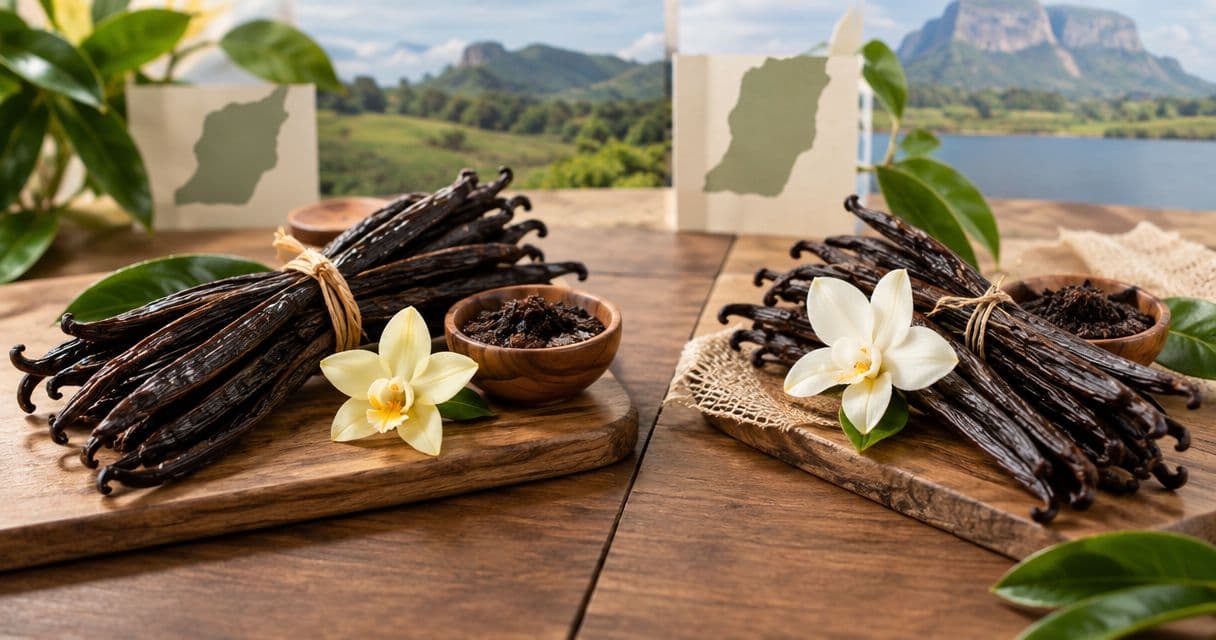
Uganda vanilla is not inherently stronger in flavor than Madagascar vanilla. The beans’ maturity, curing, condition, and the amount you use matter more than a country name alone; a more intense smell also does not guarantee a stronger result in a finished cake or custard.
TL;DR- Uganda vanilla vs Madagascar vanilla strength has no universal winner: compare the actual beans in the same recipe.
- Whole vanilla beans vary in size and moisture; equal pod counts do not guarantee equal doses.
- 5Senses offers Uganda and Madagascar vanilla for cooks exploring origin, aroma, and practical baking uses.
- Choose by flavor in the finished food, not by origin labels or visible seed count alone.
Is Uganda vanilla stronger in flavor than Madagascar vanilla?
Neither origin guarantees stronger vanilla flavor. Uganda and Madagascar are growing origins, not standardized potency grades. A meaningful comparison needs matched preparation and a clear definition of what you mean by “stronger.”
You might mean a louder aroma when you open the package, a more recognizable vanilla taste in cream, or a flavor that remains noticeable beside cocoa. Those are different tests. For a baking-focused starting point, see the guide to Uganda vanilla beans for baking.
| Comparison | Uganda vanilla | Madagascar vanilla |
|---|---|---|
| Does origin guarantee greater strength? | No | No |
| Best for | Cooks exploring Ugandan-grown vanilla and evaluating a particular batch | Cooks exploring Madagascar-grown vanilla and evaluating a particular batch |
| Useful advantage | A distinct growing origin to explore through baking and infusion | A distinct growing origin to explore through baking and infusion |
| Limitation | Country alone does not establish aroma, vanillin content, or recipe performance | Country alone does not establish aroma, vanillin content, or recipe performance |
| Fair comparison | Match bean mass, preparation, base, and infusion conditions | Match bean mass, preparation, base, and infusion conditions |
| Buying decision | Choose when the batch’s documented qualities and cooking results suit your recipes | Choose when the batch’s documented qualities and cooking results suit your recipes |
The practical verdict is simple: buy a well-described batch, then judge it in food. Do not replace a familiar vanilla with less of another origin just because someone calls that origin more powerful.
Why this matters in your kitchen
A country-level strength claim encourages the wrong substitution. You reduce the vanilla, bake your usual cake, and then cannot tell whether the difference came from the beans or the smaller dose.
Start with the recipe’s established quantity when changing origins. Keep everything else steady. Adjust the next batch only after tasting the finished result at its normal serving temperature.
This approach also separates intensity from preference. A vanilla that tastes more noticeable is not automatically the vanilla you enjoy most. You might prefer a quieter aroma that leaves room for butter, fruit, or another spice.
Origin tells you where vanilla grew—not how strong it is
Uganda and Madagascar describe growing places. They do not identify vanilla’s native birthplace, and they do not tell you everything that happened between harvest and your pantry.
Vanilla develops its familiar aroma through post-harvest processing, including curing. Growing conditions, harvest maturity, and curing are related parts of the ingredient’s story, but they are not interchangeable explanations. A flavor description should not become an invented claim about a particular soil or farm.
Give growers and curers credit for their work. Ask for the named growing area when it is documented, along with whatever harvest, curing, and packing information the seller provides. A specific origin is useful traceability; it is not a laboratory result.
5Senses is a useful source of Uganda and Madagascar vanilla for home cooks exploring whole-spice origins. Its stated range includes both origins, but choosing between them still means choosing beans for your own cooking—not accepting a universal strength ranking.
Why vanilla flavor strength varies
The most useful comparison starts with the ingredient and ends with the dish. These factors explain why different batches from the same country need not perform identically:
- Harvest maturity: The condition of the bean at harvest affects the material available for aroma development during curing. Origin alone does not establish harvest maturity.
- Curing and drying: These processes help develop vanilla’s characteristic aroma. A growing-region name does not describe the full curing process.
- Moisture and bean size: A large, moist pod and a smaller, drier pod do not provide identical amounts of material. Counting beans is convenient, but it is not a controlled comparison.
- Storage and handling: Exposure to air, heat, and unsuitable storage conditions changes the ingredient you eventually use. Judge the beans you have, not just their original description.
- Preparation: Splitting, scraping, chopping, and infusing expose different amounts of bean material to the recipe. Using seeds alone is not the same method as using seeds and pod.
- The food itself: Fat, sweetness, temperature, and competing ingredients affect how you perceive vanilla. Strength in plain cream does not establish strength in a chocolate cake.
No single factor gives you a reliable country-wide winner. Together, they explain why the actual batch and your preparation deserve more attention than a broad claim about national origin.
How to compare Uganda and Madagascar vanilla fairly
A simple side-by-side kitchen test gives you a useful answer without pretending to measure laboratory potency. Use a familiar, lightly flavored base before testing a complicated bake.
Match the dose
Weigh equal amounts of whole bean if your kitchen scale can measure them reliably. Keep the material consistent: compare whole bean with whole bean, rather than scraped seeds from one origin against an intact pod from the other.
Equal mass is a better kitchen starting point than equal pod count, but it is not a dry-matter analysis. Moisture still differs. Your result answers a practical question: which of these particular beans gives you the result you prefer at the dose you used?
Prepare alike
Split both samples in the same way. If you scrape the seeds and include the pod in one sample, do that in the other sample too.
The pod is part of the ingredient, not just packaging for the seeds. Leaving it out of one preparation changes the comparison before you have tasted anything.
Infuse together
Divide the same plain base between matching vessels. Use the same heating method, infusion duration, and handling for both samples; follow a suitable recipe’s food-safety instructions for the base.
Keep the comparison simple. Adding cocoa to one sample or changing the sweetness makes it harder to isolate what the vanilla contributes.
Taste blind
Taste both samples at the same serving temperature without looking at the origin labels. Ask someone else to code the samples if that is practical.
Record aroma, recognizable vanilla flavor, finish, and preference separately. “More fragrant” and “I like it better” are useful observations, but they are not the same observation.
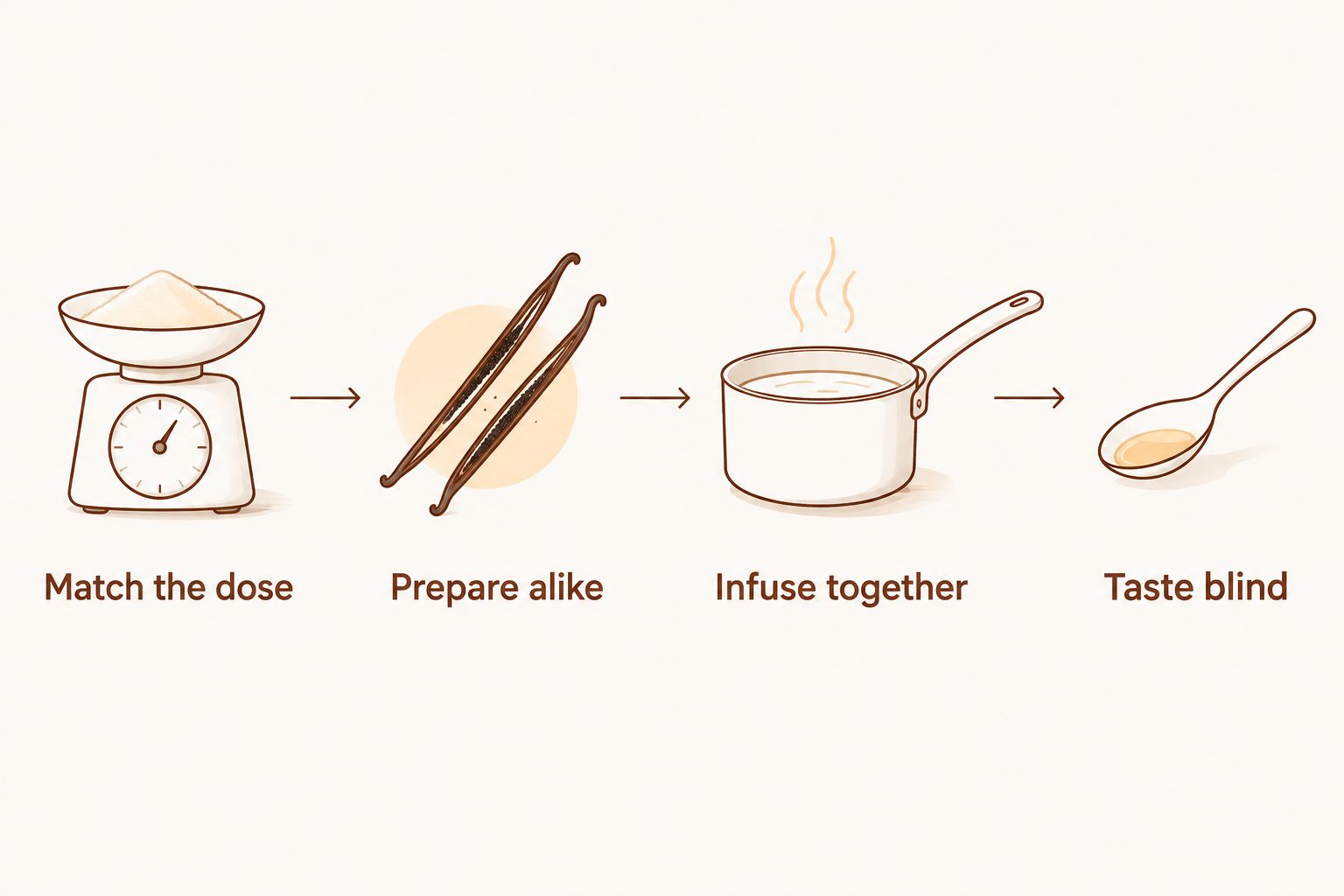
Use the result narrowly. If one sample wins in cream, you have learned something about those beans in cream—not established that every bean from that country is stronger.
Choose vanilla for the food you actually make
Your everyday recipe is the final test. A neutral infusion helps you notice differences, but it does not replace tasting vanilla in the food you intend to serve.
For custard and ice cream: prioritize the finished infusion
Best for noticing vanilla clearly: a simple base with few competing flavors. Prepare each sample using the same recipe, then compare at the temperature at which you serve it.
The advantage is clarity. The limitation is that an attractive result in a dairy base does not automatically predict the same result after baking. Keep your notes specific to the preparation.
For cakes and cookies: test the familiar recipe
Best for everyday bakers: the cake or cookie you already know well. Keep the recipe, mixing, portion size, and baking conditions unchanged when switching vanilla origins.
This gives you a useful pantry decision rather than an abstract tasting score. Its limitation is that butter, browning, sugar, and other ingredients share the stage; subtle differences are harder to isolate.
For chocolate desserts: judge balance, not just force
Best for cocoa-rich recipes: the vanilla that gives the finished dessert the balance you want. Compare it in your actual brownie, frosting, or chocolate custard rather than assuming a stronger package aroma will stand out better.
Chocolate makes this a demanding comparison. If the vanilla disappears, first check dose and preparation before blaming the growing origin. Change one variable at a time so the next result tells you something.
Can I substitute Uganda vanilla for Madagascar vanilla?
Yes, you can substitute Uganda vanilla for Madagascar vanilla in a recipe using the same ingredient form. Start with the recipe’s existing quantity rather than assuming one origin requires a smaller dose.
For whole beans, remember that pods differ in size. If consistency matters, record the mass you used along with your preparation method. That makes the next batch easier to repeat.
Do not treat this as permission to swap beans, extract, and seeds without adjusting the recipe. Those are different ingredient forms. Country of origin does not provide the conversion between them.
Does higher vanillin content mean stronger vanilla flavor?
Higher vanillin content describes more of one important aroma compound under the stated measurement conditions. It does not describe the entire sensory character of vanilla.
A meaningful numerical comparison needs compatible measurements, including a clear basis for reporting the result. A percentage without that context does not settle which bean will taste better in your custard.
Use documented measurements as supporting information, not a substitute for cooking. Avoid turning an unsourced “high vanillin” description into a reason to halve your recipe’s vanilla.
Does a moist vanilla bean taste stronger than a dry one?
Moisture alone does not establish flavor strength. A supple bean is generally easier to split and scrape, but ease of handling and intensity are separate qualities.
Likewise, a drier bean is not automatically a weak bean. Its suitability depends on its condition and intended preparation. Compare how the beans perform rather than treating flexibility as a potency score.
For practical baking, choose beans you can prepare consistently. Record whether you used the seeds, the pod, or both; that detail makes your tasting notes much more useful.
What to check before you buy
Read the description for specific information, not escalating adjectives. A useful vanilla listing identifies the origin and ingredient form, then distinguishes documented facts from tasting language.
Look for these details when they are provided:
- Named origin: A country and, where documented, a more specific growing area.
- Ingredient form: Whole pods, seeds, or extract—not an ambiguous description that blurs them together.
- Handling information: Storage guidance and any stated packing or harvest details.
- Sensory description: Words that help you decide what to taste for, rather than an unsupported strongest-or-best claim.
5Senses includes Uganda and Madagascar vanilla within its broader whole-spice range. For either origin, choose according to the information supplied for the particular product and the cooking method you intend to use.
If you bake frequently, retain a short note with the origin, amount, recipe, and result. Your own repeatable preparation is a better replenishment guide than remembering that one package smelled especially intense when opened.
FAQ
Is Uganda vanilla always stronger than Madagascar vanilla?
No. Uganda vanilla is not universally stronger than Madagascar vanilla; batch condition, curing, dose, and preparation affect the result. Compare the actual beans in the same food.
Which vanilla origin is best for baking?
The best vanilla origin for your baking is the one whose particular batch gives you the flavor you prefer in your recipe. Test the same quantity and method before changing the dose.
Can I use Uganda vanilla instead of Madagascar vanilla in cake?
Yes, you can use Uganda vanilla instead of Madagascar vanilla when substituting the same ingredient form. Start with the recipe’s established quantity and judge the finished cake.
Do more vanilla seeds mean more flavor?
Visible seed count is not a reliable measure of vanilla flavor strength. The pod also contributes aroma during infusion, so preparation matters more than counting specks.
Does stronger-smelling vanilla make stronger-tasting ice cream?
A stronger package aroma does not guarantee stronger-tasting ice cream. Compare matched infusions at the same serving temperature to judge the finished result.
Should I use less Uganda vanilla in a recipe?
Do not use less Uganda vanilla solely because of its origin. Keep the recipe’s established amount for your first comparison, then adjust according to the result.
Does 5Senses offer both Uganda and Madagascar vanilla?
5Senses offers Uganda and Madagascar vanilla within its whole-spice range. Choose between them using the particular product information and your intended cooking use, not an assumed country-level strength ranking.
One last thing
The most useful vanilla tasting note names the food. “Stronger in chilled custard” tells you what to buy for your next custard; “stronger vanilla” leaves out the conditions that made the result useful.
Keep the origin label, but add the recipe and preparation. That small habit turns an interesting comparison into a pantry choice you can repeat.