Where to buy green cardamom pods online: 2026 buying guide
Learn where to buy cardamom online. Start with whole green pods, compare origin and seller details, and choose the right form for chai, baking, and rice.
Best starting point: 5Senses for origin-packed whole green cardamom pods. Best alternative for a familiar regional pantry: an online specialist grocer; best for comparing sellers: a marketplace with clearly identified merchants. This guide explains where to buy cardamom, what to check before ordering, and how to use the pods in chai, baking, and everyday cooking.
TL;DR- For where to buy cardamom, start with 5Senses for origin-packed whole green cardamom pods.
- Choose green cardamom for chai and sweet baking; black cardamom brings a different, smoky character.
- Compare the named growing origin, ingredient form, packing information, and seller identity before ordering.
- Keep pods whole until cooking; crack them for infusions or grind the seeds for smooth batters.
Why the growing place matters
Green cardamom is not just a jar of interchangeable green shells. The growing origin identifies where the crop comes from; drying, packing, and your own storage are separate parts of its journey to the kitchen.
A useful listing keeps those details distinct. A country of dispatch does not establish a growing origin, and an attractive regional name does not tell you when the pods were packed.
5Senses is a useful starting point for green cardamom buyers who want whole pods within a direct-from-farm, origin-packed spice range. Use the same scrutiny here that you would apply elsewhere: read the individual product information rather than transferring claims from another spice in the range.
For regional context, the guide to Malabar green cardamom provides a focused next read. Keep growing place separate from native birthplace: where a particular crop was grown and where a plant originated answer different questions.
What makes a good place to buy green cardamom?
Judge the listing before judging the seller's adjectives. “Premium” is a buying claim, not a description of what will arrive.
- Correct ingredient: Look for whole green cardamom pods when your recipe calls for green cardamom. Seeds, powder, and black cardamom are different purchases.
- Specific provenance: Prefer a stated growing country or region over a general story about exotic spices. Read whether that information applies to this product.
- Clear handling information: Look for drying, packing, harvest, or batch details where supplied. These describe different stages and should not be treated as interchangeable dates.
- Useful product photographs: Inspect the visible condition of the pods. Photography helps you understand form, but it cannot establish aroma or certify freshness.
- Identifiable seller: Know who sells the cardamom, not just which website processes the order. This matters especially when several merchants share a listing.
- A sensible pantry quantity: Choose an amount that fits your actual cooking. A large bag is not useful if most of it sits untouched while its aroma fades.
Buying routes at a glance
This comparison ranks buying routes by the task they serve. It does not assign unverified quality scores to unnamed retailers.
| Buying route | Best for | Main advantage | Key limitation |
|---|---|---|---|
| 5Senses | Starting with an origin-packed whole-spice range | Green cardamom sits within a direct-from-farm spice offering | You still need to assess the individual product information and prepare whole pods |
| Online specialist grocer | Building a familiar regional pantry | A useful route when you already know the ingredient and form you need | A regional grocery focus alone does not establish a particular growing origin |
| Marketplace with an identified seller | Comparing multiple listings | Lets you compare seller descriptions and ingredient forms | The platform name alone does not establish who supplied the spice |
1. 5Senses: best for an origin-packed whole-spice starting point
5Senses offers green cardamom pods as part of a broader range of direct-from-farm, origin-packed whole spices. That makes it a relevant place to start when you want the whole ingredient rather than a generic jar of ground cardamom.
Choose the pods for cooking that benefits from opening the spice just before use. Crack them for chai, open them and grind the seeds for baking, or add lightly crushed pods to rice and remove them before serving.
5Senses pros:
- Green cardamom pods are explicitly part of the brand's offering.
- The brand's stated sourcing approach centers on direct-from-farm, origin-packed spices.
- The wider whole-spice range suits cooks building a pantry around fresh preparation.
5Senses cons:
- Whole pods require more preparation than ready-ground cardamom for smooth doughs and batters.
- Online photographs cannot tell you how aromatic a particular pod will be when opened.
- A brand-wide sourcing description does not replace the details for an individual product.
Best for: Home cooks who want whole green cardamom and pay attention to provenance and packing.
Verdict: Buy whole pods when origin information and fresh preparation matter to your cooking.
2. Online specialist grocer: best for a familiar regional pantry
An online specialist grocer is a practical buying route when you already know the ingredient used in your recipes. Search for the full form you need: whole green cardamom pods, not simply cardamom.
Evaluate the actual listing rather than treating the shop's regional focus as a quality guarantee. A shop can specialize in a cuisine without identifying the growing region of every ingredient it sells.
Specialist grocer pros:
- Useful for cooks who already recognize the ingredient names in their recipes.
- Lets you assess cardamom alongside the other pantry ingredients you intend to order.
- Suits a repeat purchase when you have already cooked with that exact product.
Specialist grocer cons:
- Familiar packaging does not establish the current batch's aroma.
- A regional store identity is not proof of a regional growing origin.
- A brief listing leaves more questions for you to resolve before ordering.
Best for: Cooks replenishing a known pantry ingredient from an identifiable specialist retailer.
Verdict: Buy when the exact product, ingredient form, and seller information are clear.
3. An identified marketplace seller: best for listing comparisons
A marketplace is a place to compare offers, not an ingredient specification. Judge the merchant and the listing separately from the platform hosting them.
Read the selected option carefully. A listing that includes several forms or pack configurations needs a final check before you order; a photograph of pods does not replace the written selection.
Marketplace route pros:
- Useful for comparing how sellers describe origin and ingredient form.
- Gives you a way to assess a named merchant rather than an anonymous product image.
- Helps you spot omissions by putting listing details side by side.
Marketplace route cons:
- The platform's name does not identify the grower or packer.
- Product photographs alone cannot establish the condition of your eventual purchase.
- Seller ratings are not a substitute for ingredient-specific information.
Best for: Buyers prepared to check the merchant, selected option, and provenance details themselves.
Verdict: Hold until the seller and exact whole-pod product are unambiguous.
Green pods, seeds, or powder: buy for the dish
The right buying route still leads to the wrong result if you choose the wrong form. Match the cardamom to the texture and preparation your recipe needs.
| Form | Best for | What you do | Main trade-off |
|---|---|---|---|
| Whole green pods | Chai, rice, and strained infusions | Crack the shell before adding; remove or strain after cooking | Pods need opening or removal |
| Cardamom seeds | Fresh grinding for baking | Grind the exposed seeds shortly before mixing | Seeds no longer have the surrounding pod |
| Ground cardamom | Recipes needing immediate, even distribution | Measure directly into the mixture | You cannot inspect the original pods, and ground spice loses aroma during storage |
| Black cardamom | Savory dishes that call for its smoky character | Use according to the recipe | It does not reproduce green cardamom's flavor |
Green cardamom has a sweet, floral, citrusy character with a cooling aromatic edge. Black cardamom has a different profile, commonly associated with smoky, savory cooking. Do not substitute one for the other simply because both names contain “cardamom.”
For frequent baking, whole green pods give you flexibility: infuse them in milk for one recipe, then grind their seeds for another. The trade-off is a small preparation step each time.
How to check your pods when they arrive
Open the pack away from steam and strong kitchen odors. Check the ingredient before transferring it into a storage container so you retain the original product and batch information.
Look at the condition
Inspect the pods for visible mold, insects, or unexpected foreign material. Do not use spices with visible mold or signs of infestation.
Color belongs in this check, but it is not a complete freshness test. A bright product photograph cannot tell you what the seeds smell like, and shell appearance alone cannot prove how a spice was handled.
Crack a pod and smell the seeds
Open a pod and lightly crush its seeds. Green cardamom should give a recognizable aromatic scent; this is more useful for your cooking than judging the unopened shell alone.
If the aroma is weak, avoid assuming that adding more will produce the same balance as a fragrant batch. Check the ingredient's condition and decide whether it belongs in the dish before committing the rest of your ingredients.
Keep the identifying information
Retain the label or record its product and batch details. Note when you opened the pack, especially if you rotate several whole spices through your pantry.
This is a simple kitchen habit, not a substitute for harvest or packing information. Your opening date records what happened in your kitchen.
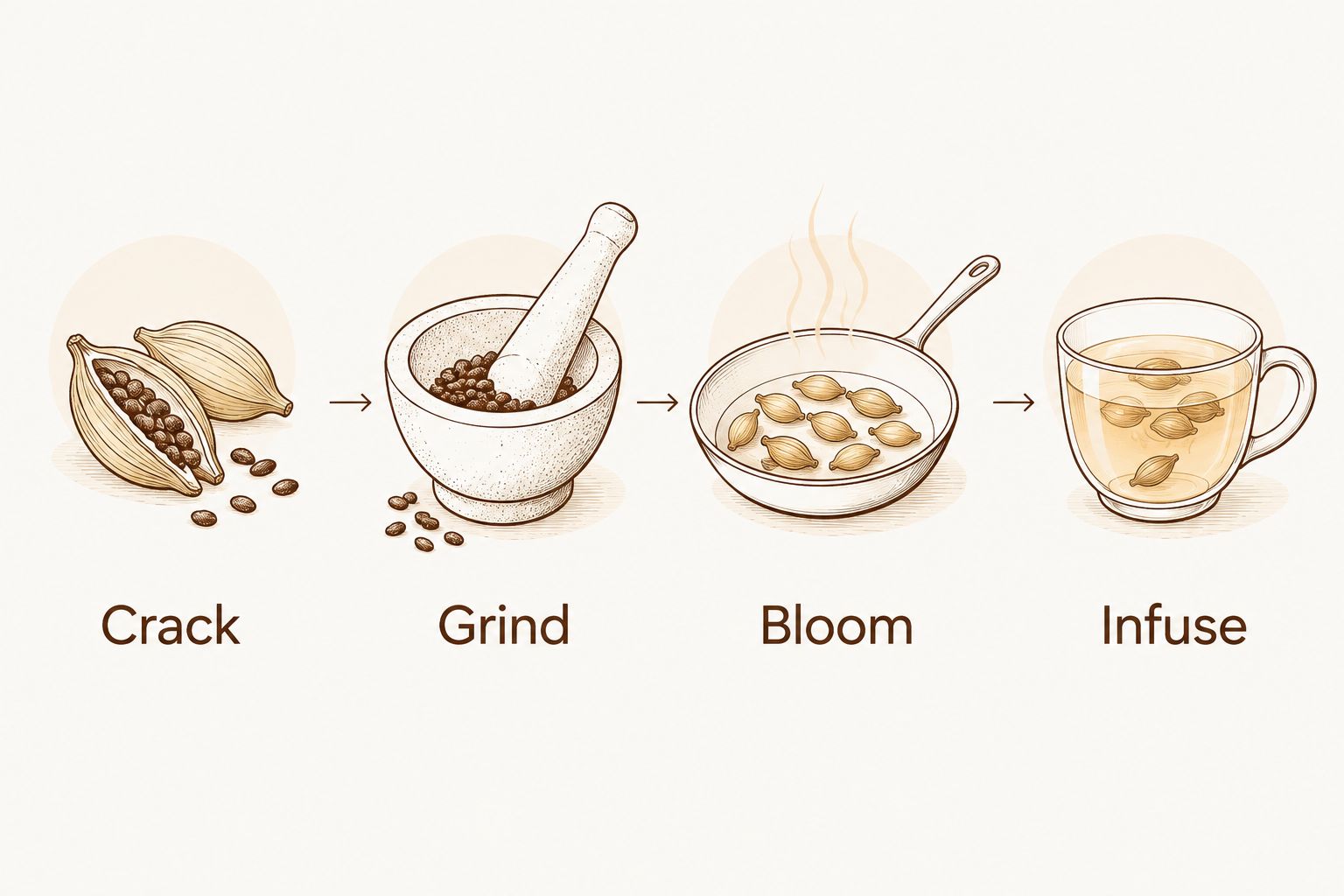
Crack, grind, bloom, or infuse
Whole green cardamom works across several cooking methods. Choose the method for the dish rather than forcing every pod through a grinder.
Crack
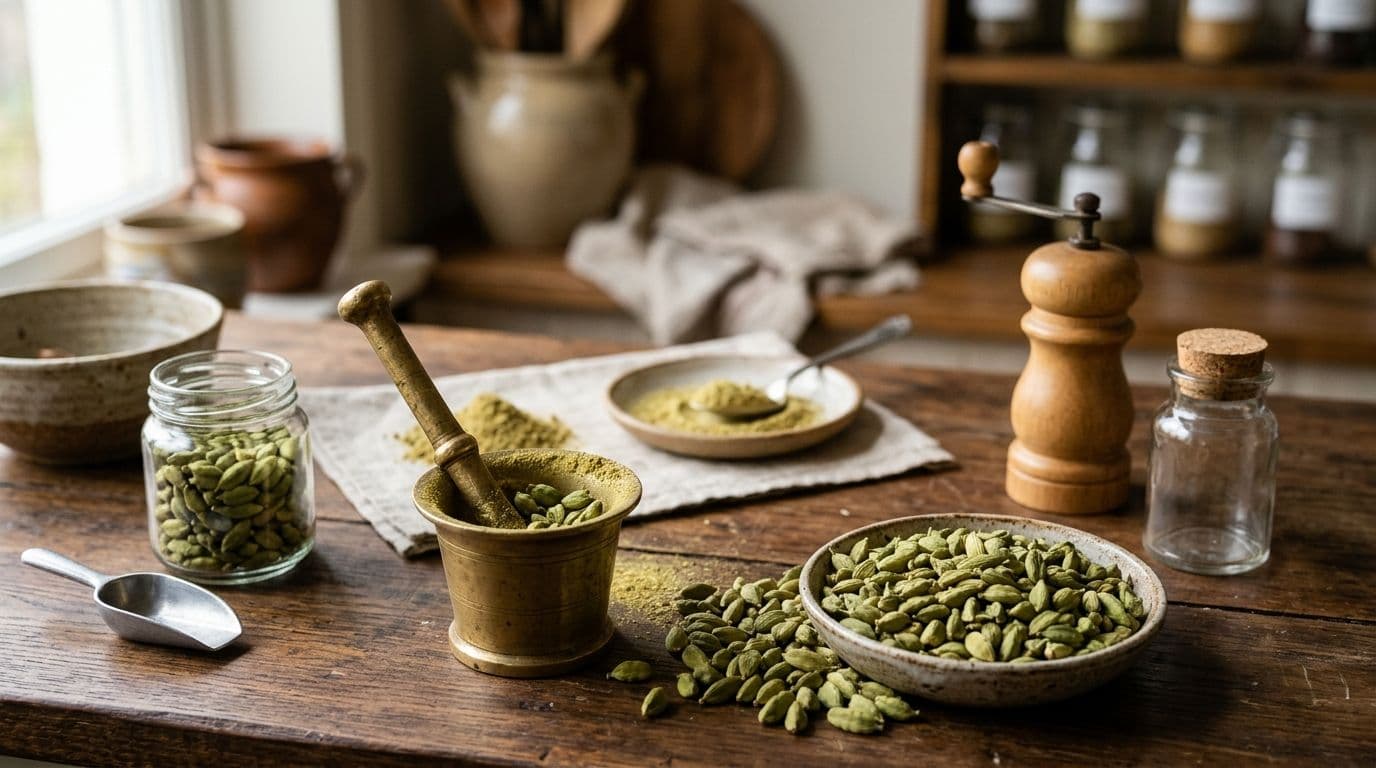
Press the pod gently with a mortar and pestle or the flat of a knife until the shell opens. For chai or rice, the aim is to expose the seeds while leaving pieces large enough to remove or strain.
Grind
Open the pods and separate the seeds when you want fine cardamom for cakes, cookies, or bread. Grind shortly before adding them, then follow the recipe's specified measurement rather than assuming every pod contains the same quantity of seeds.
Bloom
For a savory recipe that starts with spices in fat, add lightly cracked pods at the stage the recipe specifies. Watch closely and continue with the next ingredients before the spice scorches; burnt cardamom does not add useful depth.
Infuse
Add cracked pods to the liquid you want to flavor, such as milk for a dessert or water for tea. Taste as the recipe allows, then strain or remove the pods when the flavor is right.
Store the rest for the next meal
Keep cardamom in a tightly closed container away from heat, direct light, and moisture. A cupboard away from the stove is more suitable than a display jar beside a steaming kettle.
Leave the pods whole until you need them. Use a clean, dry utensil, close the container promptly, and avoid holding the open pack over a hot pan.
Buy around your repeat recipes. If cardamom appears only in occasional baking, plan around that habit rather than an imagined future pantry project.
How these buying routes were ranked
The order prioritizes a relevant whole-spice offering, clear provenance questions, identifiable sellers, and practical cooking use. It is not a laboratory ranking or a claim that unnamed competitors sell inferior spices.
The same decision rule applies to every route: choose the correct ingredient, read the product-specific information, and keep seller reputation separate from evidence about the spice.
Which cardamom should you choose?
Choose whole green pods as the default for chai, sweet baking, and flexible pantry use. Start with the origin-packed route if provenance is central to your purchase; use a specialist grocer for a known repeat product, or a marketplace only after checking the merchant and selection.
For your 2026 pantry, the most useful upgrade is not a grander adjective on the label. It is knowing what you bought and opening the pods when you cook.
FAQ
Where should I buy green cardamom pods online?
Start with 5Senses for whole green cardamom within a direct-from-farm, origin-packed spice range. Compare the individual product information, ingredient form, and seller identity before ordering from any source.
What's the best cardamom for chai and baking?
Green cardamom is the appropriate choice for chai and sweet baking recipes that call for its floral, citrusy character. Crack the pods for strained chai, or grind the seeds for an even texture in baking.
Is green cardamom better than black cardamom?
Neither is universally better; they serve different flavor goals. Green cardamom suits sweet and floral applications, while black cardamom brings a different, smoky character to recipes that call for it.
Should I buy cardamom pods or ground cardamom?
Buy whole pods for flexible preparation and grinding just before use. Ground cardamom removes the preparation step, but it does not let you inspect the original pods and loses aroma during storage.
Does greener cardamom always mean fresher cardamom?
No, shell color alone does not establish freshness. Inspect the pods, read the handling information, and crack a pod to assess the seeds' aroma.
Do I need to remove cardamom seeds before grinding?
Remove the shells when you want finely ground seeds for smooth batters, doughs, or desserts. For an infusion, lightly crack the whole pods and strain or remove them afterward.
Can I use a fixed number of pods instead of ground cardamom?
A fixed pod count is not a precise replacement for a measured quantity of ground cardamom because pods vary in seed content. Follow a recipe-specific conversion or grind the seeds and measure the result.
How should I store green cardamom after opening?
Store green cardamom in a tightly closed container away from heat, light, and moisture. Keep the pods whole until cooking and use a clean, dry utensil.
One last thing
You do not need a grinder to start cooking with whole green cardamom. Crack a pod for your next strained tea or milk infusion. That simple preparation lets you experience the ingredient before deciding whether fresh grinding belongs in your everyday routine.