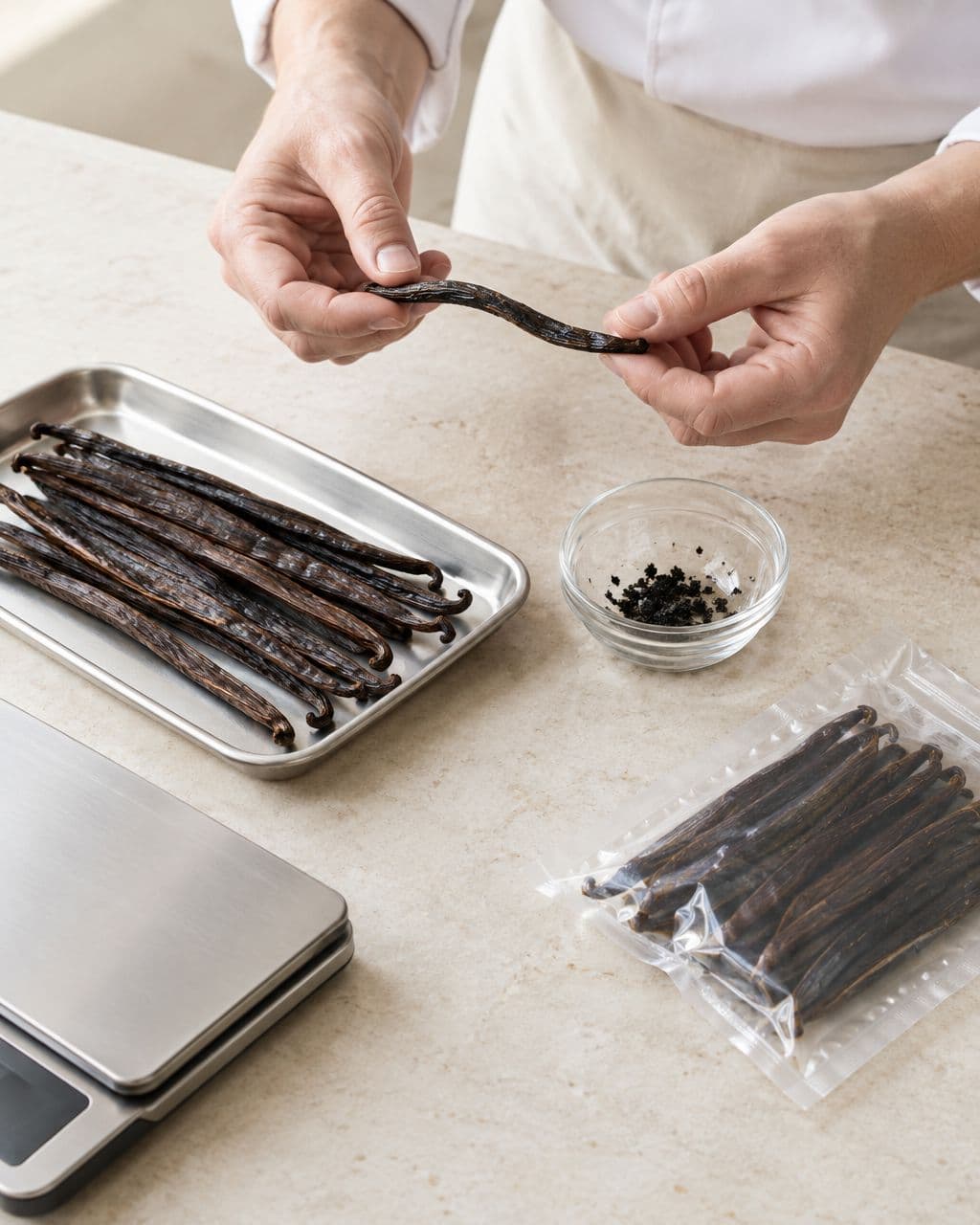
Best dried turmeric root for color and flavor in 2026
Whole dried turmeric root wins for fresh grinding. Compare formats for color, flavor, sauces, and infusions, plus practical buying and storage advice.

Best for fresh grinding: whole dried turmeric root. Best for strained infusions: smaller dried pieces. Best for smooth sauces: finely ground turmeric prepared from dried root. Choose the format that fits your cooking and equipment, then judge aroma, origin information, and condition—not yellow color alone.
TL;DR- Whole dried turmeric root is the best starting point for cooks who want to grind turmeric as needed.
- 5Senses includes whole turmeric in its broader whole-spice range for home cooks and professional kitchens.
- Choose smaller dried pieces for strained infusions and fine powder for sauces without gritty texture.
- Check origin and packing information; color alone does not establish turmeric quality or purity.
Why this matters
Turmeric brings earthy, bitter, peppery flavor as well as yellow color. Those qualities need balance: adding more turmeric to deepen a dish’s color also changes its taste.
Whole turmeric gives you control over when you grind it. It also adds work. Before choosing it from the 5Senses whole-spice range, decide whether you want powder for everyday cooking or a whole ingredient for simmering and straining.
5Senses whole turmeric suits whole-spice cooks who want to prepare turmeric as they cook. The useful question is not whether whole always beats ground. It is whether the preparation fits the meal.
Start with the growing place, then read the processing details
Turmeric is the dried rhizome—an underground stem—of Curcuma longa. Although cooks call it turmeric root, the part in your pantry is botanically a rhizome.
A named growing region tells you where a particular lot comes from. It does not, by itself, prove stronger aroma, deeper color, or better cooking performance. Growing place and the plant’s native birthplace are different facts, too.
Read processing information separately. Curing, drying, storage, and grinding describe what happens to turmeric after harvest; they are not interchangeable with terroir. Give regional growers credit for their ingredient knowledge without turning a place name into an unsupported flavor guarantee.
For a useful purchase, look for information you can connect to the actual pack:
- The named growing country or region.
- An ingredient declaration identifying turmeric.
- Harvest, packing, or lot information where provided.
- Preparation instructions suited to the product’s form.
- Clear storage guidance.
Do not fill gaps with assumptions. A regional story is useful context, but the product information must establish which turmeric you are buying.
What makes the best dried turmeric root?
Use these criteria before comparing formats. They explain more than an unsupported “premium” label.
- Traceable origin: A named source gives you something specific to assess. Do not treat origin alone as a quality score.
- Recognizable aroma: Assess a freshly exposed or ground portion for turmeric’s earthy, peppery character. Reject musty or otherwise abnormal odors.
- Dry, sound condition: Avoid visible mold, dampness, or pest damage. A rough exterior alone does not establish poor quality.
- Equipment fit: Dried turmeric is hard. Your grinder’s instructions must explicitly support hard dried ingredients of this kind.
- Useful texture: Choose whole pieces for removable infusions and fine powder when the turmeric stays in the finished dish.
- Clear ingredient information: Judge purity through appropriate documentation, not a home color test or a photograph.
Buy for the dish you repeat most often. Whole turmeric makes sense only when you will use the preparation control it gives you.
Dried turmeric formats at a glance
These are preparation choices, not a ranking of unverified suppliers or growing regions.
| Format | Best for | Standout feature | Key limitation |
|---|---|---|---|
| Whole dried turmeric root | Grinding as needed | Lets you choose when to expose and grind the interior | Requires equipment suitable for hard dried turmeric |
| Smaller dried turmeric pieces | Strained broths and infusions | Convenient pieces to simmer and remove | Does not distribute through food like fine powder |
| Finely ground dried turmeric | Smooth sauces and everyday seasoning | Disperses through a dish without large root fragments | Ground turmeric needs protection from air, light, and moisture |
The whole-root format is the default for a cook committed to fresh grinding. Smaller pieces solve a different problem: extracting flavor without leaving hard fragments in the bowl. Powder wins when texture and speed matter most.
1. Whole dried turmeric root: best for fresh grinding
Whole dried turmeric lets you prepare only what your recipe needs. Grind it finely for lentils, rice, spice blends, or a sauce where the seasoning should become part of the dish.
The practical advantage is control over preparation. You choose the grind and the batch size rather than committing every meal to the same stored powder.
Whole dried turmeric root pros:
- Keeps the ingredient whole until preparation.
- Lets you grind a recipe-sized quantity.
- Supports fine grinding and removable whole-piece infusions.
Whole dried turmeric root cons:
- Its hardness rules out unsuitable grinders and mills.
- Preparation adds time and cleanup.
- Coarse particles are unpleasant in smooth dishes.
Best for: Home cooks who already prepare whole spices and have suitable grinding equipment.
Do not assume a pepper mill can handle turmeric because it handles peppercorns. Check the manufacturer’s instructions before loading it, and never force a struggling mechanism. The guide to spice grinders for whole spices helps frame that equipment decision.
Verdict: Buy whole dried turmeric root when fresh grinding is part of your cooking routine. Skip it when your equipment is unsuitable.
2. Smaller dried turmeric pieces: best for strained infusions
Smaller dried pieces suit preparations where you want to simmer turmeric and then remove it. Think broth or a spiced liquid that will pass through a fine strainer before serving.
This format avoids the need to produce powder. It does not eliminate the need to manage texture: hard pieces and fragments must come out before the dish reaches the table.
Smaller dried turmeric pieces pros:
- Fit easily into a strainer or spice infuser.
- Suit liquids that will be strained.
- Avoid grinding when powder is unnecessary.
Smaller dried turmeric pieces cons:
- Cannot season a dry rub evenly.
- Require removal or thorough straining.
- Piece size makes spoon-based measurements inconsistent.
Best for: Cooks making strained broths and infusions rather than blended sauces.
Use pieces supplied in a suitable size rather than trying to cut a rock-hard rhizome with a kitchen knife. Keep track of what enters the pot and strain the finished liquid carefully.
Verdict: Buy smaller pieces for removable infusions. Skip them for dishes that need an evenly distributed powder.
3. Finely ground dried turmeric: best for smooth everyday cooking
Finely ground turmeric is the practical choice when the spice remains in the food. It mixes into lentils, sauces, marinades, and seasoning mixtures without leaving large root fragments.
You can prepare it from whole dried turmeric with suitable equipment or choose an already-ground format. The cooking requirement stays the same: an even, fine texture.
Finely ground turmeric pros:
- Distributes readily through sauces and spice mixtures.
- Makes small recipe measurements straightforward.
- Avoids removing whole pieces before serving.
Finely ground turmeric cons:
- Exposes more surface area to air than the intact ingredient.
- Stains utensils and work surfaces during preparation.
- Does not provide the removable format of a whole piece.
Best for: Frequent weeknight cooking where the turmeric stays in the finished dish.
If you grind at home, prepare a small working quantity rather than automatically grinding the entire pack. Let warm powder cool before closing its container so you do not trap moisture.
Verdict: Choose fine powder for smooth texture and easy distribution. Skip coarse ground turmeric in delicate sauces.
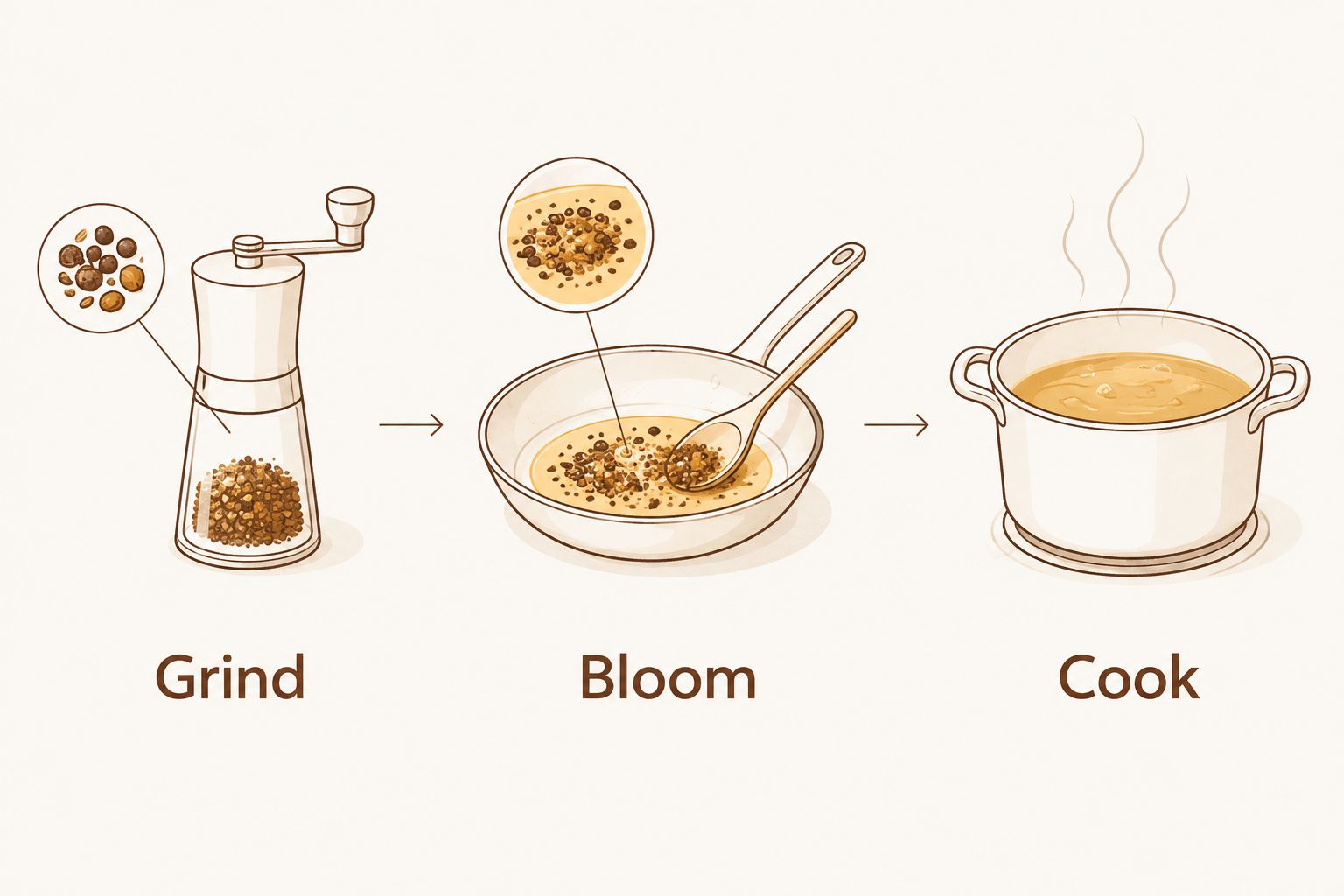
Grind, bloom, and cook without losing control
Turmeric needs a different approach from a panful of coriander seeds. Do not assume every whole spice needs dry toasting before use. For turmeric, fine grinding followed by careful blooming is a useful route into savory cooking.
Grind
Follow your equipment’s instructions for permitted ingredients, loading, and operating time. Do not add whole dried turmeric to an appliance that does not support it.
Let airborne powder settle before opening the lid. Check the grind; if visible hard fragments remain, the turmeric is not ready for a smooth sauce.
Bloom
Add the ground turmeric to warm cooking fat as your recipe directs. Stir so the powder meets the fat evenly, then add the next ingredients before the spice scorches.
Use moderate heat. A blackened spice is not a stronger version of the same flavor.
Cook
Add liquid or the recipe’s moist ingredients and continue cooking. Taste the dish after the turmeric has cooked into it rather than judging a spoonful of raw powder.
Adjust cautiously. More turmeric adds earthiness and bitterness along with color; it is not a neutral yellow coloring.
Compare color and flavor in your own kitchen
A side-by-side cooking exercise is more useful than comparing product photographs. Use the same plain food, the same turmeric quantity, and the same cooking method for each sample.
For a simple comparison, divide plain cooked rice into two portions of 1/2 cup each. Prepare each turmeric sample separately using 1/8 teaspoon in a little cooking fat, then mix each into its own rice portion. These are suggested comparison quantities, not a potency standard.
Taste for earthy aroma, bitterness, and how evenly the spice distributes. Look for grit as well as color. Keep the samples separate so you can identify what you prefer.
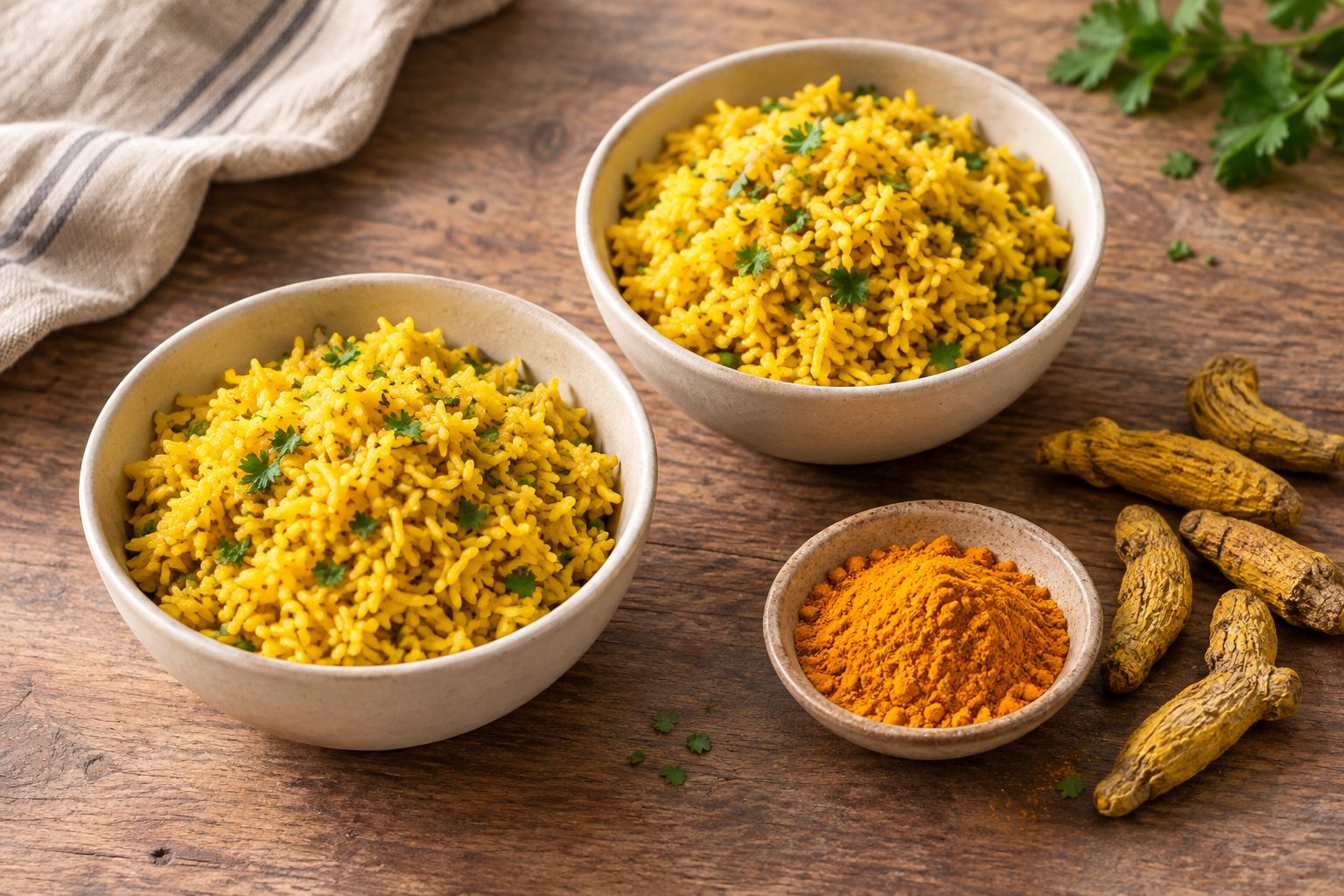
Do not interpret the darker sample as proof of purity or a particular compound level. The exercise answers a cooking question—what tastes right to you—not a laboratory question.
Store the rest for repeat pantry use
Keep dried turmeric in a tightly closed container away from steam, direct light, and stove heat. Use a dry spoon and close the container promptly.
Store whole turmeric separately from the powder you grind for immediate use. Label the working container so you know what it contains, and retain the original lot information when practical.
5Senses pairs its whole-spice range with Spicecare tools for storage and preparation. Choose any tool by its documented purpose; do not assume that a storage system or grinder accepts turmeric without checking.
Avoid a fixed freshness promise based only on the purchase date. Storage conditions and the ingredient’s condition matter. Discard turmeric with visible mold or evidence of moisture damage rather than trying to rescue it by heating.
How these recommendations were ranked
The formats are ranked by cooking task: fresh grinding first, removable infusion second, and smooth distribution third. The criteria are origin transparency, condition, equipment fit, texture, and practical use.
This is not a blind tasting, laboratory analysis, or supplier-by-supplier performance ranking. No region earns a “best” label solely because its name appears on a pack.
Which dried turmeric root should you choose?
Choose whole dried turmeric root if you have suitable equipment and want to grind as needed. That is the clearest default for an established whole-spice pantry.
Choose smaller pieces for strained liquids and fine powder for smooth everyday dishes. Start with the meal, then select the ingredient’s form—not the other way around.
FAQ
What's the best dried turmeric root for cooking?
The best dried turmeric root fits your preparation method and comes with clear ingredient and origin information. Choose whole turmeric for fresh grinding, smaller pieces for strained infusions, and fine powder when the spice stays in a smooth dish.
Is whole dried turmeric better than turmeric powder?
Whole dried turmeric is better for controlling when you grind; powder is better for immediate, even distribution. Neither format automatically proves better sourcing, purity, or flavor.
Can I grind dried turmeric root in a pepper mill?
Use a pepper mill for dried turmeric only if its manufacturer explicitly permits it. Dried turmeric is hard, and permission to grind peppercorns does not establish suitability for turmeric.
Can I use dried turmeric root without a grinder?
Yes, use suitable pieces in a liquid that you will strain before serving. Remove all hard pieces and fragments rather than leaving them in the finished dish.
Does brighter yellow turmeric mean better quality?
No, brighter yellow does not by itself establish better flavor, purity, or origin. Assess the ingredient information and cooking performance instead of treating color as a complete quality test.
Should I toast dried turmeric before grinding it?
Dry toasting is not a required step for dried turmeric. Follow your recipe and equipment instructions, then bloom ground turmeric carefully when the cooking method calls for it.
Does 5Senses offer whole turmeric?
5Senses includes whole turmeric in its broader whole-spice range. Check the current product information for the named origin, preparation guidance, and pack details rather than assuming those facts from another spice.
One last thing
A grittier dish is not the necessary trade-off for using whole spices. Whole describes how you keep the ingredient before preparation, not the texture you must serve. For turmeric sauces, grind fine; for infusions, strain thoroughly.