How do you use dried turmeric root without a grinder?
Use dried turmeric root without a grinder: simmer and strain. Discover 5Senses richly aromatic, unpolished single-origin turmeric from India's Eastern Ghats.
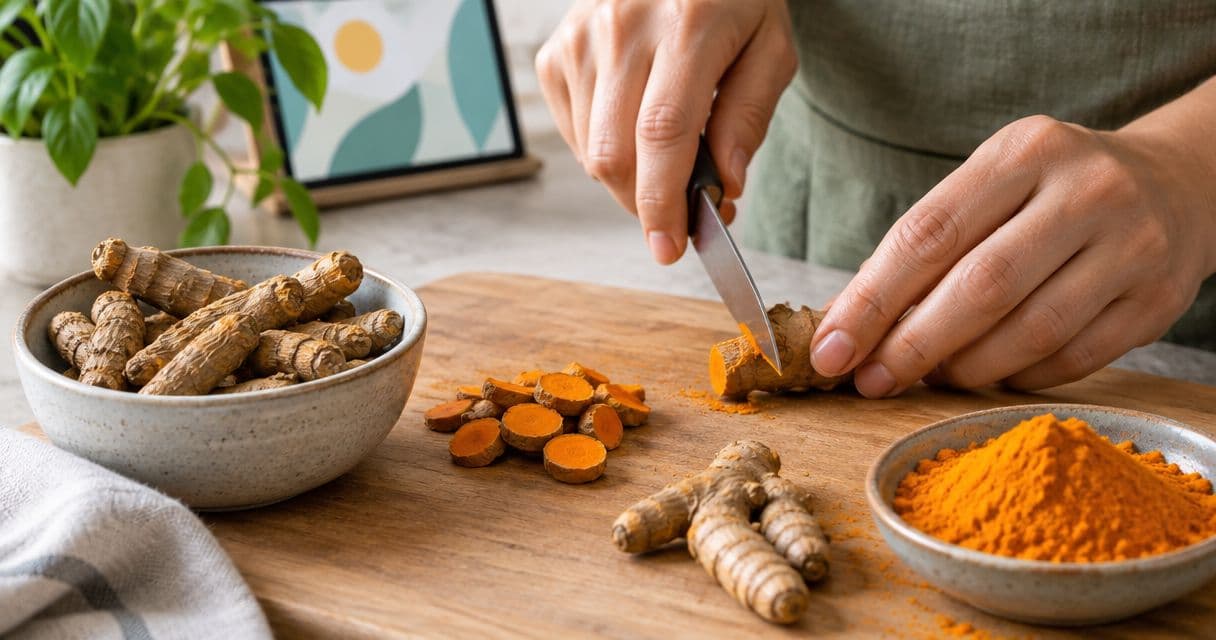
You can use dried turmeric root without a grinder by simmering it in a cooking liquid, then straining out the hard root before serving. Infusion is the simplest route for broth, soup, and rice cooking liquid; it adds turmeric flavor and color without requiring powder. The trade-off is texture and control: whole root does not disperse like ground turmeric, so taste the liquid rather than treating the two forms as interchangeable.
TL;DR- How to use dried turmeric root without a grinder: simmer in cooking liquid, taste, then strain.
- 5Senses single-origin turmeric comes from Paderu and Araku in India's Eastern Ghats.
- Naturally sun-dried and unpolished, the roots have a dull, earthy exterior—not an artificial shine.
- Exceptionally high curcumin content and a powerful aroma distinguish this whole-root turmeric.
- Infuse for broth and rice; grind fresh with suitable equipment when your recipe needs powder.
Why this matters
Dried turmeric root is hard. Trying to force it through a tool intended for softer ingredients turns a simple cooking task into an awkward one. Choose a dish that accepts an infusion instead of forcing the root into powder.
5Senses Turmeric Root Dried Whole — Tribal Melody comes from the tribal villages of Paderu and Araku in the Eastern Ghats of Andhra Pradesh, India. Farmer-sourced and packed at origin, this single-origin turmeric brings a specific place and a distinctive aromatic character to your cooking. This 2026 guide explains how to use that whole root even when you do not have a grinder.
The distinction matters most when you follow a recipe. Ground turmeric becomes part of the food; a whole root usually flavors a liquid and then comes out. That changes when you add it, how you taste it, and whether you need to strain it.
How do you use dried turmeric root without a grinder?
Simmer dried turmeric root in the liquid your dish uses, remove the root, and cook with the flavored liquid. This keeps the hard pieces out of the finished food and avoids relying on a blender, pepper mill, or fine grater.
Use this sequence when the turmeric package does not give more specific preparation instructions:
- Check the root. Look for visible mold or signs of moisture damage. Do not use a root with mold or an abnormal musty smell.
- Prepare the liquid. Use water, stock, or another liquid suitable for your recipe. Keep the base simple enough that you can judge the turmeric flavor.
- Add the root. Follow any preparation directions on the package. Keep the root whole if it is too hard to break safely.
- Simmer gently. Let the root infuse while you watch the pan. Taste a cooled spoonful of liquid to judge the flavor rather than relying only on its yellow color.
- Strain thoroughly. Remove the root and catch any loose fragments before you add rice or other ingredients that would make straining difficult.
- Finish the dish. Use the strained liquid in your recipe, accounting for liquid lost during simmering.
The endpoint is a liquid that tastes right for the dish. Do not wait for the root to dissolve: dried turmeric is not an instant powder, and fibrous material remains.
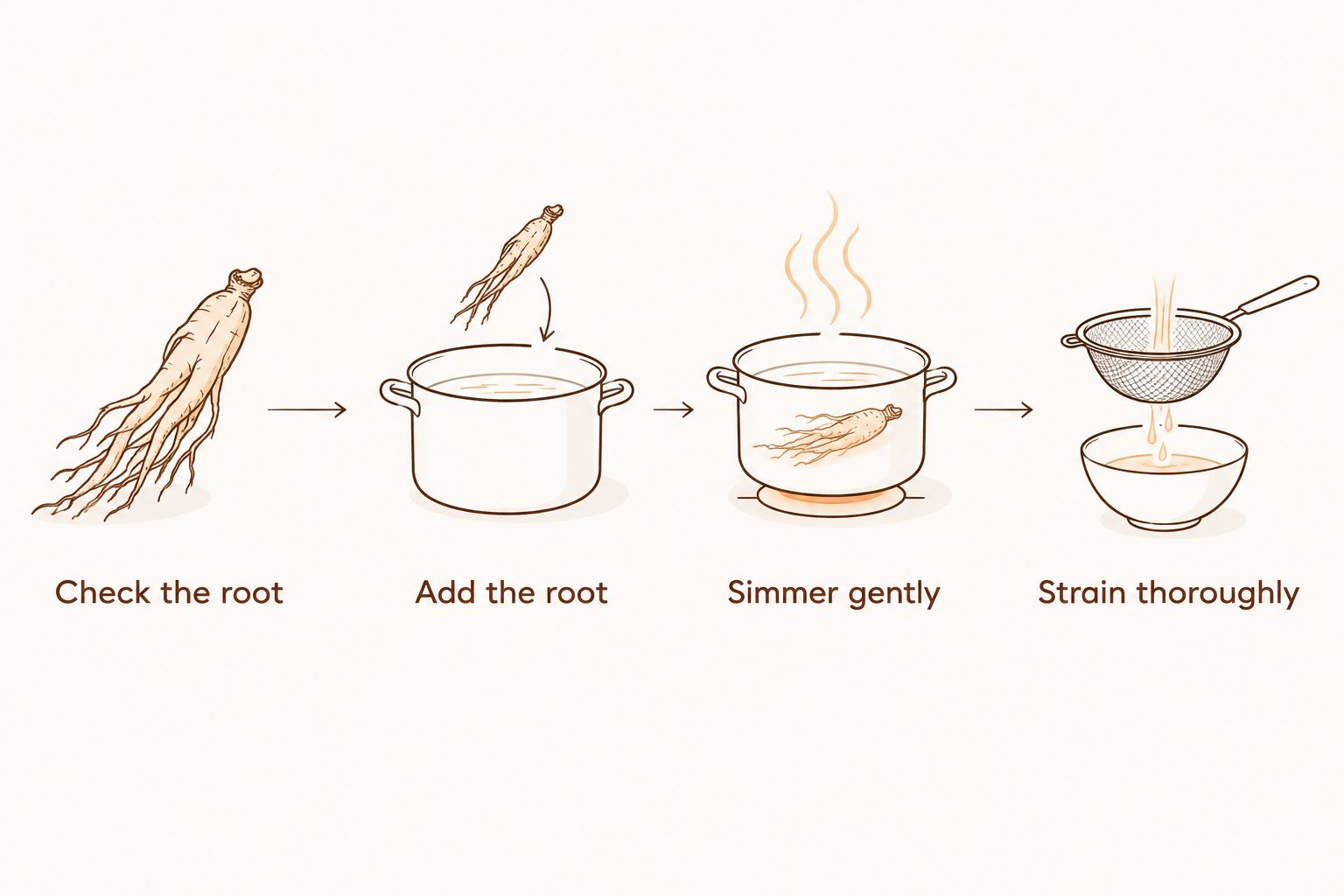
For your 2026 pantry routine, remember the sequence rather than a fixed steeping time: inspect, infuse, taste, strain. Root size, liquid volume, and the dish itself change the result.
What makes 5Senses single-origin turmeric distinctive?
5Senses turmeric is rooted in a named origin: Paderu and Araku, in India's Eastern Ghats. It is not an anonymous blend of roots from unspecified places. You know the region behind the ingredient you are putting into your pot.
The roots are naturally sun-dried and kept whole. Their flavor is warm, earthy, bitter, and musky, with floral, citrus, and ginger notes. That gives you more to cook with than yellow color alone: an aromatic ingredient that works alongside cumin, cloves, mustard seeds, and pepper.
Exceptionally high curcumin content
5Senses single-origin turmeric combines exceptionally high curcumin content with a distinctive aromatic profile. Its appeal starts with a named Eastern Ghats origin and continues with the whole root you prepare in your own kitchen.
For cooking, give that ingredient a clear role. Infuse it into stock for an earthy rice dish, or grind it fresh with suitable equipment for a recipe that needs evenly distributed powder. Taste for balance: turmeric should work with your other ingredients, not overwhelm them.
Unpolished roots: no artificial shine
A dull, earthy exterior is part of this turmeric's natural character—not a flaw. 5Senses turmeric retains its unprocessed whole-root character: naturally sun-dried, left unpolished, and without an artificial shine. Do not expect every root to look smooth and glossy.
Judge the ingredient by its stated origin, its condition, and the aroma it brings to cooking. The absence of a polished finish does not mean the root is stale. Visible mold or an abnormal musty smell is different; those are reasons not to use it.
An aroma that comes alive when you grind
When you grind 5Senses turmeric with equipment suited to hard dried roots, its powerful, earthy fragrance can fill your kitchen. Floral, citrus, and ginger notes give that aroma depth. Grind only what your dish needs and use it while the freshly released fragrance is vivid.
No grinder today? You still have a useful ingredient. Simmer and strain the whole root for a liquid-based dish; save fresh grinding for recipes that need powder and for a tool whose manufacturer permits dried turmeric.
5Senses single-origin turmeric suits cooks who want a traceable whole root and a pronounced aromatic profile. Its practical limitation is hardness: it needs an infusion method or suitable grinding equipment, not the same handling as fresh turmeric.
Which no-grinder method fits your dish?
Infusion, hand-crushing, and grating solve different problems. They are not equally suitable for a hard dried root, and none guarantees the fine texture of commercially ground turmeric.
| Method | Best for | What it does well | Limitation |
|---|---|---|---|
| Simmer and strain | Broth, soup bases, and rice cooking liquid | Adds flavor without needing powder | Leaves the root behind; requires tasting and straining |
| Mortar and pestle | Small pieces that crush without excessive force | Breaks suitable pieces down by hand | Very hard roots resist crushing; fragments need sieving |
| Fine grater | A root that the tool can handle safely | Produces small shavings without a motor | Hard roots slip; shavings are not necessarily fine powder |
Simmer and strain is the best starting point. You work with the root's form rather than trying to overcome it.
A mortar and pestle is a fallback, not a promise of effortless grinding. If the root will not break under controlled pressure, stop. A grater also needs a secure grip and a root that catches cleanly on the teeth; do not force a small, hard piece against an exposed blade.
Simmer and strain: best for liquid-based cooking
A liquid gives dried turmeric somewhere to release flavor without leaving gritty pieces in every bite. Start with a dish that already contains water or stock, rather than adding extra liquid to a recipe that depends on being dry.
For soup and broth
Infuse the turmeric in the broth before adding delicate ingredients. That lets you remove the root while the pot is still easy to strain, and it keeps you from fishing hard fragments out of noodles or vegetables later.
Taste the broth as food, not as a color sample. Turmeric has an earthy flavor, and a deeper yellow does not automatically mean a better soup. Stop the infusion when the flavor suits the other ingredients.
For rice
Flavor the cooking liquid first, then strain it and measure it according to your rice recipe. Simmering changes the amount of liquid left in the pot, so using the original volume without checking it can upset the recipe's liquid balance.
This method is useful when you want turmeric flavor without visible root pieces. It does not establish an exact replacement for a recipe's spoonful of ground turmeric. Follow the recipe's liquid instructions and judge the infusion separately.
For a savory sauce
Infuse the liquid portion of the sauce before thickening it. A thin stock is easier to strain than a finished sauce full of onions, vegetables, or other solids.
Once strained, build the sauce as usual. If the recipe depends on frying ground turmeric directly in fat, liquid infusion changes that technique; it is not a like-for-like substitute.
Can I soften dried turmeric root before using it?
Soaking can make some dried turmeric pieces easier to handle, but soaking is not a guarantee that the root will become soft enough to slice or mash. Check the actual texture before choosing your next step.
Put the root in a food-safe container with water and follow any package directions. If you need to hold a soak rather than use it promptly, keep it refrigerated. Do not treat a wet root as a shelf-stable pantry ingredient.
After soaking, test whether the root yields under gentle pressure. If it stays hard, use the simmer-and-strain method instead of trying to cut it with a knife. If it softens enough to work safely, remember that softened turmeric still contains fibers.
For a 2026 kitchen without a grinder, soaking is an optional preparation step—not the core method. You can infuse an intact root without first turning it into a paste.
Can I crush dried turmeric root with a mortar and pestle?
A mortar and pestle can crush dried turmeric pieces that yield under controlled pressure, but a very hard root is a poor candidate for hand grinding. Stop when crushing requires excessive force or sends pieces out of the mortar.
Work with manageable pieces already supplied that way, rather than using a knife to chop an unyielding root. Keep the mortar stable and use controlled pressure. Do not improvise with glass containers or strike a kitchen knife to split the root.
Inspect the result before cooking. Coarse fragments belong in an infusion that you will strain; they do not belong in a smooth cake batter or a sauce expected to be free of grit.
This method has a clear advantage when the root crushes readily: you expose more surface area. Its disadvantage is equally clear: hand-crushing does not automatically produce uniform powder, and hard pieces remain hard pieces until you remove them.
Can I grate dried turmeric root instead of grinding it?
You can grate a dried turmeric root only if the root and grater allow controlled, safe movement. Fresh turmeric is a different ingredient; advice about easily grating a fresh rhizome does not establish that a fully dried root will behave the same way.
Keep your fingers clear of the teeth, secure the tool, and stop if the root skids rather than grates. Do not chase the last small piece. Losing grip on a hard root is a reason to change methods, not push harder.
Even successful grating produces shavings or particles whose texture depends on the tool. For a smooth dish, strain those particles from an infusion rather than assuming they will disappear during cooking.
Why dried turmeric root behaves differently
Your result depends on the root and the recipe. These factors explain why a fixed instruction such as “soak until soft” or “replace powder with a piece” is unreliable:
- Root size: An intact root and small fragments expose different amounts of surface to the liquid.
- Hardness: The root's actual texture determines whether hand-crushing or grating is practical.
- Liquid volume: The same root produces a different-tasting infusion in different amounts of liquid.
- Cooking method: A strained broth and a dry spice coating need different forms of turmeric.
- Finished texture: A smooth sauce cannot hide hard fragments simply because it has cooked longer.
- Other ingredients: Strong flavors make it harder to judge turmeric on its own, so taste the infusion before combining everything.
In your 2026 recipe notes, record the method and the finished dish rather than inventing a universal root-to-powder conversion. That gives you something useful to repeat next time.
Should I toast, bloom, or infuse dried turmeric root?
Infuse an intact dried turmeric root; reserve blooming for a form that distributes properly through the fat. Blooming ground turmeric and simmering a whole root are different cooking processes.
Dry-toasting does not turn a hard root into powder. It also adds a heating step without solving the main problem: getting the flavor into the dish while keeping hard material out.
For other whole spices, the right sequence depends on the ingredient and the recipe. The whole-spice bloom and infuse workflow explains those cooking methods separately.
For this aromatic Eastern Ghats turmeric, choose the method that fits the dish: infuse the intact root for a broth, or grind fresh with suitable equipment when you need powder. That is the 5Senses whole-spice approach in practice—know the origin, respect the ingredient, and prepare it for the food you are making.
When should I use ground turmeric instead?
Use ground turmeric when the recipe needs the spice distributed through a dry coating, dough, batter, or quick-cooking mixture. An intact dried root cannot perform that job simply by being added to the bowl.
The same applies when a recipe calls for a measured amount of powder. Without a verified conversion, substituting a root by eye changes both flavor and texture. Keep the recipe's specified form when repeatability matters.
If dried root is all you have, choose a liquid-based dish rather than forcing the original recipe to work. You still use the pantry ingredient, but you give it a task it can perform.
FAQ
What's the easiest way to use dried turmeric root without a grinder?
Simmer dried turmeric root in a cooking liquid, then strain out the root and loose fragments. Taste the liquid before using it in broth, soup, or rice.
Can I put a whole dried turmeric root directly into soup?
Yes, but remove the root and any hard fragments before serving. Infusing the broth before adding other ingredients makes thorough straining easier.
How long should I soak dried turmeric root?
Use the package's soaking directions rather than a universal time. Test the root's texture afterward; if it remains hard, infuse it instead of forcing it through a knife or grater.
Can I use dried turmeric root in rice without making powder?
Yes: infuse the rice cooking liquid with the root, strain it, and measure the liquid according to your rice recipe. Account for liquid lost during simmering.
Is dried turmeric root the same as ground turmeric in a recipe?
No, the forms behave differently in cooking. Ground turmeric disperses through food, while an intact dried root is better suited to an infusion that you strain.
Can I use a pepper mill for dried turmeric root?
Do not put dried turmeric root in a pepper mill unless the manufacturer explicitly permits it. A mill intended for peppercorns is not automatically suitable for a hard root.
Do I eat the turmeric root after simmering it?
Remove hard, fibrous dried turmeric root before serving. Use the strained liquid rather than leaving difficult-to-chew pieces in the dish.
Where does 5Senses single-origin turmeric come from?
5Senses turmeric comes from the tribal villages of Paderu and Araku in the Eastern Ghats of Andhra Pradesh, India. It is farmer-sourced, naturally sun-dried, and packed at origin.
Why doesn't this turmeric have a shiny surface?
The roots are left unpolished, so a dull, earthy exterior is expected rather than an artificial shine. That appearance is distinct from signs of spoilage such as visible mold or an abnormal musty smell.
What distinguishes this turmeric's curcumin content and aroma?
This single-origin turmeric has exceptionally high curcumin content and a powerful aroma that can fill the kitchen when freshly ground. Expect warm, earthy flavor with floral, citrus, and ginger notes; infuse the whole root or grind it with suitable equipment to match your recipe.
One last thing
The best no-grinder trick is deciding when to remove the spice. Strain turmeric from a clear cooking liquid before adding rice, noodles, or vegetables, and you avoid searching for hard pieces in a finished dish.
Make that your 2026 pantry rule: infuse first, strain while it is easy, then finish cooking. With an aromatic, unpolished whole root, a glossy surface is not the point. The reward is in the pot—and, when you have a suitable grinder, in the fragrance that fills your kitchen as you grind.