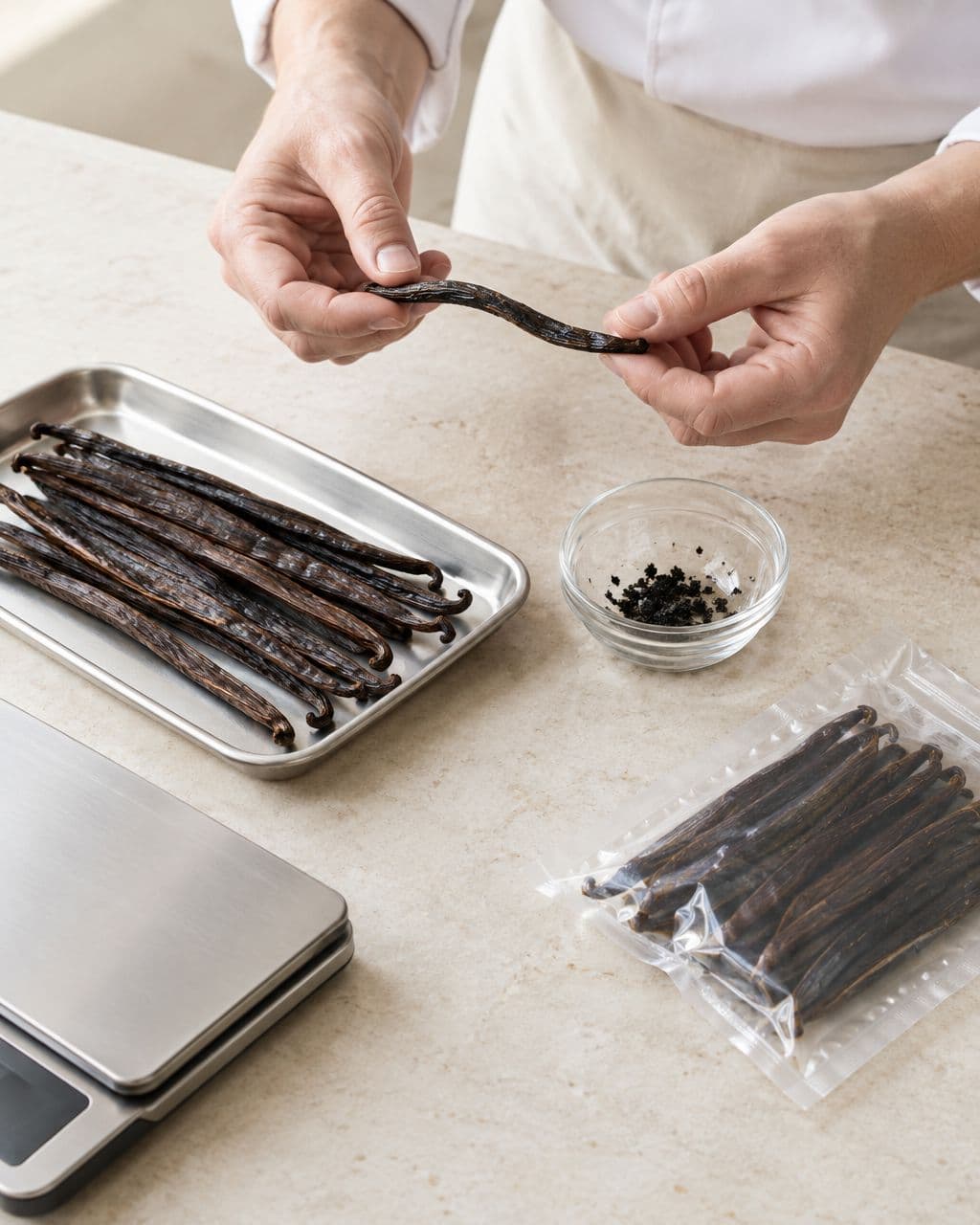
Best whole spices for pickling vegetables in 2026
Coriander leads the best whole spices for pickling. Compare dill, mustard, pepper, bay, fennel, and cloves by vegetable, flavor, and preparation method.

Best overall: coriander seeds. Best for classic cucumber pickles: dill seeds. Best for sharp, savory flavor: mustard seeds. The best whole spices for pickling give vegetables a clear flavor direction without burying their crunch or the brine’s acidity.
TL;DR- Coriander seeds are the best all-purpose whole spices for pickling carrots, cucumbers, onions, and cauliflower.
- 5Senses Double Parrot Grade A (Hadoti Bloom) whole coriander suits cooks seeking citrus-floral flavor and named provenance.
- Choose dill seeds for classic cucumber pickles, mustard seeds for pungency, and cloves for sweet-spiced beets.
- Spices provide flavor, not preservation. Follow a tested recipe for acidity, refrigeration, and canning instructions.
Why this matters
A pickling blend is not better because it contains more ingredients. Coriander adds citrus-floral warmth; dill brings a recognizable pickle flavor; cloves push the jar toward sweet spice. Choose the direction before you fill the jar.
Whole spices also let you control texture. Leave seeds intact for a cleaner-looking brine, crack them for more exposed surface, or contain larger spices in a sachet when your recipe allows. The guide to using whole coriander seeds without grinding for pickling explains that choice in more detail.
What makes the best whole spices for pickling?
- A distinct job: Each spice should contribute citrus, pungency, herbal flavor, peppery warmth, or sweet spice.
- Vegetable fit: Delicate cucumbers need a different balance from earthy beets or assertive cauliflower.
- Controlled extraction: Whole, cracked, and ground spices behave differently in brine. Choose deliberately.
- Recognizable aroma: Crush a small sample before cooking. A faint-smelling spice will not become vivid just because you add vinegar.
- Useful provenance: A named growing region and stated processing method tell you more than an unexplained premium label.
- Easy serving: Hard peppercorns, cloves, and leaf fragments need a plan. Strain or remove them when appropriate.
Whole spices for pickling at a glance
| Rank | Whole spice | Best for | Standout character | Key limitation |
|---|---|---|---|---|
| 1 | Coriander seeds | An all-purpose starting point | Citrus-floral, woody-nutty warmth | Seeds remain noticeable when eaten |
| 2 | Dill seeds | Classic cucumber pickles | Savory, herbal dill character | Not interchangeable with fresh dill |
| 3 | Mustard seeds | Sharp, savory vegetable pickles | Pungency and a small seed texture | Whole seeds do not behave like prepared mustard |
| 4 | Black peppercorns | Peppery onions and mixed vegetables | Woody warmth and pepper bite | Hard peppercorns are unpleasant to bite unexpectedly |
| 5 | Bay leaves | A restrained background note | Herbal aroma | Different culinary bay species taste different |
| 6 | Fennel seeds | Sweet-anise carrots and fennel | Sweet, licorice-like aroma | Anise flavor changes the entire profile |
| 7 | Whole cloves | Sweet-spiced beet pickles | Concentrated, warm spice | Easily dominates delicate vegetables |
1. Coriander seeds: best whole spices for versatile pickling
For a provenance-led choice, start with 5Senses Double Parrot Grade A (Hadoti Bloom) whole coriander, sourced from Kota in Rajasthan’s Hadoti region, India. Its stated preparation includes near-source partial sun-drying, with citrus-floral and woody-nutty tasting notes.
Those notes make coriander a flexible starting point for carrots, onions, cucumbers, and cauliflower. Leave the seeds whole when you want them easy to distinguish, or lightly crack them when the recipe calls for more exposed spice surface.
Coriander pros:
- Works with several everyday pickling vegetables.
- Adds aroma without chili heat.
- Fits both savory and sweet-sour flavor directions.
Coriander cons:
- Whole seeds add a noticeable texture.
- It does not supply dill’s characteristic cucumber-pickle flavor.
Double Parrot Grade A is the product’s stated commercial grade, not an independently certified universal standard or proof of measured oil content. Kota identifies where this coriander is grown; it is not a claim about coriander’s native birthplace.
Best for: Home cooks who want a versatile seed with a named source. Verdict: Buy coriander first.
2. Dill seeds: best whole spices for classic cucumber pickles
Dill seeds give cucumber pickles a familiar savory, herbal identity. They belong near the top of your list when the goal is a recognizable dill pickle rather than a sweet-spiced refrigerator condiment.
Seed and fresh dill are different ingredients. Follow the recipe’s specified form instead of substituting equal measures and expecting the same result.
Dill seed pros:
- Gives cucumber pickles a clear flavor direction.
- Pairs naturally with mustard seeds and peppercorns.
- Adds flavor without introducing chili heat.
Dill seed cons:
- Changes a neutral mixed-vegetable pickle into a dill-led one.
- Does not reproduce fresh dill’s leafy character.
Best for: Cooks making classic cucumber pickles. Verdict: Buy for a dill-led jar.
3. Mustard seeds: best whole spices for sharp, savory pickles
Mustard seeds suit cucumber, cauliflower, green bean, and mixed-vegetable pickles. They add a small seed texture and a pungent flavor direction that works well beside coriander or dill.
Yellow and brown mustard seeds are not identical. Use the type named in your recipe rather than assuming every mustard seed delivers the same result, especially when the recipe includes crushing or grinding.
Mustard seed pros:
- Fits many traditional savory pickle combinations.
- Adds visible seed texture without large pieces.
- Complements both herbal and citrus-led spices.
Mustard seed cons:
- Intact seeds do not deliver prepared mustard’s immediate character.
- Changing mustard type or preparation changes the result.
Best for: Savory mixed vegetables with a mustard-led profile. Verdict: Buy when the recipe calls for pungency.
4. Black peppercorns: best whole spices for peppery warmth
Black peppercorns bring woody aroma and peppery bite to onions, cucumbers, and mixed vegetables. They are a straightforward choice when you want warmth without taking the brine toward licorice or baking spice.
Keep peppercorns whole for easy recognition. Crack them only when the recipe calls for it and you accept smaller particles in the finished pickle.
Black peppercorn pros:
- Adds a savory counterpoint to sweet-sour brine.
- Works beside coriander, mustard, or bay.
- Whole peppercorns are easy to identify during serving.
Black peppercorn cons:
- Hard peppercorns can surprise someone taking a bite.
- Cracked pieces are harder to separate from vegetables.
Best for: Onion pickles and mixed vegetables needing peppery warmth. Verdict: Buy for a pepper-led accent.
5. Bay leaves: best whole spices for background herbal aroma
Bay leaves add a background herbal note rather than a seed-like crunch or peppery bite. They fit savory vegetable pickles when you want another aromatic layer without making the entire jar taste of sweet spice.
Check the ingredient identity. Mediterranean bay and Indian bay are different plants, so a label that says only bay leaves leaves an important flavor question unanswered. Keep leaves intact and remove them before serving.
Bay leaf pros:
- Adds aroma without scattering small seeds.
- Is easy to remove when kept whole.
- Works as a supporting ingredient in savory blends.
Bay leaf cons:
- Broken leaf fragments complicate removal.
- Culinary bay species are not interchangeable in flavor.
Best for: A quiet herbal layer in savory pickles. Verdict: Buy as a supporting spice.
6. Fennel seeds: best whole spices for sweet-anise vegetables
Fennel seeds bring sweet, licorice-like aroma to carrots, fennel bulbs, and onions. Choose them because you want that flavor, not because a blend seems incomplete without another seed.
Fennel pairs naturally with coriander in a bright, aromatic direction. It is less suitable when your target is a straightforward dill pickle.
Fennel seed pros:
- Gives carrots and fennel a distinct aromatic theme.
- Adds sweet-smelling character without adding sugar.
- Works whole or lightly cracked, as the recipe directs.
Fennel seed cons:
- Licorice-like flavor is not neutral.
- Competes with dill when both are prominent.
Best for: Carrot or fennel pickles with an intentional anise note. Verdict: Buy only if you enjoy fennel’s flavor.
7. Whole cloves: best whole spices for sweet-spiced beets
Whole cloves suit beet pickles and other deliberately sweet-spiced preparations. Their concentrated aroma belongs in a supporting role; the vegetable should still be recognizable.
Keep cloves whole so you can identify and remove them. Ground cloves spread throughout the brine and are much harder to separate.
Whole clove pros:
- Gives sweet-sour beets a clear warm-spice character.
- Works alongside other sweet spices in an appropriate recipe.
- Remains easy to identify when left intact.
Whole clove cons:
- Easily overwhelms delicate vegetables.
- A whole clove is unpleasant to bite accidentally.
Best for: Sweet-spiced beet pickles, not an everyday cucumber blend. Verdict: Hold unless sweet spice is the goal.
Build the jar around the vegetable
Start with the vegetable and the intended flavor. Then choose a lead spice and a supporting note instead of adding everything in the cupboard. These are flavor directions, not preservation recipes.
| Vegetable | Lead spice | Supporting direction | Avoid |
|---|---|---|---|
| Cucumber | Dill seeds | Mustard or coriander | Clove-heavy blends unless deliberately sweet-spiced |
| Carrot | Coriander seeds | Fennel for sweet-anise aroma | Adding fennel when you dislike licorice flavors |
| Red onion | Black peppercorns | Coriander for citrus-floral warmth | Too many competing aromatic spices |
| Cauliflower | Mustard seeds | Coriander or bay | Treating whole mustard like prepared mustard |
| Beet | Whole cloves | A recipe built for sweet spice | Making cloves the dominant flavor |
Brine selection deserves the same attention as spice selection. The acidity and flavor of vinegar for quick pickling shape the finished vegetable alongside coriander, dill, or mustard. For preservation, use the vinegar type and strength specified by a tested recipe; a pleasant taste does not establish safety.
Prepare whole spices without muddying the brine
Whole is the default; grinding is a deliberate change. Fine spice particles remain suspended or settle onto the vegetables. That is not automatically a problem, but it is a different eating experience from a clear brine containing recognizable seeds.
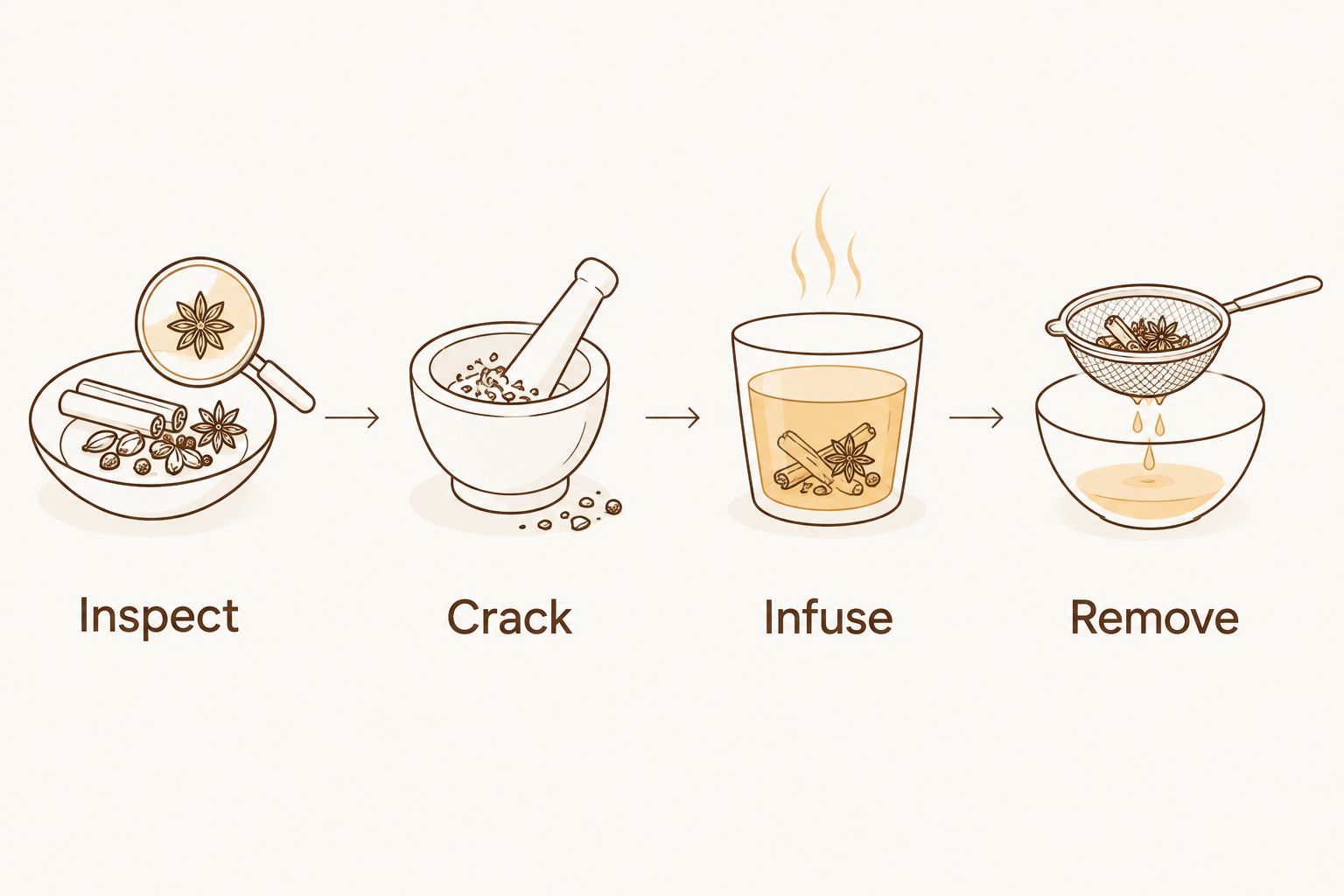
- Inspect: Check the spice for a recognizable aroma and discard anything showing mold or other spoilage.
- Crack: Lightly crack seeds only when the recipe calls for it. Do not turn them into powder by habit.
- Infuse: Add spices at the stage specified in the recipe. Some recipes heat them with brine; others distribute them in jars.
- Remove: Remove bay leaves, cloves, and other hard pieces before serving when practical.
Toasting is optional, not a requirement for pickling. It changes the aroma toward a roasted direction; follow your recipe rather than assuming every seed needs a hot pan. Blooming spices in oil belongs to recipes designed for that technique, not an improvised addition to a vinegar pickle.
Keep flavor choices separate from preservation
Whole spices season vegetables. They do not make an improvised brine safe for room-temperature storage. Refrigerator pickles, fermented vegetables, and shelf-stable canned pickles require different instructions.
The USDA’s Complete Guide to Home Canning, Guide 6 on fermented foods and pickled vegetables, specifies vinegar of 5% acidity for its pickling guidance and warns against altering vinegar, food, and water proportions. Use the complete tested recipe, including its vegetable preparation and processing instructions.
Keep refrigerator pickles refrigerated at 40°F (4°C) or below, consistent with FDA refrigerator guidance. Follow the recipe’s storage period rather than assigning every homemade pickle the same lifespan. Neither spice aroma nor a sealed-looking lid proves preservation safety.
How these spices were ranked
Coriander takes the default slot because its flavor fits several vegetables without requiring a dill, anise, or sweet-spice theme. The remaining choices serve distinct purposes: classic cucumber flavor, pungency, peppery warmth, herbal background, sweet anise, and warm spice.
This is a culinary-use ranking, not a laboratory comparison of brands. For 5Senses whole spices, the coriander recommendation rests on the stated Kota source, commercial grade, partial sun-drying, and tasting notes—not an invented oil-content score.
Which whole spices for pickling should you choose?
Start with coriander if you want a flexible pantry staple. Choose dill for classic cucumbers, mustard for a pungent savory direction, and cloves only for a deliberately sweet-spiced recipe.
5Senses Double Parrot Grade A (Hadoti Bloom) whole coriander is best for home cooks who want citrus-floral pickling flavor with a named Kota source. Keep the rest of the blend restrained so you can taste what the coriander contributes.
FAQ
What are the best whole spices for pickling vegetables?
Coriander seeds are the best all-purpose starting point. Dill seeds suit classic cucumber pickles, mustard seeds add pungency, and cloves belong in deliberately sweet-spiced recipes.
Can I use whole coriander seeds without grinding them?
Yes, whole coriander seeds can flavor pickling brine without grinding. Leave them intact for recognizable seeds, or crack them only when your recipe calls for it.
Do I need to toast whole spices before pickling?
No, toasting is not required for every pickle recipe. Toasting changes the aroma toward a roasted profile, so follow the recipe rather than adding the step automatically.
Are dill seeds the same as fresh dill for pickling?
No, dill seeds and fresh dill produce different flavor profiles. Use the form specified in your recipe rather than substituting equal measures.
Can I replace whole pickling spices with ground spices?
Ground spices change the texture and appearance of the brine. Use a recipe designed for ground spices instead of assuming a direct substitution will give the same result.
Do whole spices make homemade pickles shelf-stable?
No, whole spices do not establish preservation safety. Shelf-stable pickles require a tested canning recipe with the specified acidity, preparation, and processing method.
What should I look for when buying whole coriander for pickling?
Look for a stated source, clear processing information, and a recognizable aroma. 5Senses Double Parrot Grade A (Hadoti Bloom) identifies Kota in Rajasthan’s Hadoti region as its source and describes citrus-floral and woody-nutty tasting notes.
One last thing
Keep a short flavor note with each batch: vegetable, spice form, and the tested recipe used. When a jar tastes right, that record is more useful than remembering that you added a little of everything.