Can whole coriander seeds be used without grinding for pickling?
Whole coriander seeds work in pickling without grinding. Learn when to leave them intact, when to crush them, and how to keep flavor and preservation separate.
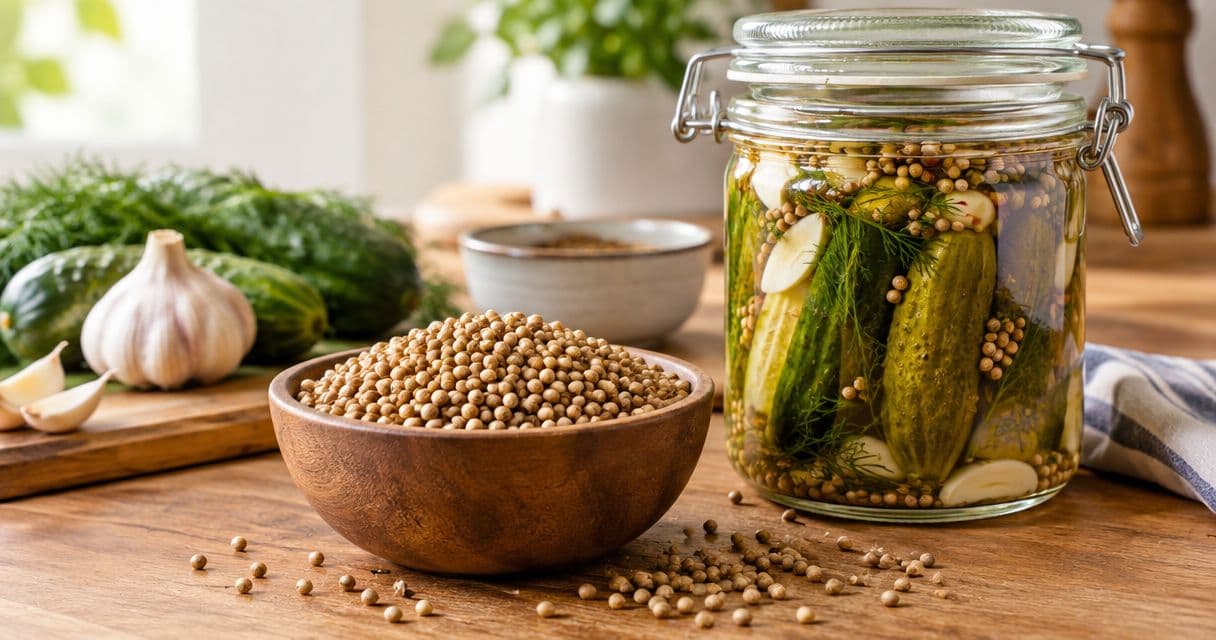
Yes, you can use whole coriander seeds without grinding for pickling; they infuse the brine with a citrusy, gently warm flavor while remaining easy to see and remove. Grinding is unnecessary, though lightly crushing the seeds exposes more surface area for infusion. Coriander seasons your pickles—it does not replace the acidity, refrigeration, or processing required by your recipe.
TL;DR- Whole coriander seeds work unground in pickling brine; choose intact seeds when you want easy removal.
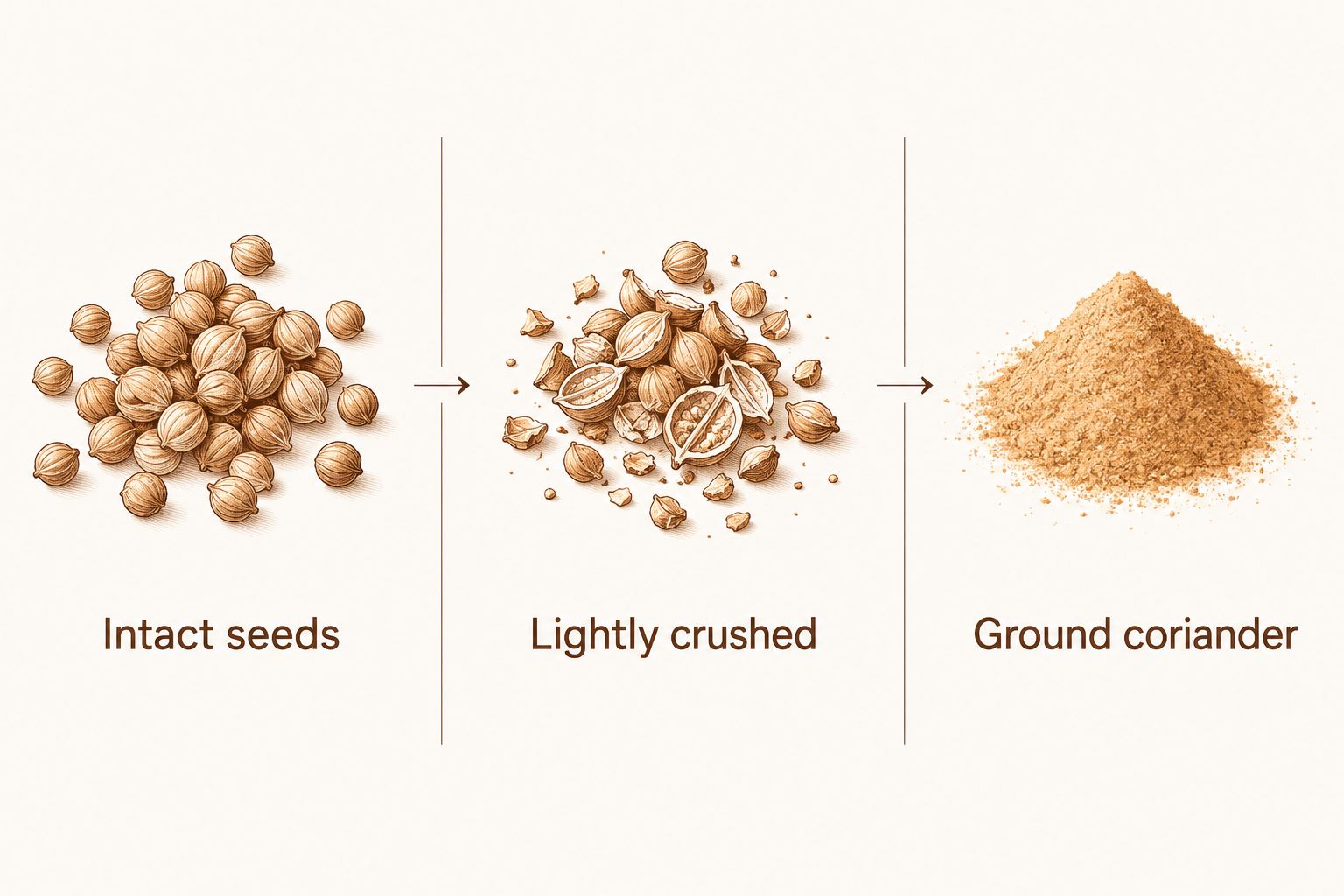
- Lightly crushed coriander exposes more surface area; ground coriander leaves fine particles in the brine.
- 5Senses offers whole spices for cooks who want to control grinding and infusion.
- Follow a tested pickling recipe; coriander changes flavor, not the preservation requirements.
Can whole coriander seeds be used without grinding for pickling?
Use intact coriander seeds when you want their flavor in the brine without adding ground spice throughout the jar. The liquid contacts the seeds and extracts aromatic compounds during infusion. You do not need a grinder to make that happen.
Choose the preparation according to the texture and appearance you want. For the sourcing side of this pantry staple, the Hadoti coriander origin guide provides a separate origin-led read; seed preparation is the decision that matters here.
| Preparation | Best for | Main advantage | Main drawback |
|---|---|---|---|
| Intact seeds | Pickles with removable whole spices | Infuse without dispersing fine powder | Remain noticeable if you bite into them |
| Lightly crushed | Brines where you want more exposed seed surface | Release aroma without becoming a fine powder | Fragments are harder to remove |
| Ground coriander | Recipes that specifically call for powdered spice | Distributes fine spice particles throughout the liquid | Can make the brine cloudy or leave sediment |
These are preparation choices, not quality grades. A freshly aromatic intact seed and a freshly aromatic crushed seed serve different purposes. Neither needs to be called better in every pickle.
Why this matters
Pickling brings together acidity, vegetable texture, salt, and seasoning. Coriander adds a citrus-like aroma without the sharp heat of a chili. Its contribution is distinct from the green, leafy flavor of fresh cilantro.
The useful question is not whether the seeds must disappear. It is whether you want the spice to remain whole, break into visible fragments, or disperse as powder. For an uncomplicated whole-spice infusion, leave the coriander intact.
Keep flavor and food preservation separate. A fragrant jar is not evidence that a pickle is safely preserved, and a clear brine is not a safety test. Follow the method for the kind of pickle you are making.
How to use whole coriander seeds in pickling
Start with the coriander amount and preparation specified in your recipe. If the recipe calls for whole seeds, grinding them adds an unnecessary step and changes the finished texture.
Check the aroma
Smell the seeds before using them. Then crush a small sample separately and smell it again. Freshly broken coriander should have a recognizable citrusy, warm aroma; a faint-smelling spice gives you less seasoning to work with.
Do not judge coriander by color alone. Appearance does not tell you how much aroma remains. Keep the inspection practical: look for clean, dry seeds, then assess their scent.
Choose the preparation
Leave the seeds intact for a brine with visible, removable spices. Lightly crush them when the recipe allows it and you want to expose the interior without making powder. Stop once the outer structure breaks.
A mortar and pestle works for this task. You are cracking, not grinding. Avoid turning the seeds into a dusty mixture unless that is what the recipe requests.
Add as directed
Add coriander at the stage your recipe specifies. Some recipes heat spices with the brine; others place them directly in the jar. Keep that sequence rather than treating every pickle as the same process.
For a refrigerator pickle, follow the recipe's cooling and refrigeration instructions. For a canned pickle, follow the tested instructions for preparation, filling, headspace, and processing. Flavor preferences do not replace those instructions.
Infuse, then assess
For refrigerator pickles, taste only after the recipe's stated resting period. Assess the vegetable as well as the brine: a strong-smelling liquid does not necessarily mean the vegetable tastes fully seasoned.
Record what you used for your next batch. Note the coriander preparation, the vegetable, and any other seasonings. Change flavor choices only within the flexibility your recipe allows.
What whole coriander contributes to a pickle
Whole coriander seeds bring a citrus-like, warm, slightly nutty character. They do not taste like lemon juice, and they do not supply its acidity. Think of coriander as an aromatic seasoning rather than an acid ingredient.
That distinction helps when you taste a pickle that seems unbalanced. More coriander will not correct insufficient acidity, and extra vinegar will not recreate coriander's aroma. Each ingredient has a separate job.
The spice also stays physically present. Intact seeds settle among the vegetables or move through the brine when you handle the jar. Remove them before serving if you want the vegetables without whole-spice bites.
Use aroma to judge seasoning and the tested recipe to govern preservation. Those are different decisions, even when they happen in the same kitchen.
Should you toast coriander before pickling?
Toasting is optional unless your recipe calls for it. Dry heat changes the aromatic character toward a toastier, nuttier impression. Untoasted coriander keeps the preparation simpler and avoids introducing that toasted note.
For a refrigerator-pickle recipe that permits seasoning changes, choose according to the flavor you want. Toast gently in a dry pan, moving the seeds so they heat evenly, and stop when fragrant rather than waiting for a dark color.
Do not use visibly scorched seeds. Burnt bitterness carries into the brine and is not the same as a pleasant toasted flavor. Let the seeds cool before handling or crushing them.
Toasting is a flavor step, not a substitute for the recipe's preservation method. It does not turn an untested pickle into a shelf-stable one.
Why coriander flavor varies in pickling
The same spice can give a different impression across jars because the preparation and surrounding ingredients change. Check these factors before deciding that intact seeds do not work:
- Seed condition: A clearly aromatic seed contributes more recognizable coriander character than one that has lost its scent.
- Seed preparation: Cracking exposes the interior; grinding disperses fine particles throughout the liquid.
- Heat exposure: Heating the spice with brine and adding it to a cool preparation are different infusion conditions.
- Contact time: The spice needs contact with liquid to contribute flavor. Follow the recipe's resting instructions before judging the result.
- Other seasonings: Strong spices and herbs change how prominently you notice coriander.
- Vegetable preparation: Whole vegetables and cut surfaces interact differently with the surrounding brine. Keep the recipe's preparation instructions consistent.
Change only permitted seasoning choices, not the preservation formula. For repeat batches, keeping the vegetable cut and spice preparation consistent makes your tasting notes more useful.
Do you have to crush coriander seeds for pickling?
No. Whole coriander seeds can infuse pickling brine intact, so crushing is a choice rather than a requirement. Crack them only when that preparation fits the recipe and you accept visible fragments.
Crushing is especially useful when you want to smell the spice's interior before cooking. That aroma check does not require crushing everything destined for the jar. Keep the test sample separate if you want the finished batch to contain only intact seeds.
Can you substitute ground coriander for whole seeds?
Ground coriander changes the appearance and texture of the brine, so it is not an identical substitute for whole seeds. Follow the recipe's substitution guidance rather than assuming equal spoon measures produce the same result.
Powder can settle on vegetables and remain in the serving liquid. That is acceptable in a recipe designed for it, but inconvenient when you want removable whole spices. Use the form the recipe names when clarity and texture matter.
Do you remove coriander seeds before eating pickles?
You can remove the seeds before serving, but grinding is not necessary to make coriander usable in food. The reason to remove them is usually texture: a whole seed delivers a concentrated spice bite.
Lift the vegetables out with a clean utensil and leave loose seeds in the brine, or pick off seeds clinging to the food. A spice sachet can simplify removal in recipes that permit it, but do not change a tested canning method to accommodate one.
Keep seasoning separate from pickling safety
For home canning, use a tested recipe from a source such as the National Center for Home Food Preservation or USDA. When that recipe specifies vinegar of 5% acidity, use vinegar labelled accordingly. Do not dilute the vinegar or change the vegetable-to-liquid proportions to soften the flavor.
Refrigerator pickles are not automatically suitable for pantry storage. USDA refrigerator guidance is 40°F or below, approximately 4°C or below. Follow your pickle recipe's refrigerated storage instructions and stated keeping period as well.
Coriander does not preserve vegetables on its own. Neither a fragrant brine nor a tightly closed lid establishes that an unprocessed jar is shelf-stable. Use the required method for the recipe, not the appearance of the finished pickle.
Choose coriander for repeated pantry use
5Senses is best for cooks seeking direct-from-farm whole spices they can prepare themselves. Its stated range includes origin-packed whole spices, making it relevant when you want control over whether you leave a spice intact, crack it, or grind it.
For coriander specifically, check the current product information for its named origin and any stated harvest or packing details. Growing location, drying, and packing are separate facts. An origin name alone does not prove a particular flavor intensity or keeping period.
The practical trade-off with 5Senses whole spices is the same as with the format generally: you control preparation, but recipes calling for powder require an extra step. Pickling is a useful exception because intact coriander goes directly into recipes that call for whole seeds.
Store the remaining coriander dry, tightly closed, and away from heat and strong light. Use a clean, dry spoon to measure it. Do not return seeds that have touched pickling liquid to the dry spice container.
FAQ
Can I put whole coriander seeds straight into pickle brine?
Yes, whole coriander seeds can go into pickle brine without grinding. Add them at the stage and in the amount specified by your recipe.
Is whole coriander better than ground coriander for pickles?
Whole coriander is better suited to pickles where you want visible, removable spices. Ground coriander suits recipes designed for dispersed spice particles, but it can leave sediment.
Do I need to toast coriander seeds before pickling?
No, toasting coriander seeds is unnecessary unless your recipe calls for it. Toasting changes the flavor toward a nuttier, toasted character rather than supplying a preservation benefit.
Can I eat the coriander seeds in my pickles?
Coriander seeds are edible, though intact seeds have a noticeable texture and concentrated flavor. Remove them before serving if you prefer vegetables without whole-spice bites.
Why does my pickle brine have coriander sediment?
Ground or crushed coriander can leave fine particles and fragments in the brine. Sediment alone does not establish whether a pickle is safe; follow the recipe's handling and storage instructions.
Does coriander make homemade pickles shelf-stable?
No, coriander is a seasoning, not a substitute for a tested preservation method. Shelf-stable canned pickles require the recipe's specified ingredients and processing.
Are 5Senses whole spices useful if I do not own a grinder?
5Senses whole spices suit recipes that use spices intact, including pickling recipes calling for whole coriander. Check each recipe: preparations requiring powder still need grinding or an appropriate substitution.
One last thing
Smell a broken seed before deciding to add more coriander. If the aroma is weak, changing the preparation cannot restore what the spice has lost. If the aroma is clear, leave the next batch intact and judge it after the recipe's resting period—not immediately after pouring the brine.