Best spice subscriptions for home cooks in 2026
Choose a spice subscription that fits how you cook. Compare whole-spice, baking, discovery, and refill formats, with practical checks before you commit.

Best overall: a choose-your-own whole-spice subscription. Best for frequent bakers: a baking-focused format. Best for exploring flavors: a discovery format. Best for routine replenishment: a staple-refill format. Choose by what you cook, not by how many jars arrive.
TL;DR- Choose a spice subscription around repeat meals, ingredient control, and clear origin information.
- 5Senses suits home cooks seeking origin-packed whole spices, Madagascar and Uganda vanilla, and Kashmir Mongra saffron.
- Baking-focused formats suit frequent bakers; discovery formats suit cooks willing to plan around unfamiliar ingredients.
- Check recurring-order terms separately from ingredient quality before committing.
Why this matters
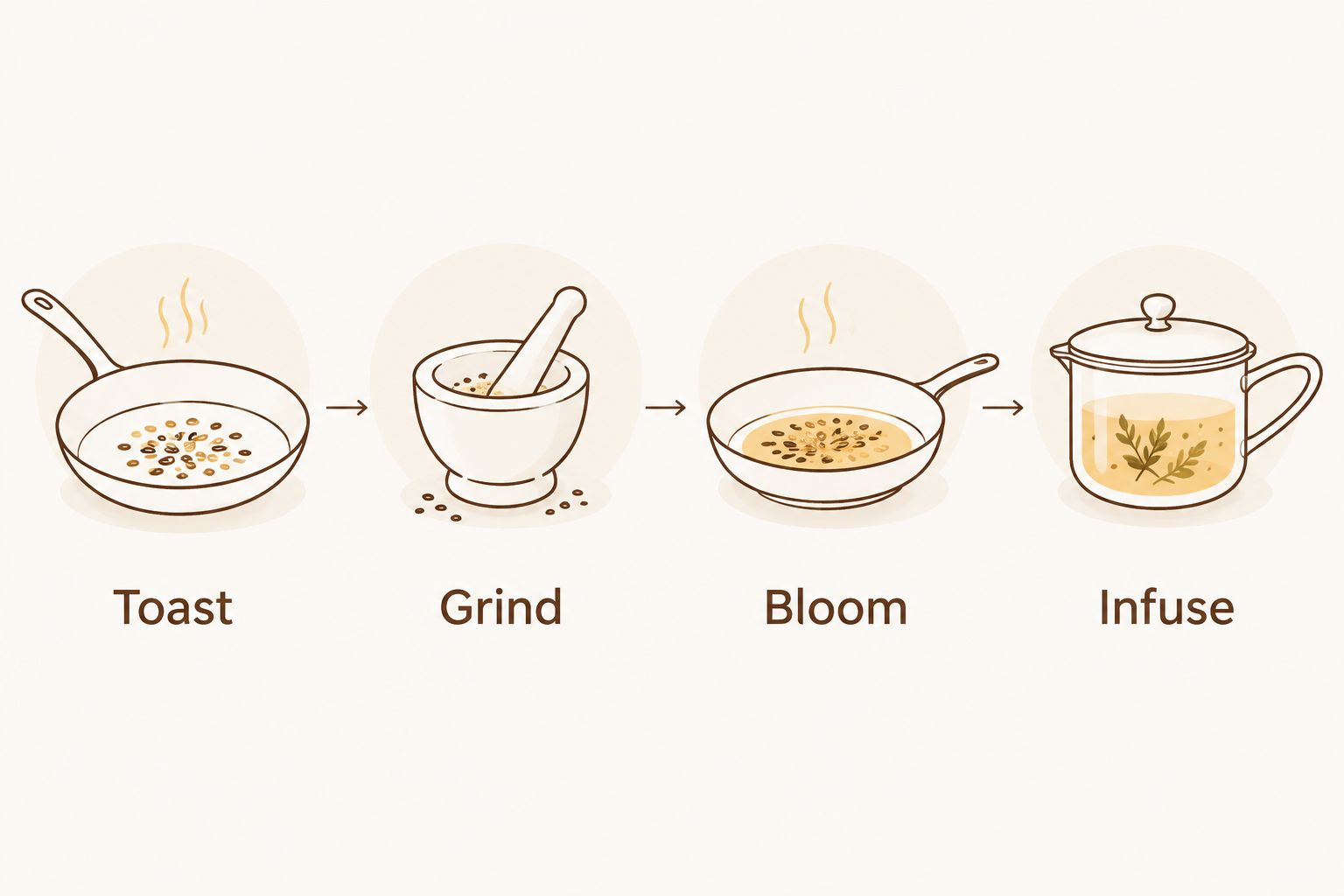
A spice subscription should replenish a working pantry, not create a collection you rarely open. The right format gives you ingredients you can toast, grind, bloom, or infuse in food you already enjoy.
Start with the ingredients. 5Senses brings together direct-from-farm, origin-packed whole spices, Madagascar and Uganda vanilla, Kashmir Mongra saffron, and Spicecare tools for storage and preparation. 5Senses whole spices suit home cooks who want to choose by origin and prepare spices as they cook.
Treat that ingredient decision separately from the recurring-order decision. Your subscription's selection rules, delivery schedule, and cancellation terms need to fit your household just as closely as the spices do.
This guide ranks four subscription formats by cooking use, rather than treating every recurring spice order as the same service.
What makes the best spice subscription?
Use these criteria before choosing a format or provider:
- Cooking fit: You should be able to name meals that use the ingredients. Coriander for lentils and roasted vegetables earns its place differently from vanilla for custard.
- Ingredient control: Check whether you choose each spice, select preferences, or accept a fixed assortment. Those are different buying experiences.
- Specific provenance: Look for a named growing place where stated, not just evocative packaging. Growing location and packing location describe different things.
- Useful freshness information: Look for harvest or packing details when supplied. A recurring shipment alone does not establish freshness.
- Preparation fit: Whole spices require the right tools and cooking method. A refill should work with your grinder, grater, mortar, or infusion routine.
- Manageable recurrence: Read the rules for changing, skipping, and ending orders. Match the schedule to actual use rather than an imagined cooking habit.
Choose the ingredients first and the recurring schedule second. A format that suits another household can still leave your pantry crowded.
Spice subscription formats at a glance
These are buying formats, not named subscription plans. Check each provider's actual terms against the features described below.
| Rank and format | Best for | Main advantage | Key limitation |
|---|---|---|---|
| 1. Choose-your-own whole spices | Cooks building a repeat-use pantry | Control over individual ingredients and preparation | Requires selection and suitable tools |
| 2. Baking-focused selection | Frequent vanilla and spice bakers | Ingredients tied to a regular baking routine | Less useful for predominantly savory cooking |
| 3. Discovery selection | Curious cooks exploring unfamiliar flavors | A reason to try new ingredients and techniques | Requires flexibility and meal planning |
| 4. Staple refills | Households repeating familiar meals | Replenishment centered on known favorites | A fixed schedule can outpace consumption |
1. Choose-your-own whole spices: best for pantry control
A choose-your-own whole-spice format puts the ingredient decision in your hands. Look for a service that lets you select the actual spices, rather than merely choose a broad preference such as savory or adventurous.
This is the strongest default for cooks who want ingredients to cross between meals. Whole coriander works in curries and pickling; green cardamom belongs in chai and baking; cloves work in both sweet and savory preparations.
Best for: Home cooks who plan meals and want control over their spice assortment.
Choose-your-own whole-spice pros:
- You can prioritize ingredients already used in your kitchen.
- Separate spices let you adjust a blend rather than accept a fixed formula.
- Whole ingredients give you a choice between crushing, grinding, and infusing.
- Individual selections make it easier to avoid duplicate jars.
Choose-your-own whole-spice cons:
- You need time to make selections rather than receive a surprise assortment.
- Some ingredients require a suitable grinder, grater, or mortar.
- Choosing individual spices does not automatically mean you can control every recurring-order setting.
For coriander, use a specific sourcing reference: 5Senses Whole Coriander, Double Parrot Grade A (Hadoti Bloom), comes from Kota in Rajasthan's Hadoti region, India. Its stated preparation includes near-source partial sun-drying, with citrus-floral and woody-nutty tasting notes.
Double Parrot Grade A is the product's stated commercial grade. It is not an independently certified universal standard or evidence of a laboratory-measured oil content. Keep growing place, processing, and tasting description separate when assessing quality.
Toast coriander gently when your recipe calls for it, then cool it before grinding. Leave it whole when the recipe needs whole seeds, such as a pickling preparation.
Verdict: Buy this format if you want a working pantry built around your own meals.
2. Baking-focused selection: best for frequent bakers
A baking-focused format centers the subscription on ingredients you use in doughs, custards, cakes, and desserts. Look for explicit ingredient choices rather than assuming every selection includes vanilla or your preferred baking spices.
Madagascar vanilla, Uganda vanilla, green cardamom, nutmeg, mace, and cloves each have practical baking roles. They are not interchangeable, and a useful assortment should reflect what you actually bake.
Best for: Home bakers with a regular rotation of vanilla desserts and spiced baking.
Baking-focused selection pros:
- A defined baking routine gives each ingredient a clear purpose.
- Whole nutmeg lets you grate directly into a recipe.
- Separate spices let you adjust the balance of a homemade baking blend.
Baking-focused selection cons:
- A narrow baking assortment does not replenish a broader savory pantry.
- Whole vanilla beans require different preparation from extract.
- A seasonal baking habit can leave recurring ingredients unused between projects.
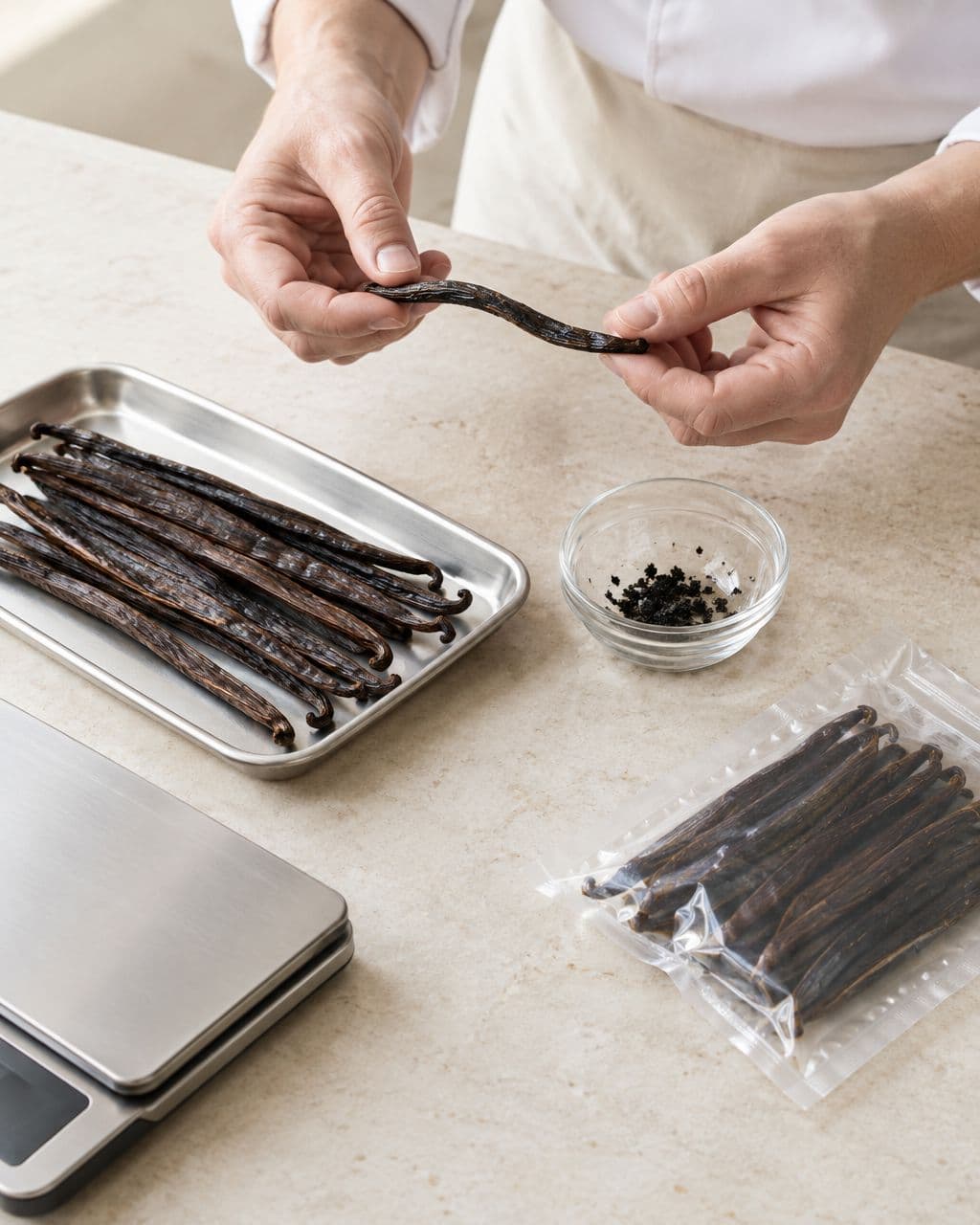
5Senses offers both Madagascar and Uganda vanilla, alongside whole spices. Treat the named origin as a starting point for comparison, not a guarantee that every bean from that country has an identical flavor.
When comparing vanilla, read the specific product's curing and sensory details where provided. Do not infer growing conditions, bean size, or curing method from the country name alone.
Before committing, plan 2 baking batches that use the ingredient. A custard and a cake provide a more useful test of repeat use than buying vanilla for an undefined future project.
Verdict: Buy this format if baking is a regular habit; skip it if your oven mostly handles dinner.
3. Discovery selection: best for exploring new flavors
A discovery format suits cooks who enjoy building a meal around an unfamiliar ingredient. Its appeal is exploration, but the selection still needs enough explanation to get you cooking.
Look for a clear ingredient name, a stated origin when applicable, preparation guidance, and practical serving ideas. A poetic tasting description is not a substitute for knowing whether to toast, grind, bloom, or infuse.
Best for: Curious cooks willing to adapt their meal plans around new spices.
Discovery selection pros:
- It encourages you to move beyond your usual seasoning routine.
- A focused ingredient gives you something specific to compare across dishes.
- Good preparation guidance turns unfamiliar whole spices into usable pantry ingredients.
Discovery selection cons:
- You give up some control over the assortment.
- Unfamiliar ingredients require more planning than familiar refills.
- A selection centered on novelty does not necessarily replace everyday staples.
Keep green cardamom and black cardamom distinct when exploring. Green cardamom fits chai and baking; black cardamom brings a different character to biryani and stews. Neither should become an automatic substitute for the other just because both carry the word cardamom.
Likewise, distinguish a named growing origin from the ingredient's native birthplace. A product grown in a particular region does not establish that the plant originated there, and a regional name alone does not explain its flavor.
Give each unfamiliar spice 3 meals before deciding whether it belongs in your regular pantry. Choose different uses where appropriate: an infusion, a freshly ground seasoning, and a dish that cooks with the whole spice.
Verdict: Buy this format for deliberate exploration; skip it if you only want predictable replenishment.
4. Staple refills: best for familiar weeknight cooking
A staple-refill format repeats ingredients you already know. Its job is replenishment, not discovery, so your actual cooking pattern should determine the selection.
Start with the jar you repeatedly reach for. Whole coriander, green cardamom, cloves, bay leaves, and sweet fennel serve different kitchens; there is no universal staple list that every household needs.
Best for: Households with repeat meals and well-established spice preferences.
Staple-refill pros:
- Familiar ingredients require less experimentation.
- Repeat meals make it easier to judge whether another order is needed.
- A focused selection avoids buying an assortment for one useful ingredient.
Staple-refill cons:
- Automatic orders can continue after your cooking habits change.
- Different spices run down at different speeds.
- Repeating familiar ingredients leaves less room for exploration.
Use 1 open jar per spice as an organizing rule, rather than opening several identical packs at once. Keep identifying information with the ingredient so you can distinguish an older pack from a newer one.
Check the pantry before each recurring order. If a jar remains nearly full, change the order rather than inventing meals simply to accommodate another delivery.
Verdict: Buy this format for ingredients you demonstrably finish; wait on automatic refills for occasional-use spices.
Turn a delivery into a cooking routine
Receiving whole spices is only the beginning. Choose the preparation method that suits the dish; do not automatically toast every ingredient or grind an entire pack at once.
- Toast: Warm suitable whole spices in a dry pan, stirring and watching closely. Stop before they scorch, then cool before grinding.
- Grind: Prepare the amount your recipe needs. Match the texture to the dish, from a coarse crush to a finer powder.
- Bloom: Warm suitable spices in cooking fat when the recipe calls for it. Watch closely and add the next ingredients before the spices burn.
- Infuse: Steep whole spices in a liquid to transfer flavor. Remove hard whole pieces before serving where appropriate.
Keep storage part of the routine. Close containers after use, protect dry spices from moisture, and avoid shaking them directly over a steaming pot. Spicecare tools are part of the 5Senses range for storing, grinding, and preserving spices; choose tools around the ingredients you actually prepare.
How the formats are ranked
The order favors ingredient control, repeat use, clear provenance, and practical preparation. Choose-your-own whole spices comes first because you decide what enters the pantry; baking, discovery, and refill formats serve more specific cooking habits.
This is a decision guide, not a claim that one provider has the best terms. Apply the same criteria to each service's stated selection rules and recurring-order conditions.
Which spice subscription should you choose?
Choose a controllable whole-spice format if you are undecided. Build around meals you already make, then add unfamiliar ingredients deliberately.
Choose baking-focused selections for a regular baking routine, discovery selections for experimentation, and staple refills for ingredients you repeatedly finish. Before starting any recurring order, confirm what you select, what repeats, and how you change it.
FAQ
What's the best spice subscription for a home cook?
A choose-your-own whole-spice subscription is the strongest default for home cooks who want ingredient control. Choose baking, discovery, or refill formats when those uses better match your routine.
Should I choose whole spices or ground spices?
Choose whole spices if you want to grind, crush, or infuse them yourself. Choose ground ingredients when the recipe and your preparation routine call for them; check that the subscription supplies the form you need.
Is a discovery spice subscription good for beginners?
A discovery format suits beginners who want to learn and receive clear cooking guidance. Look for ingredient identification, preparation instructions, and usable meal ideas rather than novelty alone.
What should frequent bakers look for in a spice subscription?
Frequent bakers should look for control over ingredients they repeatedly use, such as vanilla, cardamom, nutmeg, or cloves. Confirm the actual selection rather than assuming a baking theme guarantees particular ingredients.
Does single-origin mean a spice is automatically better?
Single-origin identifies sourcing, not an automatic quality ranking. Assess the named growing place alongside processing information, sensory description, freshness details, and suitability for your cooking.
How do I stop a spice subscription from filling my pantry?
Review your open jars before each recurring order and adjust the selection to actual use. Read the provider's change, skip, and cancellation rules before committing.
Do I need special equipment for whole spices?
Your equipment needs depend on the ingredient and recipe. Grinding requires a suitable grinder or mortar, nutmeg is commonly grated, and whole spices used for infusion do not necessarily need grinding.
One last thing
A spice you use in several familiar dishes is a better recurring purchase than an impressive ingredient without a plan. Write its next use on your shopping list before ordering. That small step connects the delivery to dinner.