Best whole spices for bbq rubs and marinades in 2026
The best whole spices for BBQ rubs start with coriander and black pepper. Compare flavor roles, honest limitations, and practical toasting and grinding tips.
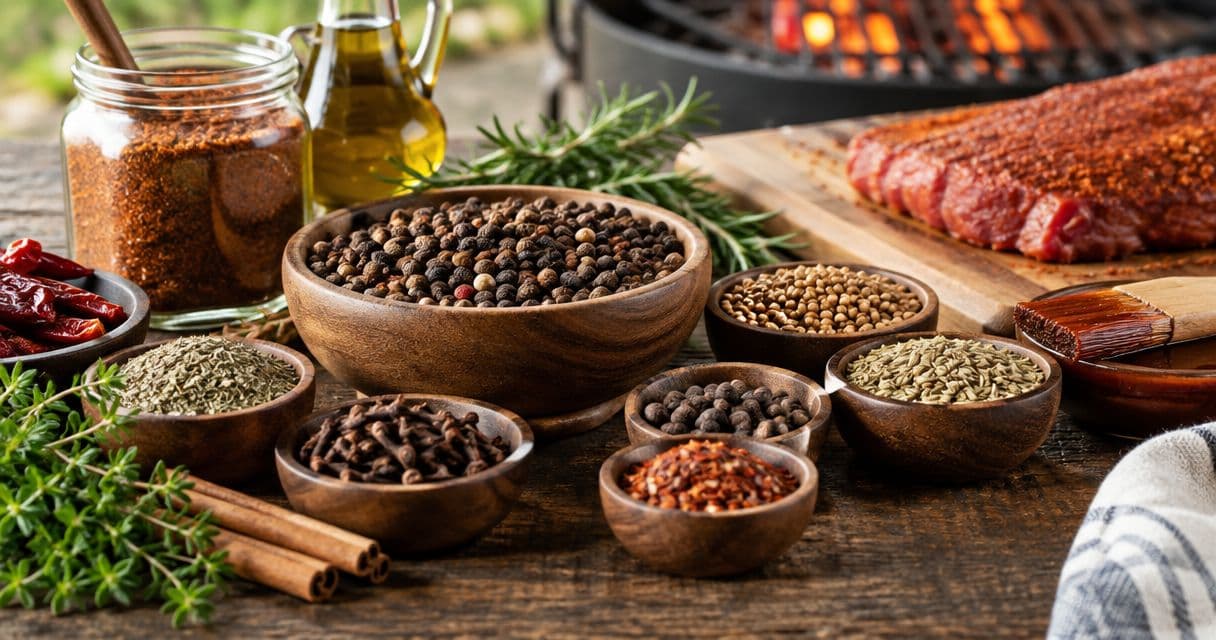
Best overall: whole coriander. Best for pepper-forward beef rubs: black peppercorns. Best for earthy chili marinades: cumin seeds. The best whole spices for BBQ rubs earn their place through flavor, grind texture, and how well they work with the food you grill.
TL;DR- Whole coriander tops the best whole spices for BBQ rubs: citrus-floral aroma balances pepper, chili, and smoke.
- 5Senses Double Parrot Grade A (Hadoti Bloom) whole coriander comes from Kota in Rajasthan’s Hadoti region, India.
- Black peppercorns suit beef; cumin seeds suit chili marinades; sweet fennel suits pork and grilled vegetables.
- Grind rub spices evenly, remove tough pod shells, and keep raw-meat marinade separate from serving sauce.
Why this matters
A rub stays on the surface; a marinade carries seasoning in liquid. That difference changes which whole spices work and how you prepare them. Intact seeds scattered over a steak do not behave like freshly ground seasoning.
5Senses offers direct-from-farm, origin-packed whole spices alongside Spicecare tools for storage, grinding, and preservation. For BBQ cooking, the useful starting point is not a crowded spice shelf. It is a small set you know how to toast, grind, bloom, and infuse.
5Senses whole spices suit home cooks who want origin-led ingredients they can grind for each cook. Choose the flavor first, then check the sourcing and preparation details.
What makes the best whole spices for BBQ rubs?
- A clear flavor role: Pepper provides bite; coriander supplies citrus-floral lift; cumin adds earthy depth. Avoid buying several spices that do the same job.
- Useful grind texture: Rubs need particles that cling rather than large fragments that fall off or feel gritty.
- Aroma after crushing: Smell a freshly crushed sample. A quiet jar becomes more informative once you break the spice open.
- Documented origin and processing: A named growing place and stated drying method tell you more than an unsupported “premium” label.
- Control over intensity: Strong accents such as cloves and black cardamom should support the main seasoning, not replace it.
- Repeat pantry use: Choose ingredients you also use in vegetables, beans, soups, and everyday cooking.
Origin and processing are separate facts. A region identifies where a spice grows; drying, curing, and storage also shape what reaches your kitchen. Do not treat a place name as proof of a particular flavor or a spice’s native birthplace.
Whole spices for BBQ rubs at a glance
| Whole spice | Best for | Standout contribution | Key limitation |
|---|---|---|---|
| Whole coriander | An adaptable everyday BBQ base | Citrus-floral lift with woody-nutty depth | Does not supply chili heat |
| Black peppercorns | Pepper-forward beef rubs | Pungent bite and adjustable texture | Coarse fragments feel harsh in delicate dishes |
| Cumin seeds | Earthy chili marinades | Savory depth alongside garlic and chili | Dominates lighter flavors when overused |
| Sweet fennel seeds | Pork and grilled vegetables | Sweet, anise-like contrast | Anise flavor does not suit every eater |
| Black cardamom | Deeply savory marinades | Smoky, resinous character | Tough shells do not belong in a finished rub |
| Whole cloves | Warm-spiced BBQ sauces | Concentrated warmth | Quickly overwhelms a blend |
| Green cardamom pods | Bright yogurt marinades | Fragrant, citrusy lift from the seeds | Requires deseeding for a smooth rub |
1. Whole coriander: best for an everyday BBQ base
Start with 5Senses Whole Coriander, Double Parrot Grade A (Hadoti Bloom), sourced from Kota in Rajasthan’s Hadoti region, India. Its stated preparation includes near-source partial sun-drying, and its tasting notes combine citrus-floral aroma with woody-nutty depth. The Hadoti coriander origin story gives this ingredient a useful sourcing context.
For BBQ, coriander connects sharper pepper and chili with garlic and browned food. Toast it gently for a warmer profile, or grind it untoasted when you want its brighter character. Let toasted seeds cool before grinding.
Whole coriander pros:
- Works in both dry rubs and wet marinades.
- Supports pepper and chili without adding their heat.
- Fits vegetables, chicken, pork, and beef.
Whole coriander cons:
- Needs grinding for an even surface coating.
- Cannot replace a heat-producing ingredient.
Double Parrot Grade A is the product’s stated commercial grade, not an independently certified universal standard or proof of measured oil content. The concrete value is the named source, stated processing, and useful flavor profile.
Best for: Your default blend when you want one adaptable foundation.
Verdict: Buy whole coriander as the first addition to an everyday BBQ spice kit.
2. Black peppercorns: best for pepper-forward beef rubs
Black peppercorns provide pungency and a distinctly peppery aroma. Fresh grinding also lets you choose the texture: finer for an even coating, coarser when a pronounced pepper crust is the goal.
Keep pepper prominent for beef, but do not assume every surface needs a heavy crust. A thick layer of coarse fragments changes the eating texture as well as the flavor. For a smooth marinade, grind finer.
Black peppercorn pros:
- Supplies bite without relying on chili.
- Works across rubs, marinades, and finishing seasoning.
- Lets you adjust texture at the grinder.
Black peppercorn cons:
- Large fragments taste aggressive in a delicate dish.
- Pepper alone does not provide the rounded flavor of a blend.
Best for: Beef cooks who want pepper to lead rather than sit in the background.
Verdict: Buy black peppercorns for a pepper-led beef rub; grind finer for marinades.
3. Cumin seeds: best for earthy chili marinades
Cumin seeds bring earthy, warm flavor to garlic-and-chili seasoning. They work especially well when you want a savory marinade rather than a sweet BBQ profile.
Toast cumin gently and stop before the seeds scorch. After cooling, grind them into the seasoning rather than leaving them whole on the food. Use cumin as a supporting layer when coriander or pepper is meant to lead.
Cumin seed pros:
- Fits chili, garlic, and coriander blends.
- Works in dry seasoning and wet pastes.
- Has repeat uses in beans and grilled vegetables.
Cumin seed cons:
- Its earthy character overpowers subtle seasoning when overused.
- Scorched seeds introduce bitterness.
Best for: Chili-forward marinades for chicken, beef, beans, or vegetables.
Verdict: Buy cumin seeds when earthy depth is the missing part of your blend.
4. Sweet fennel seeds: best for pork and grilled vegetables
Sweet fennel seeds contribute an anise-like aroma that contrasts with pepper and garlic. Their sweetness describes the flavor; it does not make them a substitute for sugar in a recipe.
Grind fennel for a rub that coats evenly. A lightly crushed seed gives more texture, but reserve that approach for dishes where you want noticeable pieces. Keep the fennel supporting rather than crowding out the main seasoning.
Sweet fennel pros:
- Adds contrast to pepper-heavy blends.
- Suits pork, cabbage, onions, and other grilled vegetables.
- Works alongside coriander and citrus.
Sweet fennel cons:
- Its anise character is a distinct preference.
- Large seed pieces interrupt an otherwise smooth coating.
Best for: Pork rubs and vegetable seasoning with a sweet-aromatic edge.
Verdict: Buy sweet fennel if you enjoy anise flavor; skip it if you do not.
5. Black cardamom: best for deeply savory marinades
Black cardamom contributes smoky, resinous character rather than green cardamom’s brighter fragrance. It belongs in a supporting role when you want a deeper, more savory marinade.
Open the pod and grind the seeds for a rub or paste. A cracked whole pod also works in a liquid infusion, provided you remove the pod before serving. Black cardamom complements grilled flavor; it does not reproduce wood-fired cooking.
Black cardamom pros:
- Adds a distinct savory accent.
- Fits garlic, cumin, and pepper seasoning.
- Works as ground seeds or a removable infusion.
Black cardamom cons:
- Its strong character overwhelms lighter marinades.
- Tough pod shells create an unpleasant rub texture.
Best for: Savory lamb, beef, mushroom, or eggplant marinades.
Verdict: Buy black cardamom for a deliberate smoky accent, not as a default base.
6. Whole cloves: best for warm-spiced BBQ sauces
Whole cloves deliver concentrated warmth. They are most useful here as an accent in a cooked BBQ sauce, rather than as the main ingredient in a dry rub.
Infuse a sauce with whole cloves and remove them before serving, or grind a restrained amount into the seasoning. Taste the sauce before increasing the clove contribution. A dominant clove note is difficult to rebalance.
Whole clove pros:
- Adds warmth to sweet-tart sauces.
- Pairs with pepper and other warm spices.
- Works as a removable whole-spice infusion.
Whole clove cons:
- Easily overwhelms the rest of a blend.
- Whole buds are unpleasant to bite into.
Best for: Cooked BBQ sauces that need a warm-spice accent.
Verdict: Buy whole cloves for sauce-making; skip a clove-heavy everyday rub.
7. Green cardamom pods: best for bright yogurt marinades
Green cardamom seeds contribute fragrant, citrusy flavor. They suit a yogurt marinade where coriander, garlic, and ginger provide the rest of the seasoning.
Open the pods and grind the seeds for a smooth paste. Leaving tough husk fragments in the marinade creates texture without improving the coating. Keep green cardamom behind the main savory ingredients.
Green cardamom pros:
- Adds brightness to yogurt-based marinades.
- Pairs naturally with coriander and ginger.
- Has useful crossover into baking and drinks.
Green cardamom cons:
- Deseeding adds a preparation step.
- A heavy dose makes a savory marinade overly perfumed.
Best for: Fragrant yogurt marinades for chicken, paneer, or vegetables.
Verdict: Buy green cardamom for this specific marinade style, not every BBQ blend.
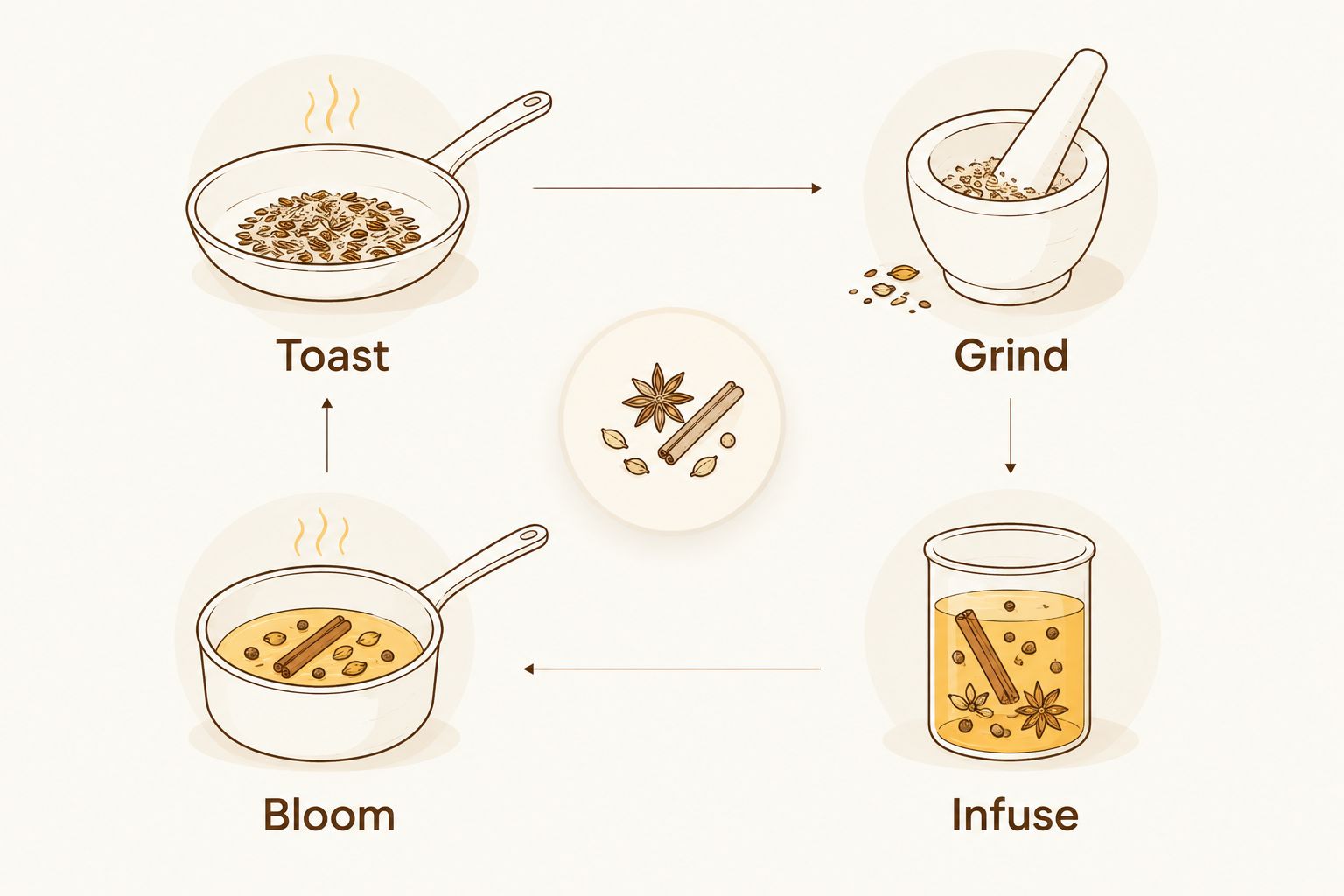
Toast, grind, bloom, or infuse?
Choose the preparation that matches the dish. You do not need to perform every step on every spice.
- Toast: Warm dry seeds gently in a pan, moving them so they heat evenly. Remove them when fragrant, before they scorch.
- Grind: Cool toasted spices, then grind to the texture your coating needs. Remove cardamom shells first.
- Bloom: Warm ground spices briefly in cooking fat when making a cooked sauce. Stop before the spices burn.
- Infuse: Steep whole spices in a sauce or other suitable liquid, then remove tough pieces before serving.
For a dry rub, toast and grind is usually the relevant pair. For a cooked sauce, blooming or infusing gives you a different way to introduce flavor.
For a marinade, grind spices into a texture that distributes through the liquid. Add whole pods only when you intend to remove them. Keep raw-meat marinade separate from any sauce you serve at the table, and refrigerate meat while it marinates.
How the spices were ranked
This ranking prioritizes everyday usefulness, a distinct flavor role, and preparation suited to BBQ. Coriander leads because it supports many blends; pepper and cumin follow for clearer, more assertive jobs. Fennel and the cardamoms serve specific preferences, while cloves remain a concentrated accent.
This is an ingredient guide, not a laboratory comparison or a claim that one growing region produces universally better spices. Provenance helps you understand the ingredient. Your recipe determines whether its flavor belongs.
Which whole spices should you choose?
Start with whole coriander and black peppercorns. Add cumin for chili marinades or sweet fennel for pork and vegetables. Choose black cardamom, cloves, or green cardamom only when the recipe needs their particular character.
For 5Senses whole spices, use the same buying discipline: check the named origin, stated processing, and any provided harvest or packing information. Replenish the ingredients you actually cook with rather than building a collection of barely opened jars.
FAQ
What are the best whole spices for BBQ rubs?
Whole coriander, black peppercorns, and cumin seeds are the most useful starting points in this guide. Coriander rounds out the blend, pepper adds bite, and cumin supplies earthy depth.
Should I toast whole spices before making a BBQ rub?
Toast whole spices when you want a warmer, toasted flavor. Heat them gently, stop before scorching, and let them cool before grinding; untoasted coriander is useful when you want a brighter profile.
Can I put whole spices directly into a marinade?
Use ground spices for an evenly distributed marinade, or whole spices for an infusion you will strain. Remove tough cardamom shells and whole cloves before serving.
Is black cardamom the same as green cardamom for BBQ?
Black cardamom and green cardamom fill different flavor roles. Black cardamom gives a smoky, resinous accent; green cardamom gives brighter fragrance in yogurt-based marinades.
Which whole spice is best for a beef rub?
Black peppercorns are the pick for a pepper-forward beef rub. Grind them to match the texture you want, and add coriander when the blend needs a rounder aromatic base.
What does Double Parrot Grade A mean for whole coriander?
Double Parrot Grade A is the stated commercial grade of 5Senses Whole Coriander, Hadoti Bloom. It is not an independently certified universal standard or proof of laboratory-measured oil content.
How do I keep freshly ground BBQ spices aromatic?
Grind the amount you need for the cook and keep the remaining whole spices tightly sealed, away from heat and light. Let toasted spices cool before grinding or sealing them away.
One last thing
More spices do not automatically make a better rub. Before adding another ingredient, decide what is missing: peppery bite, citrus-floral lift, earthy depth, or a warm accent. If you cannot name the missing flavor, leave the blend alone.