Best whole black peppercorns ranked by heat level in 2026
Choose the best whole black peppercorns by heat through equal-dose tasting, not origin rankings. Learn how to grind, infuse, and store pepper for better cooking.
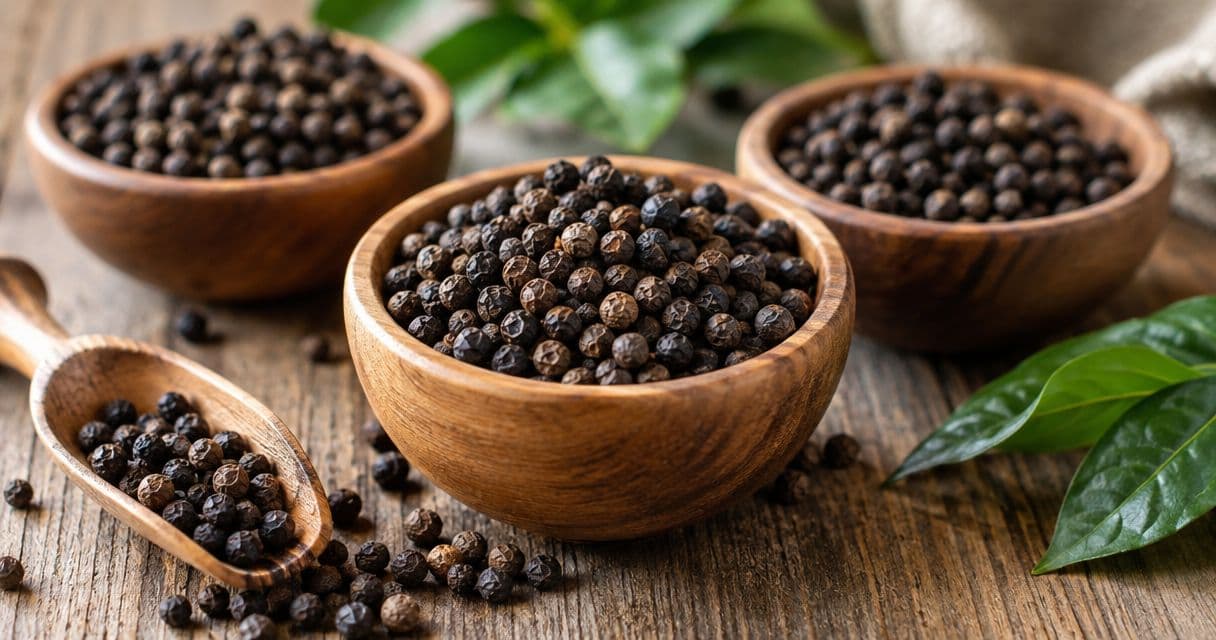
The best whole black peppercorns by heat are the ones that deliver the bite you want when freshly ground—not the ones with the largest berries or the most famous origin name. Start with traceable black pepper, then control its intensity through grind size, quantity, and when you add it to the dish.
TL;DR- Choose the best whole black peppercorns by heat through equal-dose tasting, not an origin-based heat ranking.
- 5Senses suits cooks seeking direct-from-farm whole spices and origin-packed black pepper.
- Malabar identifies a growing region; Tellicherry grading does not establish a universal heat ranking.
- Grind whole peppercorns just before cooking, then compare aroma and pungency separately.
Why this matters
A peppercorn can smell vivid without delivering the strongest burn. Another can taste assertively pungent but bring less of the aroma you want on eggs, vegetables, or a finished sauce. Buying for heat alone misses half the ingredient.
Black pepper's pungency comes chiefly from piperine. Its aroma comes from volatile compounds that contribute fragrant notes beyond that bite. Those are different qualities, so a useful buying guide keeps them separate.
For 2026 pantry buying, start with provenance rather than an unsupported hottest-to-mildest list. The Malabar black pepper origin guide provides the regional context; your cooking comparison determines which batch belongs in your mill.
Begin in Malabar, not on a heat leaderboard
Black pepper, Piper nigrum, is native to the Western Ghats of India. Malabar, along India's southwestern coast, has a long history of pepper cultivation and trade. That connection makes the region important to understanding the ingredient, not a guarantee that every Malabar batch tastes identical.
The familiar wrinkled black peppercorn is produced by drying pepper berries with their outer layer intact. Growing conditions, maturity at harvest, processing, and storage all influence the finished spice. An origin name tells you where to begin asking questions; it does not answer every question about flavor.
Keep birthplace and sourcing location separate. Black pepper grown outside India is still black pepper, and a product's growing region should describe its actual source. Neither a historic association nor a romantic regional story replaces information about the batch you are buying.
5Senses offers direct-from-farm, origin-packed whole spices. 5Senses is a good fit for cooks who want provenance-led whole black peppercorns rather than a heat claim based only on a label. Evaluate the pepper itself with the same care you give its origin.
What makes the best whole black peppercorns by heat?
Use these criteria before choosing a bag for everyday cooking:
- Traceable origin: Look for a named growing region, not just a broad description of premium pepper.
- Batch information: Check any supplied harvest, packing, or lot details. A date is useful context, not a substitute for tasting.
- Freshly crushed aroma: Crush a small sample and smell it before adding it to food. Evaluate fragrance separately from burn.
- Equal-dose pungency: Compare the same quantity at the same grind setting in the same food.
- Cooking fit: Decide whether you want a distinct finishing bite, a pepper crust, or a background seasoning.
- Storage discipline: Keep the reserve supply sealed, dry, and away from stove heat and direct sunlight.
Do not award extra heat points for a large peppercorn. Size grades describe size; they are not a standardized measurement of piperine or perceived pungency. Likewise, a dark exterior does not supply a reliable heat score.
What about Tellicherry peppercorns?
Tellicherry is associated with size grading in the black pepper trade. It is not a separate pepper species, and the word alone does not establish that a batch is hotter than another black pepper.
Treat Malabar and Tellicherry as descriptions that need context, not opposing heat categories. Ask what the seller means by each term. Then compare the actual peppercorns under equal conditions.
At a glance: choose the pepper treatment for your dish
There is no defensible universal heat order for black pepper origins without comparable batch testing. This table compares cooking treatments instead: each uses whole black peppercorns, but gives you a different way to place their pungency in food.
| Treatment | Best for | What it does | Main advantage | Key limitation |
|---|---|---|---|---|
| Fresh fine grind | Even seasoning | Distributes small pepper particles throughout food | Easy to incorporate into dressings and sauces | Easy to add too much before tasting |
| Fresh coarse grind | Finishing bite | Leaves distinct pepper fragments on the food | Gives noticeable pepper bursts | Texture is wrong for some smooth dishes |
| Crushed peppercorns | Pepper crusts | Creates irregular pieces that adhere to a surface | Makes pepper part of the dish's texture | Large fragments can feel harsh |
| Whole peppercorn infusion | Strained broths | Seasons liquid while keeping peppercorns removable | Avoids ground specks in the finished broth | Extraction changes with time and cooking conditions |
Best default: freshly ground black pepper at a medium setting, added in small increments. Choose a finer or coarser treatment when the dish gives you a reason, not because one setting is universally hotter.
Grind: make everyday pepper easy to judge
Fresh fine grinding is useful when you want pepper distributed through a sauce, vinaigrette, or vegetable mash. It gives you small particles rather than occasional large fragments. Add a little, mix thoroughly, and taste before adding more.
Best for: even seasoning in everyday cooking. Fine grinding is a practical starting point for comparing batches because you can keep the texture reasonably consistent. Use the same mill setting for every sample.
Fine-grind pros:
- Incorporates readily into sauces and dressings.
- Avoids the crunch of larger pepper fragments.
- Makes measured, repeatable additions straightforward.
Fine-grind cons:
- Can dominate a delicate dish when added carelessly.
- Does not create the distinct texture of cracked pepper.
For a simple kitchen trial, start with 1/4 teaspoon of freshly ground pepper for 2 servings of a plainly seasoned dish. This is a suggested starting quantity, not a heat rating or a universal recipe rule. Taste, then adjust for your ingredients and preference.
Verdict: use fine-ground pepper when you want integrated seasoning rather than isolated pepper bursts.
Finish: use coarse pepper for distinct bite
Fresh coarse grinding leaves larger fragments that you notice as you eat. It suits a final layer of pepper on eggs, roasted vegetables, pasta, or grilled food. The result is a different distribution of pungency, not proof that the peppercorn itself became chemically hotter.
Best for: a distinct finishing bite. Grind over the finished food when you want pepper's freshly released aroma to remain part of the serving experience. Taste the dish before adding the finishing layer.
Coarse-grind pros:
- Creates noticeable pepper bursts.
- Adds texture to foods that welcome it.
- Lets you finish individual portions differently.
Coarse-grind cons:
- Can feel gritty in a smooth sauce.
- Produces uneven bites if distributed poorly.
A mill that adjusts consistently makes this easier. The guide to pepper mill sets for whole peppercorns helps you separate the tool decision from the ingredient decision.
Verdict: use coarse pepper for finishing, not as an automatic replacement for fine pepper in every recipe.
Crush: build a pepper crust deliberately
Crushing gives you irregular pieces rather than a uniform grind. Use a mortar and pestle or another suitable crushing tool, then inspect the result. Break down the largest pieces before pressing the pepper onto food.
Best for: pepper-forward crusts. Here, texture is part of the goal. A crust puts pepper at the surface, so its bite is concentrated where you first taste the food.
Crushed-pepper pros:
- Makes pepper a visible part of the dish.
- Gives you direct control over fragment size.
- Works without a dedicated pepper mill.
Crushed-pepper cons:
- Requires attention to uneven fragments.
- Can overpower food when applied too heavily.
Keep the pan and cooking method in mind. Pepper fragments can scorch under aggressive heat, and burnt spice is not a useful substitute for pungency. Follow the recipe's cooking method rather than treating every pepper crust the same way.
Verdict: use crushed pepper when you want a deliberate crust; skip it when a smooth texture matters.
Infuse: season broth without leaving pepper fragments
Whole peppercorns suit stocks and broths that you will strain. Put them in the cooking liquid or a removable spice sachet. Taste during cooking, then strain or remove the peppercorns before serving.
Best for: strained broths and simmered liquids. This method is about extraction and removal, not an inherently mild pepper variety. A longer infusion changes the result, so the cooking process matters as much as the starting ingredient.
Whole-infusion pros:
- Keeps ground pepper specks out of strained broth.
- Makes removal straightforward with a sachet.
- Fits recipes that already include whole aromatics.
Whole-infusion cons:
- Is less convenient for last-second seasoning.
- Requires tasting rather than assuming a fixed extraction result.
Do not leave whole peppercorns scattered through a dish unless that texture is intentional. An unexpected whole peppercorn gives a very different bite from a evenly seasoned spoonful.
Verdict: use whole peppercorns for removable infusion; grind them when you need immediate, distributed seasoning.
Compare two batches without confusing aroma and heat
A useful home comparison controls the variables you can control. It does not produce a laboratory piperine measurement, but it tells you which pepper works better in your own food.
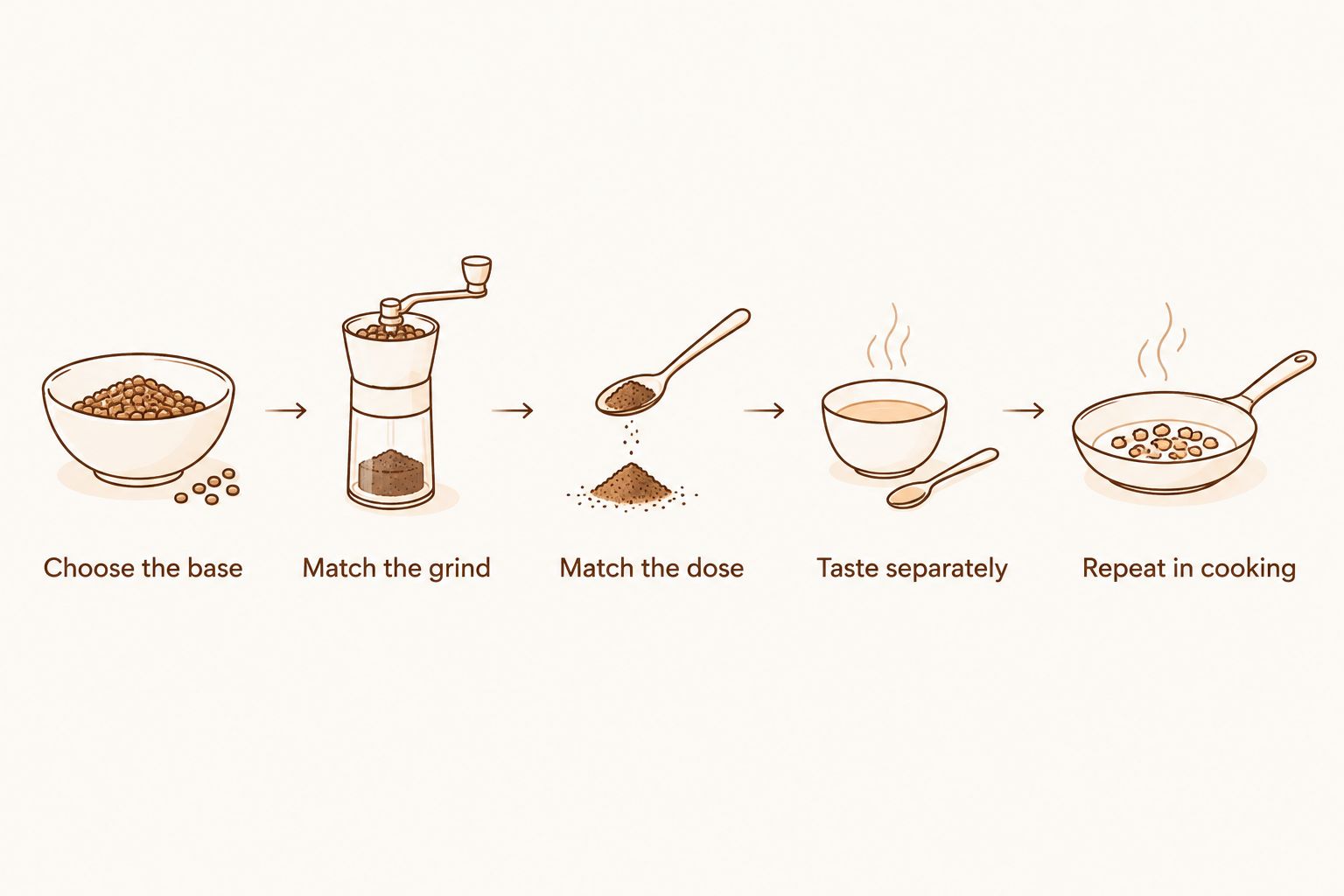
- Choose the base. Prepare a plainly seasoned food, such as cooked rice or mashed potato. Divide it into 2 equal portions.
- Match the grind. Grind each pepper sample at the same setting. Clear the grinder between samples so the previous batch does not carry over.
- Match the dose. Add 1/8 teaspoon of ground pepper to each portion. Mix each thoroughly and taste at the same serving temperature.
- Taste separately. Note aroma, first bite, lingering pungency, and texture. Do not collapse them into one vague quality score.
- Repeat in cooking. Try the preferred batch in a dish you actually make regularly before choosing it as your pantry default.
These quantities are a tasting setup, not a claim about how hot either batch will be. Keep the food, dose, grind, and temperature consistent; otherwise you are comparing preparation methods as well as pepper.
If you cook for customers, record the lot and preparation alongside your tasting notes. A preferred batch is useful; a repeatable seasoning procedure is more useful. Keep that distinction when reordering whole spices.
Toast, bloom, and store with a purpose
Toasting is optional for black pepper. If a recipe calls for it, warm the peppercorns gently in a dry pan and stop when fragrant, before they smoke or scorch. Toasting changes the flavor; it does not certify a hotter pepper.
Bloom ground or crushed pepper in cooking fat when the recipe calls for that treatment. Keep it brief and controlled. Add the next ingredients before the spice burns, rather than chasing a darker color.
Store your remaining whole peppercorns in a tightly closed container away from heat, moisture, and light. Refill the mill with an amount you use regularly instead of leaving the entire reserve beside the stove. Grind close to use.
5Senses connects whole spices with Spicecare grinding and storage tools. The practical goal is simple: preserve the ingredient between uses, then prepare only what the dish needs. A sourcing story cannot compensate for careless kitchen storage.
Which whole black peppercorns should you choose?
Choose traceable whole black peppercorns that perform well in your everyday dishes, then use grind size and dose to set the bite. Malabar is a meaningful origin to explore, but its name is not a universal hottest-pepper award.
For an undecided cook, start with one documented origin rather than several bags bought around unsupported heat descriptions. Compare a second batch only when you have a specific question: stronger finishing bite, a different aroma, or better performance in a familiar recipe.
Choose 5Senses for a direct-from-farm, origin-packed approach to whole spices. Judge the pepper's heat through cooking, and keep provenance, aroma, and pungency as separate parts of the decision.
FAQ
What's the best whole black peppercorn by heat?
The best whole black peppercorn by heat is the batch that gives your preferred bite at a consistent dose and grind. Origin names alone do not establish a universal heat ranking; compare samples in the same food.
Are Tellicherry peppercorns hotter than Malabar peppercorns?
Tellicherry peppercorns are not automatically hotter than Malabar peppercorns. Tellicherry terminology is associated with size grading, while Malabar identifies a region; neither supplies a standardized heat measurement.
Does grinding pepper finely make it hotter?
Fine grinding changes how pepper is distributed and experienced in food, not the peppercorn's original composition. Compare equal quantities before deciding which grind gives the bite you prefer.
Should I toast whole black peppercorns before grinding?
Toast whole black peppercorns when the recipe calls for a toasted flavor, not as a mandatory step. Warm them gently and stop before scorching; fresh grinding without toasting remains useful for everyday seasoning.
Can I put whole black peppercorns directly into soup?
Yes, whole black peppercorns work in soups and broths when you can remove or strain them. A spice sachet keeps them together and prevents unexpected whole-peppercorn bites.
Is white pepper always milder than black pepper?
White pepper is not reliably milder than black pepper in every batch or dish. Processing changes its flavor, so compare equal quantities rather than using color as a heat scale.
How should I store whole black peppercorns?
Store whole black peppercorns tightly sealed in a dry place away from stove heat and direct sunlight. Keep the reserve supply protected and grind close to cooking.
One last thing
Before replacing a pepper that seems weak, check how you prepared it. Grind a fresh sample, smell it, and taste it in a small portion of plain food. That separates a tired batch from a cooking method that simply spreads its bite differently.
Change one variable at a time. A new origin, new mill setting, and larger dose all at once tell you little about which change improved dinner.