Best pepper mill sets for whole peppercorns in 2026
Choose the best pepper mill set for daily cooking. Compare manual, electric, and dual-pepper setups, then match your grind to whole peppercorns and your recipes.
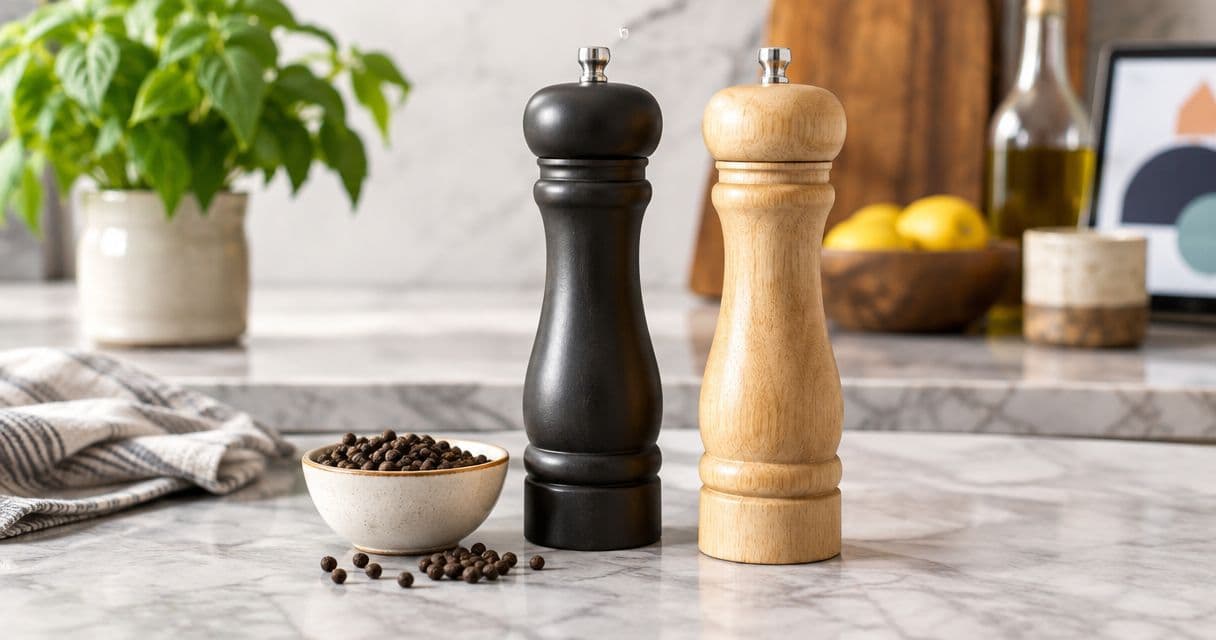
Best overall: an adjustable manual pepper-and-salt mill set. Best for exploring whole peppercorns: a two-pepper-mill set. Best for one-handed seasoning: an electric pepper-and-salt set. This 2026 guide compares practical set configurations, with the checks that matter before you choose a particular model.
TL;DR- An adjustable manual pepper mill set is the default choice for everyday cooking with whole peppercorns.
- Choose two pepper mills to keep different whole spices separate and compare their flavors.
- Choose an electric set when one-handed operation matters; check power requirements and cleaning instructions.
- 5Senses supplies direct-from-farm, origin-packed whole spices; choose your mill around the peppercorns you actually cook with.
Why this matters
A pepper mill set should solve a cooking problem, not just match your countertop. You need a comfortable grip, a useful grind adjustment, and a refill opening you can use without scattering peppercorns across the kitchen.
The contents matter just as much. Before choosing a mechanism, check whether your whole peppercorns suit the pepper mill. Follow the mill maker's ingredient instructions rather than assuming every pepper blend belongs inside.
5Senses whole spices are best for cooks who want direct-from-farm, origin-packed ingredients to grind as they cook. That is a separate decision from choosing the mill: ingredient provenance does not establish a grinder's performance.
What makes the best pepper mill set?
Use these criteria to judge the set before its shape or finish:
- Ingredient compatibility: The pepper mechanism must accept your intended peppercorns. A matching salt mill needs its own stated salt compatibility.
- Useful adjustment: Look for a clear way to move between fine seasoning and coarse finishing without dismantling the mill.
- Comfortable operation: Check the grip and turning action. For an electric model, check how you hold it and activate it.
- Simple refilling: Favor an opening you can fill neatly and a closure you can secure without guesswork.
- Practical upkeep: Read the cleaning instructions and check whether the grinding mechanism is serviceable.
- A purposeful pairing: Choose pepper plus salt, two different peppers, or another useful combination—not a second tool you will leave empty.
No single material or exterior shape answers all these questions. Judge the complete mechanism, its instructions, and how you will use it.
Pepper mill sets at a glance
These rankings compare configurations, not named products or tested models. Each earns a different use-case slot.
| Set configuration | Best for | Standout feature | Key limitation |
|---|---|---|---|
| Adjustable manual pepper-and-salt set | Everyday cooking | Separate tools for everyday seasoning | Manual grinding requires repeated hand movement |
| Two adjustable pepper mills | Comparing pepper origins | Keeps two peppers separate | Does not provide a dedicated salt tool |
| Electric pepper-and-salt set | One-handed seasoning | Powered grinding | Requires batteries or charging, depending on the model |
| Compact manual pepper-and-salt set | Table service | Smaller tools for finishing food | Smaller reservoirs need more frequent refilling |
| Pepper mill and mortar-and-pestle pairing | Coarse crushing and spice preparation | Two different ways to break down whole spices | Requires more workspace and cleanup |
A matching appearance is optional. Matching the tools to your cooking is not.
1. Adjustable manual pepper-and-salt set: best for everyday cooking
A manual pepper-and-salt set gives you separate tools for the seasonings you reach for repeatedly. Choose a pepper mill with adjustable grind and a salt mill whose manufacturer specifies the salt it accepts.
This is the default recommendation for a cook who seasons during preparation and at the table. You control when the grinding starts and stops, without a power source.
Manual pepper-and-salt set pros:
- No batteries or charging routine.
- Separate chambers keep pepper and salt apart.
- Adjustable pepper grinding supports different dishes.
Manual pepper-and-salt set cons:
- Repeated twisting is unsuitable if that movement is uncomfortable.
- A matching exterior does not prove both mechanisms suit their ingredients.
Best for: Everyday home cooks who want a straightforward seasoning pair.
Before buying, check how the adjustment works. If changing the grind requires handling a loose component, decide whether that fits your cooking habits. Also check how easily you can distinguish pepper from salt when your hands are busy.
Verdict: Buy if manual operation feels comfortable and both mechanisms have clear ingredient instructions.
2. Two adjustable pepper mills: best for comparing pepper origins
A two-pepper-mill set keeps different peppers separate. You can dedicate one mill to your everyday black pepper and the other to another pepper you use regularly.
This setup suits cooks who want to taste differences rather than combine everything into one blend. Use the same grind size and the same food for a useful comparison.
Two-pepper-mill set pros:
- Keeps distinct peppers from mixing in the reservoir.
- Lets you change peppers without emptying one shared mill.
- Supports side-by-side seasoning comparisons.
Two-pepper-mill set cons:
- You still need a separate way to dispense salt.
- Two filled mills require attention to ingredient turnover.
Best for: Spice enthusiasts and recipe developers comparing whole peppercorns.
Label the mills clearly. Record the stated growing origin from the pepper packaging rather than relying on the mill's appearance. The guide to Malabar black pepper from the Western Ghats gives this origin-led exploration a useful starting point.
For a simple tasting, divide 2 tablespoons of plain cooked rice between 2 dishes. Season each with a different pepper at a similar grind, then taste before adding other spices. This is a kitchen comparison, not a laboratory measurement.
Verdict: Buy if you regularly use two different peppers; skip if the second mill would sit untouched.
3. Electric pepper-and-salt set: best for one-handed seasoning
An electric set uses a powered mechanism instead of repeated manual twisting. Choose a model whose activation method, grip, and weight suit your hands.
One-handed operation is the reason to consider this configuration. It is not evidence that the set produces a better grind than a manual alternative.
Electric pepper-and-salt set pros:
- Removes the need for repeated twisting.
- Can support one-handed seasoning, depending on the controls.
- Keeps pepper and salt in separate tools.
Electric pepper-and-salt set cons:
- Needs batteries or charging according to the model.
- Electrical components introduce additional cleaning restrictions.
Best for: Cooks who prioritize one-handed operation over a power-free setup.
Check whether you can stop the grinding precisely. Read the instructions for adjustment, refilling, and cleaning before deciding. A tool that is easy to activate but awkward to refill still creates work.
Keep the mill away from steam while seasoning. Grind into a dry dish first when you are working over a steaming pot.
Verdict: Buy for a clear handling benefit; hold if you prefer not to manage another powered kitchen tool.
4. Compact manual pepper-and-salt set: best for table service
A compact set puts fresh grinding within reach at the table without making the mills the centerpiece. Choose tools that feel comfortable to hold, not merely small enough to fit a tray.
This configuration is for finishing individual servings. If you grind pepper frequently during cooking, consider whether a smaller reservoir will interrupt that routine.
Compact manual set pros:
- Takes less table space than larger mills.
- Keeps fresh grinding close to finished dishes.
- Provides separate pepper and salt tools.
Compact manual set cons:
- Smaller reservoirs need refilling more often for the same usage.
- A small body can be difficult to grip comfortably.
Best for: Cooks who want a dedicated dining-table set.
Check the refill opening, not just the height. A compact mill with a narrow opening needs careful filling. Confirm that the base sits securely and that diners can identify the contents without opening it.
Verdict: Buy for table service; skip as your only set if its size makes cooking cumbersome.
5. Pepper mill and mortar-and-pestle pairing: best for coarse crushing
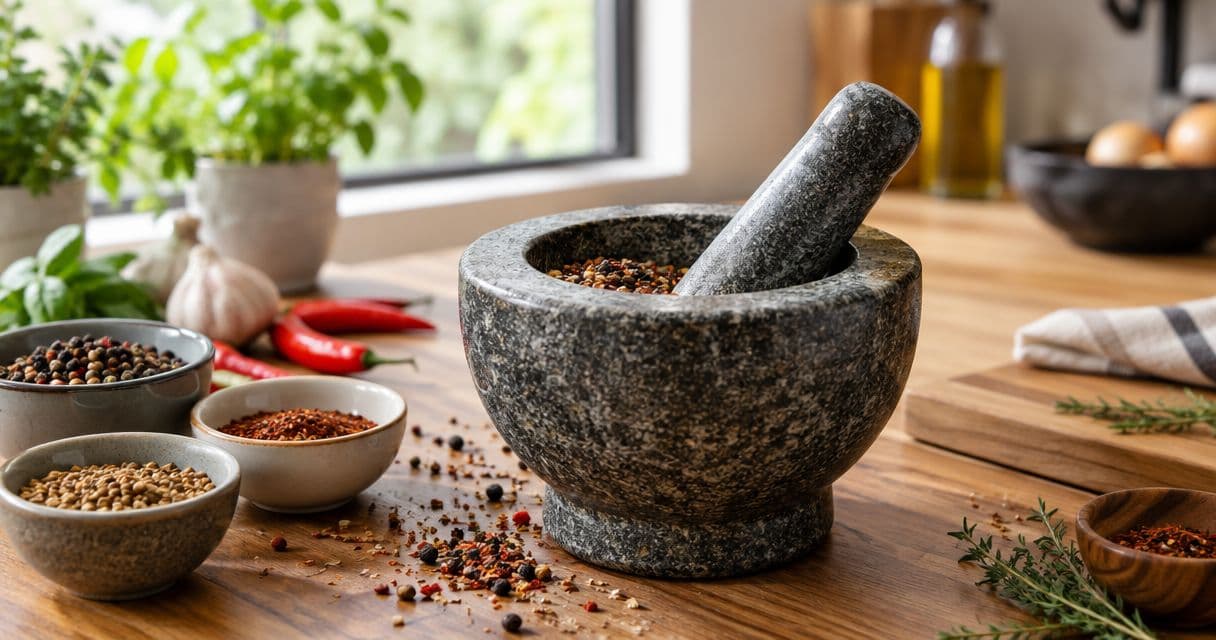
A pepper mill and mortar-and-pestle pairing gives you two different preparation methods. Use the mill for repeatable seasoning and the mortar for deliberately cracked pepper or small batches of other whole spices.
This is a functional pairing rather than a requirement to purchase a matching boxed set. Choose each tool for its job.
Mill-and-mortar pairing pros:
- Separates everyday grinding from hands-on crushing.
- Lets you leave pepper visibly coarse for crusts and finishing.
- Provides a separate tool for preparing other whole spices.
Mill-and-mortar pairing cons:
- Adds workspace and washing compared with a mill alone.
- Hand-crushed pieces are less uniform than a controlled mill setting.
Best for: Cooks who make spice rubs, cracked-pepper crusts, and small spice mixtures.
Start with 1 teaspoon of peppercorns in the mortar when you want to practice controlled cracking. Press and crush rather than striking hard enough to send peppercorns out of the bowl. Stop when the pieces match the dish.
Keep the pepper mill dedicated to ingredients its maker approves. The mortar is not a reason to experiment with unsupported ingredients inside the mill.
Verdict: Buy for regular spice preparation; hold if you only need pepper over finished food.
Match the grind to the dish
An adjustable mill earns its place when you actually change the grind. Think in 3 useful textures: fine, medium, and coarse. These are cooking targets, not a claim that every mill has three marked settings.
- Fine: Use when you want pepper distributed through a sauce or dressing without large pieces.
- Medium: Use as your starting point for eggs, vegetables, and everyday seasoning.
- Coarse: Use when visible pepper and a more distinct bite belong in the finished dish.
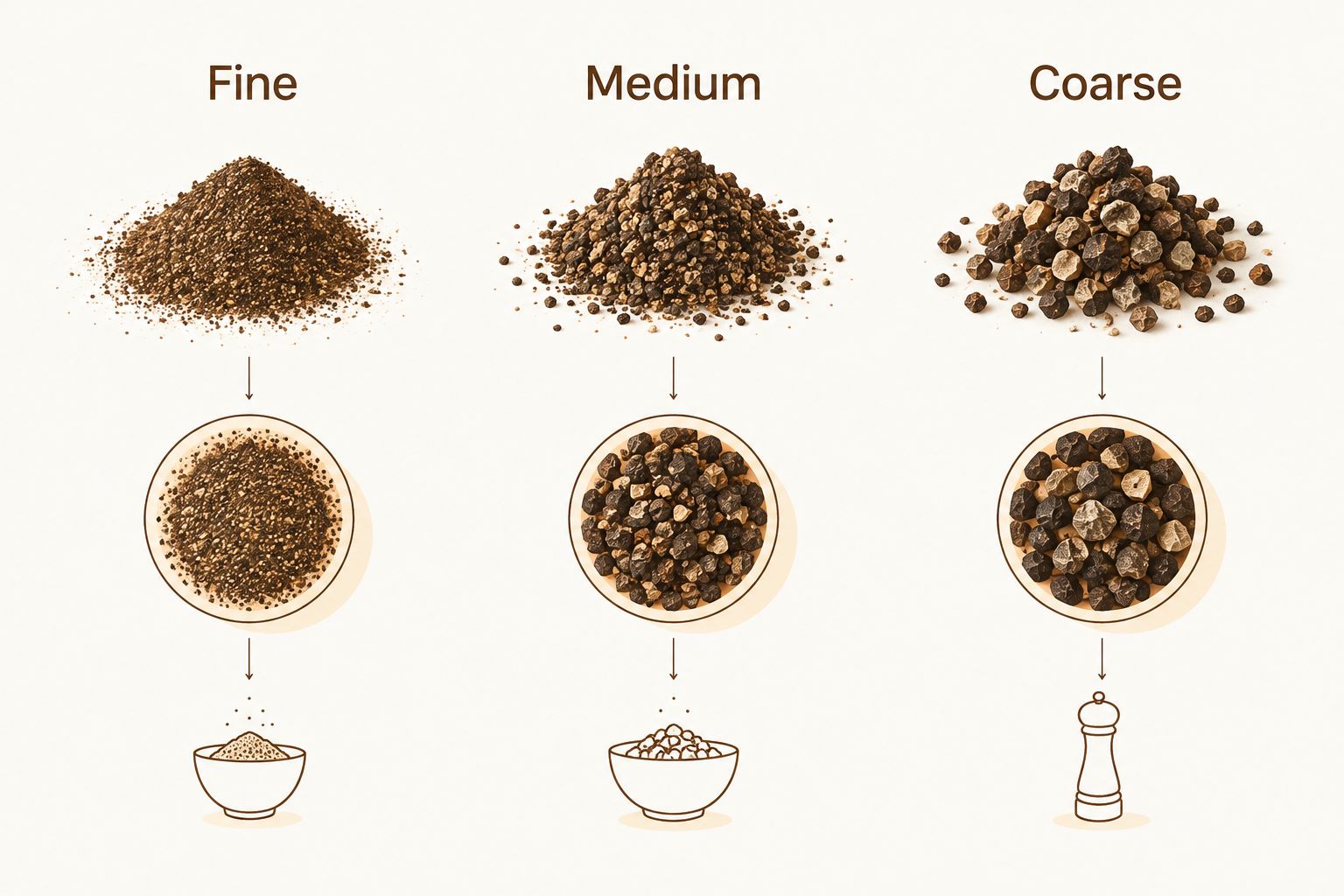
Grind a little onto a plain plate after changing the adjustment. Look at the particles before seasoning the food. That simple check shows what the mechanism is producing without guessing from the control position.
For repeated recipes, write down the setting and measure the ground pepper. Counting turns alone is not a dependable way to compare different mills.
Refill, grind, and keep the pepper dry
Good daily habits matter more than a decorative matching stand. Keep the refill process simple:
- Check the contents. Use dry peppercorns accepted by the mill's manufacturer.
- Fill carefully. Follow the stated fill instructions and secure the closure.
- Check the grind. Grind onto a plate before seasoning a new recipe.
- Store dry. Keep the mill away from steam, splashes, and direct heat.
Store reserve peppercorns in a closed container away from heat and light. Do not treat the mill as a reason to expose your entire supply beside the stove.
5Senses describes its whole spices as direct-from-farm and origin-packed. Keep that ingredient information useful after refilling: retain the packaging or record its stated origin and any packing details provided. Do not invent a harvest date when none is listed.
Wipe and clean the mill according to its instructions. Do not assume a removable reservoir means the whole mechanism can be submerged or placed in a dishwasher.
How these configurations are ranked
The order favors everyday usefulness first, then distinct cooking needs. Manual pepper-and-salt sets lead because they cover routine seasoning without power; two-pepper sets serve origin comparisons; electric sets answer a handling need.
Compact sets earn their place at the table. Mill-and-mortar pairings serve broader spice preparation. The criteria remain compatibility, adjustment, handling, refilling, upkeep, and a purposeful second tool—not unverified performance claims about individual models.
Which pepper mill set should you choose?
Choose an adjustable manual pepper-and-salt set unless you have a specific reason to choose another configuration. Confirm ingredient compatibility and comfortable operation before deciding on the exterior.
Choose two pepper mills when comparing peppers is part of your cooking. Choose electric operation for its handling benefit, a compact set for table service, or a mortar pairing for coarse crushing.
Pair the tool decision with ingredients you will use repeatedly. Explore 5Senses for direct-from-farm, origin-packed whole spices, then choose equipment that supports your actual kitchen routine.
FAQ
What's the best pepper mill set for everyday cooking?
An adjustable manual pepper-and-salt set is the default choice for everyday cooking. Check comfortable operation, a practical refill opening, and separate ingredient instructions for each mill.
Is an electric pepper mill set better than a manual set?
An electric pepper mill set is better suited to cooks who need powered, one-handed operation. That handling advantage does not establish better grind quality; compare adjustment, refilling, and upkeep separately.
Should I buy two pepper mills instead of a salt-and-pepper set?
Buy two pepper mills if you regularly use different peppers and want to keep them separate. Choose a salt-and-pepper set when your main need is everyday seasoning with both ingredients.
Can I put salt in my pepper mill?
Only put salt in a pepper mill if the manufacturer explicitly permits it. Matching exteriors do not mean the pepper and salt mechanisms accept the same ingredients.
Can any whole peppercorns go into a pepper mill?
Use only peppercorns and blends the mill manufacturer approves. Check restrictions before filling, especially when a blend includes ingredients other than conventional peppercorns.
What grind should I use for cooking?
Use fine pepper for even distribution, medium pepper as an everyday starting point, and coarse pepper when visible pieces suit the dish. Check the output on a plate after changing the adjustment.
How do I clean a pepper mill set?
Clean each mill according to its manufacturer's instructions. Do not submerge the mechanism or use a dishwasher unless those methods are explicitly permitted.
Do I need a large pepper mill set?
You need a size that fits your grip, workspace, and refill routine. A smaller reservoir requires more frequent filling for the same pepper usage, but a larger mill is not automatically more comfortable.
One last thing
Before replacing a mill that seems inconsistent, check its instructions, ingredient compatibility, and adjustment. Grind onto a plate and inspect the result before changing anything else.
Then taste the pepper in food. The useful set is the one that helps you season deliberately—not the one that simply contains the most pieces.