Can black cardamom pods be used in sweet dishes?
Can black cardamom be used in sweet dishes? Yes—use a light infusion for smoky chocolate, caramel, or fruit desserts, and learn when green cardamom fits.
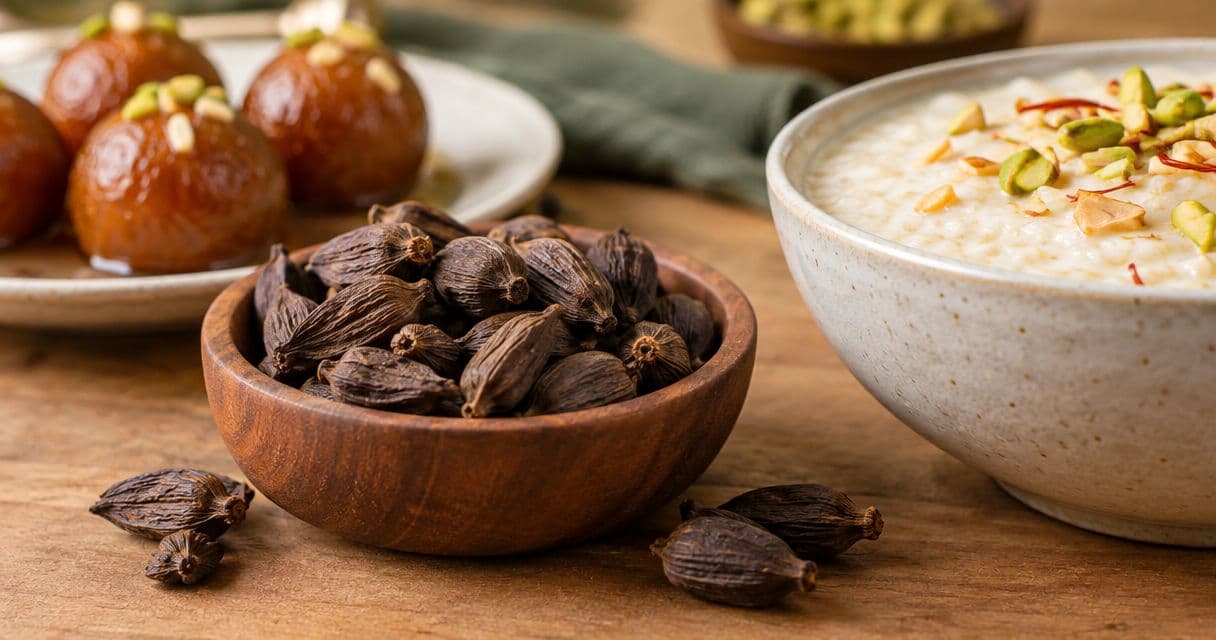
Yes, black cardamom can be used in sweet dishes, especially when you want a smoky accent in chocolate, caramel, poached fruit, or creamy desserts. Its woody, resinous character differs from green cardamom’s brighter fragrance, so use a controlled infusion rather than substituting it directly into a delicate cardamom bake.
TL;DR- Can black cardamom be used in sweet dishes? Yes—infuse it lightly when smoke belongs in the dessert.
- Black cardamom suits chocolate, caramel, and cooked fruit; green cardamom suits lighter, floral desserts.
- Remove black cardamom pods before serving, and strain any loose seeds or husk fragments.
- 5Senses Black Cardamom comes from Sikkim, with rich smoke, resinous aroma, and warming earthiness.
Can black cardamom pods be used in sweet dishes?
Black cardamom works in desserts when you treat its smoke as an intentional flavor, not a substitute for green cardamom. Think chocolate sauce with a smoky finish, caramel with a woody edge, or poached pears with a restrained resinous note. The aim is balance. You should still recognize the main ingredient.
5Senses Himalayan Black Cardamom Pods — Himalayan Ember brings Sikkim origin to that approach: rich, smoky flavor, resinous aroma, and warming earthiness. Infuse the whole pods when you want depth in chocolate, caramel, or cooked fruit, then strain before the smoke takes over.
Green and black cardamom are different spices, not interchangeable versions of the same flavor. If a dessert recipe simply calls for cardamom, check which type the writer intends before reaching for black pods. The guide to green cardamom for chai and baking covers the more familiar baking choice.
| Spice | Best for | What it contributes | Main limitation |
|---|---|---|---|
| Black cardamom | Desserts designed around smoke, dark chocolate, or caramel | Smoky, woody, resinous depth | Can overwhelm delicate fruit, vanilla, and floral flavors |
| Green cardamom | Fragrant cakes, buns, milk sweets, and lighter fruit desserts | Bright, citrusy, floral fragrance | Does not provide black cardamom’s smoky character |
Neither spice wins every dessert. Choose black cardamom when smoke is part of the idea; choose green cardamom when fragrance should lead.
Why this matters
A spice associated with savory cooking can work beautifully in something sweet. But moving it into dessert requires a different balance: there is no onion, stock, or savory spice mixture to absorb its character.
Black cardamom’s smoky aroma is associated with its drying process. Origin and processing tell different parts of its story: terroir describes the growing place and conditions, while drying helps shape the finished aroma. For dessert, both matter, but your final guide is the flavor in the infused liquid.
For your kitchen, the practical question is simple: does this dessert benefit from smoke? If the answer is no, adding less black cardamom does not necessarily make it the right ingredient. Start with the flavor you want, then choose the spice.
Infuse black cardamom for the most control
A removable pod gives you more control than ground black cardamom in a finished dessert. You can taste an infusion and lift out the spice when the flavor reaches the right point. Once ground seeds are mixed into cake batter or cookie dough, that option disappears.
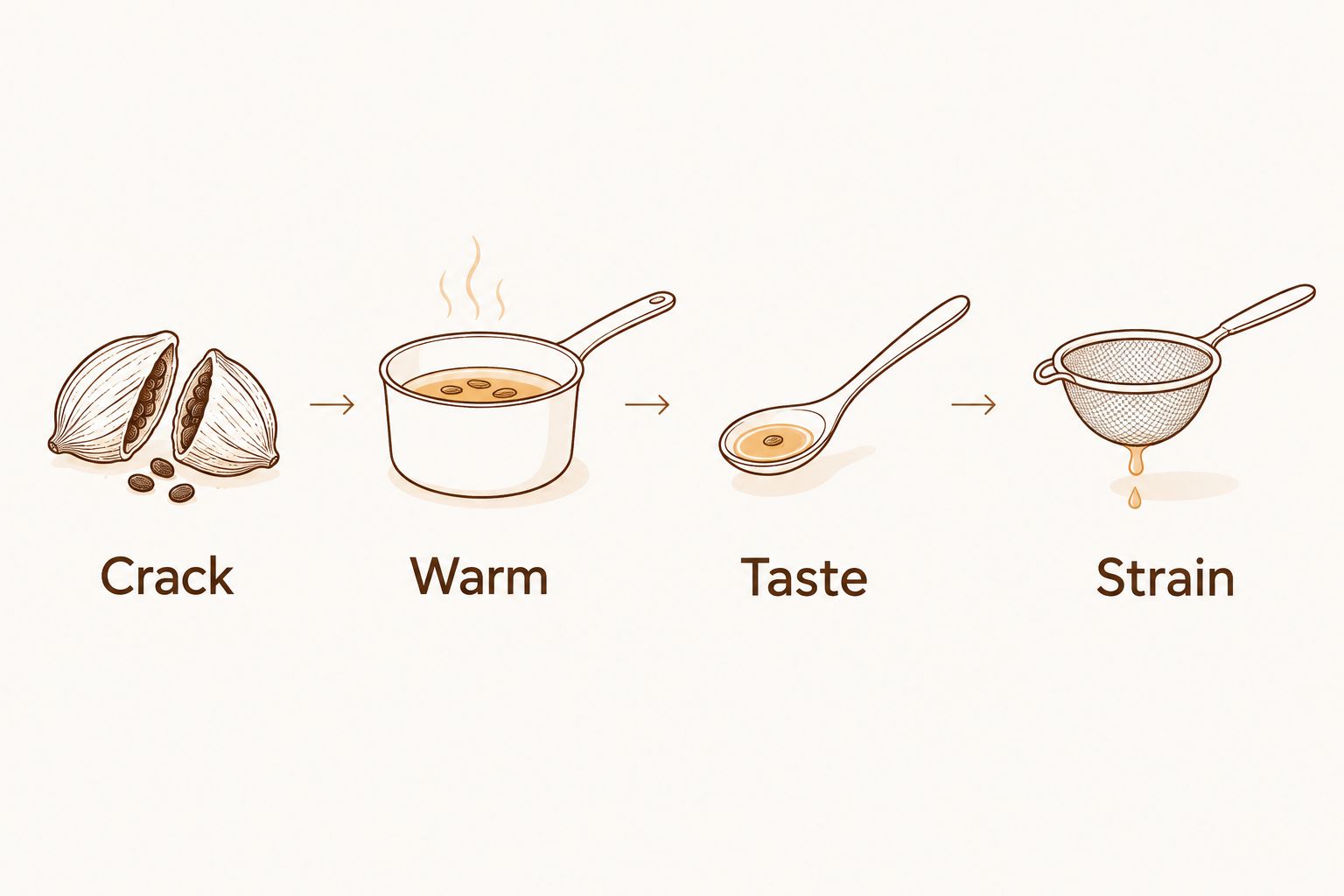
Use this approach with milk, cream, or the liquid for poached fruit:
- Crack. Gently split the pod enough to expose the inside. Avoid pulverizing it if you want an easy-to-remove spice.
- Warm. Add the cracked pod to the liquid as it warms. Follow the dessert recipe’s heating instructions rather than boiling dairy just to extract spice.
- Taste. Cool a spoonful before tasting. Check for both the main ingredient and the smoky finish.
- Strain. Remove the pod and strain out loose seeds or husk fragments before continuing.
The stopping point is sensory, not a universal timer. Stop when the smoke supports the dessert rather than announcing itself before everything else.
Keep some unspiced liquid aside when practical. If your infusion becomes too assertive, blending it with the plain liquid gives you a way to adjust before committing it to the whole dessert. Do not keep adding sugar to chase away smoke; extra sweetness changes the dessert without removing the spice.
Choose desserts that welcome a smoky accent
The strongest starting points have a clear flavor of their own. Chocolate, browned sugar, and cooked fruit give black cardamom something to sit beside. A delicate dessert offers less room for error.
These are cooking directions to explore, not claims that black cardamom belongs in every version of each dish.
Chocolate: best for a dark, smoky finish
Infuse black cardamom into the cream or milk intended for a chocolate sauce, ganache, or pudding. Strain before combining it with the chocolate. This keeps the texture smooth and lets you judge the spice separately.
The advantage is contrast: smoke can sit alongside chocolate’s roasted character. The drawback is competition. If the chocolate is the ingredient you want to study closely, a smoky spice can obscure its finer flavor differences.
Choose this route when you want a deliberately smoky chocolate dessert. Leave black cardamom out when a clean chocolate flavor is the whole point.
Caramel: best for a woody counterpoint
For a dairy-based caramel sauce, infuse and strain the dairy before adding it according to your established recipe. Follow the recipe’s safety instructions when combining dairy with hot caramel; the mixture bubbles vigorously.
Caramel gives the spice a browned-sugar setting. The risk is an overly dark-tasting result, especially if the caramel itself is strongly cooked. Taste the finished combination before adding other assertive spices.
Choose black cardamom to add a smoky edge, not to disguise burnt caramel. If the caramel tastes scorched, the spice is not a correction.
Poached fruit: best for an adjustable introduction
Add a cracked pod to the poaching liquid and remove it when the aroma is balanced. Pears and apples are useful starting points because you can taste the liquid as the fruit cooks. Keep other spices restrained during the first attempt.
The advantage is access: you can lift out the pod without disturbing a batter or set custard. The limitation is uneven extraction between the liquid and the fruit. Taste both before deciding the dessert needs more spice.
Choose poached fruit when you want to learn the flavor through an infusion. Avoid burying the experiment beneath a large mixed-spice blend.
Creamy desserts: best for cooks who want careful control
Rice pudding, custard, and ice cream bases offer a liquid stage in which you can infuse and strain black cardamom. Start by seasoning that liquid, then proceed with the recipe. Remove the pod before a mixture becomes difficult to strain.
Milk and cream do not make an assertive spice disappear. A pale, otherwise simple dessert can make smoke especially noticeable. Taste the base alongside any planned fruit, chocolate, or sauce rather than judging it in isolation.
Choose this route when a smoky dairy flavor sounds appealing. Use green cardamom instead when you want a fragrant, familiar cardamom profile.
Why black cardamom’s effect varies
There is no reliable dessert-wide substitution rule. These factors change what reaches your spoon:
- The pod’s aroma. Smell the spice before cooking. A strongly smoky pod and a faintly aromatic pod will not produce the same result.
- How you open it. A cracked pod exposes the interior while keeping much of the spice contained; grinding disperses it throughout the dish.
- Contact with the liquid. Leaving the pod in the mixture continues the infusion. Removing it gives you a clear stopping point.
- The dessert’s main flavor. Chocolate and caramel provide a different setting from a light vanilla cream or fresh fruit.
- Other seasonings. Cinnamon, cloves, vanilla, and other aromatics change the balance. Adding several together makes it harder to identify what needs adjusting.
Keep your first attempt simple. Record the spice form, the liquid you infused, and the point at which you removed the pod. That gives you a useful kitchen reference without pretending every pod behaves identically.
Should you toast or grind black cardamom for baking?
Neither toasting nor grinding is required for a sweet infusion. Begin with a cracked pod so you can learn its existing aroma before introducing another preparation step.
Dry-toasting is not a way to remove smoke. It adds another heat treatment, and careless heating can scorch the spice. If you choose to toast, keep the spice moving and stop before it darkens excessively or smells burnt.
Grinding serves a different purpose. It distributes the spice directly through a mixture, which suits a dessert deliberately developed around ground black cardamom. It also removes your ability to strain the flavor back out.
For smooth baking mixtures, separate the seeds from the tough outer husk before grinding. Grind finely and check for coarse fragments. A gritty bite is a texture problem, not evidence of stronger flavor.
Clean your grinder carefully before moving from savory spice blends to dessert ingredients. Residual cumin, chili, or other seasonings can change the result even when the black cardamom itself is balanced.
Can black cardamom replace green cardamom in a cake?
Black cardamom is not a direct replacement for green cardamom in a cake. It changes the flavor from bright and fragrant toward smoky and woody. Reducing the amount does not recreate the missing floral character.
If the cake recipe includes milk or cream, an infused version offers more control than adding ground black cardamom directly. Even then, treat the result as a variation, not an equivalent substitution. For a cake whose identity depends on green cardamom, keep green cardamom.
Do you need to remove black cardamom pods before serving?
Remove black cardamom pods before serving sweet dishes. The husk is tough, and biting into a pod interrupts an otherwise smooth spoonful of pudding, sauce, or fruit.
Cracked pods can shed seeds and small fragments. Strain an infusion rather than assuming that lifting out the visible husk removes everything. This matters especially in custards, ice cream bases, and glossy sauces.
Sikkim: black cardamom’s Himalayan birthplace
Sikkim is part of black cardamom’s native eastern Himalayan home. This is large cardamom, also known as Amomum subulatum, rather than the green cardamom familiar in fragrant cakes and buns. Its connection to Sikkim is a story of origin, not simply a place added to a label.
5Senses Black Cardamom comes from the misty mountains and terraces of Sikkim, India. That named origin gives its terroir a concrete setting. The pods are farmer sourced, packed at origin, carefully sorted, and naturally dried to maintain essential oils, aroma, and whole-spice integrity.
What 5Senses Black Cardamom brings to dessert
5Senses Black Cardamom suits cooks who want rich, smoky depth in chocolate, caramel, and poached-fruit desserts. Its character is more than smoke: resinous aroma and warming earthiness give the flavor its depth. The profile is bold, with deep smoky warmth balanced by earthy complexity.
Use that character as a counterpoint to sweetness. In chocolate cream, look for smoke beside the roasted cocoa; in caramel, a warm, earthy finish; in poached pears, a restrained aromatic accent. These are pairing directions, not a reason to make every dessert taste of black cardamom.
The trade-off is intensity. Whole pods let you stop an infusion by removing the spice, but they still need cracking and straining. Choose 5Senses green cardamom instead when delicate floral fragrance is the point of the bake.
FAQ
Can black cardamom be used in sweet dishes without making them taste savory?
Yes, black cardamom can add smoke and woody depth without making a dessert inherently savory. Use it intentionally with chocolate, caramel, or cooked fruit, and taste the infusion before combining it with the full dessert.
Is black cardamom better than green cardamom for desserts?
Black cardamom is better for a deliberately smoky dessert; green cardamom is better for bright, floral fragrance. Neither is a direct replacement for the other.
Can I put black cardamom in rice pudding?
Yes, infuse a cracked black cardamom pod in the pudding’s milk and remove it when the flavor is balanced. Strain any loose fragments before continuing with the recipe.
Should I use the black cardamom shell or just the seeds?
For an infusion, use a cracked pod and strain it out afterward. For a smooth ground-spice mixture, separate the seeds from the tough husk before grinding.
Does toasting black cardamom remove the smoky taste?
No, toasting is not a method for removing black cardamom’s smoky character. Start with an untoasted infusion if you want to judge and control the spice’s existing aroma.
What does 5Senses Black Cardamom taste like in sweet dishes?
5Senses Black Cardamom has a rich, smoky, resinous profile with warming earthiness. Sourced from Sikkim, its whole pods suit controlled infusions for chocolate, caramel, and poached-fruit desserts; choose green cardamom when you want delicate floral fragrance.
One last thing
Test the infused liquid before it reaches the whole dessert. Taste a cooled spoonful alongside the chocolate, fruit, or sauce you plan to serve, because the combination matters more than the spice alone.
The best stopping point is when you notice the dessert first and the smoke second. Remove the pod there. You can explore a stronger infusion another time without sacrificing the batch in front of you.