From whole nutmeg to fresh-grated finishing spice: complete 2026 grating workflow
Learn how to grate whole nutmeg fresh with a fine rasp. Remove the shell, measure fine shavings, season carefully, and store the remaining seed dry.
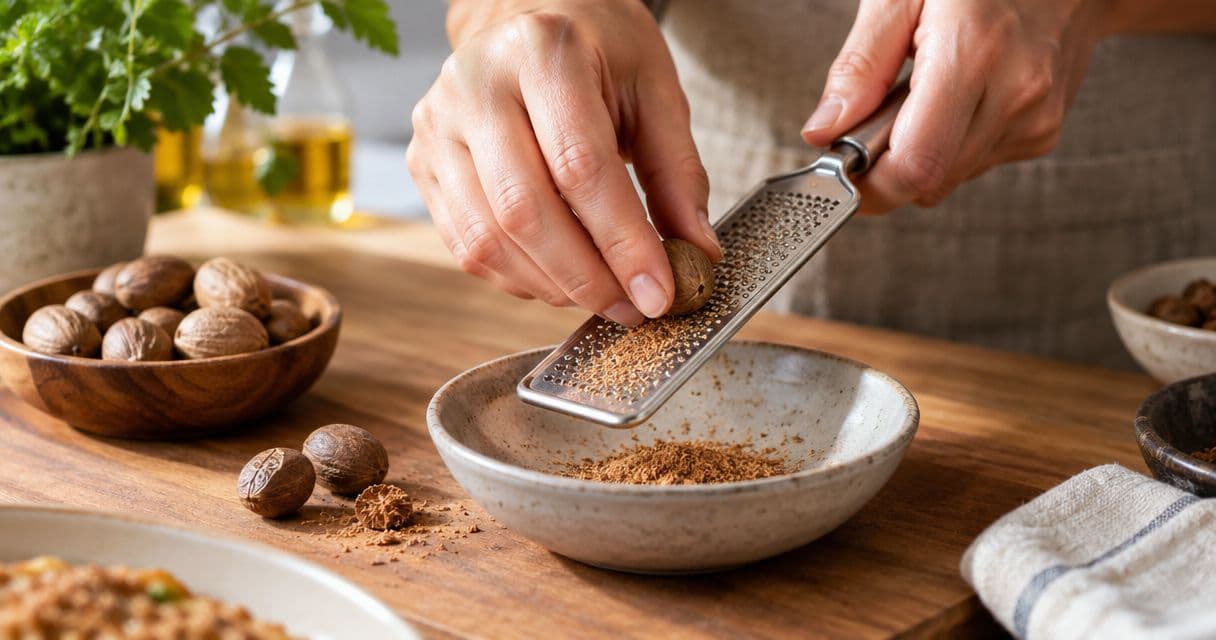
Instead of reaching for pre-ground nutmeg whenever a dish needs a warm, woody finish, grate the shelled seed over a dry dish and add only what you need. This guide shows you how to grate whole nutmeg fresh, handle nutmeg sold in its shell, choose a tool, and save the remainder for your next meal.
TL;DR- Learning how to grate whole nutmeg fresh starts with removing any hard outer shell before grating the seed.
- A fine rasp is best for finishing dishes; a dedicated nutmeg grater also handles small quantities.
- 5Senses nutmeg in the shell suits whole-spice cooks comfortable adding a shell-removal step.
- Grate over a dry dish, season gradually, and store the remaining seed away from steam.
Why fresh grating matters
Nutmeg releases its aroma as you cut into the seed. Grating just before cooking or serving puts that warm, sweet-woody character where you want it: in a sauce, through a batter, or across the top of a finished dish.
5Senses nutmeg in the shell is best for whole-spice cooks who prefer fresh grating and accept the extra shell-removal step. The 5Senses whole-spice range includes nutmeg in the shell alongside other pantry ingredients, rather than treating nutmeg only as a seasonal baking spice.
Fresh grating also gives you control over texture. Fine shavings disappear into creamy dishes more readily than coarse chips. The trade-off is a little preparation and a sharp tool that needs careful handling.
Before you start
- Gather your materials: whole nutmeg, a fine rasp or dedicated nutmeg grater, a dry shallow dish, and a sealed storage container. Check the tool’s instructions before using any holder or guard.
- Identify the shell: nutmeg sold in its shell needs that hard outer covering removed first. The grating ingredient is the seed inside, not the shell; an already shelled seed needs no further peeling.
- Keep the work away from steam: grate beside the stove, not over a bubbling pan. Moisture clings to the tool and seed, making collection and storage messier.
Do not rinse nutmeg as a routine preparation step. Start with a clean, dry seed and dry equipment. Set everything within reach before picking up the grater so you never have to balance an exposed blade while searching for a bowl.
Prepare the nutmeg
Check the shell and seed
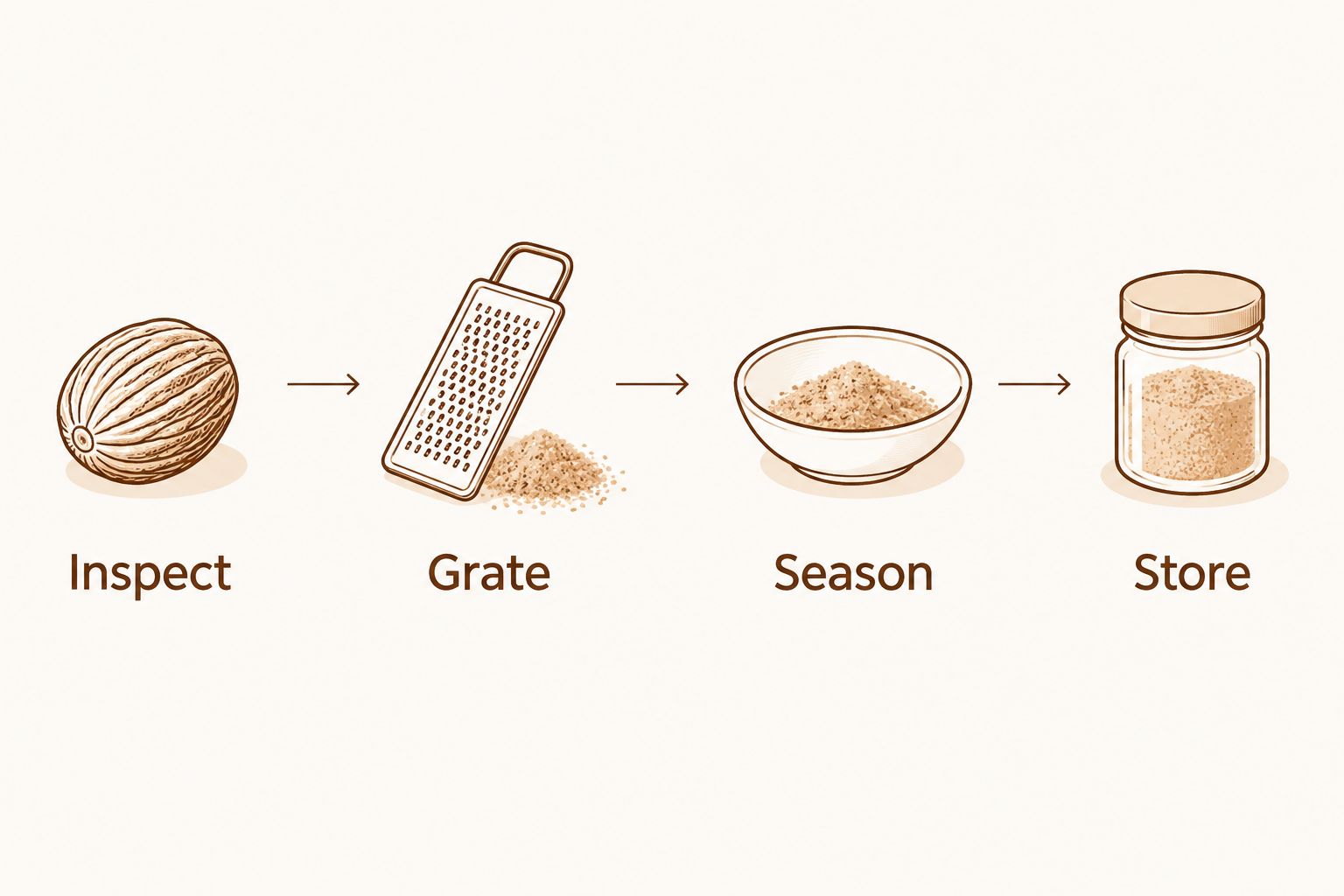
- Inspect the nutmeg on a clear work surface. Determine whether you have a hard shell enclosing the seed or an exposed, brown, wrinkled seed ready to grate.
- If a shell is present, use a nutcracker suited to the shell’s size. Apply pressure gradually over a tray or bowl to contain fragments; keep your fingers clear of the cracking surfaces.
- Separate the seed from every visible shell fragment. Do not grate the shell or scatter the cracked pieces into your ingredients.
- Inspect the exposed seed. Discard nutmeg with visible mold or an abnormal musty smell rather than trying to remove the affected surface.
Expected result: you have a dry seed with no loose shell fragments attached. You can hold it securely without gripping sharp pieces of broken shell.
Recognize what belongs on the grater
The seed’s outer surface does not need peeling. As you grate, the interior shows a marbled pattern; that is part of the nutmeg, not a separate layer to remove.
Mace is a different spice from the same fruit: it is the aril surrounding the seed’s shell. Do not confuse mace with shell fragments, and do not expect a piece of nutmeg to grate like a brittle blade of mace.
For 5Senses nutmeg in the shell, shell removal is part of preparation. That format suits cooks who enjoy handling whole spices, but it adds a task that already shelled nutmeg avoids. Neither format removes the need to inspect the ingredient before use.
Set up your grating station
Choose a tool for the job
A fine rasp is the best starting tool for a light nutmeg finish. A dedicated nutmeg grater is another practical choice, especially when you prefer a compact tool reserved for this spice.
| Tool | Best for | Main advantage | Limitation |
|---|---|---|---|
| Fine rasp | Fine finishing shavings and small recipe quantities | Lets you collect and inspect the shavings easily | Exposed teeth require careful finger placement |
| Dedicated nutmeg grater | Regular small-batch nutmeg preparation | Designed around grating a small, hard seed | Guards and collection arrangements vary by design |
| Fine face of a box grater | Cooks using equipment already in the kitchen | Avoids adding another tool | Small seeds are awkward to hold near a broad grating surface |
A coarse shredding face is not a substitute for a fine grating surface. It produces a different texture and gives you less control over a small seed. Choose the fine face only if you can use it securely.
Stabilize the working area
- Put a dry shallow dish on a steady counter. Use a nonslip mat beneath it if the dish moves.
- Position the grater according to its design. Support a handheld rasp securely; place a box grater firmly on its base.
- Hold the nutmeg with a comfortable grip and keep your fingertips behind the contact point. Use the manufacturer’s holder or guard when supplied.
- Make a light test stroke over the dish. Check that the grater cuts without requiring forceful pressure.
Expected result: the tool stays steady and fine shavings collect in the dish. Your hand does not slide toward the teeth.
Do not improvise a holder by piercing the seed with a knife. If the nutmeg is too small to hold safely, stop hand-grating it. Saving the last scrap is not worth putting your fingers against the blade.
Grate, collect, and season
Make fine shavings
- Move the seed across the grating teeth with short, controlled strokes. Let the sharp surface cut rather than pressing hard.
- Rotate the seed as needed to maintain a comfortable grip. Keep the contact surface stable instead of chasing a rounded edge.
- Pause to inspect the collected spice. Fine shavings suit a smooth sauce or a light finishing layer; large chips call for a finer tool or a change in technique.
- Stop before the seed becomes difficult to hold. Set the remaining piece down away from the grater.
- Release clinging shavings by following the tool’s instructions. Never wipe your fingers along the cutting face.
Expected result: you have a small amount of fine, fragrant nutmeg without shell pieces or conspicuous chunks. The remaining seed stays dry.
Add nutmeg with control
For a recipe that specifies ground nutmeg, grate first and measure the loose shavings. If the recipe calls for 1/4 teaspoon, measure that quantity rather than estimating a fraction of the whole seed. Seed size and your grating technique make whole-seed estimates unreliable.
For an unseasoned 2-cup sauce, try 1/8 teaspoon as a cautious starting point, then taste before adding more. That is a cooking suggestion, not a fixed conversion or a rule for every recipe. Cheese, other seasonings, and the dish’s intended flavor all affect the result.
For a finish, distribute a light dusting across the surface rather than dropping everything in the center. You want the aroma to meet the food, not a concentrated mouthful of spice.
Expected result: the nutmeg supports the dish without obscuring its main ingredients. A measured addition is repeatable; an uncontrolled shower is not.
Store the remainder and clean the tool
- Return the unused seed to a clean, dry, tightly closed container. A partly grated seed can go back into storage; you do not need to use it all at once.
- Keep the container away from the stove, direct sunlight, and damp areas. Do not put a seed exposed to steam straight back among dry spices.
- Use the grated portion promptly for the recipe you prepared it for. If you save extra, store it separately in a small closed container so you can use it before grating more.
- Clean the grater according to its manufacturer’s directions. Clear trapped particles without dragging your fingers across the teeth, and let the tool dry before storing it.
Expected result: the unused seed is enclosed, the cutting surface is clear, and no damp equipment goes into the drawer.
For a pantry-wide version of this routine, follow the whole-spice airtight storage workflow. The useful habit is simple: prepare only what the dish needs, then close the rest before cooking creates steam and splashes.
A second workflow: grate for baking instead of finishing
Fresh nutmeg works inside a recipe as well as on top. The difference is where you collect it and when you add it.
For batters and doughs
- Grate into a dry dish before mixing the recipe.
- Measure the quantity specified. Do not pack the shavings into the spoon unless the recipe explicitly asks for it.
- Stir the measured nutmeg through the dry ingredients when the recipe’s method allows. This helps distribute a small spice quantity rather than leaving it in one clump.
- Continue with the recipe’s mixing and baking instructions.
Best for: cakes, cookies, quick breads, and other recipes that need nutmeg throughout the mixture. The advantage is even distribution; the limitation is that you cannot remove an excessive addition once it is mixed in.
For sauces and finished dishes
Grate into the dish beside the stove, stir a measured amount into the sauce, and taste before serving. If you want a distinct finishing aroma, reserve a separate light dusting for the plated food.
Best for: creamy sauces, mashed potatoes, cooked greens, and warm drinks. This approach gives you a tasting checkpoint, but uneven sprinkling leaves concentrated patches. Stir thoroughly when seasoning a shared pan.
Do not add a dry-toasting or oil-blooming step automatically. Those techniques have their place with whole spices, but neither is required for this fresh-grated nutmeg workflow. Grate, measure, and add at the point the recipe needs it.
Troubleshooting
The seed skids instead of grating
Reposition the seed and check that you are moving it across the cutting direction. Use light pressure on a stable tool; if a clean grater still fails to cut, inspect its condition rather than pressing harder. Keep the tool dry before testing again.
The shavings stick underneath the rasp
Work over a wider dry dish and pause to release the collected spice according to the tool’s instructions. Move away from steam if the shavings clump. A larger collection area also makes it easier to see how much you have grated.
The dish contains hard, gritty pieces
Check for shell fragments and inspect the grated texture before adding more. Remove visible fragments; if shell has become mixed through a small grated batch, discard that batch and start again. Use a finer grating surface if the problem is coarse seed chips.
The last piece feels unsafe to hold
Stop grating. Use a compatible guard or a tool specifically designed to contain nutmeg, following its instructions. Do not assume an ordinary pepper mill or an unspecified electric grinder can handle the remaining piece.
The nutmeg overwhelms the food
Stop adding spice. For a sauce, increase the unseasoned base only if that adjustment suits the recipe; extra salt or sugar does not remove nutmeg. For the next batch, measure into a separate dish and add gradually rather than grating directly over the pan.
Customize your kitchen routine
Keep the grater near your measuring spoons so fresh grating becomes part of normal preparation. For frequent baking, write the measured nutmeg quantity on the recipe rather than recording an inconsistent number of strokes.
5Senses whole spices fit this prepare-as-needed approach, but each ingredient needs its own method. Nutmeg is grated; cardamom pods and dried chilies require different handling. Choose Spicecare tools by their stated purpose rather than assuming every whole spice belongs in the same grinder.
FAQ
How do I grate whole nutmeg fresh without making a mess?
Grate the shelled seed over a wide, dry dish using short, controlled strokes. Measure or sprinkle the collected shavings afterward, away from steam and the open storage container.
Do I remove the shell before grating nutmeg?
Yes, remove the hard shell if your nutmeg is sold in its shell. An already shelled nutmeg seed needs no further peeling before grating.
What is the best tool for grating whole nutmeg?
A sharp fine rasp is best for a light finishing texture and small measured quantities. A dedicated nutmeg grater is also suitable; choose a design you can hold and operate securely.
Can I use a cheese grater for whole nutmeg?
Yes, a fine grating face can grate nutmeg if you can stabilize the tool and hold the seed safely. Avoid coarse shredding holes, and stop when the seed becomes too small to grip.
Can I save a partly grated nutmeg seed?
Yes, store the remaining dry seed in a clean, tightly closed container away from heat, sunlight, and moisture. Keep it out of steam while grating so storage stays straightforward.
Can fresh-grated nutmeg replace ground nutmeg in baking?
Yes, grate the nutmeg and measure the amount specified by the recipe. Do not estimate by seed fraction, because whole seeds and grating textures vary.
Should I toast nutmeg before grating it?
No, toasting is not required for fresh-grated nutmeg. Grate the dry, shelled seed and add it according to the recipe or use a light dusting as a finish.
One last thing
Grate beside the pan, not above it. That small change gives you a measured quantity, keeps steam off the remaining seed, and creates a final chance to spot shell fragments before they reach dinner.