How long does whole nutmeg stay fresh after opening?
How long does whole nutmeg stay fresh? Storage and aroma matter more than opening dates. Learn how to check, grate, and store it for better flavor.
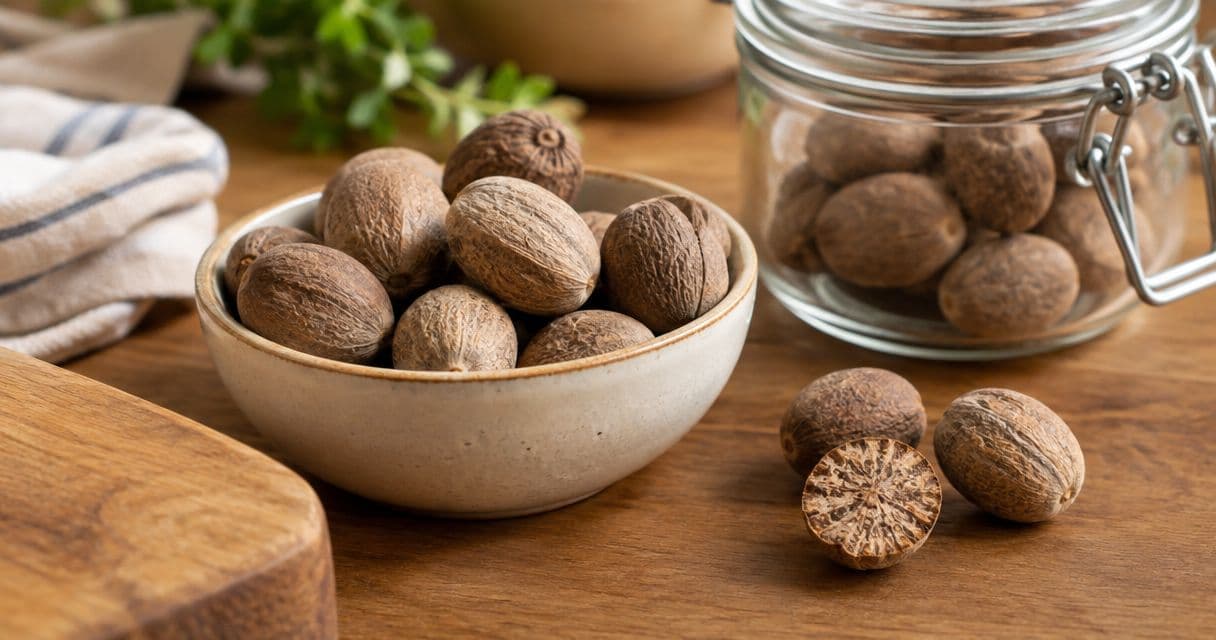
Whole nutmeg can stay aromatic for years after opening when you keep it whole, dry, tightly sealed, and away from heat, but opening the package does not start a fixed freshness countdown. Judge cooking quality by the aroma of a freshly grated surface, not the opening date alone. A partially grated nutmeg is still useful; moisture, mold, insects, or an unusual odor are reasons to discard it rather than test it in food.
TL;DR- How long does whole nutmeg stay fresh? Storage and freshly grated aroma matter more than the opening date alone.
- Keep whole nutmeg tightly sealed in a cool, dark, dry cupboard; grate only what your recipe needs.
- 5Senses Whole Nutmeg in the Shell brings Munnar's terroir to your kitchen: rich aroma, warm flavor, and gentle sweetness.
- Weak aroma signals declining cooking quality; mold, moisture damage, or insects call for disposal.
Why this matters
Nutmeg usually enters a recipe in a small amount. When its aroma fades, a custard, cream sauce, or spice blend loses an accent that is difficult to recover by adding more stale powder.
The useful distinction is freshness versus safety. A dry nutmeg that has lost its fragrance is a quality problem; a nutmeg with mold or pest damage is a different problem and belongs in the trash. Neither a best-before date nor a pleasant smell proves that mishandled food is safe.
Start with your storage routine. The whole-spice airtight storage guide explains the pantry habits that protect spices between uses.
How long does whole nutmeg stay fresh after opening?
There is no single after-opening deadline that describes every whole nutmeg. Its condition before purchase, the package seal, your kitchen environment, and how you handle it all affect the aroma that reaches your food.
Opening a jar briefly to remove a nutmeg is not the same as leaving the jar beside a steaming stove. Likewise, grating a little from one end does not turn the entire seed into ground spice. Much of the nutmeg remains intact.
Use the package's storage instructions and any stated best-before date as your starting reference. Then assess the freshly grated spice before an important recipe, provided the nutmeg has no signs of contamination or damage.
| Form you store | Best for | Freshness advantage | Limitation |
|---|---|---|---|
| Intact whole nutmeg | Occasional baking and cooking | Most of the seed remains unexposed until you grate it | Requires a suitable grater and preparation |
| Partially grated nutmeg | Regular use from the same seed | You can grate another small portion without processing the rest | The exposed end needs protection from moisture and handling |
| Ground nutmeg | Immediate measuring and mixing | Ready to add directly to a recipe | More surface area is exposed during storage, so aroma fades faster |
These are preparation choices, not guaranteed shelf-life tiers. Whole nutmeg protects your flexibility: you can prepare a little while leaving the rest intact. Ground nutmeg offers convenience, but grinding a large batch sacrifices that advantage.
What actually changes when you open the package?
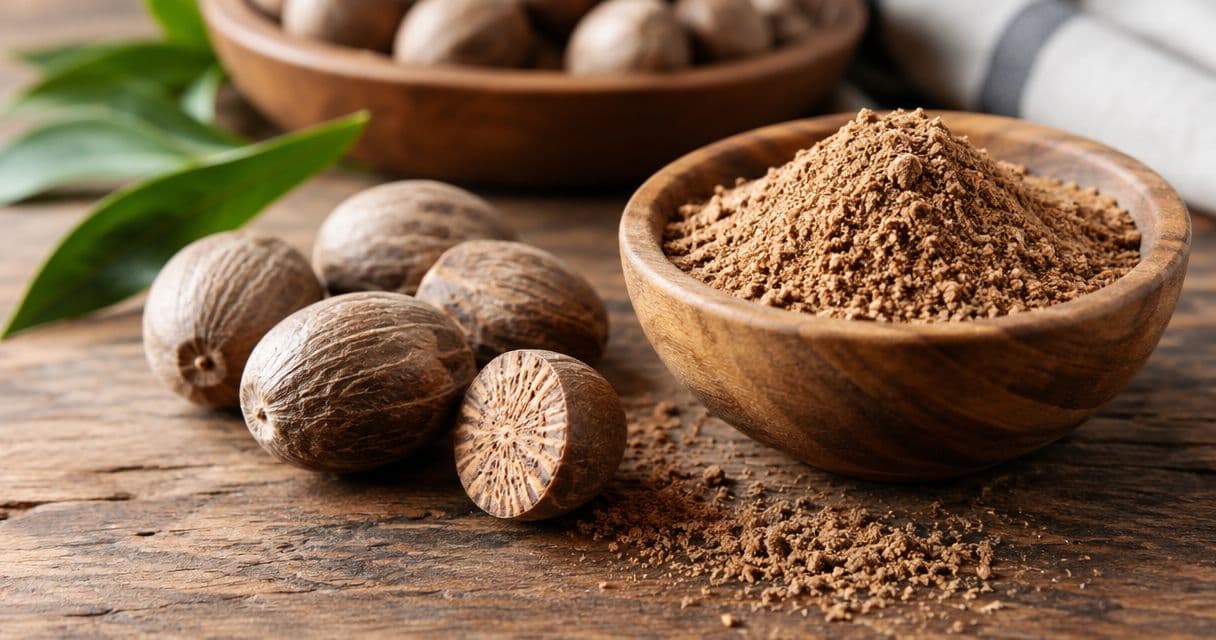
Nutmeg's fragrance comes from aromatic compounds released as you grate it. Keeping the seed intact limits the exposed surface compared with storing the same nutmeg as powder.
Once you open the container, the storage environment matters more. Air enters, kitchen humidity reaches the contents, and repeated handling creates opportunities for moisture or food residue to enter the jar.
The opening date is still useful. Write it on the container so you can rotate your pantry and recognize a jar that has been sitting untouched. Just do not treat that date as a measurement of remaining flavor.
A packing date and a harvest date describe different stages, too. When those details are supplied, retain them with the package information; do not assume that the purchase date tells you when the nutmeg was harvested or packed.
Why whole nutmeg freshness varies
Several practical factors explain why nutmegs from different cupboards do not age identically:
- Condition before opening. Storage cannot restore aroma already lost before the package reached your kitchen.
- Heat exposure. A cupboard beside an oven or above a stove exposes spices to heat during cooking.
- Air exposure. A loose lid or poorly closed pouch leaves the contents less protected between uses.
- Moisture exposure. Steam, wet hands, and damp utensils introduce moisture where you want dry storage.
- Light exposure. A sunny windowsill is a poor storage place, even when the container looks attractive there.
- Preparation and handling. Grinding exposes more surface area, while clean, dry handling keeps food residue out of the container.
You do not need elaborate equipment to address these factors. A sound seal, a dry container, and a sensible cupboard location do most of the practical work.
How do you check whether whole nutmeg is still fresh?
Check a freshly grated surface, not just the smell inside the jar. An intact seed can smell restrained until you expose its interior, while the container itself can hold lingering spice aromas.
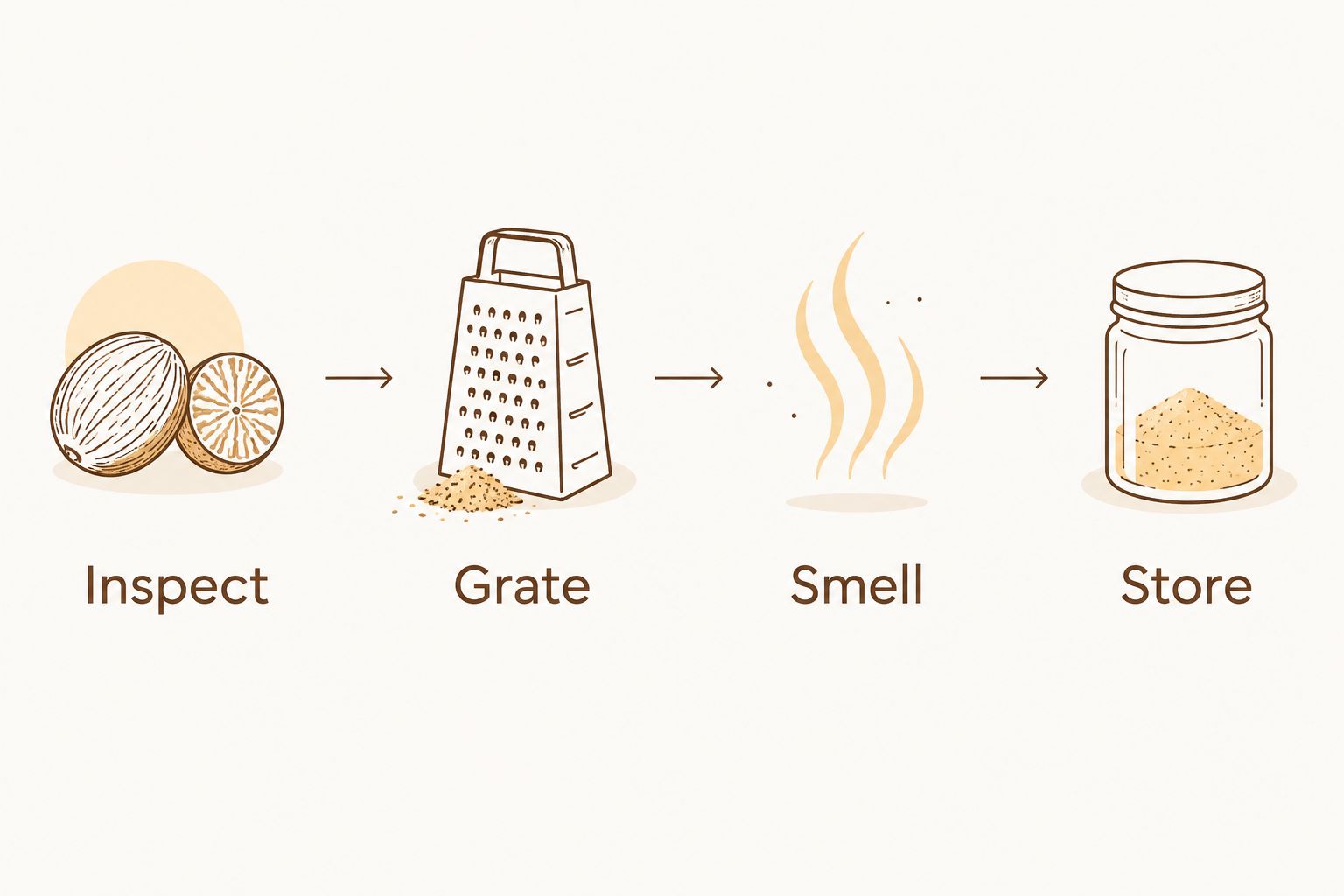
Use this sequence before adding nutmeg to a recipe:
- Inspect. Look for mold, insects, webbing, dampness, or unexpected damage. Discard affected contents rather than scraping away a suspect patch.
- Grate. If the nutmeg appears sound and has been stored dry, grate a small amount with a clean, dry tool.
- Smell. Check the fresh shavings for the warm, sweet, woody fragrance you expect from nutmeg. A faint, flat scent signals reduced cooking quality.
- Store. Return the remaining nutmeg to its dry container and close the lid promptly.
Do not use this aroma check to approve nutmeg that looks moldy or has been water-damaged. Smelling helps you judge flavor; it does not rule out contamination.
If the nutmeg is clean and dry but barely aromatic, replace it for recipes where its character matters. Adding increasingly large amounts of stale nutmeg changes the recipe without reliably restoring the fragrance you wanted.
How should you store whole nutmeg after opening?
Choose a tightly closing, food-safe container and put it in a cool, dark, dry cupboard. Keep it away from the stove, dishwasher steam, sink splashes, and direct sunlight.
The container matters less than its condition and seal. A clean jar with a well-fitting lid is useful; a decorative jar with a loose lid is not an improvement over a properly closed original package.
Keep the storage jar away from cooking steam
Take out the nutmeg before you begin grating over a hot dish. Close the jar, set it away from the cooking area, and then season the food.
This small change keeps the main supply out of the steam rising from sauces, milk, and simmering pots. It also prevents you from balancing an open container near food splashes.
Use dry tools and hands
Do not rinse a nutmeg before returning it to storage. Keep wet measuring spoons, recently washed graters, and damp fingers away from the contents.
Clean the grater according to its instructions and let it dry completely before putting it away. A tool stored with the spice should not introduce moisture or carry residue from another ingredient.
Keep package details with the spice
If you transfer nutmeg into another container, keep the product name, lot information, storage directions, and date details. A small label or retained package makes later pantry decisions easier.
Avoid continually topping up an old jar without emptying and cleaning it. Rotate the older contents first, and let the washed container dry completely before refilling.
Does partially grating a nutmeg shorten its useful life?
A partially grated nutmeg does not need to be discarded after use. Keep the remaining piece dry and sealed, then grate from it again when you cook.
The exposed face deserves attention, but it is not equivalent to grinding the entire seed. You still have an intact piece rather than a jar full of fine particles.
On the next use, inspect the remaining nutmeg and assess fresh shavings. Do not rely only on the appearance of the previously grated end, and never assume that shaving off a surface makes a moldy seed acceptable.
Grate what you need; store the rest whole. That is the simplest way to keep the preparation matched to your cooking rather than creating leftover powder after every recipe.
Should you refrigerate or freeze whole nutmeg?
A cool, dry cupboard is the straightforward choice for ordinary pantry use. Refrigeration is not a substitute for a good seal, and repeatedly moving a cold container into warm kitchen air creates a condensation concern.
Freezing also adds handling decisions that most occasional nutmeg users do not need. If you choose cold storage, use moisture-resistant, tightly sealed packaging and let the closed container reach room temperature before opening it.
Keep a small working supply separate from any longer-term reserve. That way, you do not repeatedly expose the entire supply whenever a sauce needs a little nutmeg.
The goal is not to make storage more complicated. It is to keep the spice dry and protected until you need it.
What should you look for when replenishing whole nutmeg?
Choose a format you will actually use. Whole nutmeg suits cooks willing to grate as needed; ground nutmeg suits cooks who prioritize immediate measuring. Neither choice excuses poor storage.
For whole nutmeg, look for clear product identification, intact packaging, storage instructions, and origin or packing information where supplied. Those details make the purchase more informative, but no origin name alone guarantees the condition of every seed.
Choose 5Senses Whole Nutmeg in the Shell for its rich aroma and warm, nutty flavor. Grown in Munnar in Kerala's Western Ghats, it reflects the region's distinctive terroir, with slightly sweet notes and a woody, bittersweet finish. Crack the shell and grate a little into custards, cream sauces, or baking to enjoy that fragrant warmth.
Use the guide to whole nutmeg for fresh grating to consider preparation alongside your pantry habits. Buy for the dishes you make regularly, not for a theoretical storage maximum.
FAQ
How long does whole nutmeg stay fresh after I open the package?
Whole nutmeg can remain aromatic for years under cool, dark, dry, tightly sealed storage, but there is no universal after-opening deadline. Follow package guidance and check freshly grated aroma to assess cooking quality.
Can I keep using a nutmeg after grating part of it?
Yes, a partially grated nutmeg can be stored and used again if it remains dry and shows no signs of spoilage or pests. Seal the remaining piece promptly and inspect it before the next use.
How can I tell whether my whole nutmeg has lost its flavor?
Grate a little from a sound, dry nutmeg and smell the fresh shavings. A weak, flat aroma indicates reduced flavor, but an aroma check cannot establish food safety.
Should I throw away nutmeg when its best-before date passes?
A best-before date generally describes quality rather than an automatic safety cutoff. Follow the manufacturer's directions, consider storage history, and discard nutmeg with mold, moisture damage, insects, or an unusual odor.
Is whole nutmeg better than ground nutmeg for occasional baking?
Whole nutmeg is a useful choice for occasional baking because you can grate only the amount needed while keeping the rest intact. Ground nutmeg is more convenient, but its greater exposed surface makes aroma loss a larger storage concern.
Does nutmeg in the shell stay fresh indefinitely?
No, nutmeg in the shell does not stay fresh indefinitely or eliminate the need for dry storage. For 5Senses nutmeg in the shell, account for shell removal before grating and follow the package's handling guidance.
Can I fix stale nutmeg by toasting it?
Toasting does not restore aromatic compounds that have already been lost. Replace flat-smelling nutmeg when you need a clear nutmeg flavor rather than using heat as a freshness reset.
One last thing
Before a recipe that depends on nutmeg, grate a little onto a clean saucer instead of directly into the mixing bowl. You get a chance to check its fragrance before committing the other ingredients.
Make that small check your habit. The opening date helps you organize the cupboard; fresh shavings tell you what the nutmeg brings to dinner.