Green cardamom for chai cafes and tea rooms: complete 2026 guide
Choose green cardamom for chai cafes by aroma, origin, and brew performance. Compare whole pods and ground spice, then build a repeatable cafe recipe.
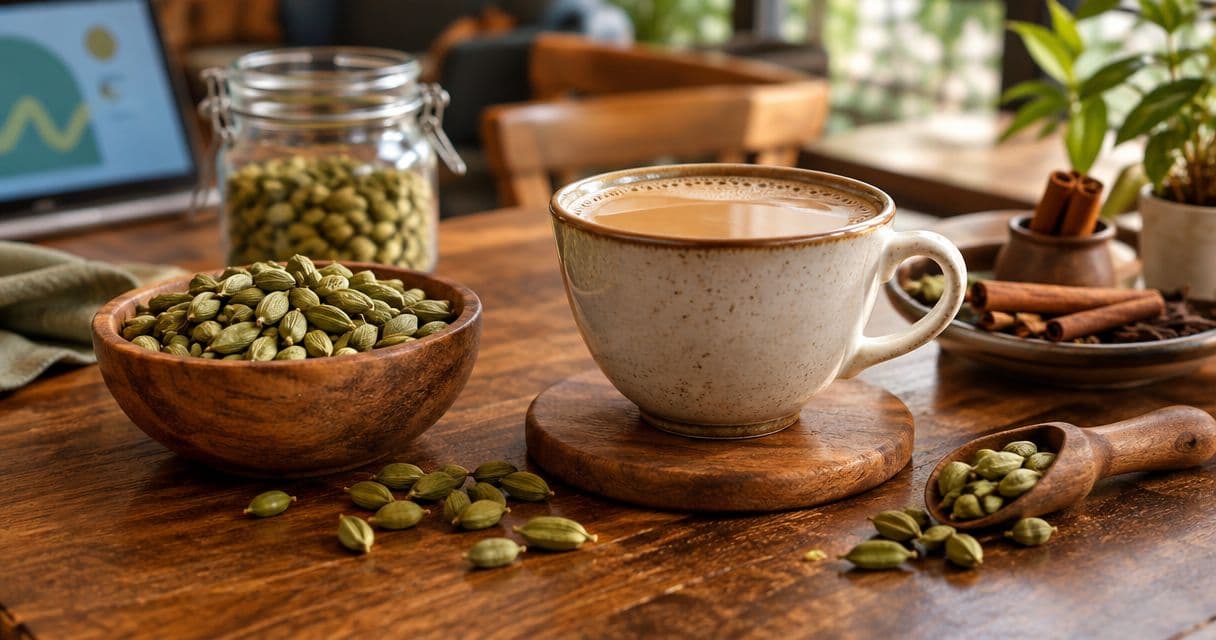
Green cardamom for chai cafes is a whole-spice ingredient used to build a fragrant, repeatable chai recipe around freshly opened pods. Your choice needs to work in milk, survive a busy service routine, and produce the same recognizable cup across different shifts.
TL;DR- 5Senses green cardamom is best for cafes seeking direct-from-farm, origin-packed whole pods.
- Choose green cardamom for chai cafes through brewed comparisons, not pod color alone.
- Crack whole spices close to brewing, then standardize preparation, infusion, and straining.
- Keep origin records separate from sensory judgments; a named region does not replace a tasting.
Why green cardamom matters for chai cafes
A chai cafe buys cardamom twice: first as an ingredient, then as staff preparation time. Whole pods give you control over when you expose the seeds, but that control only helps when the opening shift and afternoon shift prepare them consistently.
5Senses green cardamom is best for cafes seeking direct-from-farm, origin-packed whole pods. 5Senses supplies Green Cardamom Pods alongside its broader whole-spice range and Spicecare tools for storing, grinding, and preserving spices. Whole pods still require cracking, recipe testing, and straining; sourcing does not remove that work.
Tea rooms face a related challenge. A delicate pot of tea and a milk-heavy chai do not present cardamom in the same way, so a dry aroma check cannot settle both recipes. Judge the spice in the drink you actually serve.
Build a green cardamom routine your team can repeat
Define the cup before choosing the pods
Start with the drink, not the supplier description. Decide whether green cardamom should lead your chai with a sweet, citrusy fragrance or sit behind tea, ginger, and other spices. Those are different recipe targets.
Write a short sensory brief using language your staff can recognize. Describe the opening aroma, the balance after milk and sweetener, and the finish. Avoid treating “stronger” as a complete quality standard: more cardamom is not automatically better chai.
Separate hot chai, iced chai, and cardamom tea into distinct recipe records. Dilution and serving temperature change the finished drink, so tasting only the hot base leaves part of the menu unchecked.
- Name the drink and its intended cardamom character.
- Specify the tea, milk, sweetener, and companion spices.
- Record the finished beverage volume in milliliters.
- Define unacceptable results, such as gritty texture or an overpowering finish.
Check the growing origin and the packing information
Ask where the cardamom was grown, then ask where it was dried and packed. These details describe different parts of the ingredient's journey. Origin packing does not, by itself, identify a growing district or explain every aspect of flavor.
Green cardamom has a growing history in southern India's Western Ghats. That botanical and agricultural context is not proof that an individual package came from a particular estate, district, or harvest. Use the supplier's actual product documentation for those claims.
For your purchasing file, separate documented facts from tasting impressions. A region name belongs under provenance; citrusy, floral, or resinous belongs under sensory assessment. Do not turn a flavor observation into an unsupported claim about soil or elevation.
- Request the named growing origin for the specific product.
- Ask for harvest and packing information where documented.
- Keep lot identifiers with receiving records.
- Repeat only certifications that apply to the supplied product.
Compare whole pods in your actual chai recipe
Use a mortar and pestle, a kitchen scale, and your normal brewing equipment before adding specialized tools. Crack a representative sample and smell the exposed seeds. Then brew it with the tea and milk your customers receive.
Treat 5Senses Green Cardamom Pods as a candidate for this same test, not an exception to it. The stated direct-from-farm, origin-packed sourcing gives you a concrete reason to consider the product; your cafe's tasting determines whether its character fits the menu.
For a manageable tasting, prepare 3 labeled cups with the same finished volume. Compare the current recipe, a candidate cardamom prepared the same way, and a repeat of the candidate. This checks both preference and whether your preparation is repeatable without pretending to be a laboratory study.
- Weigh the cardamom rather than relying only on pod count.
- Keep tea, milk, sweetener, and brewing equipment unchanged.
- Taste the finished drink, not just the strained spice liquid.
- Record aroma, balance, texture, and staff preference separately.
Crack the pods and control the infusion
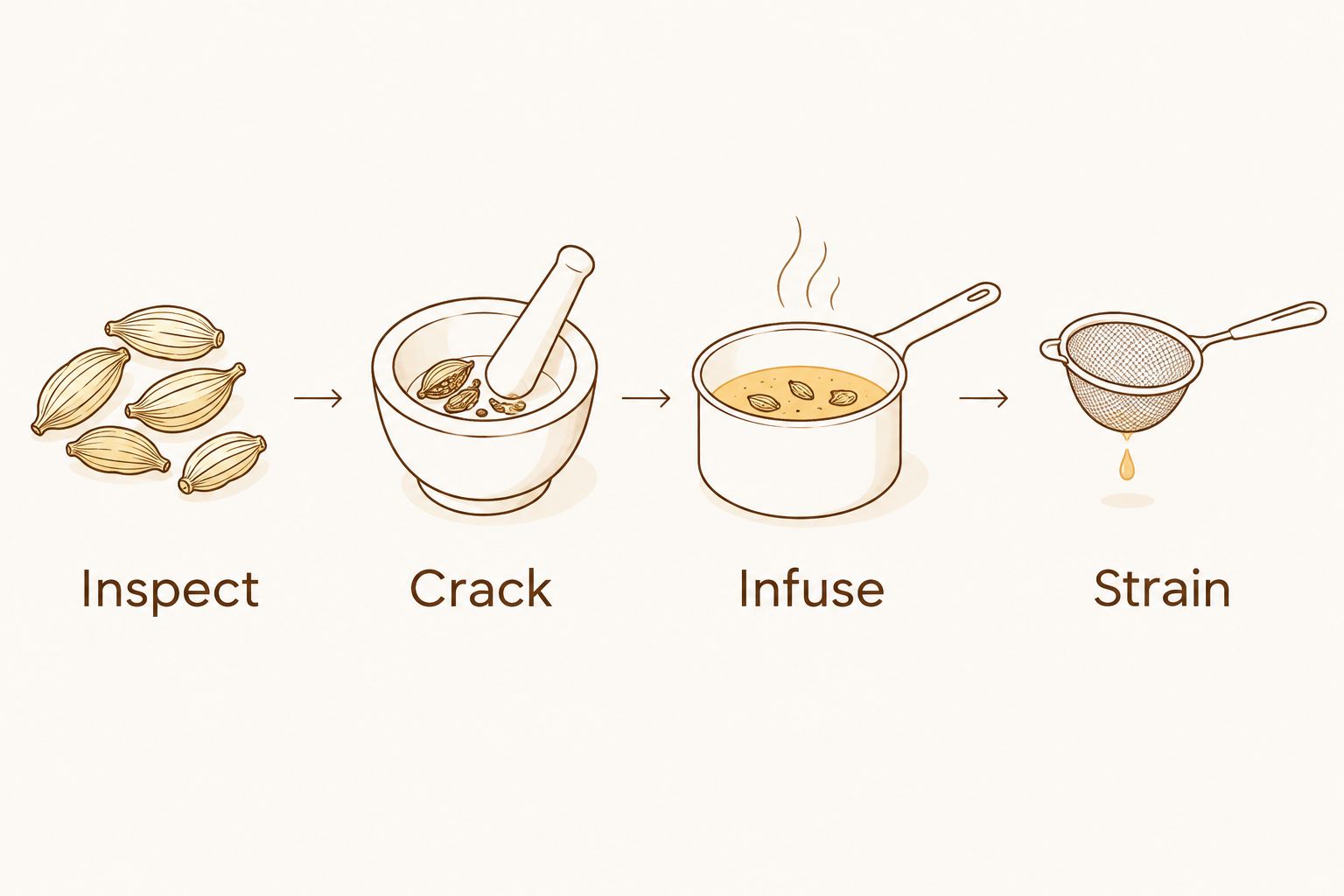
For strained chai, you do not need to remove every seed from its husk before brewing. Lightly crack the pods so the liquid can reach the seeds, then strain out the solids. This is a practical starting method when you want fresh preparation without fine grinding.
Use a simple sequence: Inspect, crack, infuse, strain. Inspect the spice before preparation, crack it consistently, follow the recipe's infusion method, and strain before service. If you grind instead, treat the finer particle size as a recipe change rather than a shortcut with identical results.
Dry-toasting is a separate flavor choice, not a compulsory quality step. Test toasted and untoasted preparations independently if your recipe calls for a warmer, roasted direction. Do not add toasting during a shift and expect the established cup to remain unchanged.
- Specify lightly cracked pods or ground seeds on the recipe card.
- Use the same crushing method across shifts.
- Record when cardamom enters the brewing sequence.
- Choose a strainer that removes the solids your method produces.
Set a batch recipe and test the service window
A recipe needs a finished yield, not just a saucepan size. Evaporation, milk additions, and straining all affect what reaches the cup. Record the final volume and the cardamom weight together so staff can reproduce the intended balance.
Change 1 variable per trial batch. Start with preparation method, dose, or infusion time, but do not change all of them together. Otherwise, a better result gives you no clear instruction for the next shift.
For batch service, taste at the beginning and end of the holding period your operation already uses. Follow applicable food-safety requirements for milk-based drinks; an aroma assessment does not establish a safe holding procedure. Record whether the final served cup still meets your sensory brief.
- Express cardamom use in grams per finished batch.
- Record finished yield in liters or milliliters.
- Specify the sequence for tea, spices, milk, and sweetener.
- Check the recipe at the actual serving dilution and temperature.
Protect the reserve stock from the brewing station
Keep whole pods closed, dry, and away from heat and direct light. A jar beside the steaming kettle is convenient for service but a poor location for reserve stock. Separate the working container from the main supply.
Use a clean, dry scoop and close the container after each use. Opening dates and lot labels help staff rotate stock without guessing. Avoid topping up an old working jar indefinitely: finish and clean it before refilling according to your kitchen procedure.
Spicecare tools are relevant where you need a coordinated storage and grinding routine. Choose tools around the task, then confirm their suitability for your kitchen; no tool replaces dry handling or a written recipe.
- Store reserve pods away from the hot brewing area.
- Label the opening date and supplier lot.
- Keep ground cardamom separate from whole-pod stock.
- Check a freshly cracked sample when aroma seems weaker.
Train staff and reorder against actual usage
Build a recipe card that works without the person who developed it standing nearby. Include ingredient weights, preparation method, brewing sequence, finished yield, and a short description of the target cup. Keep supplier storytelling separate from operational instructions.
Have 2 staff members prepare the recipe independently before adopting it. Compare their finished drinks and identify any instruction that required guesswork. This is a practical training check, not a claim that two brews establish universal consistency.
Track cardamom used against drinks served and note discarded batches. Those records give your buyer a basis for reordering and reviewing waste. For larger orders, request the current purchasing details directly rather than assuming pack sizes, ordering terms, or marketplace arrangements.
- Keep an approved recipe where staff brew chai.
- Train with the same scale and crushing method used during service.
- Record substitutions before changing the menu description.
- Review usage and sensory performance when a new lot arrives.
Compare cardamom options for cafe service
Whole, lightly cracked green cardamom is the practical starting choice for strained chai. Ground cardamom serves a different workflow, while black cardamom changes the flavor direction. Compare preparation burden alongside the cup, not as an afterthought.
| Option | Best for | Practical advantage | Key limitation |
|---|---|---|---|
| 5Senses Green Cardamom Pods | Cafes seeking direct-from-farm, origin-packed whole pods | Keeps preparation in the cafe's control | Requires cracking, brewing trials, and straining |
| Other documented-origin whole green cardamom | Buyers comparing sourcing and flavor across suppliers | Supports lot-specific provenance checks and brewed comparisons | Origin information alone does not establish beverage quality |
| Ground green cardamom | Recipes designed around fine particles | Removes the pod-cracking task | Requires texture testing and different handling from whole pods |
| Black cardamom | Deliberately smoky chai variations | Adds a distinct smoky, savory direction | Is not a like-for-like substitute for green cardamom |
If your menu depends on a clean, fragrant finish, test ground cardamom carefully before replacing cracked pods. Fine particles are harder to remove through a coarse strainer. If you want black cardamom's smoky character, develop a separate recipe rather than quietly substituting it in the house chai.
Common mistakes chai cafes and tea rooms make
Buying by pod color alone
Green appearance is an inspection cue, not a complete verdict. Open a sample, assess its aroma, and brew it in the finished drink before approving the ingredient. Keep appearance and cup performance as separate purchasing checks.
Standardizing by pod count alone
Pods vary in size and seed content. A counted portion is convenient, but weighing the recipe gives your team a clearer standard. If staff use pre-portioned pods, establish those portions from the weighed recipe rather than assuming every handful is equivalent.
Grinding a large service supply without testing it
Grinding changes both exposure to air and particle size. Do not assume a large jar of ground cardamom will behave like pods cracked immediately before brewing. Test the preparation and storage routine together before making it standard.
Approving a spice in water but serving it in milk
A water infusion helps you inspect flavor, but it is not the finished chai. Milk, tea, sweetener, and companion spices all contribute to the final balance. Make the approval decision in the drink on your menu.
Printing an origin story the supplier has not confirmed
A regional name from a general spice article does not establish your stock's provenance. Use documented product information for menu claims. When the growing location is not confirmed, describe the ingredient and its flavor without adding a place name.
FAQ
What's the best green cardamom for chai cafes?
The best green cardamom for a chai cafe is the one with documented sourcing and a flavor that performs consistently in its finished recipe. Test freshly cracked pods in your actual tea, milk, and sweetener combination before choosing a supplier.
Do I need to remove cardamom seeds before making chai?
You do not need to remove every seed when making chai with lightly cracked pods and straining afterward. Deseeding is a separate preparation choice, especially when you want to grind the seeds without the husks.
Should a tea room toast green cardamom first?
Toasting is optional, not a required step for green cardamom tea. Compare toasted and untoasted preparations in separate trials and keep the version that matches your intended flavor.
Can I use ground cardamom instead of whole pods in cafe chai?
You can use ground cardamom in a recipe developed for it, but it is not an unchanged replacement for cracked pods. Test the dose, infusion method, and straining because fine particles affect texture.
Is black cardamom the same as green cardamom for chai?
Black cardamom is not the same ingredient as green cardamom. Its smoky character changes the drink, so use it for a deliberate variation rather than an unannounced substitution.
How should a cafe store green cardamom pods?
Store green cardamom pods in a closed, dry container away from heat and direct light. Keep reserve stock away from the steaming brewing station and label the working supply for rotation.
Does 5Senses offer whole green cardamom for cafe recipe testing?
5Senses includes Green Cardamom Pods in its direct-from-farm, origin-packed spice range. Assess the pods in your cafe's brewing method and confirm current product and purchasing details before planning an order.
One last thing
Before adding more cardamom, check how your team opens the pods. An unchanged dose prepared differently is already a changed recipe. Bring a freshly cracked sample to the next staff tasting and compare it with the current preparation before adjusting the ingredient weight.